

What Happened
GCT Semiconductor Holding, Inc. held its Q1 2026 earnings call on May 12, 2026, with CEO John Schlaefer and CFO Fong leading the presentation to investors and analysts. Earnings calls are high-stakes communication events where leadership must simultaneously report results, manage expectations, and project confidence. How you say the numbers matters just as much as what the numbers say.
The Communication Angle
Most executives treat earnings calls like a financial recitation. Read the numbers, hand it to the CFO, take a few questions, get off the phone. That is a failure of leadership communication, and it happens every quarter across thousands of companies.
The core problem with semiconductor earnings calls specifically is that the audience is sophisticated and skeptical. Analysts are not listening to learn. They are listening to catch you. That means every vague phrase, every dodge, every moment of hesitation gets flagged and interpreted. The communication burden on a CEO in this format is enormous, and most are not prepared for it.
What separates the calls that move stock prices in the right direction from the ones that crater them has nothing to do with the actual results. It has everything to do with narrative control. A strong CEO opens an earnings call with a single, clear thesis: here is what this quarter means in the context of where we are going. Not "we had some challenges but also some wins." That is noise. The thesis needs to be one sentence, and it needs to be said out loud in the first 90 seconds.
The second layer is handling analyst questions. This is where most executives fall apart. They answer the question that was asked instead of the question they should be answering. An analyst asks about margin compression in one product line. A weak executive defends the numbers. A strong executive acknowledges the pressure, pivots to the strategic reason it exists, and lands on what changes in the next two quarters. That sequence, acknowledge, explain, resolve, takes 30 seconds. It signals competence without being evasive.
The third layer is tone. Investors are reading your emotional state as much as your words. If you sound defensive, they assume you are hiding something. If you sound overly cheerful about bad news, they assume you are out of touch. The target tone is calm confidence, the kind that says "I have seen this before and I know what to do." That tone is not an accident. It is a preparation decision, not a personality trait.
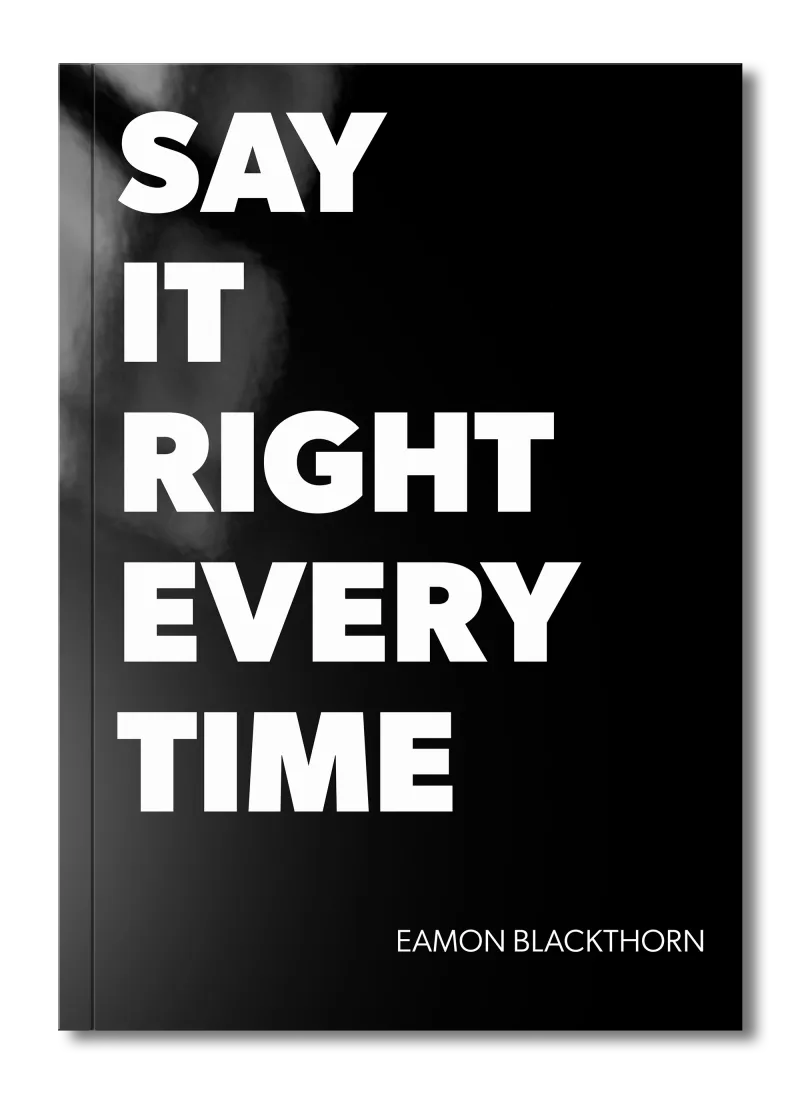
This is exactly the kind of scenario I break down in Say It Right Every Time. The chapter on controlling the frame in adversarial conversations gives you a concrete framework for staying on offense when your audience is actively looking for cracks. The earnings call is just a formal version of every hard conversation where someone is waiting for you to stumble. The preparation method is the same whether you are in a boardroom or a performance review.
Never Be Lost
for Words Again
Get word‑for‑word scripts for the conversations that shape your life, from job interviews and negotiations to difficult talks with family and partners, so you always know exactly what to say and how to say it.
Never Be Lost
for Words Again
Get word‑for‑word scripts for the conversations that shape your life, from job interviews and negotiations to difficult talks with family and partners, so you always know exactly what to say and how to say it.
Key Takeaway
Before your next high-stakes presentation to a skeptical audience, write your single thesis sentence before you write anything else. It should complete this prompt: "When this presentation is over, I want everyone in the room to believe one thing, and that thing is..." If you cannot finish that sentence cleanly, you are not ready to present.