

What Happened
The role of CEO has shifted in a fundamental way. Corporate leaders are no longer judged solely on quarterly results or board relationships. They are now expected to function as publishers, broadcasters, and personalities. The public, employees, and investors all want direct access to the person at the top, and they want it constantly. Silence from leadership is no longer neutral. It reads as absence.
The Communication Angle
This shift is not a trend. It is a permanent restructuring of what leadership communication means, and most CEOs are completely unprepared for it.
Here is the core problem: executives are trained to speak carefully, with legal teams reviewing every sentence and PR handlers smoothing every edge. That approach worked when a CEO communicated through press releases twice a year. It fails completely when you are expected to post, speak, respond, and engage on a weekly or even daily basis. The over-polished, committee-approved voice sounds hollow at scale. People can hear the committee behind every word.
The CEOs who are winning right now share one specific trait: they have a defined point of view that exists independent of their company's marketing message. They are not just amplifying their brand. They are expressing a perspective on their industry, their craft, or the world. That is what builds an audience. That is what creates trust. Think of the difference between a CEO who posts their company's product announcements and a CEO who explains, in plain language, why they made a hard decision, what they got wrong last quarter, or what they genuinely believe about where their industry is heading. One is advertising. The other is communication.
The technique at work here is called consistent voice positioning. You pick two or three topics you actually know deeply and care about, and you speak about them with specificity and regularity. Not every topic. Not whatever is trending. You build a lane, and you stay in it. Readers and followers learn what you stand for, and that clarity compounds over time into genuine authority.
The failure mode I see constantly is executives treating their public platform as a reputation management tool. Every post is defensive. Every statement is designed to prevent criticism rather than invite engagement. That strategy produces the opposite of what they want. It signals insecurity. Audiences are not looking for a CEO who has no weaknesses. They are looking for one who knows themselves well enough to speak honestly. Vulnerability used with precision is not weakness. It is the most powerful credibility builder available.
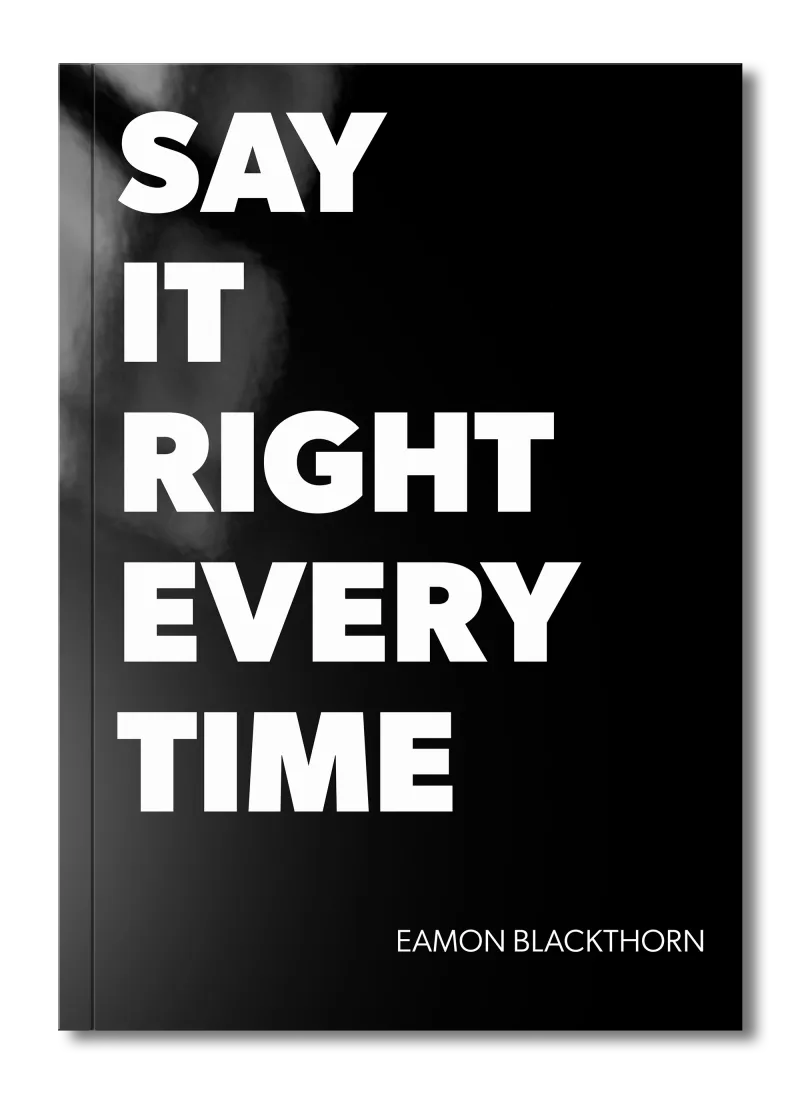
This is exactly the kind of scenario I break down in Say It Right Every Time. The chapter on building a consistent voice gives you a framework for identifying your core communication territory, the two or three subjects where your credibility is unmatched, and shows you how to express that territory in a way that is unmistakably yours. Because a platform without a distinct voice is just noise with a title attached.
Never Be Lost
for Words Again
Get word‑for‑word scripts for the conversations that shape your life, from job interviews and negotiations to difficult talks with family and partners, so you always know exactly what to say and how to say it.
Never Be Lost
for Words Again
Get word‑for‑word scripts for the conversations that shape your life, from job interviews and negotiations to difficult talks with family and partners, so you always know exactly what to say and how to say it.
Key Takeaway
Pick one topic inside your industry where you have a genuine, specific opinion that differs from the conventional wisdom. Write three sentences explaining your position and why the common view is wrong. Post it. That single exercise will teach you more about your own voice and your audience than six months of polished content ever will. The discomfort you feel is the signal that it is worth saying.