
In Short
This article contains five word-for-word scripts covering the conversations new managers need most to establish team synergy from the start.
- Setting shared goals in your first team meeting
- Naming how your team will handle disagreement
- Opening a one-to-one to build trust and role clarity
A team synergy checklist is a structured set of scripts and prompts that guide new managers through the foundational conversations that build collective performance. It covers goal alignment, role clarity, conflict norms, and trust so a team functions as a unit, not a group of individuals.
I once watched a new manager walk into her first team meeting with nothing but good intentions and a confident smile. She knew what she wanted to build. She had no idea what to say. By the end of that meeting, her team was polite, vague, and no closer to working together well. The moment passed, and it took her months to recover the ground she lost in those first forty minutes.
A team synergy checklist is not about having every answer. It is about having the right words ready before the conversation starts. Prepared language gives you confidence. Confidence gives your team a reason to trust you. Trust is where real collective performance begins.
Find the script that matches your situation. Read the context before you speak. Practice it out loud at least twice. If you want to understand the culture that makes these scripts stick, how leaders foster a culture of team synergy is worth reading alongside this guide.
How to Use These Scripts
Before you use any of these scripts, follow these steps.
- Find the situation that matches yours.
- Read the full script and the context note before speaking or writing.
- Adapt the words to your natural voice: keep the structure, change the tone.
- Practice out loud at least twice. Scripts read differently than they sound.
The most common mistake people make is reading a script word for word without adapting it to the relationship in front of them. A script delivered as a performance sounds hollow. Adapt it until it sounds like a more prepared, more confident version of you. The structure is the tool. Your voice is what makes it land.
"The Conversation You're Avoiding Is the One You Need to Have."
"The Conversation You're Avoiding
Is the One You Need to Have."
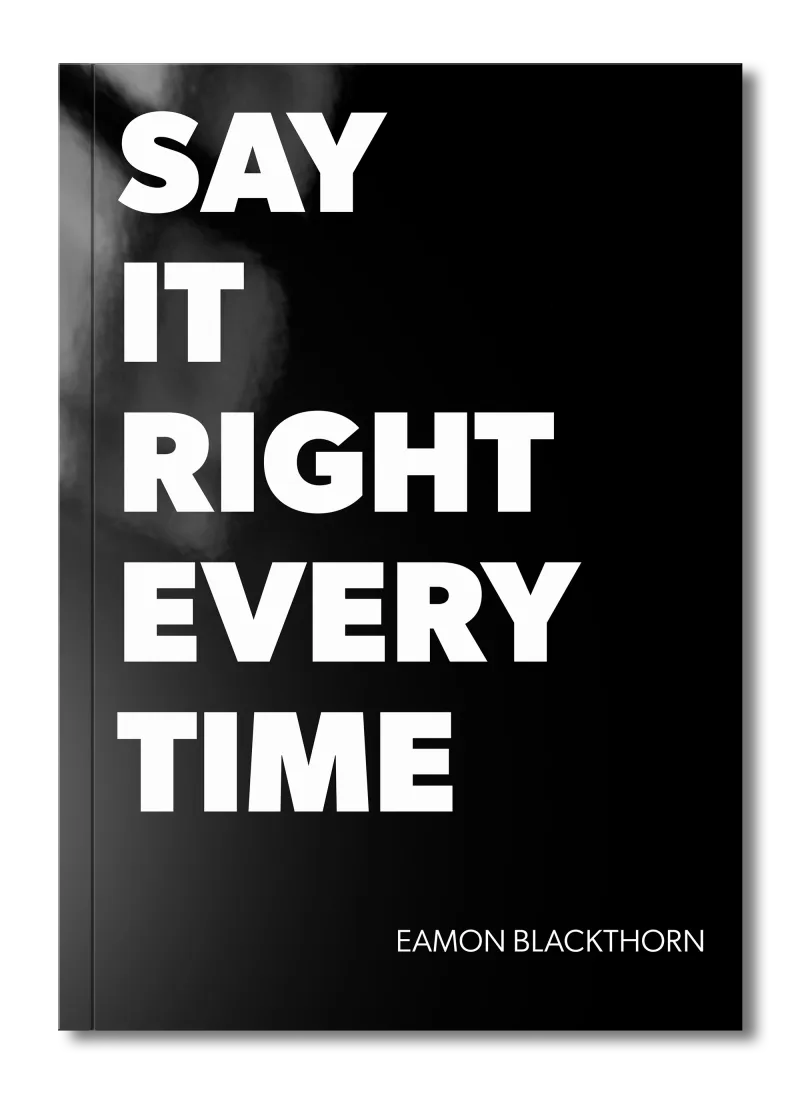
Stop rehearsing conversations you'll never have. Say It Right Every Time gives you 115 word-for-word scripts and 16 proven frameworks to speak with confidence in every conversation that matters.
Script 1: Setting Shared Goals in Your First Team Meeting
Situation: Use this in your first full team meeting, ideally within the first two weeks. This is the moment to establish what the team is collectively working toward, which is the first condition for real team cohesion.
Why this works: Teams cannot pull together if they are not sure what they are pulling toward. Naming shared goals in public creates accountability and gives people a reason to coordinate rather than compete. It also signals that you see this as a collective effort, not a set of individual assignments.
Standard version:
"Before we get into the day-to-day, I want us to take ten minutes on something important. I want us to agree on what we are actually here to accomplish together, not just individually. [Name a specific goal or outcome you have identified.] Does that match how you each understand our purpose? I want to hear where you agree, and honestly, where you do not. That conversation is worth having now rather than six months from now."
Formal version:
"I would like to open by establishing some shared clarity on our collective objectives. My understanding is that our primary goal this quarter is [state specific goal]. Before we proceed, I want to ensure this reflects each team member's understanding of our purpose and priorities. If there is misalignment, this is the right moment to surface it."
After you use it: Listen for genuine agreement, not polite nodding. Good responses are specific: "Yes, and I would add..." Difficult responses are silence or vague affirmation. If you get silence, name it: "Quiet usually means uncertainty. What am I missing?"
Eamon's note: This much I know for certain: a team that cannot name its shared purpose will find a dozen private ones, and none of them will match.
Script 2: Naming How the Team Will Handle Disagreement
Situation: Use this early, before conflict arrives. The best time is your second or third team meeting, once people are comfortable with you but before the first real tension surfaces. Setting norms for disagreement before they are needed is one of the most underused tools a new manager has.
Why this works: Teams do not fall apart because people disagree. They fall apart because no one agreed on how to disagree. Naming this norm in advance removes the shame from conflict and gives people a clear, shared method for working through friction. It is closely connected to the kind of psychological safety covered in what is psychological safety and how it drives team synergy.
Standard version:
"One thing I want us to agree on early is how we handle it when we do not see eye to eye, because we will not always see eye to eye, and that is fine. What I ask is this: bring the disagreement to the person directly first. If that does not resolve it, bring it to me. What I will not do is let issues sit in silence until they become something bigger. Does that feel workable to everyone?"
Formal version:
"I would like to establish a shared norm around how we address disagreement within the team. My expectation is that concerns are raised directly with the relevant colleague first. If that conversation does not produce resolution, I ask that it be escalated to me promptly. This approach keeps issues contained and addressed, rather than allowed to develop into broader team friction."
After you use it: Watch whether people nod and move on, or whether someone asks a clarifying question. A question is a good sign: it means they are taking it seriously. If no one responds at all, revisit it in a one-to-one.
Eamon's note: The teams I have seen break apart almost always had the same thing in common: they never agreed on what to do when things got hard.
Script 3: Opening a One-to-One to Build Trust and Role Clarity
Situation: Use this in your first individual conversation with each team member. This is not a performance review. It is a connection conversation, designed to understand what each person does, how they see their role, and where they feel uncertain. What is role clarity and why it is the foundation of sustainable team synergy explains why this conversation matters more than most managers realise.
Why this works: People perform better when they feel seen and when their role is clear. This script does both at once: it signals genuine interest in the person, and it surfaces any confusion about responsibilities before that confusion causes problems for the wider team.
Standard version:
"I want to use this time to understand how you see your role here, not how it looks on paper, but how it actually works day to day. What do you feel most responsible for? Is there anything that feels unclear or that overlaps awkwardly with someone else's work? I am asking because I want to make sure you have what you need to do your best work."
Formal version:
"I would like to use this conversation to gain a clear picture of how you understand your responsibilities within the team. Could you walk me through what you consider your primary areas of ownership? I am also interested in any areas where role boundaries feel ambiguous or where coordination with colleagues creates friction. That information will help me support the team more effectively."
Casual version:
"Forget the job description for a minute. What does your week actually look like? What do you feel like you own, and is there anything that feels a bit murky, like you are not sure if it is yours or someone else's? I want to make sure things are clear for you."
After you use it: A good response is specific and a little candid. Difficulty here is over-rehearsed answers that sound like a performance review. Follow up with: "Tell me something that is not in the official version."
Eamon's note: You cannot build a team that works as one unit if the people in it are not sure where they end and the next person begins.
Script 4: Giving Feedback That Strengthens Rather Than Damages
Situation: Use this when a team member's behaviour or output is affecting the collective performance of the group, not just their individual results. This is not about a private mistake; it is about something that is creating friction or confusion for others. For a fuller treatment of this subject, how to give feedback that strengthens team synergy instead of breaking it goes deeper on the principles behind this script.
Why this works: Feedback that connects an individual's behaviour to the team's shared goals lands differently than feedback that feels personal. It removes the sense of attack and replaces it with shared stakes. The person you are speaking with can hear it as a practical problem to solve, not a judgement of their character.
Standard version:
"I want to talk with you about something I have been noticing, and I want to do it now before it becomes a bigger issue. When [describe specific behaviour], it creates [describe specific impact on the team]. I do not think you intend that impact. But I need it to change because the team relies on [the outcome being affected]. What would help you make that shift?"
Formal version:
"I would like to raise something I have observed that I believe is affecting the team's overall effectiveness. Specifically, when [describe behaviour], the result for the team is [describe impact]. I want to address this constructively and early. I would welcome your perspective on what is driving this and what support would help you approach it differently."
After you use it: A good response includes acknowledgement and a question or a plan. A defensive response is common and not a failure: give the person a moment to sit with it, then ask what they need. If they signs your team lacks synergy and how to fix it can be a useful resource if the pattern continues across the team.
Eamon's note: Feedback delivered early, with care, is one of the most generous things a manager can give.
Script 5: Starting a Difficult Conversation That Is Blocking the Team
Situation: Use this when something unspoken is creating visible friction in the team: a conflict between two people, a decision that was never properly made, or a habit that everyone notices but no one has named. This script helps you open that conversation without it feeling like an ambush. It connects directly to the guidance in how to start a difficult conversation that's blocking your team's synergy.
Why this works: Hard conversations stay hard because no one has a way to begin them. This script names the problem without blaming a person, which lowers defensiveness immediately. It also signals that you are raising this to solve it, not to punish anyone, which makes people more willing to engage honestly.
Standard version:
"There is something I think we need to talk about as a team, and I want to name it directly rather than let it sit. [Describe the issue simply and without blame: e.g., 'It seems like decisions about X are getting made twice, and the second decision contradicts the first.'] I do not think anyone is doing this deliberately. But it is slowing us down. I want us to work out what is actually happening and agree on how we handle it going forward."
Formal version:
"I would like to raise a team-level issue that I believe is affecting our collective performance. I have observed that [describe the issue without attributing blame]. My intention is not to assign responsibility but to understand the source of the problem and agree on a practical resolution. I would welcome each person's perspective on what they have experienced."
After you use it: The first response is often silence or a cautious partial explanation. That is fine. Let it breathe. If someone goes defensive, acknowledge their perspective before returning to the shared problem. Good daily habits, like those in how to use daily standup meetings to actively build team synergy over time, can prevent many of these conversations from being necessary in the first place.
Eamon's note: The conversation you keep postponing is usually the one the whole team is waiting for you to have.
Adapting These Scripts for Your Team
Every script in this article is a starting point, not a final word. The words exist to serve the conversation, not to replace it.
Adjust for the length of your relationship. A script for someone you met last week needs more warmth and less precision than the same script used with someone you have worked alongside for months. Add a sentence of genuine acknowledgement before the main language.
Match the register to the stakes. The formal versions exist for situations with HR involvement, senior leadership present, or written documentation required. Do not use them with a colleague you normally speak to casually. They will hear the formality as distance, and distance is not what you are building.
Remove any phrase that does not sound like you. If a line makes you hesitate when you practise it aloud, rewrite it. Keep the structure: the opening, the specific description, the impact, the question. Change any word that feels foreign to your natural speech.
Slow down at the key moment. Every one of these scripts has a central sentence where the real message lands. Pause before it. Let the person hear it clearly before you move to the next line.
The goal is for these words to sound like a better, more prepared version of you, not like someone else.
Common Mistakes When Using Team Communication Scripts
The biggest way scripts fail is when the person using them sounds like they are reading, not speaking. The listener feels the distance, and the whole conversation becomes formal in a way that closes people down rather than opening them up.
Reading verbatim without lifting your eyes. Even in written scripts, you should know the shape of what you are saying well enough to maintain eye contact. Preparation earns you presence.
Using the formal version in an informal relationship. Elevated register with a trusted colleague signals that something is wrong, even when it is not. Match the script to the relationship, not to how serious the topic feels to you internally.
Skipping the question at the end. Almost every script here ends with a question or an invitation. That ending matters. It is what turns a statement into a conversation. Do not cut it because you are nervous about the answer.
Delivering the script and then filling the silence. After you say the hard thing, stop talking. The silence belongs to the other person. Filling it immediately tells them their response is not actually welcome.
Using the same script twice in the same week with the same person. Scripts build trust when used well and erode it when they become a pattern the other person can predict. Vary your language once the relationship is established.
A script is a tool. Use it like one: with skill, not rigidity.
Frequently Asked Questions (FAQ)
What is a team synergy checklist for new managers?
A team synergy checklist is a practical set of communication prompts and scripts that help new managers establish the conversations, norms, and habits that create collective performance. It gives managers the exact words to use in high-stakes early moments.
How do you build team synergy quickly as a new manager?
You build team synergy quickly by having the right conversations early: setting shared goals, clarifying roles, naming how the team will handle disagreement, and creating space for honest feedback. Scripts help you have those conversations with confidence from day one.
What should a team synergy checklist include?
A strong team synergy checklist covers goal alignment, role clarity, conflict norms, feedback practices, and trust-building. These are the five foundations of a team that functions as a unit rather than a collection of individuals pulling in different directions.
When should a new manager start building team synergy?
Start building team synergy in your first two weeks. The habits a team forms early tend to stick. Waiting until problems appear makes repair far harder than building the right foundation from the beginning.
Why do new managers struggle to build team synergy?
New managers struggle because they lack the specific language for the conversations that create cohesion. They understand what they want but cannot find the words. Scripts solve this by giving managers a clear starting point they can adapt to their own voice.
How does role clarity affect team synergy?
Role clarity is one of the strongest foundations of team synergy. When every person knows what they own and where their work connects to others, confusion drops and trust rises. Ambiguity about responsibility is one of the most common causes of team friction.