
In Short
This article covers five communication frameworks that give leaders and teams a practical system for sustaining team synergy when organizational complexity threatens to pull people apart.
- The SBAR Framework for cross-functional clarity under pressure
- The Shared Context Ritual for keeping distributed teams genuinely aligned
- The Accountability Anchor for naming ownership without blame
Team synergy strategies are structured communication approaches that help groups of people work with greater collective force than they could achieve individually, by building alignment, trust, and shared accountability into the everyday rhythm of how a team operates.
I watched a senior manager step into a project review once, confident she had the full picture. She had sent updates, answered questions, kept her calendar clear. But three departments had been operating from three different versions of the plan, and nobody had named it. The meeting collapsed in forty minutes. Good intentions, no structure.
That is the quiet danger in complex organizations. Team synergy does not die from conflict or incompetence. It dies from the slow accumulation of small communication failures: an assumption left unchecked, a handoff never confirmed, a priority shift nobody announced. Without a framework to fall back on, even strong teams drift.
The frameworks in this article give you a reliable structure for building and sustaining team synergy across real organizational complexity. They are not theoretical models. They are tools I have tested, refined, and watched fail when people used them carelessly, and deliver results when people used them with discipline.
In this article, you will learn five frameworks that give you a practical system for sustaining team synergy in any organizational environment. If you are also exploring the foundations, the article on What Is Role Clarity and Why It Is the Foundation of Sustainable Team Synergy is a strong starting point before you apply these frameworks.
Why Structure Matters More Than Goodwill Alone
Most people believe communication is a natural talent. You either have the gift or you do not. After six decades of watching teams succeed and collapse, I can tell you that belief is wrong. Communication under pressure is a skill. And skills require structure.
When the pressure is on, people do not rise to their best instincts. They fall back to their oldest habits. Without a shared framework, those habits pull in different directions, and whatever synergy the team had built begins to fracture.
Here are the situations where having a framework makes the difference:
- A cross-functional handoff goes wrong. Two teams have been working in parallel, and nobody established a clear shared format for transferring information. Important context gets lost, and the receiving team spends a week recovering ground.
- A leadership change unsettles the group. People are uncertain about priorities and begin optimizing for their own security rather than collective outcomes. A framework for re-establishing shared purpose stops the drift before it becomes a fracture.
- A difficult team member derails a planning meeting. Without a structured process for the conversation, the room either silences the person or collapses into conflict. Neither outcome builds synergy.
- A remote team loses its sense of collective momentum. Without regular shared context, individuals begin working from different assumptions, and alignment quietly erodes.
- A strategic change is announced without a clear communication plan. Uncertainty fills the space, people draw their own conclusions, and trust in leadership takes a hit.
The frameworks in this article give you that structure. Use them until they become instinct.
"The Conversation You're Avoiding Is the One You Need to Have."
"The Conversation You're Avoiding
Is the One You Need to Have."
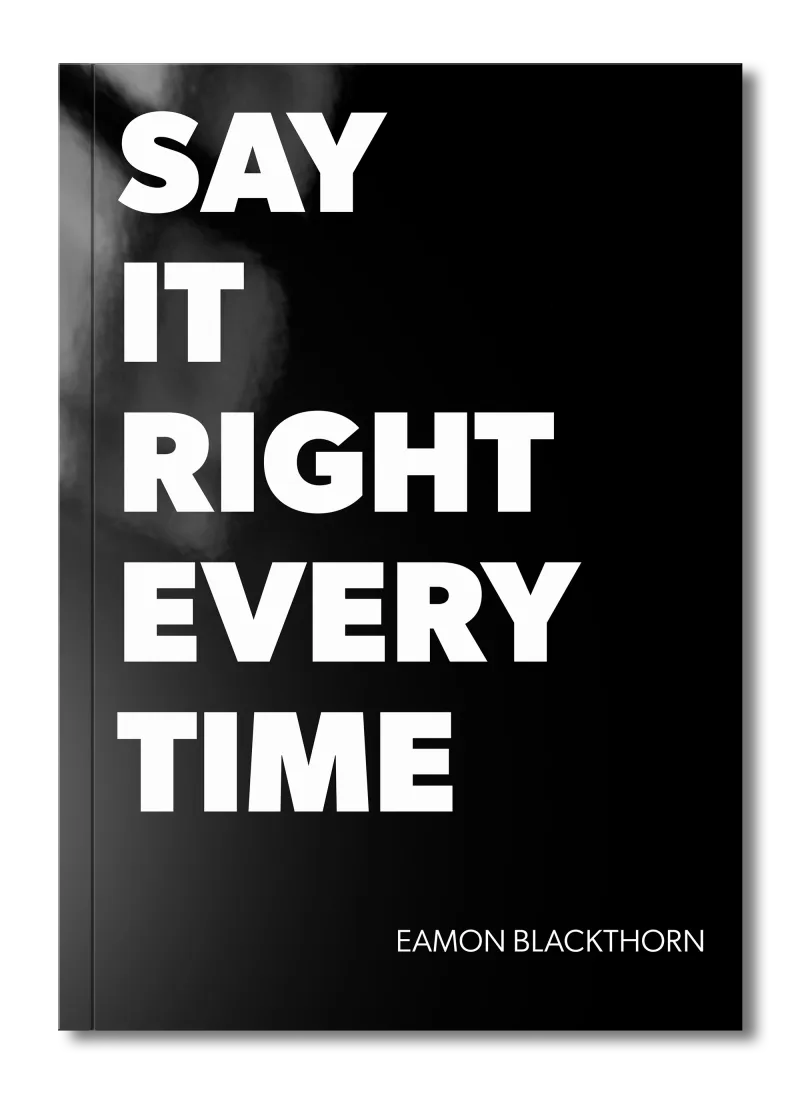
Stop rehearsing conversations you'll never have. Say It Right Every Time gives you 115 word-for-word scripts and 16 proven frameworks to speak with confidence in every conversation that matters.
Framework 1: SBAR for Cross-Functional Clarity
SBAR, which stands for Situation, Background, Assessment, and Recommendation, is a structured communication format originally developed in healthcare that transfers with remarkable effectiveness to any environment where clear information flow between teams is critical.
What it is designed for: SBAR is built for cross-functional communication, specifically when one team or individual needs to transfer complex information to another group who does not share their immediate context. It is the framework to reach for when alignment across departments is breaking down.
How it works:
Situation: State what is happening right now in one or two clear sentences. Do not bury the headline. Example: "We have a delivery conflict between the product team and the client services schedule for the end of the month."
Background: Provide the relevant context the other person needs to understand how you got here. Keep it tight. Example: "The original timeline was set before the client requested an accelerated rollout three weeks ago."
Assessment: Name your analysis of the problem. This is where you add judgment, not just facts. Example: "Without a priority decision by Thursday, both teams will proceed with conflicting plans and we will miss the client deadline."
Recommendation: State clearly what you believe should happen next. Example: "I recommend a fifteen-minute call with both team leads today to agree on sequencing."
When to use it: Use SBAR whenever you are escalating a cross-functional issue, briefing a leader who lacks your immediate context, or handing off a complex situation to another team. It is most valuable when the stakes are high and time is limited.
When not to use it: SBAR is the wrong tool for open-ended creative conversations or relationship-building discussions where rigid structure kills the energy you need.
A quick example in practice: A project coordinator emails a department head before a critical decision meeting. She writes: "Situation: The vendor has flagged a material delay. Background: This supplier was a late substitution after our original vendor withdrew in January. Assessment: If we do not identify an alternative by Friday, the Q3 launch is at risk. Recommendation: I would like thirty minutes today to walk through two alternatives I have already identified." Clear, direct, actionable.
Eamon's take: SBAR is the single most transferable communication tool I have seen move from one industry to another without losing any of its power. If your cross-functional communication is messy, start here.
Framework 2: The Shared Context Ritual
The Shared Context Ritual is a regular, structured team communication practice designed to ensure every member of a group is operating from the same current understanding of priorities, progress, and potential obstacles.
What it is designed for: This framework addresses one of the most common causes of team synergy breakdown in complex organizations: people working hard in parallel but drifting apart in their understanding of what matters most right now. It is especially powerful for distributed or hybrid teams.
How it works:
Current Reality Check: Each person or sub-team states, in two sentences maximum, what they are focused on right now. Example: "We are finalizing the onboarding documentation this week and expect to hand it off to the training team by Wednesday."
Priority Alignment Prompt: The team lead asks one question: "Has anything changed since we last met that would shift anyone's priorities?" This surfaces hidden conflicts before they become crises.
Dependency Declaration: Anyone who needs something from another team member to proceed names it explicitly. Example: "I cannot move forward on the client report until I have the usage figures from the analytics team."
Single Collective Focus: The group agrees on the one outcome that matters most this week for the team as a whole. This becomes the shared anchor for every individual decision made until the next ritual.
When to use it: Run this ritual at the start of every week, or at minimum at every key project milestone. It works best as a standing fifteen-minute commitment, not a flexible agenda item.
When not to use it: Do not use this as a substitute for deeper strategic alignment conversations. The Shared Context Ritual keeps the current picture clear; it is not the place to debate direction.
A quick example in practice: A product team of eight runs this ritual every Monday morning. Each person gives their two-sentence current reality. The lead asks the priority alignment question. Two dependency conflicts surface that would have caused delays by Thursday. They resolve both in six minutes. The meeting ends in fourteen minutes total.
Eamon's take: I have seen this ritual, used consistently for eight weeks, transform a team from a collection of individuals reporting to the same manager into a group that genuinely moves together. Consistency is everything.
Framework 3: The Accountability Anchor
The Accountability Anchor is a communication framework for naming individual ownership within a team clearly and without blame, so that every commitment made in a group setting has a named person, a defined deliverable, and a specific deadline attached to it.
What it is designed for: This framework directly addresses the accountability gap that forms when teams discuss plans but leave meetings without clear ownership. It is the primary tool for converting good team conversations into real collective momentum.
How it works:
Name the Owner: At the end of every discussion about a task or decision, one person is named as the owner. Not the team. Not the department. One person. Example: "Sarah, you are owning the client communication for this phase."
Define the Deliverable: State specifically what done looks like. Vague ownership produces vague results. Example: "That means a draft communication plan in the shared folder by end of day Thursday."
Set the Check-in Point: Agree on when and how progress will be visible to the team. Example: "Sarah will give a thirty-second update at Monday's ritual on where this stands."
When to use it: Use the Accountability Anchor at the close of every planning meeting, project kick-off, or problem-solving session where actions are agreed. Apply it any time a discussion ends with "we should" rather than "you will."
When not to use it: This framework is not appropriate for creative exploration or early ideation phases where assigning ownership too soon narrows thinking prematurely.
A quick example in practice: A team finishes a thirty-minute problem-solving session. The lead says: "Before we close, let us anchor this. Marcus, you own the revised timeline. Deliverable: an updated project plan shared by noon Friday. We will hear a sixty-second status at the Wednesday check-in. Does that work?" Marcus confirms. The room clears with clarity.
Eamon's take: The word "we" is the enemy of team accountability. Every time I hear a team say "we will handle it," I know that thing will not get handled. Name the person. Name the outcome. Name the date.
Framework 4: The Alignment Reset Conversation
The Alignment Reset Conversation is a structured one-to-one or small-group communication framework for rebuilding shared direction after a disruption, a conflict, or a period of drift, without rehashing blame or reopening old wounds.
What it is designed for: This framework is built for the moments after a team has lost its way: after a leadership change, a missed deadline, a significant conflict, or a strategic pivot. It repairs the relational and directional damage that erodes team synergy over time. The article on How to Sustain Team Synergy During Leadership Transitions and Restructuring covers the broader context where this framework is most urgently needed.
How it works:
Acknowledge the Gap: Open by naming, without drama, that alignment has slipped. Example: "I think we have been pulling in different directions for the last few weeks, and I want to fix that."
Establish Shared Ground: Ask one question: "What do we both agree is the most important outcome right now?" Start from common ground before addressing differences.
Name One Change Each: Each person names one specific communication behavior they will change to rebuild alignment. Keep it concrete, not aspirational. Example: "I will send a brief end-of-week update every Friday so you are never caught off guard by my progress."
Agree on a Review Point: Set a specific time to check in on whether the reset is holding. Example: "Let us revisit this in two weeks and see if things feel different."
When to use it: Use the Alignment Reset after any significant disruption to team cohesion. It works best when initiated early, before frustration hardens into resentment.
When not to use it: This is not the framework for addressing serious interpersonal conflict or misconduct. Those situations require a different process, and often a third party.
A quick example in practice: A team lead sits down with a peer manager whose team has been working at cross-purposes with hers for three weeks. She opens with the gap acknowledgment, asks the shared ground question, and they discover both teams are protecting the same project outcome. They each name one change. The conversation takes twenty-five minutes and resets two months of drift.
Eamon's take: Most teams wait far too long to have this conversation. The longer you wait, the harder the reset becomes. Call it early. The courage to name the drift is more valuable than any clever technique.
Framework 5: The Feedback Loop Anchor
The Feedback Loop Anchor is a structured communication framework for embedding regular, two-way feedback into the natural rhythm of team work, so that course corrections happen continuously rather than waiting for a formal review cycle. For more on how feedback shapes collective performance, the article on How to Give Feedback That Strengthens Team Synergy Instead of Breaking It goes deeper on the delivery side of this practice.
What it is designed for: This framework targets the feedback vacuum that forms in busy teams: everyone is too focused on delivery to pause for reflection, and problems compound quietly until they are expensive to fix. It is designed to make feedback a normal, low-stakes part of team life.
How it works:
The Weekly Signal: Each team member sends one sentence to the team lead each week: what is working and what is slowing them down. Example: "The new handoff process is saving me an hour. The approval bottleneck is still costing us two days per cycle."
The Collective Read: The team lead synthesizes the signals and shares one or two patterns with the group. No attribution. No blame. Example: "I am hearing that the approval process is the most common friction point this week. Let us spend five minutes on that."
The Micro-Adjustment: The team agrees on one small change based on the feedback. Small and immediate beats large and deferred. Example: "From this week, approvals for items under a certain threshold go through the team lead only, not the full chain."
When to use it: This framework works best in teams where pace is high and formal review cycles are infrequent. It is also valuable when you are trying to build the psychological safety that makes honest feedback feel safe.
When not to use it: Do not use this as a substitute for direct individual feedback on performance issues. The Feedback Loop Anchor surfaces systemic patterns; it is not designed to address individual conduct.
A quick example in practice: A team of twelve begins the weekly signal practice. In the third week, seven members mention the same coordination gap between the design and development sub-teams. The team lead names the pattern in Monday's ritual. The two sub-teams agree on a shared status format. The gap closes in ten days.
Eamon's take: The teams I have watched sustain genuine synergy over years all had one thing in common: feedback was never an event. It was a habit. Build the habit before you need it.
How to Choose the Right Team Synergy Strategy for Your Situation
Knowing the frameworks is only half the work. Knowing which one to reach for is the other half.
| Situation | Best Framework |
|---|---|
| Cross-functional information needs to transfer clearly and fast | SBAR |
| Team alignment is drifting due to pace or distributed working | Shared Context Ritual |
| Meetings end without clear ownership or follow-through | Accountability Anchor |
| Team cohesion has been disrupted by change or conflict | Alignment Reset Conversation |
| Feedback is missing from the team's regular rhythm | Feedback Loop Anchor |
| A strategic change is being communicated to the team | SBAR combined with Alignment Reset |
| A new leader is rebuilding trust with an existing team | Alignment Reset, then Shared Context Ritual |
When more than one framework seems to apply, look at the root cause. If the problem is primarily about information flow, start with SBAR or the Shared Context Ritual. If it is about relationships and trust, the Alignment Reset Conversation comes first. You can layer frameworks once the foundational issue is addressed, but do not combine them before you have clarity on what is actually broken.
When in doubt, start with the simplest framework. Complexity is not strength.
Common Mistakes When Using These Frameworks
Frameworks only work when you use them with discipline, not as a script you recite once and abandon.
Using SBAR as an email template rather than a thinking tool. The value of SBAR is in forcing clear thinking before communication, not in filling in four boxes. If you copy the format without doing the analysis, the output will be structured noise.
Running the Shared Context Ritual without protecting its time. The moment this ritual becomes optional or gets bumped for other priorities, it signals to the team that collective alignment is a nice-to-have. Protect the time fiercely or do not start the practice at all.
Applying the Accountability Anchor without following up. Naming an owner and a deadline creates an expectation. If you never check in on that expectation, you teach the team that accountability is performance, not reality.
Starting the Alignment Reset Conversation too late. This framework is most effective when the drift is recent. Used six months after the fracture, it can still help, but the repair takes significantly longer and requires more courage from both sides.
Treating the Feedback Loop Anchor as upward feedback only. The framework loses most of its power if it only flows from team members to the leader. Leaders must share what they are learning and adjust their own behavior in response. Reciprocity builds the trust that makes honest signals possible.
A framework used badly is still better than no framework. But a framework used well is a genuine advantage.
How to Start Using These Frameworks Today
Do not try to master all of these at once. That is how good tools end up unused.
Pick one framework and run it for three weeks. Choose the framework that addresses your most pressing team synergy challenge right now. Run it consistently for three weeks before evaluating. One framework practiced well beats five frameworks practiced poorly. The article on How to Use Daily Standup Meetings to Actively Build Team Synergy Over Time is a useful companion if you choose the Shared Context Ritual as your starting point.
Teach the framework to your team before you use it. Explain the purpose, walk through the components, and run a brief practice round before the real situation arrives. Teams that understand why a structure exists use it with far more precision than teams that simply follow instructions.
Review the framework's effectiveness at four weeks. Ask the team one question: "Is this making it easier or harder to work together?" Adjust based on what you hear, but do not discard a framework simply because it felt awkward at first. All new structures feel awkward before they feel natural.
Add a second framework only when the first is running on instinct. Coordination across strategic change communication and daily alignment requires multiple tools eventually. But fluency in one framework is worth more than surface familiarity with five.
Frameworks are tools. The more you use them, the less you have to think about them.
Key Takeaways
Here is what to carry with you from this article.
- Team synergy in complex organizations does not survive on goodwill alone. It needs structure built into the everyday rhythm of how people communicate.
- SBAR gives you a reliable format for cross-functional clarity when information needs to transfer cleanly under pressure.
- The Shared Context Ritual prevents the silent drift that happens when individuals work hard but in different directions.
- The Accountability Anchor converts team conversations into real commitments by naming one person, one deliverable, and one deadline.
- The Alignment Reset Conversation repairs collective direction after disruption, before drift hardens into distance.
- The Feedback Loop Anchor embeds continuous course correction into the team's rhythm, so problems surface early when they are still small.
If you are building these frameworks into a broader approach to team leadership, the articles on How Leaders Foster a Culture of Team Synergy and What Is Psychological Safety and How It Drives Team Synergy will give you the cultural foundation that makes every framework more effective.
Building team synergy is a practice, not a gift. These frameworks give you the tools. The rest is commitment.
Frequently Asked Questions (FAQ)
What are the best team synergy strategies for complex organizations?
The most effective team synergy strategies for complex organizations combine structured communication rituals, clear role accountability, and deliberate feedback loops. Frameworks like SBAR for cross-functional clarity and the Alignment Reset Conversation for repairing drift give teams a reliable system rather than relying on goodwill alone.
How do team synergy strategies differ in large versus small teams?
In small teams, synergy often builds naturally through proximity and frequent contact. In large or complex organizations, team synergy strategies must be deliberately designed into communication systems, meeting structures, and cross-functional handoffs, because organic connection rarely survives at scale without structural support.
Why do team synergy strategies break down under organizational pressure?
Team synergy strategies break down under pressure because people default to individual survival habits when clarity disappears. Competing priorities, poor information flow, and unclear accountability fracture collective momentum. Structured communication frameworks prevent this by giving people a shared system to return to when pressure strips away goodwill.
How often should you revisit your team synergy strategies?
Review your team synergy strategies at every major transition point: new leadership, restructuring, project pivots, or significant team composition changes. Outside of transitions, a quarterly check-in on how well your communication structures are serving collective alignment is enough to catch drift before it becomes a fracture.
Can team synergy strategies be applied across remote and hybrid teams?
Yes. The frameworks in this article work across remote and hybrid teams because they are built around communication structure, not physical proximity. Rituals like shared context-setting, regular alignment check-ins, and explicit feedback loops matter more, not less, when teams are distributed across locations and time zones.
What is the first team synergy strategy a new leader should implement?
Start with role clarity. Before any other team synergy strategy can take hold, every person on the team needs to know what they own, where their boundaries are, and how their work connects to everyone else. Without that foundation, even the best communication frameworks will struggle to produce real collective momentum.