
In Short
After reading this, you will know how to communicate a strategic change in a way that keeps your team's synergy intact rather than dismantling it.
- Prepare your message around the human impact, not just the operational detail.
- Give your team real space to respond before you move into action.
- Follow up consistently so trust is reinforced, not just announced.
Strategic change communication is the deliberate process of informing a team about significant organizational shifts while maintaining trust and collective momentum. Done well, it preserves team synergy by giving people the context, reassurance, and direction they need to stay aligned and effective together.
Introduction
The manager sent an email on a Friday afternoon. One paragraph. A new reporting structure, a shifted strategy, three roles quietly reshaped. By Monday, the team that had functioned like a well-oiled machine was fractured. Two people were quietly looking for other jobs. The rest were guessing, whispering, and second-guessing every decision they made.
I have watched this happen more times than I can count. The problem is rarely that the change itself was wrong. The problem is that strategic change communication was treated as an announcement rather than a process. People do not resist change as much as they resist confusion, exclusion, and the feeling that nobody thought about how this would land on them.
The deeper reason this goes wrong is structural. Most leaders know the change well before the team does, and they forget what it felt like to hear it for the first time. They have already processed the anxiety. Their team has not.
In this guide, you will get a clear, practical process for communicating strategic change in a way that preserves your team's synergy rather than dismantling it. If you are working to rebuild cohesion after a change has already been handled poorly, the article How to Rebuild Team Synergy After Conflict or Organizational Change is a strong companion to this one.
"The Conversation You're Avoiding Is the One You Need to Have."
"The Conversation You're Avoiding
Is the One You Need to Have."
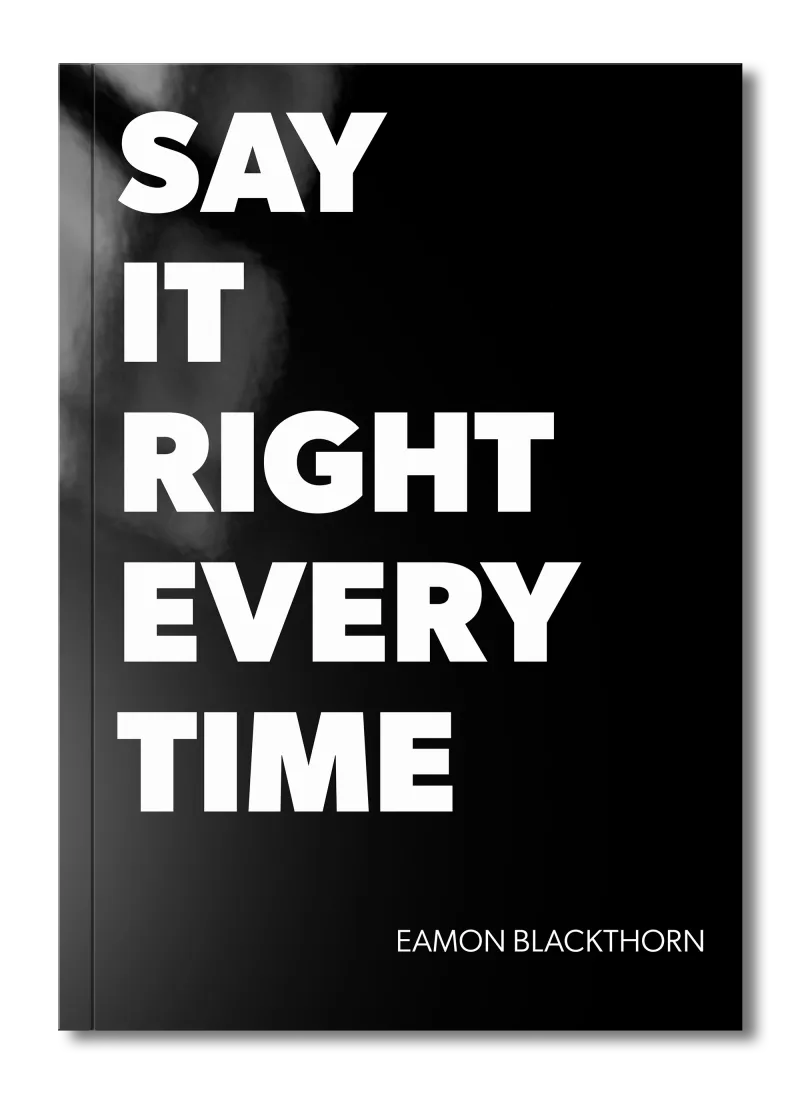
Stop rehearsing conversations you'll never have. Say It Right Every Time gives you 115 word-for-word scripts and 16 proven frameworks to speak with confidence in every conversation that matters.
Why Preserving Team Synergy During Change Is Harder Than It Looks
You know that how you communicate a change matters. Knowing that and actually doing it well under pressure are two very different things.
Here is what I have observed getting in the way, time and again:
You are close to the decision. You have spent weeks thinking through this change, so it feels settled and rational to you. Your team is hearing it fresh, and their emotional response to it will feel disproportionate if you are not prepared for it. That gap in processing time creates friction almost every time.
There is pressure to move fast. Organisations do not often give leaders the luxury of a slow, careful rollout. You are told to communicate the change and get people moving, which pushes you toward announcement mode instead of genuine conversation.
You do not know exactly what to say. The change may still be partially undefined, which makes transparent communication feel risky. So you say less than you should, and the silence fills with speculation.
Protecting team synergy feels secondary. When there is a big operational change to manage, the relational fabric of the team can feel like a soft concern. It is not. It is the engine that makes execution possible.
Resistance feels personal. When people push back on a change you believe in, it is hard not to read that as a challenge to your leadership rather than a natural human response to uncertainty.
The goal is not to eliminate these difficulties. It is to build a system that works in spite of them.
The Foundation: What You Need Before You Start
Before you begin, there are three things that need to be clear.
Your core message. Know the one thing you most need your team to understand after this conversation. Not the ten things. The one thing. Everything else supports that central point. If you cannot state your core message in two sentences, you are not ready to communicate the change yet.
The human impact. Before you speak, think through what this change means for each person on your team: their role, their relationships, their daily work, their sense of security. You do not need to have every answer ready, but you must have thought about their experience specifically. A change communicated without acknowledgment of its personal impact will feel cold, and cold communication breaks team synergy faster than almost anything else.
Your willingness to listen. If you are walking into this conversation with the sole goal of delivering information and getting agreement, you are not ready. Real strategic change communication requires that you leave genuine space for your team's response, including responses you did not want to hear.
Get these right first. The steps that follow will not work without them.
Step 1: Prepare Your Message Around the Why, Not Just the What
This step determines whether your team hears a decision or understands a direction.
Most leaders spend their preparation time on the details of the change itself: what is shifting, who it affects, when it takes effect. That is necessary, but it is not sufficient. What your team needs first is the reasoning. They need to understand the context that made this change necessary, because context converts a surprise into something they can make sense of.
Here is how to prepare:
- Write out the single most important reason this change is happening, in plain language.
- Identify what stays the same. Change feels less destabilising when people can see what is not moving.
- Anticipate the three questions your team is most likely to ask, and prepare honest answers.
- Prepare a brief acknowledgment of what this change asks of people, stated in your own words.
- Decide what you genuinely do not know yet, and be ready to name that directly.
Example: A team leader needs to communicate a restructuring that merges two working groups. Instead of opening with the new org chart, she opens with this: "We have been carrying two separate teams doing work that overlaps significantly. That structure was costing us speed and creating confusion for clients. This change is designed to fix that, and I want to walk you through the thinking and then hear your questions."
That opening earns the right to share the details. How to Start a Difficult Conversation That's Blocking Your Team's Synergy covers this kind of opening in much more depth.
When you have prepared around the why, your team receives the news as participants in a story rather than subjects of a decree.
Step 2: Choose the Right Setting and Format
This step is about respecting the weight of what you are communicating.
A significant change communicated over email or a Slack message signals that the change is primarily administrative. It is not. It is personal, relational, and consequential. The format you choose signals how seriously you take the human dimension of what you are announcing.
Here is what to consider:
- For major changes, always communicate in person or by live video first, before any written follow-up.
- Gather your team together rather than staggering individual conversations, so no one hears it second-hand from a colleague.
- Block enough time for the conversation to breathe: a minimum of 45 minutes, more if the change is complex.
- Remove competing distractions: close the door, silence notifications, and signal through your physical presence that this matters.
The written follow-up matters too. After the live conversation, send a clear written summary within 24 hours that captures what was communicated, what was heard, and what happens next. This gives people something to return to when they are processing the change later.
When the format matches the significance of the message, you protect the team's sense of being valued. That sense of value is core to maintaining team synergy through disruption.
Step 3: Deliver the Message with Clarity and Humanity
This is the moment most leaders either earn or lose the trust their team has placed in them.
Deliver your message in the order your team needs to receive it: reason first, then the decision, then the practical details, then the acknowledgment of impact. That sequence matters. Most leaders reverse it, leading with logistics when their team is still emotionally processing the news.
Follow this sequence in delivery:
- State the reason for the change in two to three clear sentences.
- Describe the change itself, specifically and without softening it into vagueness.
- Walk through the practical implications: roles, timelines, processes.
- Acknowledge directly what this asks of the people in the room.
- Tell your team what you know, and name clearly what you do not know yet.
Script example: "I want to be direct with you. We are restructuring our client delivery model, which means two of our current project teams will merge into one under a single lead. This takes effect in four weeks. I know this changes how some of you have been working, and I imagine some of you have immediate questions about your roles. I will answer everything I can right now, and I will be honest about what is still being decided."
That kind of delivery is straightforward, specific, and human. It does not oversell the change or hedge it into meaninglessness.
I cover the mechanics of this kind of high-clarity message delivery in depth in Say It Right Every Time, including the C.O.R.E. Framework, which builds every message around Clarity, Openness, Respect, and Empathy. For a change conversation, those four elements are not optional.
When the delivery is clear and human, people can begin to process the change rather than spending their energy decoding what you actually meant.
Step 4: Create Real Space for Your Team to Respond
This step is where team synergy is either protected or broken.
Most leaders treat the Q&A portion of a change announcement as a formality: a brief window to handle objections before moving to implementation. That framing is a mistake. The response phase is where your team decides whether they trust you and whether they feel included in what comes next.
Here is how to do this properly:
- After delivering your message, stop talking and wait. Silence after significant news is normal and should not be rushed.
- Ask an open question: "What is your first reaction to this?" rather than "Any questions?"
- Respond to concerns without defending the decision. Acknowledge what you hear before explaining.
- If someone raises a problem you had not considered, say so clearly: "That is a real concern and I had not fully thought about that angle."
- Do not push for resolution in this first conversation. Your goal is understanding, not closure.
Learning to give feedback that invites genuine response is closely related to this skill. The principles in How to Give Feedback That Strengthens Team Synergy Instead of Breaking It apply directly here.
When your team feels genuinely heard during a change announcement, their resistance drops and their engagement rises. That shift is not cosmetic. It is the difference between a team that tolerates a change and a team that owns it.
Step 5: Address Role Clarity Before People Have to Ask
Uncertainty about roles is the most common reason strategic change fractures team synergy.
When a change lands, people immediately ask themselves: what does this mean for me specifically? If they cannot answer that question from what you have told them, they will fill the silence with worry, comparison, and sometimes resentment. Clear role expectations are not a bureaucratic detail; they are a basic act of respect toward the people you lead.
Here is how to address this:
- Before the change is announced, map out how each person's role is affected, even if the answer is "nothing changes for you."
- Communicate role implications individually as well as collectively. Group announcements are necessary but not sufficient.
- Use a specific framework when you discuss roles: what the person is responsible for, what authority they carry, and what success looks like in the new structure.
- Invite each person to tell you where they feel unclear, and respond to that directly.
- Confirm role expectations in writing after the conversation so there is no ambiguity later.
Example: A manager communicating a new product strategy holds a team meeting to announce the change, then schedules a 20-minute individual conversation with each team member in the following two days. In each conversation, she walks through specifically what has changed and what has not changed in that person's work. Three people had assumed their roles were being reduced. None of them were. That assumption, left unaddressed, would have quietly damaged morale for weeks.
For a deeper look at this, How to Communicate Role Expectations Clearly to Prevent Synergy-Breaking Confusion and What Is Role Clarity and Why It Is the Foundation of Sustainable Team Synergy are worth reading before you hold those individual conversations.
When people know where they stand, they can commit rather than speculate.
Step 6: Follow Up With Consistency, Not Just Good Intentions
One good conversation does not sustain a team through a significant change. Consistency does.
After the initial communication, most leaders move into implementation mode and assume the communication work is done. It is not. Your team is processing a change in real time, and that processing will surface new questions, new anxieties, and new points of resistance over the following weeks. If you are not present and responsive during that period, trust erodes quietly.
Here is how to build consistency into the follow-up:
- Schedule a check-in conversation one week after the initial announcement: not to report progress, but to hear how people are experiencing the change.
- Name what you are observing: "I notice the energy in the team has been a bit flat this week. I want to hear what is underneath that."
- Update your team on any developments in what was previously unknown. Do not wait for people to ask.
- Hold your commitments from the initial conversation visibly. If you said you would have an answer by Thursday, have it by Thursday.
Consistency in follow-up is also how you convert the How to Use the G.R.O.W. Method to Turn Team Feedback Into a Synergy Improvement Plan from a concept into a real tool. The feedback your team gives you in those follow-up conversations is the raw material for improving how the change lands.
When your follow-up is consistent, people learn that what you say in a change conversation actually holds. That is how trust compounds over time.
Step 7: Reconnect the Team to Its Shared Purpose
After a change, your team needs to remember why they function well together.
Strategic change often disrupts the shared story a team has been living inside. New structure, new focus, new pressure: these can make a team feel less like a unit and more like a collection of individuals navigating different concerns. Your job as the communicator of this change is to remind people what has not changed, and what makes this team worth staying in.
Here is how to do this:
- In a team conversation after the change has settled for a week or two, explicitly name what this team does well together.
- Connect the change to the team's shared purpose: explain how this shift serves the work they all care about.
- Celebrate early evidence of the team adapting well, specifically and genuinely, not with empty praise.
- If relationships have been strained by the change, address that directly rather than hoping it resolves on its own.
If tensions between individuals have surfaced during the change period, How to Mediate Between Two Team Members to Preserve Group Synergy gives you a clear method for handling those conversations without letting them compound.
When your team reconnects to its shared purpose, the change stops being something that happened to them and starts being something they are navigating together. That shift is the heart of sustained team synergy.
Adapting This Process for Remote and Hybrid Teams
Remote and hybrid teams require specific adjustments when communicating strategic change, because the informal channels that usually soften difficult news, corridor conversations, shared lunch, the visible reassurance of a leader's presence, are simply not available.
Prioritise live video over all other formats. When your team cannot be in the same room, a video call is the closest equivalent. Do not communicate a significant change over email or chat first. The absence of facial expressions and tone in written communication amplifies anxiety. Schedule a live session before anything goes into writing.
Check in individually before the group announcement if possible. In a physical office, people often absorb informal signals before a formal announcement. In remote settings, those signals do not exist. A brief individual call to your most influential team members before the group session gives them time to process, and their steadiness during the group conversation will be visible to everyone else.
Build in asynchronous response options. Some people process change slowly and will not be ready to respond in the moment. After your live session, open a structured channel for written questions and commit to responding to every one within 48 hours. This is not about managing dissent; it is about respecting different processing styles.
Be more explicit about role clarity in writing. Remote team members cannot read a room or ask a quick clarifying question by the coffee machine. Written role clarity, distributed promptly after any live conversation, is not optional in a distributed team.
The core process holds for every team. Only the execution changes.
Common Mistakes to Avoid
Let me tell you about the mistakes I see most often. I have made most of them myself.
The mistake: Announcing the change before the message is fully prepared.
Why it happens: Pressure from above to communicate quickly pushes leaders into rushing the first conversation.
What to do instead: Take 24 hours to prepare your core message properly. A delayed but clear conversation does less damage than an immediate but muddled one.
The mistake: Softening the change so much it becomes confusing.
Why it happens: Leaders want to reduce anxiety, so they hedge language and avoid naming difficult realities directly.
What to do instead: Be direct about what is changing. Vague reassurance creates more fear than honest clarity.
The mistake: Treating the first conversation as the last.
Why it happens: Leaders assume that once the announcement is made, the communication work is done.
What to do instead: Schedule follow-up conversations in advance, before the initial announcement, so consistency is built into the plan.
The mistake: Defending the decision when the team pushes back.
Why it happens: Resistance feels like a challenge, and the instinct is to justify the choice.
What to do instead: Acknowledge what you hear before you explain. Resistance that is listened to rarely escalates; resistance that is dismissed almost always does.
The mistake: Neglecting individual role conversations in favour of group announcements only.
Why it happens: Individual conversations take time, and group announcements feel more efficient.
What to do instead: Hold brief, specific individual check-ins within 48 hours of the group session. Role uncertainty is the fastest way to break team synergy.
These are not character flaws. They are gaps in the system. Fix the system.
Your Practical Checklist
Use this checklist before you begin and after each cycle.
- I have identified the single most important message I need my team to understand.
- I have thought through the personal impact of this change on each team member.
- I have prepared honest answers to the three most likely questions.
- I have named clearly what I do not know yet and am ready to say so.
- I have chosen a live format, in person or video, for the initial announcement.
- I have blocked enough time for genuine conversation, not just delivery.
- I have prepared a written follow-up to send within 24 hours.
- I have planned individual conversations about role implications within 48 hours.
- I have scheduled a one-week check-in after the initial announcement.
- I have identified how I will reconnect the team to its shared purpose after the change settles.
If you cannot check most of these, that is your starting point.
Summary and Next Steps
You now have a clear, practical process for communicating strategic change in a way that preserves rather than dismantles your team's collective strength. That is something most leaders are never explicitly taught.
- Prepare your message around the why before you think about the what.
- Choose a format that matches the weight of what you are communicating.
- Deliver in the right sequence: reason, decision, detail, acknowledgment.
- Create genuine space for your team to respond, and listen without defending.
- Address role clarity individually, not just in the group session.
- Follow up with consistency, not just good intentions.
- Reconnect your team to its shared purpose once the dust settles.
For your next steps: if you are concerned about an existing conflict that has surfaced during a change process, How to Mediate Between Two Team Members to Preserve Group Synergy gives you a clear method for those conversations. If you want to turn the feedback you gather in follow-up sessions into a real improvement plan, How to Use the G.R.O.W. Method to Turn Team Feedback Into a Synergy Improvement Plan will show you exactly how. For the complete communication toolkit, including word-for-word scripts for high-stakes leadership conversations, Say It Right Every Time is the resource I return to and recommend without reservation.
Building team synergy through change is a test of your courage as a communicator. Meet that test and your team will follow you anywhere.
Frequently Asked Questions (FAQ)
What is strategic change communication?
Strategic change communication is the deliberate process of informing a team about significant organizational shifts in a way that maintains trust, clarity, and collective momentum. Done well, it preserves team synergy by giving people the context, reassurance, and direction they need to move forward together.
How do you communicate a strategic change without losing team synergy?
Communicate strategic change by preparing your core message before speaking, addressing the human impact directly, giving your team space to respond, and following up consistently. The key is treating your team as partners in the change, not as recipients of an announcement.
Why does poor strategic change communication break team synergy?
Poor strategic change communication creates uncertainty, rumour, and a sense of exclusion. When people do not understand why a change is happening or what it means for them personally, trust erodes quickly. That erosion fractures the shared rhythm and mutual reliance that team synergy depends on.
How long should a strategic change communication process take?
There is no fixed timeline, but the process should never be a single event. Effective strategic change communication spans multiple conversations over days or weeks. The initial announcement is just the opening. The follow-up conversations and consistent updates are where team synergy is either preserved or lost.
What should you say first when communicating a strategic change to your team?
Start with the reason, not the decision. Explain the context and the thinking behind the change before you describe what is changing. People accept difficult news far more readily when they understand the reasoning, and this approach protects the trust that keeps team synergy intact.
How do you handle resistance during strategic change communication?
Treat resistance as information, not obstruction. When someone pushes back, ask what concerns them specifically and listen without rushing to defend the decision. Resistance handled with genuine curiosity almost always reduces within one or two conversations and often surfaces real problems worth solving.