
In Short
Eye contact behavior carries emotional information that words routinely conceal. A flicker of gaze aversion, a sudden stillness in the eyes, or a shift in blink rate can signal fear, contempt, or relief long before the mouth catches up.
- Micro-expressions leak through the eyes faster than conscious thought can suppress them.
- The cost of missing these signals is real: misread trust, escalated tension, broken rapport.
- You can learn to read eye behavior accurately, but only by watching real situations, not by memorising rules.
Eye contact behavior is the pattern of gaze, blink rate, eye movement, and ocular response that occurs during human interaction. These signals transmit emotional data in fractions of a second, often revealing a person's true state before their words or deliberate body language have time to follow.
Why Examples Teach What Rules Cannot
I once watched a senior manager lose the trust of her entire team in a single meeting. Not through anything she said. Through the way her eyes went flat the moment a junior colleague spoke. She did not storm out. She did not raise her voice. Her eyes simply stopped engaging. The room felt it before anyone could name it.
That is why I want to give you examples, not principles. You can read every definition of eye contact behavior ever written and still miss the signal when it appears in front of you. You have to see it in context: who is involved, what is at stake, what the eyes actually did, and what it cost when no one noticed.
Before you read these scenarios, I want you to watch for three things. First, notice the change, not the state. One moment of gaze aversion tells you very little. A sudden shift from sustained eye contact to avoidance tells you something important has just happened. Second, watch the area around the eye, not just the direction of the gaze. Tension in the brow, a slight widening, a rapid blink. Third, match what you see in the eyes against what you hear in the words. When those two things conflict, trust the eyes.
"The Conversation You're Avoiding Is the One You Need to Have."
"The Conversation You're Avoiding
Is the One You Need to Have."
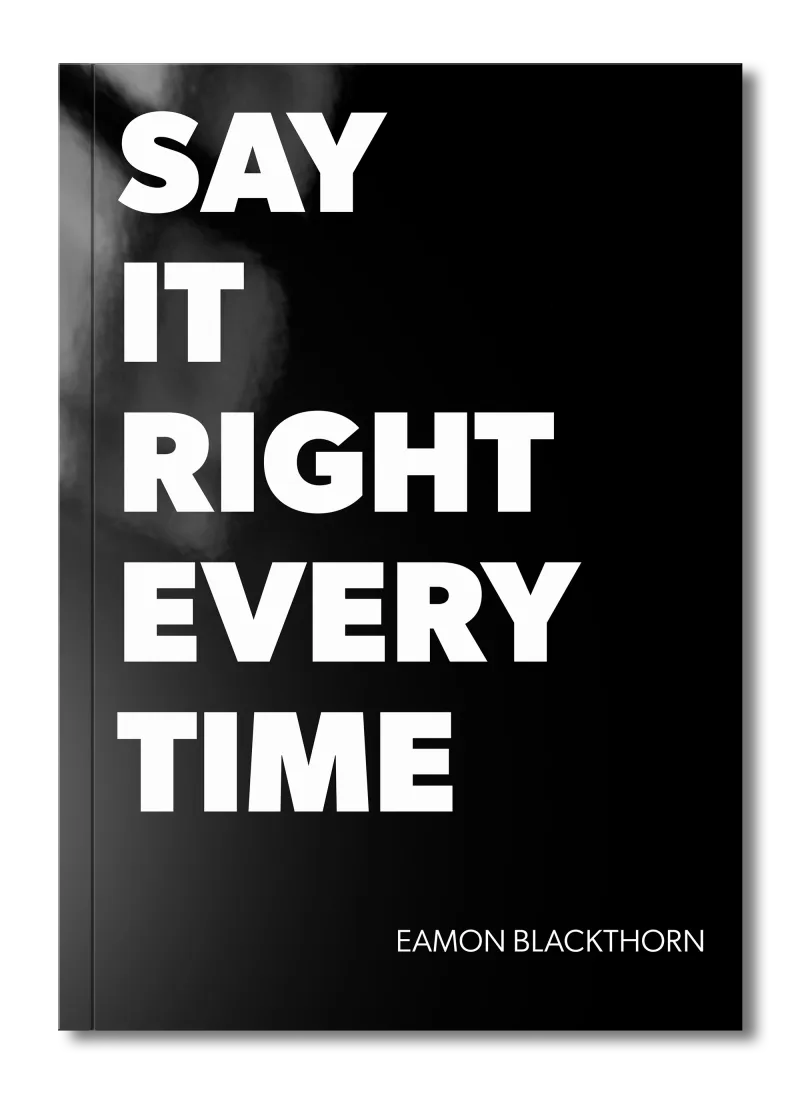
Stop rehearsing conversations you'll never have. Say It Right Every Time gives you 115 word-for-word scripts and 16 proven frameworks to speak with confidence in every conversation that matters.
Five Scenarios Where Eye Behavior Told the Real Story
Example 1: The Project Manager Who Did Not Know He Had Lost the Room
A project manager was presenting a revised timeline to his team of six. He was confident, practiced, articulate. He moved through his slides without hesitation. What he did not notice was the moment, roughly four minutes in, when two of his team members exchanged a single sidelong glance.
It lasted less than a second. Their eyes met, held, and then both looked back at him with perfectly composed expressions. No one said a word. The manager continued presenting.
That glance was a micro-expression shared between two people who had already decided they did not believe the revised timeline was achievable. The sideways flicker of mutual gaze, quick and closed, is one of the clearest signals of shared skepticism in a group setting. When you see it, the room has already had a conversation without you.
He found out six weeks later when the project fell apart and both team members said they had known from the beginning. He had all the information he needed in that one second. He simply was not watching for it.
Example 2: The New Hire Who Was Telling the Truth
A new hire was called into a one-to-one meeting after a client had complained about a misunderstanding in an email. The team lead sat across from her and watched her carefully as she explained what had happened.
She did not avoid eye contact. In fact, she held it steadily, but with something the team lead later described as an open quality, a slight widening of the eyes that comes from genuine confusion rather than performance. Her blink rate was normal. There was no lateral eye movement, no upward gaze to the left, none of the signals that tend to accompany fabricated recall.
What there was, briefly, was a single flash of hurt. A tightening around the eyes, gone within a fraction of a second, when the team lead mentioned the client's name.
The team lead trusted her. He was right to. The client had misread the email. That flash of hurt was emotional leakage, real and involuntary, from someone who had done her best and felt wrongly accused. It passed too quickly to be manufactured. This is the value of reading nonverbal communication in tense situations: the signal that clears someone is just as important as the signal that raises doubt.
Example 3: The Team That Went Quiet
A department director held a quarterly review and opened the floor for honest feedback. He asked directly: "Are there any concerns about how decisions have been made this quarter?"
Silence. And then, one by one, the people around the table dropped their gaze. Not quickly. Not guiltily. Slowly, deliberately, like stones settling to the bottom of a river.
This was not evasion. This was protection. When a group collectively avoids eye contact with the person in authority, it is rarely because they have nothing to say. It is because they have calculated, consciously or not, that speaking is not safe. The sustained downward gaze is a social signal: we are withdrawing. We are not with you right now.
The director read it as agreement. He wrapped up the meeting, thanked everyone, and left. Three of those people submitted resignation letters in the following month. He had watched them tell him everything with their eyes and heard nothing.
This is the cost of missing eye contact behavior at its most direct: a room full of people showing you the problem while saying nothing at all.
Example 4: The Negotiation That Shifted on a Blink
Two department heads were negotiating budget allocation. They had been circling the same number for twenty minutes. Then one of them, almost casually, named a figure ten percent lower than anything discussed before.
The other department head's eyes widened briefly, pupils dilating in a response she could not have controlled if she had tried. It lasted perhaps a quarter of a second. Then her expression settled back into neutral.
But the first department head had been watching. He did not press immediately. He waited, let the number sit in the air, and then said: "I think that figure gives us both room to work." She agreed.
Pupil dilation in response to an unexpected offer is an involuntary signal of heightened engagement, sometimes surprise, sometimes genuine interest, sometimes both. You cannot fake it and you cannot reliably suppress it. The man who saw it had not read it as weakness. He had read it as an opening. He responded with patience rather than pressure, which is exactly the right move when someone's eyes tell you the door is ajar. Staying grounded in that kind of charged moment is something I describe in more detail through the C.O.R.E. Framework.
Example 5: The Manager Who Made It Worse
A team member came to her manager to raise a concern about workload. She was visibly stressed: she spoke quickly, her hands were tense, but her eyes were direct. She was making real eye contact, the kind that takes courage when you are already exhausted.
Her manager listened. Or appeared to. His body was turned toward her. But his eyes moved, repeatedly and briefly, to his computer screen, to his phone on the desk, to the window behind her. Each glance lasted only a moment. He was not being rude deliberately. He was distracted.
What she experienced was something closer to invisible. Each flicker of his gaze away from hers told her, at a level beneath language, that she was not the priority. Her sentences became shorter. Her eye contact, which had started as brave and direct, gradually fell away. She left the conversation without saying half of what she had come to say.
The cost here was not dramatic. No one stormed out. But she stopped bringing problems to him after that. She managed her stress alone until it affected her output. Then it became a formal performance issue, which is a familiar and preventable arc.
When someone offers you direct eye contact during a difficult conversation, they are offering you something real. Breaking that contact repeatedly communicates exactly the wrong thing, no matter how carefully you choose your words. Understanding how this connects to the amygdala hijack explains why her nervous system read his distraction as a threat signal long before her conscious mind named it.
What Repeats Across These Situations
Three genuine patterns emerge from these five scenarios, and they are worth naming plainly.
First, the signal almost always precedes the outcome. The skeptical glance came before the project collapsed. The collective gaze drop came before the resignations. The pupil response came before the agreement. Eye behavior does not merely reflect what has already happened; it predicts what is about to. If you can read it in time, you can respond.
Second, the absence of eye contact is as informative as its presence. The room that went quiet, the team member who stopped offering her gaze, the manager whose eyes drifted: all of these are active communications. The instinct to look away is not emptiness. It is information, and it deserves the same careful attention as anything said aloud. Pairing this kind of observation with the 3-second pause gives you the space to actually act on what you see.
Third, context determines meaning. There is no universal dictionary of eye behavior. A new hire avoiding your gaze may be anxious, not dishonest. A colleague who holds eye contact unflinchingly may be performing confidence, not demonstrating it. The examples above work because they show eye behavior changing within a specific situation, not because any single eye movement carries a fixed meaning. You are always reading a pattern, never a single moment.
What You Can Do With This Starting Tomorrow
Reading eye contact behavior is a practice, not a gift. You build it through deliberate, patient attention over time. Here is where to begin.
In your next one-to-one, resist the urge to prepare your next sentence while the other person is speaking. Instead, watch their eyes. Notice the blink rate. Notice whether they maintain contact or shift away, and if they shift, notice what you just said when it happened. Use that as data, not as judgment.
In group settings, watch for the sideways glance between two people. When it appears, take note of the topic being discussed at that exact moment. That glance is rarely random. Applying the S.B.I. Method in your follow-up conversations can help you address what the eyes revealed before it hardens into a larger problem.
When you are the one speaking, offer your eye contact with care. Not as a fixed stare, which creates pressure, but as a signal of presence. Three to five seconds of genuine engagement, then a natural break, then back. That rhythm communicates respect and strength simultaneously.
Above all, remember that eye contact behavior is a channel, not a verdict. Use what you observe to ask better questions, not to reach private conclusions. The most skilled readers I have known across six decades of practice were not the ones who claimed to know what every look meant. They were the ones who let what they saw make them more curious, not more certain.
Strong daily habits, built around that kind of attentiveness, are exactly how small communication changes prevent tension from becoming chronic over months and years. You can also bring this awareness directly into addressing tension-causing behavior with the S.B.I. Method, using what you observed in someone's eyes to ground your feedback in what actually happened, not what you assumed.
Here is the truth of it: the eyes speak first, fastest, and most honestly. Earn the skill to read eye contact behavior with patience and humility, and the people around you will feel understood before you have said a single word.
Frequently Asked Questions (FAQ)
What is eye contact behavior in communication?
Eye contact behavior refers to the patterns of gaze, blink rate, eye movement, and ocular response that occur during human interaction. These signals often reveal emotional states before words do, making them one of the most reliable channels of nonverbal communication available to an attentive observer.
How do you read micro-expressions through eye contact?
You read micro-expressions through eye contact by watching for brief flickers of gaze aversion, sudden pupil dilation, rapid blinking, or tension around the eye socket. These signals last a fraction of a second. The key is to slow your own internal pace and observe rather than anticipate.
What does avoiding eye contact signal in a workplace conversation?
Avoiding eye contact in a workplace conversation can signal fear, shame, discomfort, or active disengagement. Context matters enormously. A new hire who avoids your gaze may be nervous, while a senior colleague who suddenly stops meeting your eyes during a specific question deserves closer attention.
Can eye contact behavior reveal when someone is lying?
Eye contact behavior can reveal discomfort around a topic, but it does not reliably confirm lying. People who lie sometimes hold eye contact deliberately to appear confident. The more useful signal is a sudden change in a person's usual eye contact pattern, not any single fixed behaviour.
How long should eye contact last in a professional conversation?
In most professional conversations, comfortable eye contact lasts three to five seconds before a natural break. Holding a gaze longer than seven seconds without a break tends to feel confrontational. Shorter than two seconds consistently can read as evasive. The rhythm matters more than any precise duration.
What is the difference between a micro-expression and a sustained emotional display?
A micro-expression flashes across the face in under a quarter of a second and is often involuntary. A sustained emotional display lasts several seconds and is frequently managed or performed. Eye behavior is where micro-expressions most often leak, because people rarely think to control their gaze as carefully as their words.