
In Short
Eye contact mediation is one of the most powerful tools you have in a conflict conversation, and most people use it carelessly. Your gaze tells each person whether you see them, whether you are neutral, and whether you are in control.
- Look at whoever is speaking, not at whoever you find easier to read.
- Shift your gaze deliberately, not reactively, when someone finishes talking.
- Balance your visual attention across both parties or your neutrality is gone before you have spoken a word.
Eye contact mediation is the deliberate management of where and when a mediator directs their gaze during a conflict between two people. It governs perceived neutrality, builds trust with each party individually, and shapes the emotional temperature of the room through nonverbal signals alone, across the full arc of the conversation.
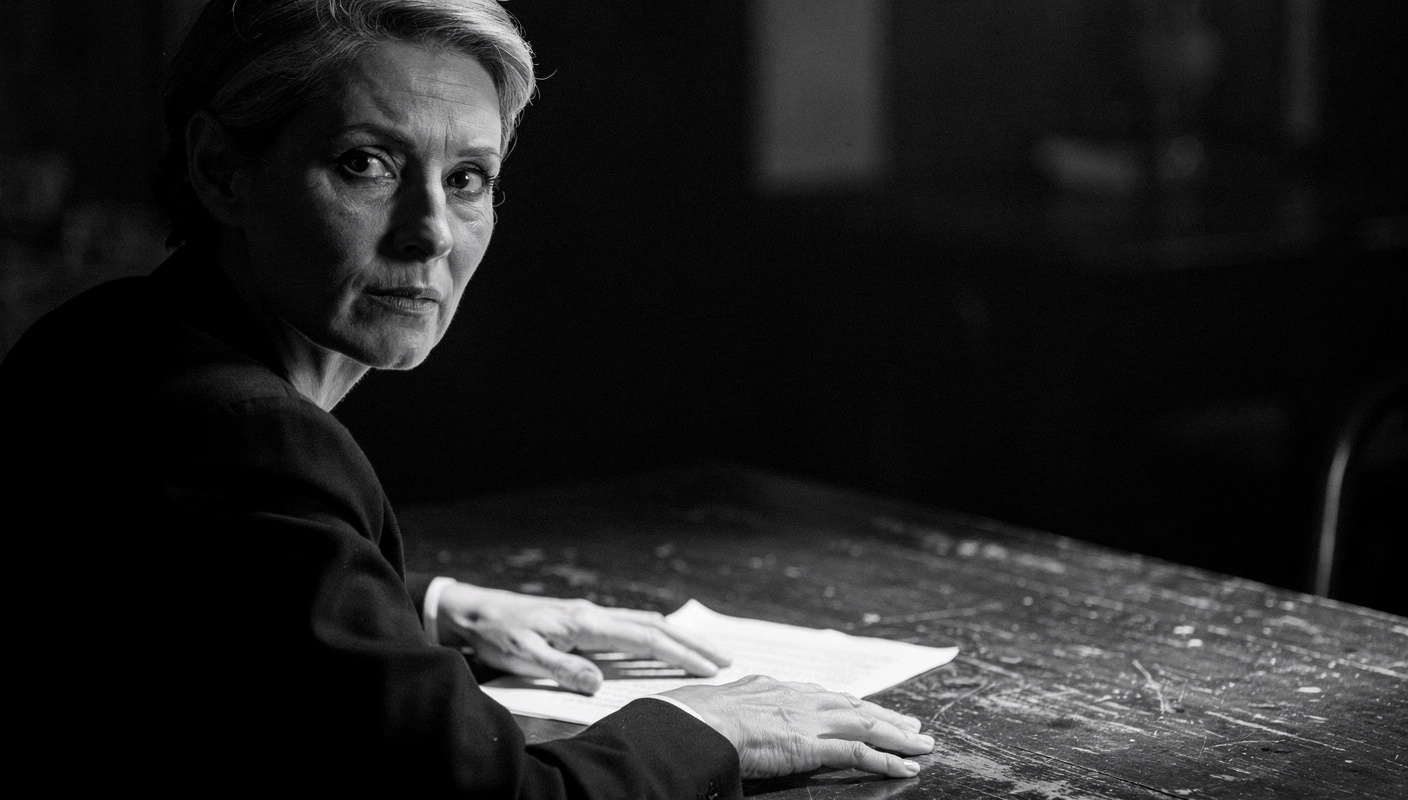
I watched a talented manager destroy a mediation session in the first three minutes. She had prepared well. She knew the issue, she understood both people, and she had a clear process in mind. But the moment the conversation started, she kept looking at the person she found more reasonable. Every time the other person spoke, her eyes drifted sideways, or dropped to her notes. The second person noticed. Of course he did. By the time she tried to redirect the conversation, he had already decided she was not on his side. The mediation failed, not because of poor planning, not because of bad questions, but because of where her eyes went.
Eye contact mediation is harder than it sounds precisely because it is unconscious. You look at people you trust, at people who make sense, at people who are calm. In a conflict, those instincts will betray you every time. This article gives you a clear sequence to follow, a set of concrete adjustments for difficult conditions, and a checklist you can use before you walk into any mediation conversation.
Why Your Eyes Do More Damage Than Your Words in Conflict Settings
When two people are in conflict, their nervous systems are already primed for threat. They are watching for signals that confirm their fear: that the mediator has already taken a side. Your words can be perfectly neutral. Your gaze rarely is, unless you actively manage it.
The person who receives less of your attention does not simply feel overlooked. They feel implicitly judged. That feeling triggers defensiveness, and a defensive person stops listening and starts protecting. Once that happens, no process on earth brings them back easily.
Here is the truth of it: in a tense room, your eyes are the most read signal in the space. People watch where a mediator looks the way they watch a compass. It tells them where the weight is. This is why learning to distribute your visual attention precisely, not approximately, is the foundational skill of conflict mediation.
For more on reading and managing the broader nonverbal landscape in high-tension moments, see Nonverbal Communication in Tense Situations.
"The Conversation You're Avoiding Is the One You Need to Have."
"The Conversation You're Avoiding
Is the One You Need to Have."
Stop rehearsing conversations you'll never have. Say It Right Every Time gives you 115 word-for-word scripts and 16 proven frameworks to speak with confidence in every conversation that matters.
What You Need to Settle Before the Session Begins
Before you sit down with two people in conflict, two things must be true. If they are not, your gaze patterns will not save you.
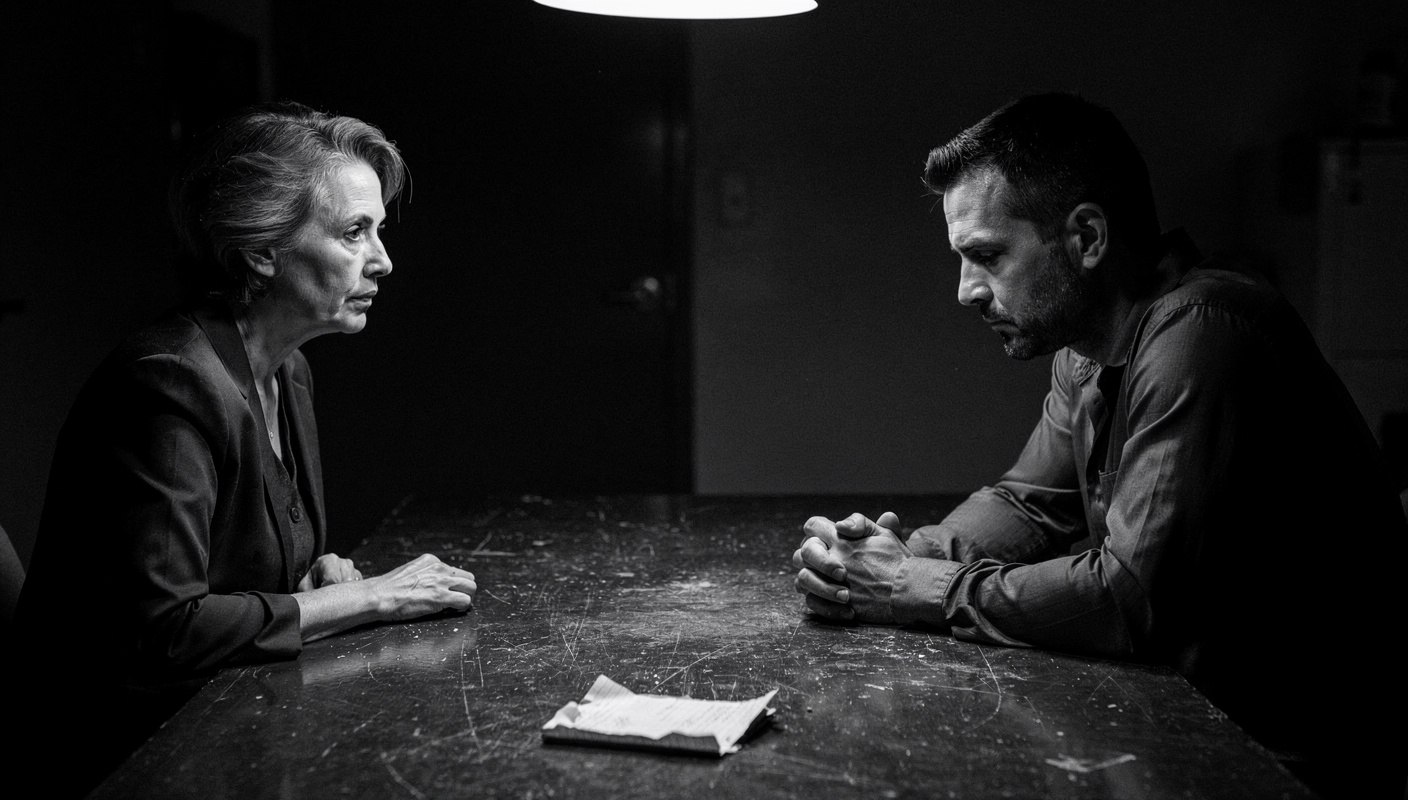
First, you need a clear seating arrangement. You must be positioned so that you can see both people's faces without turning your head awkwardly. A triangular setup, with you at one point and each party at the other two, is the most practical. If you are forced to sit in a line, you will naturally favour whoever is closest to your central line of vision.
Second, you need a personal commitment to emotional neutrality before you enter the room. If you have already formed a view about who is right, your eyes will broadcast it. Preparation is not just about knowing the facts; it is about clearing your own bias before the conversation starts. The C.O.R.E. Framework is one of the best tools I know for this kind of internal grounding before a difficult conversation.
The Step-by-Step Process for Eye Contact When Mediating a Conflict
These steps follow the natural arc of a mediation session. Apply them in order.
Open with equal, direct eye contact during your introduction. When you open the session, make a point of holding each person's gaze for roughly the same amount of time as you explain the ground rules. Do not look at your notes during this moment. Your opening eye contact sets the tone for everything that follows. It signals: I see both of you equally, and I am in charge of this room.
Track the speaker with steady, attentive gaze throughout their turn. When one person speaks, give them your full visual attention. Hold your gaze on their face, not their forehead, not the table, not your notepad. This signals genuine listening. It also gives the other person a model: watch how the mediator listens. People often mirror a mediator's attention, which can quiet the non-speaking party naturally.
Hold the speaker's gaze for one full second after they finish. This is the step most mediators skip, and it costs them. When someone finishes a thought, your instinct is to immediately shift your attention. Resist it. Hold their gaze for one full beat. It signals: I heard you completely. I am not in a rush to move on. That one second builds more trust than most things you will say.
Shift your gaze deliberately to the other person before you speak. After that beat, move your eyes to the person who has been waiting. Do this before you say anything. The shift itself communicates: I am now including you. I know you are here. When you pair this with a calm, neutral expression, you are effectively resetting the room's emotional temperature without words. For a structured approach to managing these reset moments, the D.E.A.L. Method for defusing tension between colleagues gives you a reliable sequence to work within.
Use gaze to direct speaking turns without interrupting. When both people speak at once, look at the person you want to hear from first. Do not raise your hand, do not say their name yet. Just hold your gaze on them. The person you look at will typically feel acknowledged and continue; the other person will usually pause. This is one of the quietest, most effective tools a mediator has, and almost nobody uses it intentionally.
Return your gaze to each person proportionally after you speak. When you summarise, reflect, or ask a question, distribute your visual attention between both parties as you speak. Begin your sentence facing one person, and complete it while looking at the other. This simple pattern prevents either person from feeling that your summary is aimed at them as a verdict. It keeps you clearly in the middle.
Watch the non-speaking person's face for escalation signals, using your peripheral vision. You cannot stare at the silent person while the other is speaking; that undermines the speaker. But you can use soft peripheral attention to watch for a clenched jaw, a sharp breath, a change in posture. If you see escalation building, finish your acknowledgment of the speaker and then shift your direct gaze to the non-speaker, with a steady, calm expression. Often that is enough to settle them before they interrupt.
The D.E.A.L. Method for resolving conflicts that fracture team synergy pairs well with this sequence, because it gives you the spoken structure that runs alongside your nonverbal process.
Adapting Your Gaze for High-Conflict or Emotionally Raw Sessions
Some conflicts are not just tense; they are raw. One or both people may be genuinely distressed, and in those conditions, the standard gaze sequence needs a deliberate adjustment.
When someone is crying or visibly overwhelmed, holding direct eye contact can feel intrusive. In those moments, soften your gaze slightly: look at their face, but without the directness of eye-to-eye contact. Let your eyes rest on the bridge of their nose or just below their eyes. It reads as present and attentive, but it removes the intensity that can make a distressed person feel examined. Then, as they stabilise, gradually return to full eye contact.
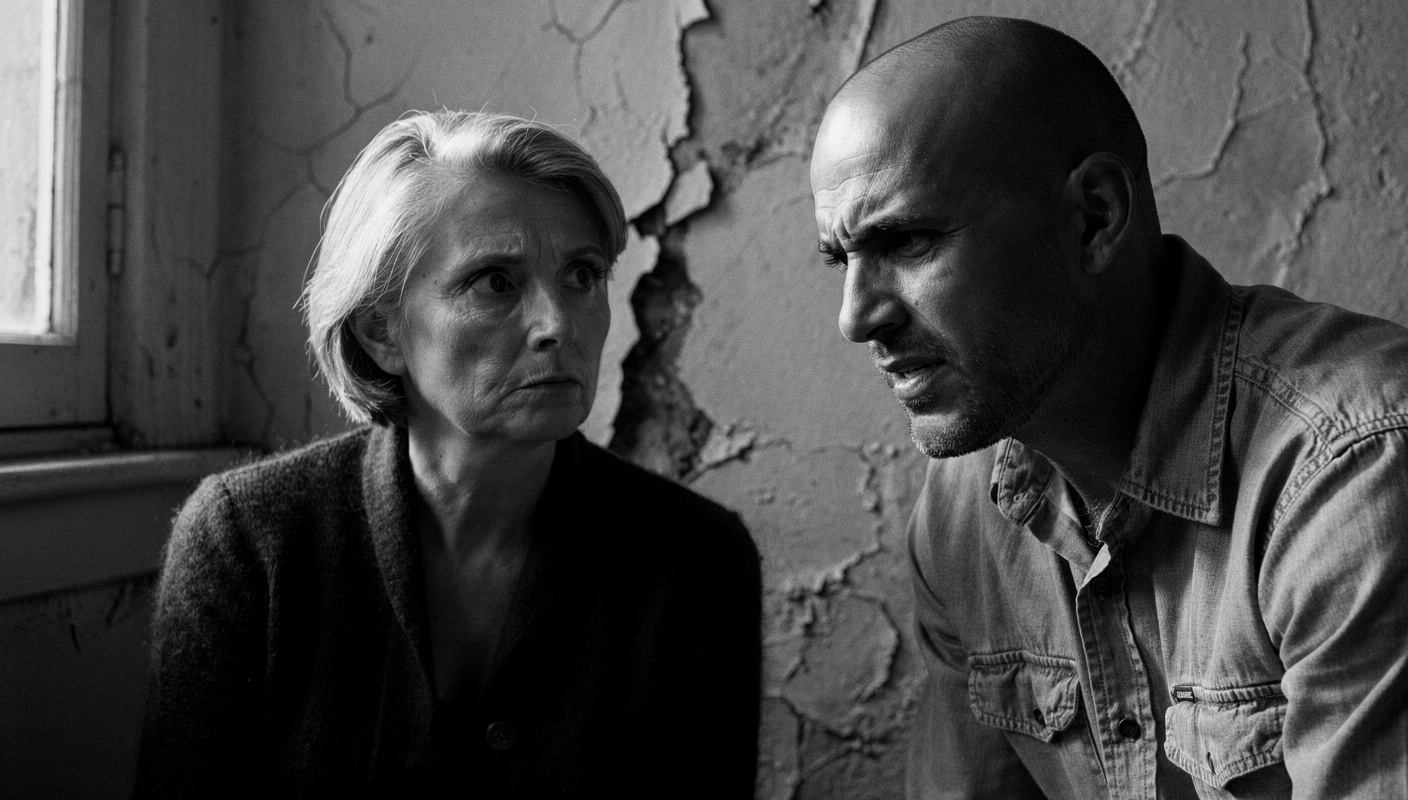
When a person is angry and escalating, the opposite applies. Dropping your gaze signals submission or discomfort and can actually embolden the anger. Hold your gaze steady and level. Not hard, not challenging, but grounded. Think of it the way you would hold your footing on uncertain ground: you do not tense up, but you do not step back either. This kind of steady, calm visual presence is one of the most powerful de-escalation tools you own.
For situations where the conflict has already broken down working relationships, the B.R.I.D.G.E. Method gives you a framework for the repair conversation that follows.
Remote Mediation and the Camera Problem
On a video call, looking at the other person's image on screen does not read as eye contact to them. It reads as you looking slightly downward and to one side. To create the sense of genuine eye contact in remote eye contact mediation, you must look directly into the camera lens when you speak or when you want to signal direct attention.
This is uncomfortable at first. You cannot read facial expressions while looking at the lens. The practical solution is to position the video windows as close to the camera as your screen allows, so the shift between reading faces and appearing to make eye contact is small. For sessions where emotional reading matters most, use a second monitor if you have one: video on the monitor, camera at eye level on your laptop between you and the monitor.
The Empathy Bridge Technique is worth applying in remote mediation before the formal session starts, precisely because the reduced richness of nonverbal signals means you need to work harder to establish trust early.
Where Mediators Go Wrong with Eye Contact
These are the three mistakes I see most often. I have made two of them myself.
The mistake: Consistently looking at the more cooperative party.
Why it happens: Your eyes naturally seek the face that gives you the most positive feedback. The calm person nods; the agitated person frowns. You follow the positive signal without realising it.
What to do instead: After each speaker finishes, ask yourself: where did my eyes spend the last thirty seconds? If the answer is mostly on one person, correct your gaze balance at the next natural pause.
The mistake: Looking down at notes during key emotional moments.
Why it happens: Conflict is uncomfortable. Looking at paper is an unconscious retreat from the emotional weight of the room.
What to do instead: Put the pen down during the moments that matter most. Write your notes in the pauses between exchanges, never while someone is speaking about something that cost them something to say.
The mistake: Holding eye contact too long when re-directing.
Why it happens: You want to make sure the person feels heard before you redirect. But holding eye contact past the natural break feels like confrontation.
What to do instead: Shift your gaze to the other person as you begin your bridging sentence. The movement signals transition; it is kinder and cleaner than a lingering look followed by a redirect.
Handling conflict during meetings involves many of the same dynamics. See How to Handle Conflict During Meetings for a broader set of tools you can carry into group settings.
I cover the deeper mechanics of managing your own reactions in high-stakes conversations in Say It Right Every Time, including how to use preparation to stay calm enough for your nonverbal signals to work for you rather than against you.
Your Pre-Mediation Eye Contact Checklist
Use this before any conflict conversation where you are playing the mediator role.
Before you enter the room:
- Have I arranged seating so I can see both faces without turning awkwardly?
- Have I cleared my own bias well enough that my gaze will not betray a preference?
- Do I know which person I am more comfortable with, so I can consciously compensate?
During the opening:
- Am I holding each person's gaze for roughly equal time in my introduction?
- Am I making full eye contact, not scanning the table or my notes?
During each speaking turn:
- Am I tracking the speaker's face continuously, not drifting?
- Am I holding their gaze for a full beat after they finish?
- Am I shifting to the other person before I speak?
During escalation:
- If someone is distressed, have I softened my gaze without withdrawing it?
- If someone is angry, am I holding steady without challenging?
- Am I using peripheral vision to monitor the non-speaking person?
After the session:
- Did I distribute my gaze time roughly equally across both parties?
- Were there moments where I dropped my gaze under pressure? What triggered it?
This kind of honest review after each session is what separates a mediator who improves from one who repeats the same mistakes. Small course corrections, made consistently, are what build real mastery over time.
The Ground You Hold With Your Eyes
Every skill in mediation begins with presence. And presence, in a conflict room, is communicated first through the quality of your gaze. When you walk into a room where two people are in genuine dispute, they are not reading your words yet. They are reading where your eyes go.
Manage your eye contact mediation deliberately, and both people feel seen before you have asked a single question. That is the ground you need to do everything else well. For a complete picture of the verbal tools that pair with these nonverbal skills, Say It Right Every Time lays out the scripts and frameworks for exactly these conversations, including word-for-word language for the moments when gaze alone is not enough.
This much I know for certain: you cannot mediate a conflict you are not fully present for. And presence starts with where your eyes choose to rest.
Frequently Asked Questions (FAQ)
What is eye contact mediation?
Eye contact mediation is the deliberate use of where and when a mediator directs their gaze during a conflict conversation. It signals neutrality, builds trust with each party, and helps manage the emotional temperature of the room without a single spoken word.
How should I use eye contact when mediating between two colleagues?
Move your gaze to whoever is speaking, hold it steadily for the full thought, then shift smoothly to the other person before you respond or redirect. Never hold a fixed stare and avoid scanning rapidly between the two. Consistent, calm eye contact signals that you are in control.
Can poor eye contact derail a mediation session?
Yes. If you look more at one person than the other, the overlooked party feels dismissed and becomes defensive. If you avoid all eye contact, both people read you as uncertain or disengaged, and the room loses trust in your ability to hold the process together.
How do I maintain eye contact neutrality during eye contact mediation?
Track your gaze time deliberately. After each speaker finishes, hold their gaze for one full second before you shift to the other person. If you notice you have looked mostly at one side of the table, correct course at the next natural pause.
What should I do when both people are talking at once during mediation?
Hold your gaze on the person you want to speak first, not the louder voice. The person you look at will feel acknowledged and usually quieten the other down for you. This is one of the most underused tools a mediator has.
How does eye contact differ in remote or video mediation?
On a video call, looking at the camera lens reads as direct eye contact to the other person. Look at the camera when you speak to either party, not at their image on screen. Prepare your setup so the camera is at eye level to avoid a downward or upward gaze angle that distorts your presence.