
In Short
This article explains one structured method, the D.E.A.L. Method, and how each of its four steps helps you resolve the conflicts that are quietly destroying team synergy.
- Define the Issue: how to name the problem without triggering defensiveness
- Explore Perspectives: how to hear both sides without taking sides
- Lock in the Commitment: why a verbal agreement is never enough
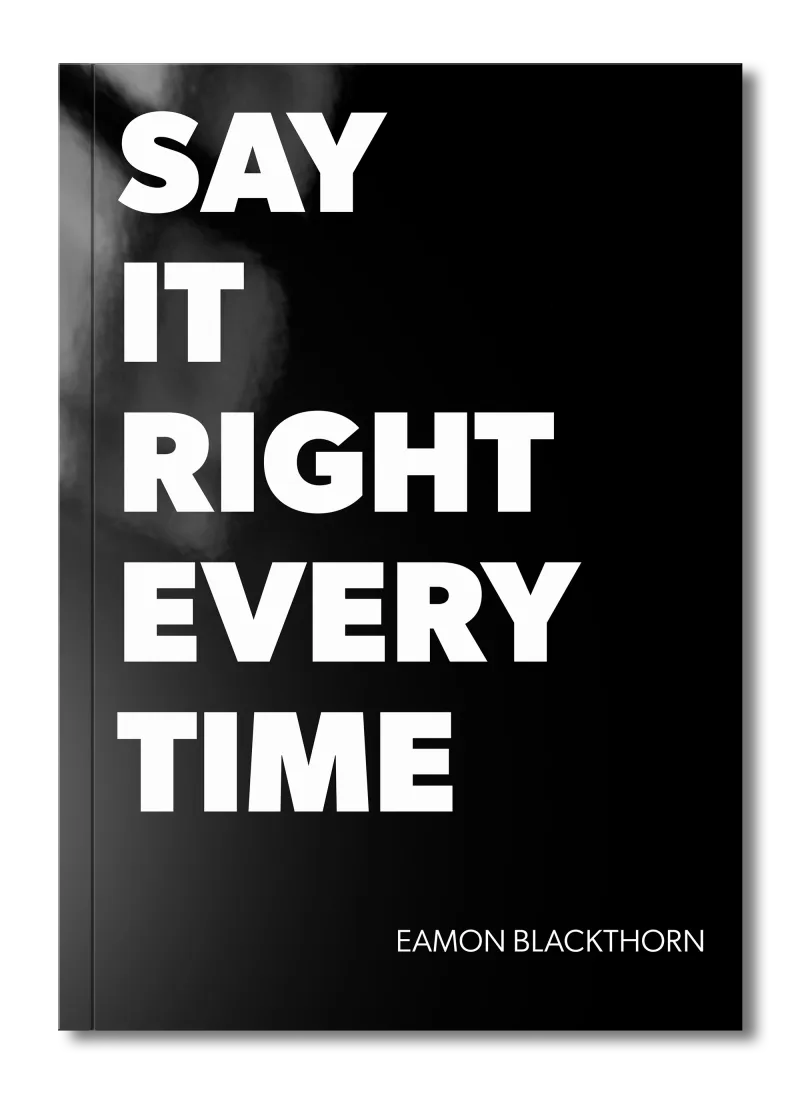
Team synergy conflicts are disputes between team members that erode collective performance, trust, and collaboration. The D.E.A.L. Method is a four-step framework from Say It Right Every Time designed to resolve these conflicts through structure: Define the Issue, Explore Perspectives, Agree on a Solution, and Lock in the Commitment.
Why Unresolved Conflict Is the Fastest Way to Destroy Team Synergy
A manager I worked with once told me she had let a disagreement between two of her senior people run for four months because she hoped they would sort it out themselves. They did not. By the time she intervened, the damage had spread. Other team members had chosen sides. Work was being duplicated because the two people refused to share information. A project deadline was missed. What started as a difference of opinion about a client strategy had become a full rupture in her team's ability to function together.
She had good intentions. She wanted to respect their autonomy. But without structure, the conflict grew roots.
Team synergy conflicts do not heal on their own. Silence does not create resolution. It creates resentment. As I write in Say It Right Every Time, "Conflict is not the enemy. Silence is." When people avoid the confrontation they need to have, what they are really doing is letting unspoken expectations calcify into grievances.
The D.E.A.L. Method exists because good intentions are not enough. You need a structure you can reach for in the moment, one that holds you steady when emotion is pulling you toward your worst habits. I introduce this method in Chapter 9 of Say It Right Every Time, and in this article you will learn exactly how to use it, when to use it, and what it looks like in practice.
If you are dealing with the aftermath of a conflict that has already fractured your team's relationships, you may also want to read How to Rebuild Team Synergy After Conflict or Organizational Change, which covers the recovery phase in depth.
"The Conversation You're Avoiding Is the One You Need to Have."
"The Conversation You're Avoiding
Is the One You Need to Have."
Stop rehearsing conversations you'll never have. Say It Right Every Time gives you 115 word-for-word scripts and 16 proven frameworks to speak with confidence in every conversation that matters.
Why Structure Matters More Than Good Intentions
Most people think conflict resolution is about being calm, reasonable, and fair. It is all of those things. But under real pressure, calmness evaporates. Reasonableness disappears. People default to the behaviours they have always used: shutting down, attacking, deflecting, or simply walking away.
Structure is what holds you steady when your instincts would otherwise take over. Here are the moments where having a clear framework makes the difference:
- When one team member is more dominant in conversation, a structured process ensures the quieter voice is heard before any decision is reached.
- When the same conflict keeps resurfacing, it signals that the previous resolution was a temporary ceasefire, not a real solution; structure forces you to address the root, not the symptom.
- When emotion is running high and both people feel wronged, a framework keeps the conversation moving forward rather than spiralling into repeated accusations.
- When a manager is mediating between two team members, a clear process gives the facilitator authority and prevents the conversation from becoming a grievance competition.
- When the team is watching, unresolved conflict between two people infects the wider group; a structured resolution sends a signal that problems here are solved, not buried.
The framework in this article gives you that structure. Use it until it becomes instinct.
The D.E.A.L. Method: A Four-Step Process for Resolving Team Conflicts
The D.E.A.L. Method is the framework I introduce in Chapter 9 of Say It Right Every Time for resolving the conflicts that fracture team synergy. The name stands for four steps: Define the Issue, Explore Perspectives, Agree on a Solution, and Lock in the Commitment. Each step has a specific purpose, and each one corrects a specific error that people tend to make when trying to resolve conflict without a structure.
Here is a complete breakdown of how the method works.
Step 1: Define the Issue
What this step is: You open the conversation by naming the problem as a neutral statement, not an accusation. The goal is to describe the situation in a way that both parties can agree is an accurate description of what is happening, without assigning blame before the conversation has even begun.
What it is designed for: This step is designed for any conflict where the opening exchange tends to trigger defensiveness. Most team disputes escalate before they are even properly named, because the first words out of someone's mouth sound like an attack.
How it works:
State the issue in neutral terms. Describe the behaviour or situation, not the person's character or motivation. Use specific, observable facts, not interpretations. For example: "Over the last three weeks, the design brief has been revised four times after the development team began work, which has caused delays" not "You keep changing your mind and it is slowing everyone down."
Separate the person from the problem. Make clear that the issue is the situation, not the individual. This is not a courtesy, it is a strategy. People who feel personally attacked stop listening and start defending. For example: "I am not here to point fingers. I want us both to understand what is creating this friction so we can fix it."
Invite agreement on the problem definition. Before moving forward, confirm that both parties recognise the issue you have named. A solution built on a contested problem statement will not hold. For example: "Does that description match what you are seeing?"
When to use it: Use this step at the very opening of any structured conflict conversation, whether you are a participant or a facilitator. It is most critical when emotions are already elevated.
When not to use it: If the issue is genuinely unclear or still emerging, do not try to force a definition too early. Wait until you have enough information to state the problem with specificity.
A quick example in practice: Two team members, Sara and James, have been in a visible dispute about how decisions are made during client calls. Their manager opens the conversation: "The issue I want us to address is that there seem to be different expectations about who has authority to commit to a client during a live call. That has created some tension and some mixed messages to the client. Does that feel like an accurate description of the situation to both of you?" Both nod. The conversation has a foundation now. It can move forward.
Eamon's take: I have seen more conflict conversations collapse in the first ninety seconds than at any other point. Define the issue with precision and neutrality, and you give the conversation a fighting chance.
Step 2: Explore Perspectives
What this step is: You give each person uninterrupted space to share how they see the situation. Your job at this stage is to listen like a journalist, with genuine curiosity, not judgment, and not yet problem-solving.
What it is designed for: This step is designed for the moment when both people believe they are right and the other person simply does not understand. That belief is often partially true on both sides. The real issue is usually two people with unmet needs, not one villain and one victim.
How it works:
Give each person the floor in turn. Ask one person to share their perspective fully before the other responds. Set this as a ground rule explicitly: "I am going to ask each of you to speak without interruption. When one person is speaking, the other is listening." This prevents the conversation from becoming a debate.
Listen for the need beneath the position. As I write in Say It Right Every Time, most conflicts are two people with unmet needs. The position someone states ("I should have authority over this decision") often covers a deeper need ("I need to feel trusted to do my job"). Train yourself to hear both. For example, after Sara speaks, her manager notes that her frustration is not really about the decision itself, it is about not being consulted before the call.
Reflect what you heard before responding. Paraphrase what each person said before moving to the next stage. This confirms understanding and makes each person feel genuinely heard, which reduces defensiveness. For example: "What I am hearing from you, Sara, is that the issue is less about the outcome and more about not being included in the preparation. Is that right?"
When to use it: Use this step with patience. Do not rush it. The Explore stage is where the real issue usually reveals itself. If you skip it or abbreviate it, you will agree on a solution to the wrong problem.
When not to use it: If one party is in an emotionally volatile state, it may be wise to pause the conversation briefly before this step. A solution reached while someone is in distress rarely holds.
A quick example in practice: James is given the floor first. He explains that he commits to timelines on calls because he has always been the senior contact and clients expect answers. When Sara speaks, she explains that she has the technical knowledge James lacks, and when he commits without her input, she is left delivering the impossible. The manager reflects both positions. The real issue becomes visible: they need a clearer system for who speaks to what on a live call.
Eamon's take: The Explore step is where I find the conflict almost always shifts. Once both people genuinely hear what the other needed, the anger tends to give way to something more workable.
Step 3: Agree on a Solution
What this step is: You move from understanding the problem to building a resolution together. The key word is together. A solution imposed on one person is not a solution; it is a temporary ceasefire, and the conflict will return.
What it is designed for: This step is designed for the transition from diagnosis to action. It works best when both perspectives have been genuinely heard and both parties feel respected enough to engage in problem-solving rather than defending territory.
How it works:
Ask both parties to contribute to the solution. Do not arrive with a pre-built answer and ask people to accept it. Instead, ask: "What would a workable solution look like to each of you?" This shifts people from adversarial positions to collaborative problem-solving. It also increases the likelihood that both parties will honour what is agreed.
Look for common ground and shared interests. Even in the most entrenched disputes, people usually share at least one goal, such as delivering good work, being respected by the client, or keeping the project on track. Name that shared interest as the foundation for the solution. For example: "You both want the client to trust this team. What can we put in place that supports that for both of you?"
Build a specific, practical agreement. Vague resolutions dissolve within days. The agreement must name specific behaviours, not just intentions. For example: "Before each client call, Sara will flag the technical boundaries in writing. James will not commit to a timeline unless he has confirmed it with Sara first." Specific. Concrete. Owned by both people.
When to use it: Use this step only after the Explore stage has been completed fully. Rushing to solutions before both perspectives are understood produces agreements that neither party genuinely owns.
When not to use it: If the parties cannot find any common ground after genuine effort, a manager may need to make a directive decision. Name it clearly: this is not the preferred outcome, but it is the necessary one.
A quick example in practice: Sara and James together agree: before each client call, they will have a five-minute briefing. Sara will confirm what is technically possible. James will handle the client relationship but will not commit on timelines without her input. Both contributed. Both own it.
Eamon's take: The best agreements I have ever been part of were ones where both people left feeling like they had won something. That is not compromise for its own sake. That is what durable resolution actually looks like.
Step 4: Lock in the Commitment
What this step is: You close the conversation with a specific, documented commitment that names what each person will do differently, by when, and how progress will be reviewed. A verbal agreement in a charged room is not enough.
What it is designed for: This step is designed for the moment when people are relieved the hard conversation is over and want to move on quickly. That relief is understandable. But without a locked-in commitment, the agreement has no weight, and the same conflict will return within weeks.
How it works:
Name the specific actions each person will take. Convert the agreement from Step 3 into named individual actions. Who will do what, and when? For example: "James, you will not commit to a timeline on a client call without first checking with Sara. Sara, you will send James a technical brief before every scheduled client call."
Agree on an accountability check-in. Set a specific date to review how the agreement is holding. This signals that the conversation is not over until the behaviour has changed, not just until the meeting ends. For example: "We will check in on this in two weeks. I will schedule that now."
Document it. Write it down and share it with both parties. Even a brief email summary sent immediately after the meeting serves as a record and a commitment. It removes the ambiguity that allows people to reinterpret what was agreed when the pressure is off. For example: "I will send you both a summary of what we agreed today."
When to use it: Always. No conflict conversation conducted under the D.E.A.L. framework ends without a locked-in commitment. This is non-negotiable.
When not to use it: There is no situation where you skip this step. If time runs out before you reach it, reschedule rather than let the conversation end without a commitment.
A quick example in practice: The manager sends both Sara and James an email that afternoon: "Following our conversation, here is what we agreed. Sara will send a technical brief to James before each client call. James will not commit to technical timelines without confirming with Sara first. We will review this in two weeks." Both reply to confirm. The agreement now exists outside the room.
Eamon's take: In 60 years, I have watched more agreements dissolve because they were never written down than for any other reason. Lock it in. Write it down. Follow up. That is what respect for the process looks like.
How to Choose the Right Conflict Resolution Approach for Your Team
Knowing the D.E.A.L. framework is only half the work. Knowing when to reach for it, and when to pair it with something else, is the other half.
| Situation | Best Approach |
|---|---|
| Active conflict between two team members, first intervention | D.E.A.L. Method (all four steps) |
| Conflict has already been addressed but trust is still damaged | B.R.I.D.G.E. Method after D.E.A.L. |
| Conflict stems from unclear roles rather than interpersonal tension | Address role clarity first, then D.E.A.L. if tension persists |
| One person needs to hear specific feedback before conflict can be resolved | S.B.I. feedback before entering the D.E.A.L. process |
| A conflict conversation has broken down mid-process | R.E.C.O.V.E.R. Method to repair the conversation, then return to D.E.A.L. |
| Conflict is rooted in one person feeling their needs are unmet | Explore the unmet needs framework before the Agree step |
If you are unsure whether the conflict needs formal resolution or a simpler repair, start with the D.E.A.L. Method. It is flexible enough to handle both. When more than one approach could apply, use D.E.A.L. to resolve the immediate dispute, then use the appropriate repair tool to rebuild what was damaged.
When in doubt, start with the simplest framework. Complexity is not strength.
Common Mistakes When Using the D.E.A.L. Method
A framework only works when you use it with discipline, not as a script you recite while doing something else entirely.
Skipping the Define step because you think the issue is obvious. The issue is rarely as obvious as it appears. Without a shared, agreed problem definition, you will spend the rest of the conversation solving different problems.
Rushing through the Explore step to get to the solution. People who feel unheard do not commit to solutions. If the Explore stage feels slow and uncomfortable, that is a sign it is working. Stay with it.
Agreeing on a solution that is too vague to hold. "We will communicate better" is not an agreement. It is a wish. Every solution needs specific named behaviours, specific owners, and a specific timeframe.
Ending the conversation without locking in a commitment. Relief that the hard conversation is over is real and understandable. But without a written, agreed commitment and a scheduled follow-up, most resolutions dissolve within two weeks.
Using the method as a performance rather than a process. If you are going through the steps while privately convinced you already know the answer, the other person will sense it. Genuine curiosity in the Explore step is not optional. It is the engine of the whole method.
A framework used badly is still better than no framework. But a framework used well is a genuine advantage.
How to Start Using the D.E.A.L. Method in Your Team Today
Do not try to master all four steps at once under real pressure. Build fluency before you need it.
Start by practising the Define step alone. Take a conflict that currently exists in your team, one you have been avoiding, and write a neutral problem statement for it. No blame, no interpretation, just observable facts. This single exercise will reveal how much you have been framing the issue as an accusation without realising it.
Use the Explore step in your next one-to-one. In your next meeting with a team member where tension exists, try one thing: ask them for their perspective on the issue and then paraphrase it back before you respond. Do not problem-solve yet. Just practise genuine listening and accurate reflection.
Practise the Lock in step on a low-stakes agreement. After your next team conversation where any decision is reached, send a brief follow-up email naming what was agreed, who owns what, and when you will check in. Do this consistently until it becomes automatic. For a deeper guide on rebuilding trust after conflict, see How to Apologize to a Team Member in a Way That Actually Restores Synergy.
Run the full D.E.A.L. process on the next real conflict. Once you have practised the individual steps, apply the complete method the next time a genuine team dispute arises. Refer to the steps as needed. You do not need to have them memorised. You just need to use them.
Frameworks are tools. The more you use them, the less you have to think about them.
Key Takeaways
Here is what to carry with you from this article.
- The D.E.A.L. Method gives you a four-step structure: Define the Issue, Explore Perspectives, Agree on a Solution, and Lock in the Commitment. Each step corrects a specific error people make when resolving conflict without a process.
- A neutral problem statement at the start of any conflict conversation is not just courtesy. It is the foundation that determines whether the rest of the conversation can succeed.
- Most team synergy conflicts are two people with unmet needs. The Explore step exists to find those needs before you attempt any solution.
- A solution that one person does not own will not hold. Build resolutions together, not for people.
- A verbal agreement is never enough. Write it down, name the accountability, and schedule the follow-up.
- The D.E.A.L. Method is most useful in the moment of active conflict. For rebuilding damaged relationships after the dispute is resolved, the B.R.I.D.G.E. Method picks up where D.E.A.L. leaves off.
You can find the full D.E.A.L. framework, along with scripts for every step, in Chapter 9 of Say It Right Every Time.
Conflict does not destroy team synergy. Leaving it unaddressed does. Reach for the structure, do the work, and watch what happens to your team when people trust that problems here get solved properly.
Frequently Asked Questions (FAQ)
What is the D.E.A.L. Method for team synergy conflicts?
The D.E.A.L. Method is a four-step conflict resolution framework from Say It Right Every Time: Define the Issue, Explore Perspectives, Agree on a Solution, and Lock in the Commitment. It gives teams a structured process to resolve disputes before they fracture collaboration and trust.
How do you use the D.E.A.L. Method to resolve team conflicts?
Start by stating the issue as a neutral problem, not an accusation. Then give each person space to share their perspective without interruption. Work together toward a solution that meets both sides. Close by agreeing specific next steps and an accountability check-in.
When should you use a structured method for team synergy conflicts?
Use a structured method like D.E.A.L. when a conflict has already affected team output, when the same issue has resurfaced more than once, or when informal conversations have failed. Structure helps when emotion is high and people have defaulted to their worst communication habits.
What is the difference between the D.E.A.L. Method and the B.R.I.D.G.E. Method?
The D.E.A.L. Method resolves an active conflict in the moment, guiding two parties from dispute to agreed solution. The B.R.I.D.G.E. Method is used after the conflict, to rebuild trust and repair the relationship once the immediate dispute has been settled.
Why do team synergy conflicts keep recurring without a structured process?
Without structure, people default to avoidance or escalation when conflict arises. Avoidance leaves the root cause untreated. Escalation hardens positions. A structured process like D.E.A.L. forces both parties to define the real issue and commit to a specific, accountable resolution.
Can the D.E.A.L. Method be used by a manager mediating between two team members?
Yes. A manager can run the D.E.A.L. process as a neutral facilitator, asking each person to share their perspective, then steering the group toward a jointly owned solution and a locked-in commitment with specific accountability. The structure works whether you are a participant or a mediator.