
In Short
Eye contact confidence is built through daily, phased practice, not through willpower or inspiration. Without a structured system, most people improve slightly in easy conversations and regress the moment the stakes rise.
- Start in low-stakes moments and build toward high-stakes ones in deliberate phases.
- Track your practice daily to create bias-resistant evidence of your progress.
- Treat imperfect execution as the method, not a sign you are not ready.
Eye contact confidence is the capacity to hold a direct, sustained gaze during conversation as a natural expression of presence and engagement, rather than as a deliberate effort. It develops through structured repetition across varied social contexts over time.
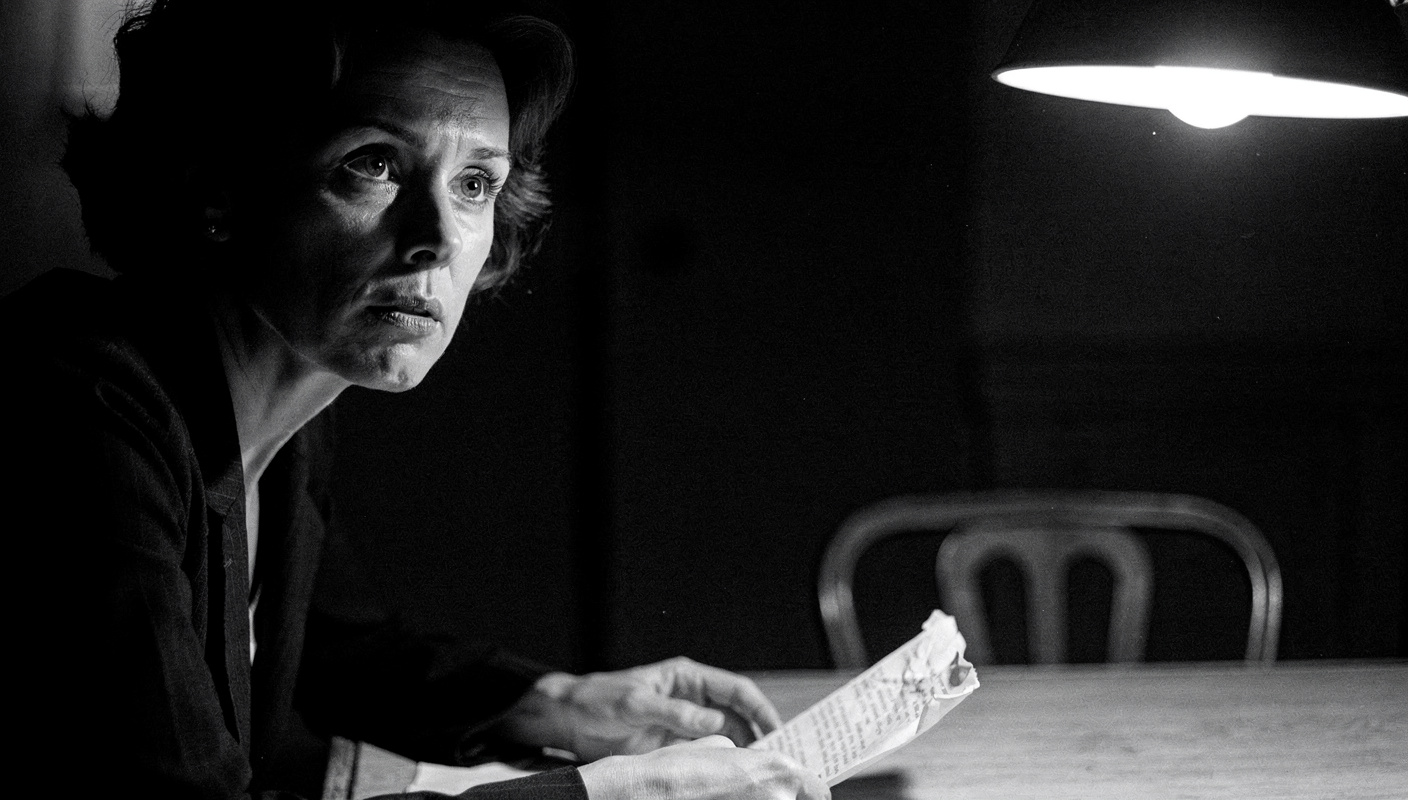
She had prepared everything. She knew her numbers cold. She had rehearsed what to say about the promotion three times the night before. But when the moment came and her manager looked across the desk at her, she dropped her gaze to her notepad and did not bring it back. The conversation went nowhere. She walked out knowing she had lost ground, not because of what she said, but because of what her eyes had communicated before she said it.
Eye contact confidence is not about dominance or staring people down. It is about presence. It is about letting another person see that you are there, steady, and certain of your ground. Most people understand this. Fewer people have a system for actually building it.
What follows is the sixty-day practice plan I outline in Say It Right Every Time For Women, adapted specifically for eye contact skill. It gives you a real process, built on daily action and honest tracking. Not a collection of tips. A working system you can start tomorrow.
Why Eye Contact Confidence Is Harder to Build Than It Looks
Everyone knows they should make better eye contact. The knowledge gap is not the problem.
The problem is what I call the knowing-versus-doing gap. You can read about the importance of direct gaze, nod along, and still find yourself looking at the table the moment a senior colleague challenges you in a meeting. Understanding the skill and performing it under pressure are two entirely different things.
Sustained eye contact also triggers a mild physiological response in many people. It activates the same low-level threat signal that makes you want to look away. That response is not a character flaw. It is wiring. But wiring responds to repetition. The same mechanism that currently makes you break gaze when you feel watched can, over time, become the thing that keeps you steady.
The other barrier is that most people practice eye contact only in conversations that already feel comfortable. That is not practice. That is maintenance. Real practice requires incremental challenge, which is exactly what the sixty-day structure is designed to give you.
"The Conversation You're Avoiding Is the One You Need to Have."
"The Conversation You're Avoiding
Is the One You Need to Have."
Stop rehearsing conversations you'll never have. Say It Right Every Time gives you 115 word-for-word scripts and 16 proven frameworks to speak with confidence in every conversation that matters.
What You Need Before Day One
Two things must be in place before you begin, and neither of them is readiness.
The first is honesty about your current baseline. Ask yourself: in which conversations do you most often look away? One-on-one with authority figures? In group settings when you are being assessed? When you disagree with someone who speaks with force? You cannot build a practice plan without knowing where your gaze fails you most.
The second is an anchor habit: a fixed daily moment when you will review your practice log. Morning coffee works for many people. The end of the workday works for others. The specific time does not matter. What matters is that it is the same time every day. In Chapter 14 of Say It Right Every Time For Women, I describe the anchor habit as the structural spine of the entire plan. Without it, tracking becomes sporadic, and sporadic tracking produces no useful data.
You do not need to feel ready. That is the Execution Adjustment principle at the core of this plan: you begin before the conditions feel right, because waiting for readiness is itself the avoidance pattern.
The Six-Phase Eye Contact Practice Plan
This plan runs across six ten-day phases. Each phase builds on the last. The structure is deliberately graduated so that by the time you reach high-stakes conversations, direct eye contact has already become a practiced behavior in dozens of lower-stakes interactions.
Phase One (Days 1–10): Low-Stakes Gaze
Choose three conversations each day where you will hold eye contact deliberately. These should be genuinely low stakes: a shop assistant, a colleague in the lift, someone you greet in the hallway. The point is volume, not difficulty.
Practice the three-second hold. Aim to hold direct eye contact for three seconds before breaking naturally. Do not stare. After three seconds, let your gaze shift briefly, then return. This creates natural eye contact rhythm without the discomfort of a fixed stare.
Log one observation per day. Use this format: Which conversation? Did I hold my gaze or look away? What triggered the break, if any? This is not a judgment exercise. It is data collection.
The goal of Phase One is simple repetition. You are rewiring a reflex, and that takes volume before it takes difficulty.
Phase Two (Days 11–20): One-on-One with Mild Stakes
Move your practice into conversations that matter slightly more. A one-on-one with a peer, a check-in with your direct manager, a phone call where you know the other person will push back mildly.
Add the return-to-gaze rule. If you look away under pressure, that is fine. What you practice now is returning your gaze within three seconds of noticing you have broken it. Avoidance compounds over time; so does the habit of returning.
Audit your self-advocacy moments. When you make a point in conversation, are you holding eye contact through the end of the sentence, or are you looking away before you finish? Looking away before you finish your own statement is the most common way direct gaze undermines confident delivery. Hold through the period.
This phase often surfaces the Authority Perception Gap for the first time: the gap between how steady you feel and how steady you appear. Your tracking log will begin to show you whether your gaze is reading as confident or tentative from the outside.
Phase Three (Days 21–30): Group Settings
Bring deliberate eye contact into meetings. Target one person per point you make. When you speak to a group, move your gaze from person to person, spending roughly three to four seconds with each before moving on. This is not performance. It is presence.
Practice holding gaze when someone else is speaking. Many people assume eye contact is only about how you look when you talk. It matters equally when you listen. Holding a steady, engaged gaze while someone else speaks signals that you are fully there. This matters enormously in meetings where dominant voices often crowd out quieter ones.
Track the Perception Gap in group settings. After each meeting, write one sentence: How did my gaze land in that room today? You will not always know. But asking the question trains your awareness of how others experience your nonverbal signals.
Effective meeting communication depends as much on what your body communicates as on what your words say. Your gaze in a group is one of the clearest signals of whether you consider yourself an equal participant.
Phase Four (Days 31–40): High-Pressure Conversations
Select one genuinely difficult conversation each week. A disagreement you have been avoiding. Feedback you need to give. A boundary you need to set. In each of these, make direct eye contact your primary nonverbal commitment. Not aggressive eye contact. Steady, calm, present eye contact.
Use the pause before you look away. When the conversation becomes tense and you feel the pull to look down, pause for one deliberate breath before breaking gaze. You will not always succeed. You do not need to. The pause is the practice.
Debrief every high-pressure conversation. Add a Phase Four field to your daily log: Did my gaze support or undermine what I said? The Perception Gap is most visible in high-stakes moments. If you felt steady but looked away repeatedly, your words were working against a nonverbal signal that said otherwise.
Nonverbal communication in tense situations is where eye contact does its most important work and where most people lose the thread entirely. This phase is the hardest. It is also where the plan starts to pay off.
Phase Five (Days 41–50): Leadership and Facilitation Contexts
Practice eye contact in contexts where you carry authority. Running a team meeting. Facilitating a discussion. Delivering a decision to your group. When you lead a conversation, your gaze sets the tone for everyone in the room.
Hold gaze while someone disagrees with you. This is the specific skill that separates people who seem confident from people who are building the real thing. When someone challenges your position, the first instinct for most people is to look down or away. Practice staying visually present through the challenge before you respond.
This connects directly to how conflict is handled in meetings and to the broader discipline of meeting facilitation. A facilitator who drops gaze when the room gets difficult signals that they are not holding the space. Holding gaze through difficulty signals that you are.
Phase Six (Days 51–60): Integration and Review
Stop practicing deliberately. Just watch what happens. By Day 51, the behaviors built in the previous five phases should begin operating without conscious instruction. Your job in this final ten-day phase is to observe what has become automatic and what still requires effort.
Run the sixty-day review. At the close of Day 60, answer four questions in your log: What conversations am I now having that I could not have had on Day 1? In which moments has my gaze become a natural signal of confidence? Where does avoidance still pull at me? What is my next ninety-day plan?
This review format comes directly from Chapter 14 of Say It Right Every Time For Women. It is not a graduation ceremony. Mastery is not a self-declaration. It is the discipline you continue.
Adapting the Plan for Remote and Hybrid Settings
Video calls create a specific problem for eye contact practice: the camera and the screen are in different places. When you look at the person's face on your screen, you appear to be looking slightly downward to everyone watching. True on-camera eye contact requires looking into the lens, not at the face.
This is genuinely counterintuitive. It means you cannot fully see the person's expression while maintaining on-camera gaze. The practical solution is to alternate. During your turn to speak, look into the camera lens. During the other person's turn to speak, shift your focus to their face on the screen. This gives you presence when you are delivering your message, and genuine attentiveness when you are receiving theirs.
For your practice log in remote settings, add one field: Did I look into the camera during my key points, or at the screen? You will quickly find that this one habit shifts how your colleagues perceive your confidence in virtual meeting and facilitation contexts.
Three Eye Contact Mistakes That Undermine Real Progress
These are the errors I have watched people repeat decade after decade, and all three have a simple correction.
The mistake: Staring without any break in gaze, in an attempt to project confidence.
Why it happens: People overcorrect when they know they have a tendency to look away. They swing to the other extreme.
What to do instead: Use the three-second-and-return rhythm. Natural eye contact includes brief, deliberate breaks. Staring without pause reads as aggression or social unawareness, not as strength.
The mistake: Looking away the instant tension enters the conversation.
Why it happens: The discomfort of sustained eye contact during disagreement is real, and breaking gaze releases that tension immediately. The problem is that it also signals capitulation, even when no ground is being given.
What to do instead: Practice the one-breath pause from Phase Four. You do not need to hold gaze indefinitely. You need to hold it long enough to signal that the tension does not control you.
The mistake: Practicing only in conversations that already feel safe.
Why it happens: Low-stakes practice feels productive. It reduces anxiety. But it produces competence only in conditions that already present no challenge.
What to do instead: Follow the phase structure. Gradual escalation is the method. If you are still in Phase One territory on Day 30, the plan is not working. Move forward even when it is uncomfortable.
The Confidence-Competence Loop operates directly here. Confidence and competence reinforce each other, but only if you are practicing at the edge of your current ability, not inside the center of it.
Handling the Empathy-Gaze Balance in Difficult Conversations
One question I hear often: "Does holding eye contact during conflict come across as aggressive rather than empathetic?" It is a legitimate concern, and it points to an important nuance.
Direct gaze during difficult conversations reads as empathetic when it is combined with open body language, a steady tone, and genuine listening. It reads as aggressive when it is paired with a closed posture, a raised voice, or the absence of any acknowledgment of the other person's position.
Before a difficult conversation, the preparation I describe in the Empathy Bridge technique sets the internal state that makes empathetic eye contact possible. When you have genuinely prepared to understand the other person, your gaze will carry that intention. People feel the difference.
Eye contact in conflict is not a weapon. It is a signal that you are present, that you respect the person enough to look at them, and that you are not going to disappear from the conversation when it gets difficult.
Your Daily Tracking Tool
Use this log every day for sixty days. It takes four minutes. It creates the bias-resistant evidence of your progress.
Daily Log
- Day number and date.
- Which conversation did I practice deliberate eye contact in today?
- Did I hold my gaze through my key points, or did I look away before finishing?
- What caused me to break gaze, if anything?
- One sentence: did the Perception Gap close or widen in today's practice?
Ten-Day Phase Review
- Which type of conversation showed the most improvement this phase?
- Where did gaze aversion still pull hardest?
- What will I deliberately challenge in the next ten days?
Sixty-Day Final Review
- Which conversations am I now holding with sustained, natural eye contact that I could not have held on Day 1?
- Which moments still require conscious effort?
- What does my next ninety days of practice look like?
The tracking layer is not a productivity ritual. It is the one tool that shows you honestly whether you are improving or simply repeating the same comfortable behaviors in new settings. Feelings of progress are unreliable. The log is not.
What Comes After Day Sixty
Here is the truth of it: sixty days from today, you will not be a finished communicator. No one is. What you will have is a body of practice. You will have held direct eye contact in dozens of conversations you previously avoided. You will have a log full of actual evidence of what shifted and what did not. And you will have a baseline that no longer includes the fear that direct gaze is something other people do naturally but you cannot.
The compound effect runs in both directions, as I note in Chapter 15 of Say It Right Every Time For Women. Practice accumulates. So does avoidance. Every conversation where you held your ground visually makes the next one slightly easier. Every conversation where you looked away first makes the next one slightly harder.
After the sixty-day plan, the discipline is to keep one practice commitment alive: keep your eye contact honest in high-stakes moments, track it quarterly, and treat reversion under stress not as failure but as the signal that the work continues.
Eye contact confidence is not a destination. It is the daily decision to remain present, visible, and steady in the room where you already belong. Begin with the conversation in front of you, and let the practice build from there.
Frequently Asked Questions (FAQ)
What is eye contact confidence?
Eye contact confidence is the ability to hold a direct, steady gaze during conversation without looking away from anxiety or habit. It signals presence, credibility, and respect. Most people can develop it through structured daily practice rather than waiting for confidence to arrive naturally.
How do I build eye contact confidence in sixty days?
Build eye contact confidence by starting in low-stakes conversations and gradually moving to higher-stakes ones. Use a daily tracking log to notice patterns. Review your progress every ten days. The key is consistent, imperfect practice rather than waiting until conditions feel right.
Why is holding eye contact so difficult for so many people?
Sustained eye contact triggers a mild threat response in many people, especially when the social stakes feel high. Anxiety about being judged, cultural conditioning, or past negative experiences can all cause gaze aversion. The discomfort is real, but it responds well to gradual, repeated exposure.
How long does it take to feel natural making direct eye contact?
Most people notice a genuine shift in eye contact comfort within four to six weeks of daily, deliberate practice. The sixty-day plan is designed to push past the initial awkwardness into automatic behavior, where direct gaze becomes a default rather than an effort.
What mistakes do people make when trying to improve their eye contact?
The three most common mistakes are staring without blinking, looking away too quickly the moment tension rises, and practicing only in easy conversations. Effective practice requires incremental challenge, brief and natural breaks in gaze, and deliberate tracking of what is and is not working.
How does eye contact affect professional credibility?
Direct, steady eye contact signals confidence, trustworthiness, and engagement. People who avoid eye contact are often perceived as less certain of their position, even when their words are strong. In high-stakes professional moments, your gaze can either reinforce or quietly undermine everything you say.
Can shy or anxious people learn to hold eye contact?
Yes. Eye contact confidence is a practiced skill, not a personality trait. Shy or anxious people often see the most dramatic improvement through the sixty-day plan because they start from the lowest baseline and build in the most structured way, adding challenge gradually rather than forcing it all at once.