
In Short
Toxic traits in charming people are the hardest to identify because charm converts your own good judgment into a defence for the person causing you harm.
- They use warmth and praise as currency to buy tolerance for their behaviour.
- The pattern only becomes visible when you stop reading each incident in isolation.
- Your discomfort is data, not disloyalty.
Toxic traits charming people display are persistent harmful behaviours, including manipulation, accountability avoidance, and boundary violations, that remain concealed behind social warmth, likability, and the goodwill charm reliably generates in others.
Why Charm Makes Harmful Behaviour Nearly Invisible
There was a man I worked alongside for nearly three years. Generous with his time, quick to laugh, the first to buy a round. Everyone in the room relaxed when he walked in. And he steadily, quietly dismantled two people's confidence during those same three years. I watched it happen and I still almost missed it. That is the particular difficulty with toxic traits in charming people: the very quality that draws you in is the mechanism that keeps you blind.
Charm works because it satisfies a real human need. We want to be seen, to feel valued, to be in the company of someone who makes the room feel lighter. When a person reliably delivers that feeling, you build up a reserve of goodwill for them. That reserve is what a charming person with toxic traits draws on, whether they know it or not. Every warm moment becomes a credit against the next harmful one.
This is not about naive people. I have seen sharp, experienced professionals completely miss the pattern. The brain resists attaching negative meaning to someone who makes you feel good. That resistance is not weakness. It is a normal feature of how trust forms. The problem is that a charming person with genuine toxic traits has learned, consciously or not, exactly how to keep that resistance working in their favour.
"The Conversation You're Avoiding Is the One You Need to Have."
"The Conversation You're Avoiding
Is the One You Need to Have."
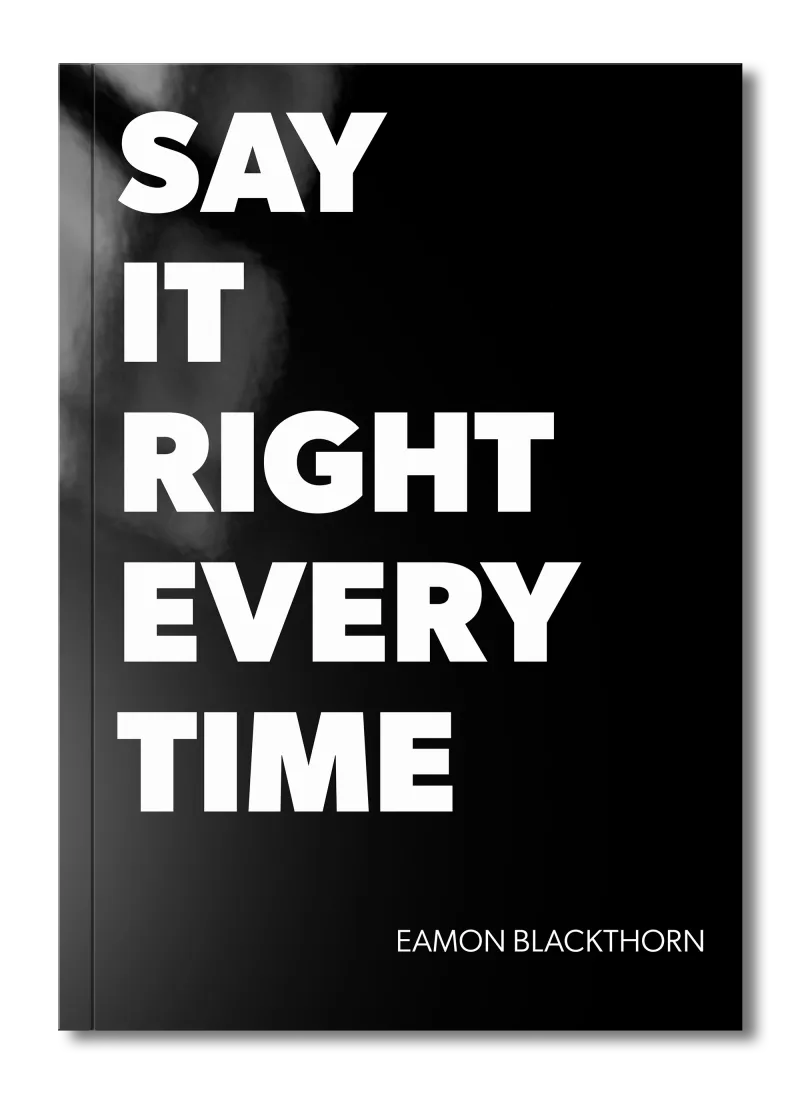
Stop rehearsing conversations you'll never have. Say It Right Every Time gives you 115 word-for-word scripts and 16 proven frameworks to speak with confidence in every conversation that matters.
Six Signs That Charm Is Covering for Genuine Toxic Traits
Praise That Arrives Just Before a Demand
What it looks like: They tell you, sincerely and specifically, what a great job you did, what a valuable person you are, how much the team depends on you. Then, almost in the same breath, they ask for something: your time, your silence, your agreement.
Why it happens: Praise softens the will to refuse. This is not always calculated. Some people have simply learned that warmth and flattery make others more pliable, and they repeat the pattern because it works.
Why it matters: Over time, you begin to associate genuine praise with an obligation you cannot decline. You stop being able to receive recognition cleanly. You start waiting for the ask.
What to do: Notice the gap between praise and request. If the gap is consistently very small, that pattern is telling you something. Write it down. One incident proves nothing. Five incidents form a pattern.
Here is the truth of it: real appreciation does not come with a price tag attached.
Credit That Flows Upward, Blame That Flows Down
What it looks like: When things go well, they are visible and central. When things go wrong, somehow the fault lands on the team, the process, the circumstances. They express sympathy but avoid accountability.
Why it happens: Charm often develops in people who learned early that likability is protective. Taking credit feels natural; absorbing blame feels dangerous. The behaviour reinforces itself because people are reluctant to challenge someone they like.
Why it matters: This erodes psychological safety on any team that person touches. People stop bringing problems forward. They stop offering ideas that could fail. They go quiet.
What to do: Track contribution and accountability separately, specifically, and over time. Ask yourself who was named in the success story and who was named when the problem was explained. The pattern will become clear.
I spent years not doing this. I was too busy enjoying the warmth to keep score.
The Private Criticism That Never Happens Publicly
What it looks like: They are supportive and encouraging in group settings. Then, one to one, they raise doubts about your work, your judgment, or your standing. They frame it as honesty between trusted friends.
Why it happens: Public charm builds their reputation. Private criticism builds their leverage. This may not be a conscious strategy. But the effect is the same regardless of intent.
Why it matters: You begin to distrust your own performance. You cannot cross-reference the private doubt against the public warmth, so you carry both, and they contradict each other. This is a form of gaslighting, even without malice.
What to do: When criticism arrives in private from a charming person, ask them directly whether they would be willing to raise the same point in the relevant group setting. Their response will tell you more than the criticism itself.
They Make Conflict Somehow Your Fault
What it looks like: You raise a concern or name a problem. By the end of the conversation, you are not sure why you brought it up. You feel vaguely like you overreacted. They remain calm and magnanimous throughout.
Why it happens: Charming people are often skilled at managing the emotional temperature of a room. They use that skill to reframe the conversation, gradually and plausibly, until your concern looks like your problem. This is not always manipulative in intent. But the outcome is deflection, and deflection protects harmful behaviour.
Why it matters: This is one of the most corrosive patterns I know of. When people cannot name a problem without feeling punished for naming it, they stop naming problems. That silence is where real damage grows. If this dynamic is playing out across your team, reading how unmet needs drive team conflict may help you understand what is accumulating beneath the surface.
What to do: After these conversations, write down what you went in to say and what you came out believing. If the gap is large and consistently favours them, trust the gap.
This sign is the one I almost never see people catch in real time. You only recognise it afterward, when the room has cleared.
Warmth That Disappears the Moment You Stop Being Useful
What it looks like: They are attentive, generous, and present when they need something from you, or when you are performing well. When your usefulness drops or you set a boundary, the warmth cools noticeably.
Why it happens: Charm deployed as a tool, rather than expressed as genuine care, is conditional. The condition is your value to them. This is the most counterintuitive sign on this list, because during the warm phases it feels completely real.
Why it matters: You will bend yourself to stay in the warm phase without understanding why. You will work harder, agree more readily, avoid conflict more carefully. All to maintain something that was never unconditional in the first place.
What to do: Think back to a time you said no to this person, even mildly. How did they respond? If the warmth dropped with notable speed, that tells you what the warmth is built on.
Boundaries That Get Tested, Not Respected
What it looks like: You state a limit, professionally or personally. They hear it, acknowledge it warmly, and then test it, just slightly, just once, with a smile. When you do not enforce it firmly, the test gets repeated.
Why it happens: Charm makes boundary-pushing feel less serious than it is. They know you are unlikely to make a scene or respond harshly to someone likable. The warmth makes your limit feel like a suggestion rather than a boundary.
Why it matters: This pattern normalises the idea that your limits are negotiable if the person asking is pleasant enough. Once that idea takes hold, it spreads to how others treat you as well. For practical tools on addressing this kind of behaviour before it compounds, the scripts for addressing team members who undermine group synergy are worth keeping close.
What to do: State the boundary once, clearly and without apology. If it is tested, name the testing directly: "I mentioned this last week. I want to be clear that it still stands." The direct statement does not require anger. It requires clarity.
The Root That Feeds Every Branch
Each of these signs is distinct. But they share a single root cause: the strategic or habitual use of charm as social currency to avoid accountability.
People with genuinely toxic traits and high social skill have often learned, over many years, that being liked insulates them from consequences. The warmth is not fake in every case. But it functions, whatever the intent, as a system for maintaining their position and avoiding the normal cost of harmful behaviour. They do not need to be conscious manipulators for the pattern to be real. The outcome is the same.
This is why addressing these traits one incident at a time rarely works. You are treating symptoms while the root continues to produce them. The passive-aggressive behaviour that silently erodes team synergy often runs through a similar root: behaviour that benefits from being hard to name.
A Diagnostic Tool You Can Use Today
Read each statement. Answer yes or no, based on patterns you have observed, not single incidents.
- They praise people most visibly when something is about to be asked of them.
- You can recall more examples of them claiming credit than absorbing accountability.
- Their warmth toward someone noticeably changes after that person sets a limit.
- You have left conversations with them feeling worse about yourself than when you entered.
- When you raise a concern about them, the conversation ends with you feeling at fault.
- Their private assessments of colleagues are more critical than their public ones.
- People around them seem careful, self-editing, or anxious in ways that are hard to explain.
Scoring guide:
- 0 to 2 yes: No clear pattern. One or two incidents do not define a person.
- 3 to 4 yes: A pattern is forming. Start tracking incidents with dates and specifics.
- 5 to 7 yes: The pattern is established. The question now is what you intend to do about it.
Your First Move Toward Clarity
The first move is not a confrontation. It is a shift in how you observe.
Stop reading each incident in isolation. Start building a picture. Write down what happened, when, and who was affected. Pattern recognition requires a record. Without one, charm will continue to reframe each incident as a misunderstanding.
Once the pattern is visible, you have genuine choices: address it directly with clear, specific language; create professional distance while you assess the situation; or, if this person holds real influence on your team, consider how to give constructive feedback without causing tension in a way that names the behaviour without becoming a conflict you cannot control.
Worth noting: feedback conversations involving charming people are particularly prone to the kind of emotional hijack that derails even well-prepared discussions. Prepare for the warmth to be turned up, not down, when you challenge them. And similarly, prepare yourself for the amygdala hijack that charm can trigger in high-pressure moments when the conversation gets real.
Courage here means staying grounded in what you observed, not what you felt. Feelings can be managed. Facts are harder to dismiss.
Closing
The person you are thinking of right now may be charming, generous, funny, and genuinely likable. All of that can be completely true. And toxic traits charming people carry can still be real. The two things are not contradictions. They are, in fact, exactly the combination that makes the pattern so difficult to name. You are not wrong for seeing it. You are right for looking more carefully.
Frequently Asked Questions (FAQ)
What are toxic traits in charming people?
Toxic traits in charming people are harmful behaviours, like manipulation, credit-stealing, and boundary violations, that stay hidden behind warmth and likability. Charm creates goodwill that makes others explain away or excuse the damage these patterns cause.
Why are toxic traits in charming people so hard to identify?
Charm activates social goodwill that overrides careful observation. When someone makes you feel seen and valued, your brain resists attaching a negative interpretation to their behaviour. The harm accumulates slowly, and by the time it is visible, it feels like your fault for noticing.
How do you spot a charming but toxic person at work?
Watch for a pattern of public praise followed by private criticism, a consistent record of missing accountability, and the habit of taking credit while distributing blame. No single incident proves it. The pattern over time does.
Can a charming person be genuinely toxic without knowing it?
Yes. Some people with toxic traits are not consciously manipulative. They have learned that charm earns them a pass, and they repeat the behaviour because it works. Intent does not change the impact on the people around them.
What is the first step when you identify toxic traits in someone charming?
Stop explaining away the pattern. Name what you observed, not what you felt. Write it down if you need to. Then decide whether to address it directly, create distance, or build the kind of psychological safety that makes the behaviour harder to sustain.
How do toxic traits in charming people affect team trust?
They erode trust slowly and silently. Team members begin to self-censor, withhold ideas, and avoid direct collaboration with the person. The damage often looks like general team disengagement before anyone names the individual as the source.