
In Short
Misreading a toxic trait pattern is not just embarrassing. It damages trust, poisons your working relationship, and leaves you flying blind the next time that person shows you who they really are.
- Owning the misread directly, without hedging, is what makes recovery possible.
- Recalibrating means gathering cleaner data, not just softening your original position.
- Re-engaging requires a framework, not just goodwill, or you will repeat the same error.
A toxic trait pattern is a repeated set of harmful behaviors in one person that consistently undermines trust, communication, or collaboration. Unlike a single bad moment, it recurs across situations and is identifiable by its consistency, not its intensity.
You spotted what you were certain was a toxic trait pattern in a colleague. You acted on it. Maybe you addressed it directly, maybe you warned others, maybe you started managing around that person. Then the picture shifted. New information surfaced. You realised you had misread the situation, at least in part, and now you were standing in the middle of a mess of your own making.
This happens more than people admit. The work of identifying genuinely toxic behavior in others is difficult, and the cost of getting it wrong cuts in both directions. Miss the real pattern and you leave your team exposed. Misread innocent behavior as a toxic trait pattern and you have caused harm to someone who did not deserve it. Either way, the relationship is damaged and your credibility has taken a hit. What you do next is what separates people who build trust over time from those who lose it in moments.
Before You Start: What Needs to Be True
Two things must be in place before you begin the recovery process.
First, you need to be genuinely uncertain about your original read, not simply under social pressure to walk it back. If someone pushed back on your assessment and you are caving to avoid conflict, that is not a misread. That is capitulation. Recovery only works when it is honest.
Second, you need to accept that the damage is real. Some people skip the recovery process entirely by telling themselves the other person probably did not notice or did not care. They did notice. They do care. Pretending otherwise is not humility; it is avoidance dressed up as perspective.
If both of those conditions are true, you are ready to work through the three steps.
"The Conversation You're Avoiding Is the One You Need to Have."
"The Conversation You're Avoiding
Is the One You Need to Have."
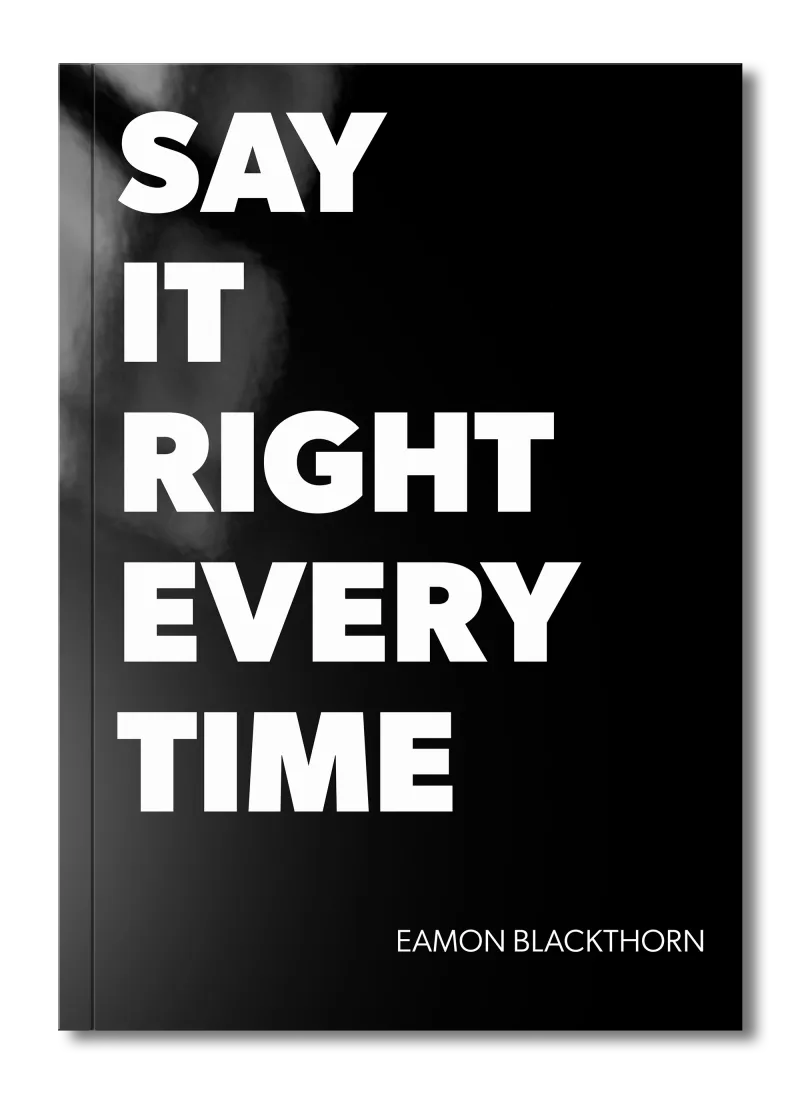
Stop rehearsing conversations you'll never have. Say It Right Every Time gives you 115 word-for-word scripts and 16 proven frameworks to speak with confidence in every conversation that matters.
The Three-Step Mistake Recovery Process After a Misread
Step 1: Name the Specific Error You Made
The most common failure at this stage is the vague acknowledgment. "I may have misjudged the situation" is not a repair. It is a hedge. The person you misread knows what you actually did, and a soft non-apology tells them you are protecting yourself, not owning the impact.
What works is naming the exact behavior you misread and the specific action you took as a result.
Here is what that sounds like: "I interpreted your directness in those meetings as an attempt to undermine the team's decisions. I acted on that interpretation by [specific action]. I have since looked at this more carefully, and I do not think that read was accurate. I want to acknowledge the impact that had on you."
That kind of directness is hard. It requires courage. But it is the only version of an acknowledgment that actually moves the relationship forward. Anything shorter leaves the other person waiting for you to say the real thing.
One note: do not over-explain your reasoning for the original misread. Brief context is fine. A long explanation becomes a defense. The person needs to hear accountability first, context second.
Step 2: Recalibrate Your Read Using Cleaner Data
After you have acknowledged the misread, you cannot simply reset to a neutral position and hope for the best. You need to actively recalibrate by gathering cleaner behavioral data.
This is where most people stumble. They assume that acknowledging the misread IS the recalibration. It is not. Recalibration is a deliberate process of re-observing the person with fresh eyes.
Concretely, this means three things. Identify the specific behaviors you originally flagged as toxic. For each one, ask whether you have two or more concrete, specific examples of that behavior harming someone, or whether you were pattern-matching against past experiences with genuinely toxic people. Then deliberately observe the person in at least two to three interactions before forming any new conclusions.
Confirmation bias is the enemy of clean recalibration. Once you have labeled someone as toxic, every neutral action looks suspicious. A blunt email becomes aggression. A missed reply becomes passive resistance. You have to actively interrupt that loop, not just be aware of it.
If you are working through conflict more broadly, the D.E.A.L. Method for resolving conflicts that fracture team dynamics gives you a structured way to separate real issues from perceived ones during exactly this kind of re-evaluation.
Step 3: Re-Engage with a Framework, Not Just Goodwill
This is the step people underestimate the most. After acknowledging the misread and recalibrating your read, they assume goodwill will carry the re-engagement. It will not. Goodwill is fuel. A framework is the engine.
Re-engagement means deciding in advance how you will respond if the concerning behavior appears again. It means having a script ready, not improvised, for the next time you are in a direct interaction with that person. And it means treating the relationship as something that requires active repair, not passive thawing.
For re-engagement, I use a simple framework: Observe, then ask, then name. If you see behavior that concerns you, observe it once without reacting. If it repeats, ask a direct question rather than making an interpretation: "I noticed you cut across Sarah twice in that meeting. What was going on for you?" If it continues after that, name it clearly and specifically.
What you are doing here is building a new pattern of interaction to replace the damaged one. That takes deliberate repetition. It does not happen in a single conversation.
If the relationship is with someone on your team, how you start a difficult conversation that has been blocking team progress gives you practical language for opening the re-engagement without reopening the original wound.
When the Person Has Genuinely Difficult Traits You Missed
Sometimes the recalibration reveals something uncomfortable: the person does have a problematic behavioral pattern, but it is different from what you originally identified. You were not entirely wrong; you were imprecise.
This is important to distinguish from a full misread because the response differs. A full misread requires the three-step process above. A partial misread, where the toxic behavior is real but you named it wrongly or targeted the wrong situations, requires a modified approach.
In this case, after completing Step 1 and Step 2, your re-engagement in Step 3 should include a clear, direct conversation about the behavior you have now correctly identified. Scripts for addressing team members who are undermining group cohesion give you exact language for this kind of precise, behaviorally specific conversation.
The goal is to separate your misread from the real issue. Owning one does not mean surrendering the other.
How the Recovery Process Changes in Remote Settings
In a remote or hybrid team, the recalibration step becomes significantly harder and takes longer. You lose the behavioral data that physical presence provides: body language, side conversations, micro-reactions in real time. Written communication, in particular, is stripped of tone in ways that make it easy to misread as aggressive, dismissive, or evasive when it is simply direct.
In remote settings, apply two adjustments to the three-step process.
First, weight your acknowledgment conversation toward a video call, not a written message. A written acknowledgment of a misread can itself be misread. You need the other person to see your face, and you need to see theirs. How to use the R.E.C.O.V.E.R. method when a team conversation goes wrong covers this exact dynamic in depth.
Second, extend your recalibration period. In person, you can gather several meaningful data points in a week. Remotely, you may need three to four weeks of deliberate observation before your new read has enough evidence to stand on. Rushing recalibration in a remote environment is how you end up making a second misread, this time in the opposite direction.
Where People Go Wrong in the Recovery Process
Three failure patterns appear most often when people attempt to recover from a misread toxic trait pattern.
The mistake: Apologising to the group rather than to the individual.
Why it happens: It feels less exposing to address the misread in a team setting where the original action also played out.
What to do instead: Begin with a direct, private acknowledgment to the person you misread. Group repair can follow, but it cannot replace individual repair.
The mistake: Using the acknowledgment to relitigate the original assessment.
Why it happens: Genuine uncertainty about whether the misread was complete. You want to keep the door open for your original read to be vindicated.
What to do instead: Commit fully to what you are saying in Step 1. If you still have concerns, those belong in Step 2 and Step 3, not in the acknowledgment itself.
The mistake: Skipping the recalibration step and moving straight to re-engagement.
Why it happens: The acknowledgment conversation goes well and the relief of being received generously makes you feel the work is done.
What to do instead: Treat the acknowledgment and the recalibration as separate stages. A warm response to your apology does not mean you now understand the person accurately.
If passive or indirect behavior has been part of the pattern you were trying to read, how to address passive-aggressive behavior that erodes team trust gives you a sharper framework for distinguishing it from genuine grievance.
Your Recovery Checklist
Use this before, during, and after the three-step process.
Before you begin:
- Confirm this is a genuine misread, not social pressure to reverse a correct assessment.
- Accept that real damage has been done and passive repair will not be enough.
- Identify the specific behavior you misread and the specific action you took as a result.
Step 1: Acknowledgment: 4. Write out your acknowledgment in full before the conversation. Name the exact behavior and the exact action you took. 5. Keep your explanation of why you misread to two sentences or fewer. 6. Do not hedge. Say what you did, not what you may have done.
Step 2: Recalibration: 7. List the specific behaviors you originally flagged. 8. For each, identify whether you have two or more concrete examples or whether you were pattern-matching. 9. Observe the person in at least two or three interactions before forming new conclusions. 10. Check for confirmation bias: are you interpreting neutral behavior as suspicious?
Step 3: Re-engagement: 11. Prepare a script for the next direct interaction before it happens. 12. Use the Observe-Ask-Name sequence before drawing any new conclusion. 13. Treat the relationship as requiring active repair for at least four to six weeks.
If the broader situation involves boundary-setting alongside the recovery, how to set limits with demanding colleagues without harming team cohesion will help you hold both at once.
When the Recovery Reveals What You Actually Need to Learn
Here is what decades of working through these situations taught me: the most valuable thing a misread gives you is information about your own pattern-recognition system, not the other person's behavior.
If you have misread a toxic trait pattern, it means one of three things. Your read was premature and based on insufficient data. Your read was accurate for a pattern you knew in someone else and you projected it onto this person. Or your read was shaped by something this person reminds you of, not by what they actually did.
All three are correctable. None of them are character flaws. But they require you to do the harder work of examining how you identify toxic behavior in others, not just how you respond once you have identified it. I cover the deeper mechanics of this kind of self-examination in Say It Right Every Time, specifically the work of checking your own clarity before entering a difficult conversation.
The three-step process repairs the immediate damage. That self-examination is what prevents the next misread. For situations that have escalated beyond misread into full breakdown, how to recover team cohesion after a conversation goes catastrophically wrong covers the deeper repair work.
Frequently Asked Questions (FAQ)
What is a toxic trait pattern?
A toxic trait pattern is a repeated set of harmful behaviors in one person that consistently damages trust, communication, or collaboration. Unlike a single bad moment, a pattern repeats across situations and relationships, and recognizing it accurately is the first step toward protecting yourself.
How do you recover after misreading someone's toxic trait pattern?
Use a three-step process: acknowledge the specific error you made, recalibrate by gathering cleaner behavioral data, then re-engage with a clear framework. Skipping the acknowledgment step and moving straight to re-engagement is the most common reason the recovery fails entirely.
Why is misreading a toxic trait pattern so damaging?
When you misread a toxic trait pattern, you either over-respond to innocent behavior or under-respond to genuinely harmful behavior. Both errors erode trust. The person you misread may become defensive or withdrawn, and your credibility as someone who reads situations clearly takes a real hit.
Can you repair a relationship after calling someone toxic incorrectly?
Yes, but only if you own the misread directly and specifically. Vague apologies that skirt what went wrong will not rebuild trust. Name the exact behavior you misread, explain why, and demonstrate through changed behavior that your read has genuinely shifted.
What causes people to misread toxic trait patterns at work?
Confirmation bias is the biggest culprit. Once you label someone as toxic, every neutral action looks suspicious. Stress and past experiences with genuinely toxic people also prime you to see patterns that are not fully there, especially early in a working relationship.
How is the toxic trait pattern recovery process different for remote teams?
In remote settings, you have fewer behavioral data points because so much context is stripped away. The recalibration step takes longer and requires deliberately creating opportunities for direct conversation. Written communication is easy to misread for tone, so face-to-face video calls should anchor your re-engagement.