
In Short
After reading this, you will know how to name toxic traits in another person using 'I' statements that stay honest without triggering an all-out defensive shutdown.
- Ground every statement in what you observed, not what you concluded about the person.
- Lead with impact: what the behavior did to you, not what it says about them.
- Prepare your words before the conversation, not during it.
Toxic traits communication is the practice of naming harmful or destructive behavior patterns in another person using clear, behavior-focused language that describes observable impact rather than character judgments, keeping the conversation open rather than combative.
Introduction
You sat across from someone whose behavior had been poisoning the room for months. You finally opened your mouth to say something real. And within thirty seconds, they were defending themselves so hard that the actual problem, the pattern you needed to address, was completely buried. You left feeling worse than before you started.
This is what happens when we try to name toxic traits without a structure to hold the conversation steady. Most people struggle here not because they lack courage, but because naming destructive behavior patterns feels like a personal attack no matter how carefully you choose your words. The fear of causing an explosion keeps too many people silent. The frustration of failed attempts keeps others from trying again.
In this guide, you will get a clear, practical process for toxic traits communication that you can use immediately. You will learn exactly how to frame what you have observed, how to connect it to real impact, and how to say it in a way that gives the conversation a fighting chance.
"The Conversation You're Avoiding Is the One You Need to Have."
"The Conversation You're Avoiding
Is the One You Need to Have."
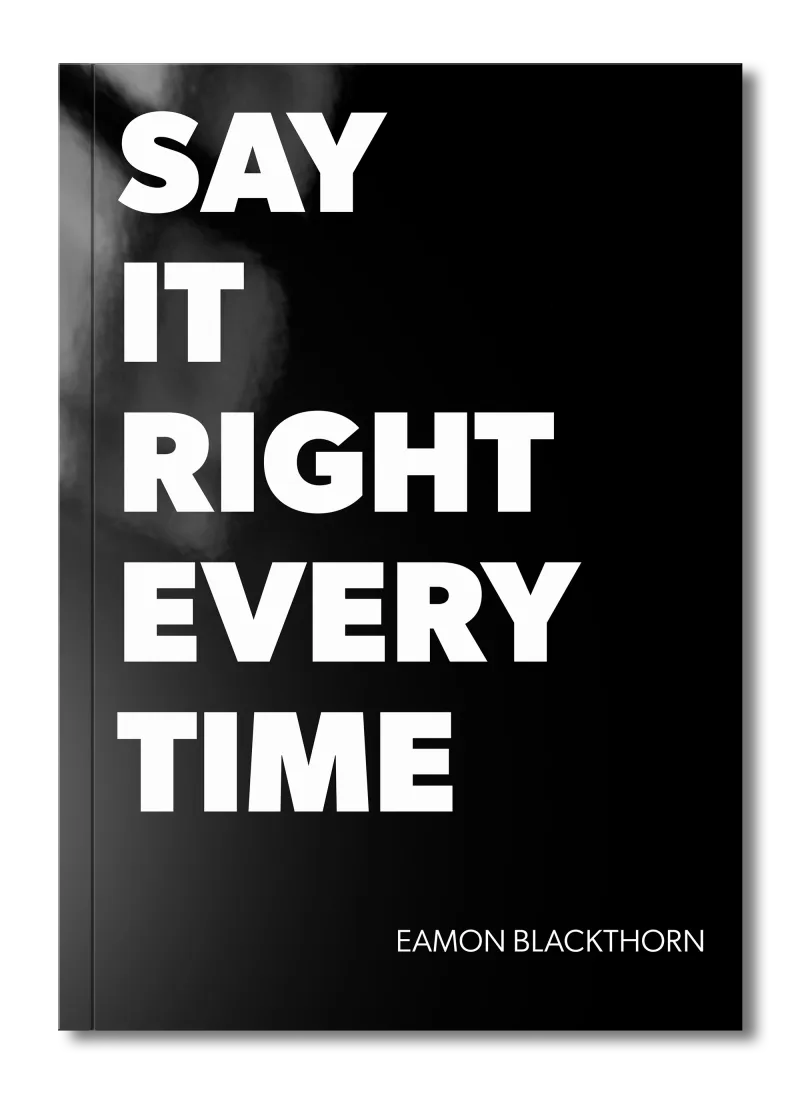
Stop rehearsing conversations you'll never have. Say It Right Every Time gives you 115 word-for-word scripts and 16 proven frameworks to speak with confidence in every conversation that matters.
Why Naming Toxic Traits Is Harder Than It Looks
Knowing you need to say something and actually saying it well are two very different things. Most people understand that staying silent about harmful behavior patterns makes things worse. That understanding does not make the conversation any easier to start.
Here is what actually gets in the way:
The line between observation and accusation is razor thin. When you try to describe a toxic behavior, it is almost impossible to avoid language that sounds like a verdict. "You always undermine people" feels like a character assassination even when it is true, and the person on the receiving end will respond to it like one.
Toxic behavior patterns are often denied by the person who holds them. Someone who habitually dismisses others rarely sees themselves that way. When you name the pattern, you are contradicting their self-image, and that triggers a very different kind of defensiveness than ordinary feedback does.
The history between you and this person makes objectivity nearly impossible. By the time you are naming toxic traits, there is usually a backlog of hurt. That history bleeds into your tone, your word choices, and your body language whether you intend it to or not.
There is no script for this in most people's toolkit. We learn how to give ordinary feedback. We are rarely taught how to name a destructive pattern in a way that stays grounded and specific without sounding like an attack.
The stakes feel too high. Naming harmful behavior means risking the relationship, risking retaliation, or risking the label of being "difficult" yourself. That risk is real. Most people do not have a system for managing it.
The goal is not to eliminate these difficulties. It is to build a system that works in spite of them.
The Foundation: What You Need Before You Start
Before you begin, there are three things that need to be clear.
Know the specific behavior, not the trait. There is a difference between "she is manipulative" and "she told our manager something I said in confidence, twice." The first is a judgment. The second is something you can actually talk about. Ground your preparation in specific, observable actions, not character labels. This distinction will carry the entire conversation.
Know your own intention. Before you speak, ask yourself honestly: do you want this person to change, or do you want them to feel the weight of what they have done? Those are different goals and they require different conversations. If you are going in to punish, the other person will feel it. If you are going in to address a real problem, that comes through too. Clarity of intention shapes everything that follows. I cover this exact principle in Say It Right Every Time, because intention is the invisible force underneath every word you choose.
Accept that you cannot control their reaction. You can control your preparation, your language, and your tone. You cannot control whether they hear you well or respond defensively. Going in expecting a smooth conversation often leads to giving up too quickly when it gets rough. Go in prepared for friction and ready to stay steady anyway.
Get these right first. The steps that follow will not work without them.
Step 1: Separate the Behavior from the Person
This step is the foundation of everything. Without it, every 'I' statement you construct will still land like an attack.
The moment you attach a toxic behavior to someone's character, you have lost the conversation before it begins. Saying "you are dismissive" closes a door. Saying "when you cut people off mid-sentence, I feel like my input doesn't count" keeps it open. The difference is not just phrasing. It is a completely different argument. One is about who they are. The other is about what happened and what it produced.
- Write down the specific behavior you want to address. Use action words, not character labels.
- Check your language: if your description could appear on a psychological diagnosis, rewrite it. You want events, not verdicts.
- Identify at least two specific instances of this behavior. Patterns need evidence, not just feeling.
- Remove any adjectives that describe the person rather than the action ("cruel," "toxic," "manipulative" all name the person, not the act).
- Read your description aloud and ask: could someone argue with this as a fact? If yes, make it more specific until it becomes harder to deny.
Example: Instead of "You are passive-aggressive and it makes everyone miserable," try: "In our last three team meetings, you agreed to the plan verbally and then worked against it afterward. I want to talk about what's driving that."
When you separate the behavior from the person, you give them a way to respond that doesn't require them to defend their entire identity.
Step 2: Build Your 'I' Statement Around Observable Impact
An 'I' statement only works when it describes something real that happened to you or around you. Vague feelings do not move conversations forward. Specific impact does.
The classic 'I' statement structure, "I feel X when you do Y," is a starting point, not a complete tool. When you are describing a toxic trait, you need to go further: name the behavior, name the impact, and name what you need. That three-part structure is what gives the statement weight without turning it into a weapon. If you are looking for more scripts built on this structure, Say It Right Every Time offers word-for-word frameworks for exactly these situations.
- Name the observable behavior using the language you prepared in Step 1.
- Connect it directly to a specific, concrete impact: on the work, on the team, on your ability to trust.
- Use first-person language throughout: "I noticed," "I experienced," "the effect on me was."
- Avoid "you make me feel," which sneaks blame back in through the side door. Use "when X happens, I feel Y" instead.
- Keep the impact statement factual where possible: "The deadline was missed" is stronger than "I felt let down."
When your 'I' statement is built on real, specific impact, it becomes much harder to dismiss. The other person can argue with your interpretation of who they are. They cannot as easily argue with what happened and what it cost.
Step 3: Script It Before You Say It
This is where most people skip the most important work. They think they can find the right words in the moment. Under pressure, with adrenaline running, that almost never happens.
When you are about to name a toxic trait in someone, your nervous system treats it like a threat. The amygdala fires. You either go harder than you intended or softer than you needed. Writing a script beforehand is not weakness. It is the most direct route to saying exactly what you mean when it counts most. Preparation is what separates people who have the conversation they needed from people who have the conversation they regret.
- Write out your opening sentence in full. The first sentence sets the tone for everything that follows.
- Write the 'I' statement you built in Step 2, word for word.
- Write one sentence that names what you are asking for going forward.
- Read the script aloud at least three times before the conversation.
- Adjust anything that sounds stilted until it sounds like you at your clearest, not a formal complaint.
Script example: "I want to talk about something that has been affecting how we work together. In the last month, I have noticed that decisions we make in our meetings get reversed or quietly ignored before they're implemented. The effect on me is that I no longer feel confident that agreements we reach are real. I need us to get to a place where when we agree on something, it holds."
That script names a toxic behavior pattern, carries real impact, and asks for something concrete. It does not call anyone toxic. It does not accuse. It describes.
Step 4: Choose the Right Moment and Setting
Even the most carefully constructed 'I' statement will fail if it lands in the wrong environment. Where and when you say something matters as much as what you say.
Naming a destructive behavior pattern requires conditions that protect both people in the conversation. You need privacy so the other person does not feel publicly exposed. You need time so neither of you is watching the clock. You need a moment when neither of you is already in a state of friction. Getting the setting right is not a small thing. It is the soil the conversation grows in.
- Choose a private setting: no open offices, no corridors, no shared spaces where others can overhear.
- Avoid conversations immediately after an incident while emotions are running highest.
- Give advance notice: "I'd like to talk with you about something important. Can we set aside thirty minutes this week?" This prevents ambush and gives the other person a chance to be in a reasonable state of mind.
- Do not start this conversation digitally. If email or text is your only option, use it only to arrange the conversation, never to have it.
- Plan for at least twenty minutes of uninterrupted time. Conversations about toxic behavior patterns rarely resolve in five.
When you control the setting, you control one of the most significant variables in whether the conversation stays productive.
Step 5: Hold Steady When They Push Back
This is the step where most conversations unravel. The other person gets defensive. You either retreat from what you said or escalate. Both options end the conversation before it goes anywhere useful.
Here is what I have learned after decades of conversations I handled badly: pushback is not failure. It is the natural response to having a behavior named that someone has never had to acknowledge before. Your job at this point is not to win. It is to stay clear and stay in the room.
- When they deny the behavior, do not argue the fact. Return to your specific example: "I understand you see it differently. What I observed was X, and the impact on me was Y."
- When they counter-attack, name it without feeding it: "I notice we've shifted to talking about me. I'd like to finish what I came to say first."
- When they go silent, give it ten seconds before you speak. Silence is often processing, not refusal.
- Keep your voice level and your pace slow. Speed and volume are how frustration sneaks in without your permission.
- If the conversation becomes unworkable, say so clearly: "I can see this isn't the right moment. I'm going to step back, and I'd like us to pick this up tomorrow."
Script for pushback: "I hear that you disagree with how I'm describing this. I'm not here to argue about who's right. I'm here because this pattern has had a real effect on me, and I needed you to know that."
After you hold steady once, the conversation has a chance of going somewhere honest. That is when real change becomes possible.
Adapting This Process for Remote and Hybrid Teams
Remote and hybrid environments add friction to every difficult conversation. When you are naming a toxic trait in someone you rarely see face to face, every step in this process needs adjustment.
Choose video over everything else. Text messages and emails are the worst possible medium for this conversation. Even a phone call removes too much: you cannot see the other person's face, and they cannot see yours. Video is the closest thing to in-person available to you. It keeps both people accountable to the weight of the conversation. For more on choosing the right medium, see how to start a difficult conversation that's blocking your team's synergy.
Be more explicit about what you are noticing. In a physical space, behavior patterns are visible in real time. Remotely, you are working from digital evidence: meeting recordings, message threads, patterns in responses. Name your sources specifically: "In our last four video calls, I noticed..." This concreteness is especially important when you cannot rely on shared physical context.
Build in more preparation time. Remote conversations feel more formal, and that formality can make the other person more guarded. Spend extra time refining your script. Practice it until it sounds natural, not rehearsed.
Send a brief, neutral heads-up message. Scheduling a video call with no context feels more threatening remotely than in person. A short message, "I'd like to talk with you one-on-one this week about something I want to address directly," gives the other person enough notice without tipping off the content.
Follow up in writing after the conversation. A brief written summary of what was said and what was agreed protects both parties. It is not a gotcha document. It is a shared record that keeps the conversation honest.
The core process holds in every environment. Only the execution changes.
Common Mistakes to Avoid
Let me tell you about the mistakes I see most often. I have made most of them myself.
The mistake: Using the word "always" or "never" when describing the toxic behavior.
Why it happens: You are frustrated, and absolutes feel like the only way to convey how serious it is.
What to do instead: Replace "you always undermine decisions" with "in the last three meetings, I observed X." Specifics are harder to dismiss than absolutes.
The mistake: Turning the 'I' statement into a disguised "you" statement: "I feel that you are manipulative."
Why it happens: People think beginning with "I feel" automatically makes it safe. It does not.
What to do instead: Keep the structure honest. "I feel" must be followed by an emotion, not a verdict. "I feel dismissed" is an 'I' statement. "I feel that you dismiss people" is not.
The mistake: Bringing in other people's observations to back up your point: "And it's not just me, others have said the same thing."
Why it happens: You want validation, and you want the person to understand the behavior is a pattern.
What to do instead: Speak only for yourself. If others have concerns, they need to raise them directly. Using their voices without their presence turns your feedback into a tribunal.
The mistake: Ending the conversation before you have named what you need.
Why it happens: The conversation got hard, and you settled for having "said something" rather than asking for change.
What to do instead: Before you go into the conversation, know the one specific thing you are asking for. Say it clearly, even if the conversation was difficult. This is also where learning to address passive-aggressive behavior that's silently eroding team synergy becomes relevant: toxic patterns need a named response, not just a named problem.
The mistake: Waiting until you are at the end of your patience before having the conversation.
Why it happens: Avoidance is easier, until it isn't.
What to do instead: Address patterns early, when your emotional state still allows for precision. A conversation at controlled frustration lands far better than one at boiling point.
These are not character flaws. They are gaps in the system. Fix the system.
Your Practical Checklist
Use this checklist before you begin and after each conversation.
- I have identified a specific behavior, not a personality label or character trait.
- I have at least two concrete examples of this behavior that I can describe factually.
- I have written my opening 'I' statement in full and read it aloud.
- My statement names the behavior, describes the impact, and asks for something specific.
- I have removed all character-level language ("toxic," "manipulative," "passive-aggressive") from my script.
- I have chosen a private setting with enough uninterrupted time.
- I have given the other person advance notice that I want to talk.
- I know what I will say if they become defensive, and I have practiced it.
- I am clear on my intention: I am here to address a problem, not to punish.
- I am prepared to hold my position calmly if they push back.
If you cannot check most of these, that is your starting point.
Summary and Next Steps
You now have a structured process for one of the hardest communication tasks most people will ever face: naming a harmful behavior pattern in someone else without turning the conversation into an attack.
- Separate the behavior from the person; name actions, not character.
- Build your 'I' statement around observable, specific impact, not feelings alone.
- Script what you want to say before the conversation, not during it.
- Control the setting: private, unhurried, face to face whenever possible.
- When pushback comes, stay clear and stay in the room.
- Avoid the disguised "you" statement, the use of absolutes, and the habit of waiting too long.
- The goal of toxic traits communication is not a comfortable conversation. It is an honest one that moves something forward.
If you want to go deeper on feedback conversations that do not blow up in your face, start with how to give feedback that strengthens team synergy instead of breaking it. If you are dealing with someone who reacts poorly no matter how carefully you frame things, how to respond when a team member reacts defensively to synergy-focused feedback will give you the tools to stay in that conversation without escalating it. And for team-wide patterns, how to use 'I' statements in team conversations to prevent synergy-breaking blame cycles takes this skill into the group setting.
The most honest conversations are rarely the easiest ones. But they are always the ones that matter most, and toxic traits communication, practiced well, is how you have them.
Frequently Asked Questions (FAQ)
What is toxic traits communication?
Toxic traits communication refers to the skill of naming harmful or destructive behavior patterns in another person clearly and directly, using language that focuses on observable impact rather than character attacks. Done well, it opens a conversation rather than shutting one down.
How do I use I statements to describe toxic traits without attacking?
Start by naming what you observed, not who you think the person is. Say what impact the behavior had on you, then state what you need going forward. Keep the focus on specific actions and your experience of them, not on labeling the person as toxic or flawed.
Why do I statements work better than you statements when naming toxic behavior?
You statements trigger defensiveness immediately because they feel like verdicts. I statements keep the focus on your experience, which is harder to argue with. This creates enough psychological safety for the other person to actually hear what you are saying instead of preparing a counterattack.
What should I do if someone gets defensive when I describe their toxic traits?
Slow down and acknowledge their reaction without abandoning your point. Say something like: I can see this is hard to hear, and I am not trying to attack you. I still need us to talk about what happened. Defensiveness is normal. Your job is to stay calm and stay specific.
Can I use I statements with someone who has a pattern of toxic behavior, not just a one-off incident?
Yes, and naming a pattern is often more important than addressing a single incident. Describe the pattern using specific examples, not generalizations. Say: I have noticed that when X happens, Y tends to follow, and the effect on me is Z. Specific examples make patterns discussable rather than deniable.
Is it possible to name toxic traits without the conversation turning into a conflict?
Not always, and it is worth being honest with yourself about that. But using I statements, specific observations, and clear impact language dramatically reduces the chances of escalation. The goal is not a conflict-free conversation. The goal is an honest one that moves something forward.