
In Short
Your amygdala hijack response to someone's toxic traits is not a character flaw. It is a survival system reacting to the wrong kind of threat.
- Toxic traits trigger your brain's threat detection system before your rational mind can engage.
- The hijack distorts your perception, making the toxic behavior feel more powerful and more personal than it is.
- Recognizing the physical signs of hijack gives you a window to choose your response instead of defaulting to survival mode.
Amygdala hijack response is what happens when your brain's threat system fires faster than your rational thinking can intervene, flooding your body with stress hormones and narrowing your perception to a single survival priority: fight, flee, or freeze.
Why Toxic Traits Hit Differently Than Ordinary Conflict
Most people think of toxic traits as simply rude or difficult behavior. Someone who interrupts constantly, takes credit for others' work, shifts blame with practiced ease, or uses contempt as a default setting. The common assumption is that you just need to stay calm and handle it professionally.
That surface understanding misses something important. Ordinary conflict, a disagreement over a deadline or a difference of opinion, engages your rational brain because neither person is attacking your fundamental sense of reality or worth. You can think your way through it.
Toxic behavior is a different category entirely. Gaslighting attacks your perception of what is real. Chronic blame-shifting attacks your sense of fairness and safety. Contempt attacks your basic worth as a person. These are not just interpersonal difficulties. They are primal threats, and your brain is wired to respond to primal threats with speed, not nuance.
Understanding the root changes how you respond to the surface. When you know why toxic traits land so much harder, you stop being confused by the size of your own reaction, and that clarity is where your real power begins.
"The Conversation You're Avoiding Is the One You Need to Have."
"The Conversation You're Avoiding
Is the One You Need to Have."
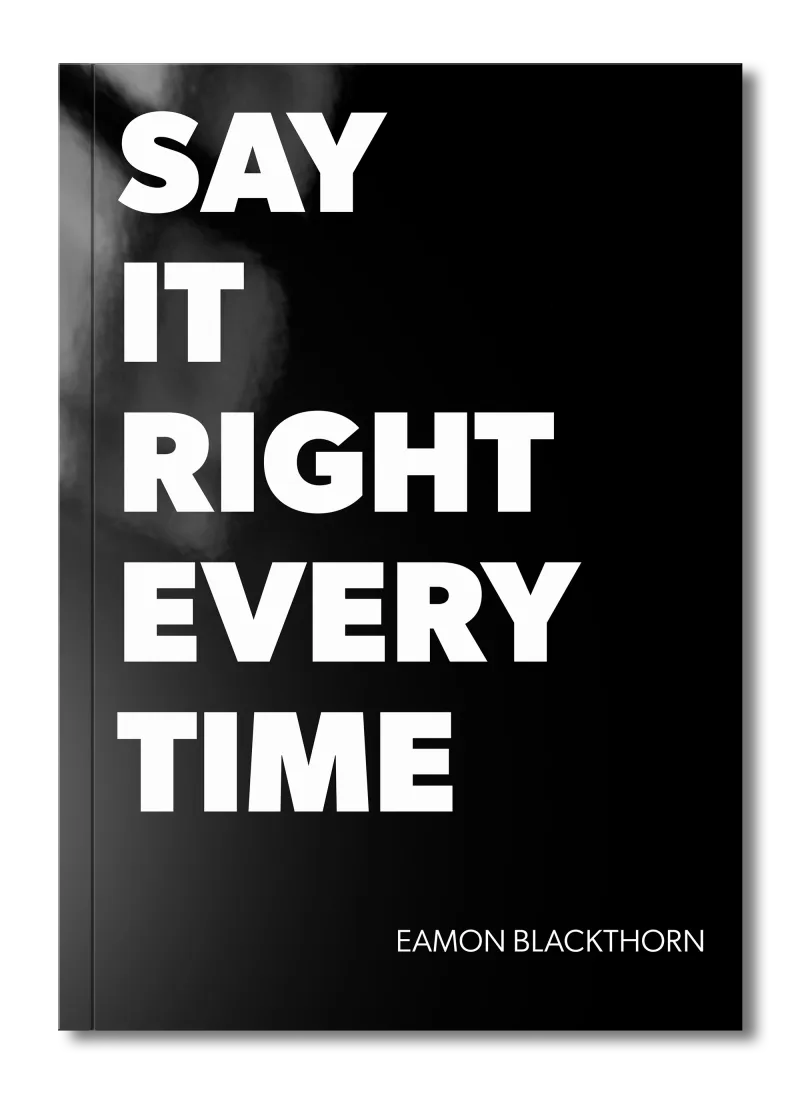
Stop rehearsing conversations you'll never have. Say It Right Every Time gives you 115 word-for-word scripts and 16 proven frameworks to speak with confidence in every conversation that matters.
How the Amygdala Hijack Response Actually Works Against Toxic Behavior
Here is the mechanism at the core of this article, and it is worth understanding precisely. Your amygdala is a small, almond-shaped structure in your brain that functions as a threat-detection system. It processes incoming information faster than your prefrontal cortex, which is the part of your brain responsible for clear thinking, measured response, and long-term judgment.
When your amygdala detects a threat, it sends an immediate alarm signal. Stress hormones flood your system. Your heart rate rises, your muscles tighten, and your cognitive resources narrow to a single focus: survive this moment. This sequence happens in milliseconds, well before your thinking brain has had a chance to assess whether the threat is real, how serious it is, or what a sensible response would look like. I cover the mechanics of this in depth in Say It Right Every Time, particularly in the context of how it derails conversations before you even open your mouth.
The critical point is this: your amygdala cannot distinguish between a lion and a colleague who dismisses your ideas with a smirk. Both register as threat. Both trigger the same survival cascade. Which means that in practice, a toxic person's behavior consistently activates a system designed for physical danger, not professional navigation.
Toxic traits are especially effective at triggering this system because they are often unpredictable. Unpredictability is one of the strongest activators of the threat response. When you cannot anticipate how someone will behave, your amygdala stays in a low-level state of readiness, primed to fire. This is why prolonged exposure to passive-aggressive behavior that silently erodes team synergy can leave you feeling exhausted and on edge even when nothing overtly dramatic has happened.
Once the hijack fires, your perception narrows. You see the toxic person's behavior as more threatening, more deliberate, and more personal than it may actually be. Your memory of past interactions with them becomes more negative. Your options for responding feel fewer. This is why people who deal with genuinely difficult individuals so often feel trapped, even when they are not.
The hijack also has a feedback loop quality. Your heightened reaction can provoke a more intense response from the toxic person, which re-triggers your amygdala, which escalates your reaction further. This is why these interactions so often spiral in ways that leave you wondering how things got so bad so quickly.
The plain summary is this: toxic traits are expert triggers for a system that was never designed to handle them. And a system running on survival instinct is not capable of the kind of clear, strategic communication that difficult people actually require.
What This Looks Like in Real Situations
Here is where this mechanism becomes visible in everyday communication.
A team leader raised a concern in a meeting about a project deadline. A colleague with a well-established pattern of blame-shifting immediately reframed the issue as the leader's failure to communicate clearly. The leader felt her face flush and her thinking go sharp and narrow. She responded more aggressively than she intended, which gave the colleague the opening to position her as the difficult one. She knew, afterward, that something had taken over. It had. Her amygdala had read "public humiliation" as a survival threat and responded accordingly. Understanding how the amygdala hijack sabotages feedback conversations would have helped her name what was happening before she spoke.
A manager sat down with a direct report to give a performance review. The direct report, known for a pattern of contemptuous dismissal, sighed visibly and checked his phone within the first thirty seconds. The manager felt the familiar tightening in his chest and the sudden urge to either confront the behavior sharply or abandon the conversation entirely. He chose the latter. The toxic behavior had not done anything dramatic. It had simply activated a freeze response, and the freeze passed as inaction.
A senior team member attempted to start a difficult conversation that was blocking her team's synergy with a colleague known for gaslighting. Within two minutes, the colleague was calmly insisting that conversations they had both participated in had never happened. The senior member felt her grip on reality loosen slightly, her confidence falter, and her prepared points dissolve. She left without saying what she came to say.
In each of these situations, the surface behavior was different. The root mechanism was the same.
Why Most People Miss the Hijack When It Happens
If this insight is this important, why do so few people see it clearly when they are in the middle of it?
The hijack is invisible from the inside. When your amygdala fires, it does not announce itself. You do not feel like a biological system in crisis. You feel like you are responding to what is happening. The emotion feels entirely proportionate and justified in the moment. It is only afterward, when the stress hormones clear and your thinking brain re-engages, that you wonder why you said what you said. This delay makes the hijack very difficult to catch in real time.
Toxic people are skilled at disguising the trigger. A remark delivered with a calm voice and a reasonable expression does not feel like an attack, even when it is designed to undermine you. Your amygdala responds to the content and the threat it carries, not the packaging. So by the time you realize you have been triggered, you are already three sentences into a response you will regret, and the other person can point to your reaction as evidence of your irrationality.
We confuse reaction with response. There is a widespread belief that strong feelings mean you are right, and that acting on those feelings is honest and direct. In practice, a hijacked reaction and a considered response can look identical from the outside in the short term. The difference only becomes clear in the aftermath, when you can see what the reaction cost you.
The physical signals are easy to rationalize. A tight chest feels like legitimate concern. A flushed face feels like justified anger. The physical signs of amygdala activation are real bodily sensations, and human beings are extremely good at explaining those sensations as evidence that their reaction is warranted, rather than as warnings that their threat system has taken control.
Awareness is the beginning. But awareness without application changes nothing.
What the Amygdala Hijack Means for How You Communicate With Toxic People
Understanding this changes what you do in three specific ways.
Learn your personal warning signs. The hijack always has a physical signature, and yours is specific to you. Some people feel it in their chest; others feel it as heat in the face, a sudden narrowing of focus, or an urge to talk faster. Identifying your early warning signals before the next encounter gives you a half-second window to pause. That half-second is the difference between a reaction and a response. Before your next difficult interaction, take a moment to recall the last time you were triggered and identify what you felt first in your body.
Pause before you respond, every single time. This is not a suggestion about being polite. It is a neurological intervention. When you pause, even for three or four seconds, you give your prefrontal cortex the chance to come back online. The C.O.R.E. Framework is built precisely on this principle: structure your response before you deliver it, so that clarity drives what you say instead of survival instinct. A pause is not weakness. It is the most powerful thing you can do in a hijacked moment.
Prepare before you walk in. Toxic traits are predictable in their patterns, even when the specific behavior is not. If you know someone reliably blame-shifts, deflects, or uses contempt, you can prepare scripts for those moments in advance. Scripts for addressing team members who are undermining group synergy are not about being robotic. They are about giving your prefrontal cortex something to reach for when the amygdala tries to take the wheel. Preparation is the antidote to hijack, because it means your thinking was done before the threat arrived.
These are not new behaviors. They are the same behaviors, grounded in a deeper understanding of why they work.
Key Insights and Next Steps
Your amygdala hijack response to someone's toxic traits is not a sign that you cannot handle pressure. It is a sign that your brain is doing exactly what it was built to do, in a situation it was never designed for.
- Toxic traits trigger your brain's survival system because they attack primal needs: your sense of reality, safety, and worth.
- The hijack happens before you are aware of it, which is why the physical warning signs are your most reliable early detection system.
- A hijacked brain sees fewer options, feels more personal threat, and is more likely to escalate or retreat, neither of which serves you when dealing with genuinely difficult behavior.
- The unpredictability of toxic people keeps your amygdala in a state of low-level readiness, which is why sustained exposure to toxic traits is genuinely exhausting.
- Preparation, pausing, and knowing your personal warning signs are not soft skills. They are direct interventions in a neurological process.
- Recognition is the first step. The next step is building a reliable system for what you do in the moment after you recognize it.
For a deeper look at what happens to clear thinking under pressure, read What Is the Amygdala Hijack and How It Silently Blocks Team Synergy. If you want to see how this pattern spreads across a group, Signs Your Team's Amygdala Hijack Problem Is Destroying Synergy in Real Time will show you exactly what to look for. And if you want practical scripts for the conversations themselves, Say It Right Every Time gives you word-for-word tools built for the moments when your brain is working against you.
This much I know for certain: the person who understands their own amygdala hijack response will always be more effective with difficult people than the person who is simply trying harder to stay calm.
Frequently Asked Questions (FAQ)
What is amygdala hijack response to toxic traits?
Amygdala hijack response to toxic traits occurs when someone's manipulative, dismissive, or hostile behavior triggers your brain's threat system before your rational mind can engage. Your body floods with stress hormones, your thinking narrows, and you react emotionally rather than strategically.
How do you recognize when amygdala hijack is happening during a difficult conversation?
You recognize amygdala hijack by physical signals that arrive before conscious thought: a tight chest, heat in the face, a sudden urge to attack or withdraw. If your response feels bigger than the moment warrants, your threat system has likely overridden your thinking brain.
Why does amygdala hijack response make toxic behavior feel worse than it is?
Your amygdala reads emotional threat the same way it reads physical danger, so a colleague's sarcasm or a manager's blame-shifting can trigger a full survival response. This makes the toxic behavior feel more powerful and more personal than it actually is.
Can you stop an amygdala hijack response to someone toxic?
You cannot prevent the initial hijack, but you can shorten it. Recognizing the physical warning signs early, pausing before responding, and using a structured approach such as the C.O.R.E. Framework gives your prefrontal cortex time to re-engage before you say something you cannot unsay.
How does amygdala hijack response differ from a normal emotional reaction?
A normal emotional reaction processes through your full brain, allowing you to feel something and still think clearly. Amygdala hijack bypasses that processing entirely, cutting off rational thought and leaving only the survival response: fight, flee, or freeze in place.
Why do toxic traits trigger amygdala hijack more than ordinary disagreements?
Toxic traits such as gaslighting, manipulation, and contempt target your sense of reality, safety, or worth directly. These are primal threats. Your amygdala is wired to respond to primal threats with speed, not nuance, which is why toxic behavior produces reactions that feel disproportionate and hard to control.