
In Short
This article covers one master framework with four supporting tools that help you stay calm, clear, and effective when feedback triggers a defensive reaction.
- The C.O.R.E. Framework: a four-pillar system for difficult feedback conversations
- The Empathy Bridge: a technique to lower defenses before delivering hard truths
- The 3-Second Pause: a micro-intervention to interrupt a reactive response
The C.O.R.E. framework is a four-part system for difficult feedback conversations built on Clarity, Openness, Respect, and Empathy. Applied in sequence, it replaces reactive instinct with a reliable structure that keeps both parties focused on behavior, not blame.
I have watched good managers give honest, well-intentioned feedback and walk away from the conversation having made things worse. Not because they were wrong. Not because they were unkind. Because the moment the other person pushed back, they had nothing to fall back on. No structure. No system. Just instinct. And under pressure, instinct is rarely your friend.
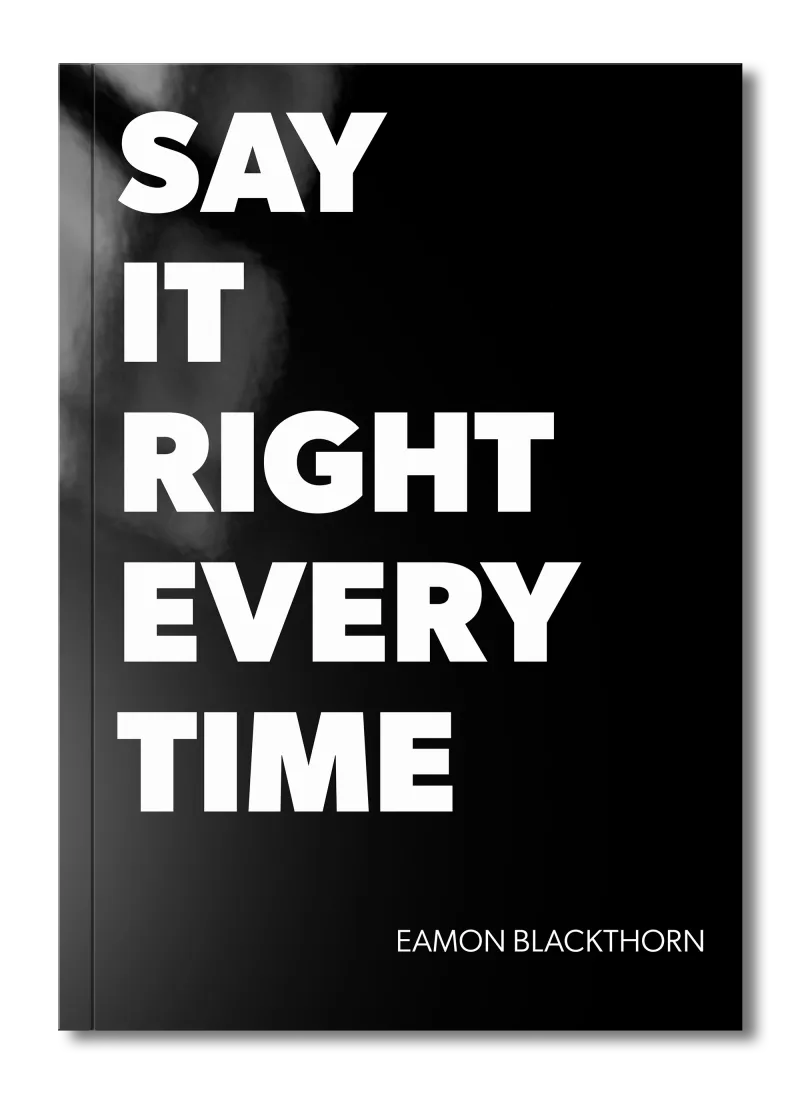
The C.O.R.E. framework solves that problem. In Say It Right Every Time, I introduce the C.O.R.E. framework as a four-pillar master system for any conversation where the stakes are high and emotions are close to the surface. Chapter 2 of Say It Right Every Time lays out the full approach, and the feedback application I cover in Chapter 5 is where most people find it most immediately useful.
In this article, you will learn the C.O.R.E. framework and four supporting tools that give you a reliable structure for feedback skills in any situation, including the moments when the other person does not want to hear what you have to say. If you are also looking at how to structure your initial feedback delivery, How to Use the S.B.I. Method to Give Team Members Feedback That Unifies Instead of Divides is a strong complement to this article.
Why Structure Matters More Than Instinct in Feedback Conversations
Most people believe that good feedback is about natural ability. Either you have the gift for delivering a hard truth gracefully, or you do not. That belief is wrong. What separates someone who handles defensive reactions well from someone who makes them worse is not talent. It is structure.
Without a framework, the moment someone reacts defensively to your feedback, the conversation belongs to the most emotional person in the room. Here is where having a method makes the difference:
- When someone interrupts your feedback with a counter-accusation, a framework tells you exactly where to go next instead of scrambling to defend yourself.
- When you feel your own frustration rising, a structure gives you a step to follow rather than a feeling to act on.
- When the other person shuts down completely, a prepared empathy response can re-open the conversation before it closes permanently.
- When feedback has been given and received poorly in the past, a consistent method rebuilds the trust that poor delivery destroyed.
- When the conversation turns personal, a behavior-focused framework keeps you both anchored to what actually happened.
The frameworks in this article give you that structure. Use them until they become instinct.
"The Conversation You're Avoiding Is the One You Need to Have."
"The Conversation You're Avoiding
Is the One You Need to Have."
Stop rehearsing conversations you'll never have. Say It Right Every Time gives you 115 word-for-word scripts and 16 proven frameworks to speak with confidence in every conversation that matters.
Framework 1: The C.O.R.E. Framework
The C.O.R.E. Framework is a four-pillar master system for difficult feedback conversations, built on Clarity, Openness, Respect, and Empathy. It is the overarching structure under which all other tools in this article sit. You apply its four pillars in sequence, from preparation through delivery to response.
What it is designed for: The C.O.R.E. framework is built specifically for feedback conversations where a defensive reaction is likely or has already occurred. It is the framework to reach for when emotions are high and the risk of a conversation going sideways is real.
How it works:
Clarity. Know exactly what you want to say and why before you open your mouth. This is not about scripting every word. It is about knowing your core message, your desired outcome, and your reason for having the conversation at all. Example: "My core concern is the missed deadline on the client report. The outcome I am hoping for is a clear plan to prevent this from happening again."
Openness. Stay genuinely willing to hear their perspective, even if it challenges your own. This does not mean abandoning your position. It means holding space for the possibility that you do not have the full picture. Example: "I hear you. So what you're saying is that you weren't given enough notice to complete this properly. Do I have that right?"
Respect. Deliver the truth with care, not cruelty. Focus on behavior and its impact, not on the person's character or intentions. Example: "I am not questioning your commitment. I am raising the specific impact of this particular situation on the team."
Empathy. Acknowledge the emotional experience of the other person, including their defensiveness, before pushing forward with your message. Example: "I can see this is hard to hear. That is not my intention. My intention is to find a way forward that works for both of us."
When to use it: Use the C.O.R.E. framework whenever a feedback conversation carries emotional weight: performance issues, repeated behaviors, sensitive topics, or any situation where the relationship matters and the truth is uncomfortable.
When not to use it: This is not the right tool for quick, low-stakes positive feedback. It is a framework for complexity. Using it for simple praise feels overengineered.
A quick example in practice: You are giving feedback to a colleague who has been dismissing other people's ideas in team meetings. You prepare your core message: the behavior is specific, the impact is clear, and your desired outcome is a change in that behavior. When they push back and say the others simply do not understand the pressure they are under, you stay open, acknowledge their stress, and return to the behavior. You respect the person and address the pattern.
Eamon's take: "Great communicators are not magicians. They are mechanics." The C.O.R.E. framework is the mechanic's manual for feedback conversations that matter.
Framework 2: The Clarity Checklist
The Clarity Checklist is a five-item pre-conversation preparation tool that ensures you are ready before a difficult feedback conversation begins. It stops vague, emotionally loaded feedback before it leaves your mouth.
What it is designed for: This tool addresses the first pillar of the C.O.R.E. framework. It is for anyone who tends to know something is wrong but struggles to articulate it clearly and specifically before the conversation starts.
How it works:
Core message. State your concern in one sentence. If you cannot do it in one sentence, you are not ready. Example: "The issue is that the weekly status report has been late three times in the last month."
Desired outcome. Name the specific, realistic, actionable change you want. Vague feedback is useless feedback. Example: "I want the report submitted by 9am every Monday, starting next week."
Supporting points. Identify two or three specific examples or observations that support your message. These are your evidence, not your ammunition.
Personal motivation. Ask yourself honestly: why am I having this conversation? If the answer is frustration or point-scoring, wait. If the answer is genuine care for the person's growth or the team's function, proceed.
Listening readiness. Decide before you start that you will listen to understand, not to respond. If you are not willing to hear their side, the conversation will not go well regardless of your preparation.
When to use it: Use the Clarity Checklist before any planned feedback conversation, particularly performance discussions, feedback loops, or situations where past feedback has not landed well.
When not to use it: It is a preparation tool, not a real-time script. You cannot run through it mid-conversation. Use it before you sit down.
A quick example in practice: Before meeting with a team member about their communication style, you write down your core message in one sentence. You identify three specific situations where the behavior occurred. You name what you want to see change. You check your own intention. You are now ready.
Eamon's take: Most defensive reactions to feedback happen because the feedback was unclear or felt unfair. The Clarity Checklist removes both of those triggers before the conversation begins.
Framework 3: The Empathy Bridge
The Empathy Bridge is a technique of acknowledging the other person's feelings or situation before delivering a difficult message. It lowers psychological defenses and signals that you are addressing the behavior, not attacking the person.
What it is designed for: The Empathy Bridge targets the Empathy pillar of the C.O.R.E. framework. It is specifically designed for moments when you can see or anticipate that the other person is going to become defensive. Psychological safety is the prerequisite for honest feedback, and the Empathy Bridge is how you build it in real time.
How it works:
Name what you observe. Acknowledge the emotion or situation you can see. Do not diagnose or project. Simply name what is visible. Example: "I can see this is difficult to hear."
Separate intent from impact. Make it clear that your intention is not to harm. This is not an apology for the feedback. It is a clarification of your purpose. Example: "My intention is not to upset you. My intention is to find a way through this together."
Invite their perspective before restating yours. After bridging, give them a moment before you push forward. This keeps the conversation two-directional. Example: "Is there something about this situation I might not be seeing?"
When to use it: Use the Empathy Bridge at the start of a difficult message, or any time you see the other person shut down or escalate during a feedback conversation. It is also effective when a team member reacts defensively to feedback you have already delivered once and are revisiting.
When not to use it: Do not use false empathy. If you cannot say it and mean it, it will land as patronizing. Authenticity is not optional here.
A quick example in practice: You are revisiting feedback with a team member who rejected it the first time. You open with: "I know this topic has come up before, and I can see it is not easy to discuss. That is not what I want this to be. I want to understand your experience and share mine." The defensiveness drops enough for a real conversation to begin.
Eamon's take: Connect before you correct. I have said this for decades, and the Empathy Bridge is the practical application of that principle.
Framework 4: The 3-Second Pause
The 3-Second Pause is a micro-intervention: you stop for three seconds before responding when emotions spike in a feedback conversation. It is small, almost invisible, and it works because it interrupts the amygdala hijack before it takes over.
What it is designed for: When someone reacts defensively to your feedback, your brain registers it as a threat. The amygdala, the brain's threat-detection system, fires before your rational mind can engage. The 3-Second Pause creates just enough space to break that cycle and re-engage clear thinking. This is the Openness and Empathy pillars of the C.O.R.E. framework made physical.
How it works:
Feel the spike. Recognize the moment your emotional temperature rises: raised voice from them, a personal accusation, a dismissal of your feedback. That moment is your cue.
Pause before you respond. Three seconds. Breathe. Do not fill the silence with an immediate counter. The pause is not weakness. It is control.
Choose your next move. After the pause, select one of three responses: acknowledge their emotion, ask a clarifying question, or postpone the conversation if both of you are too activated to continue productively. Example: "I think we're both too emotional to have a productive conversation right now. Can we agree to talk about this tomorrow at 10am?"
When to use it: Use the 3-Second Pause any time emotions spike during feedback delivery or receipt. It is most critical in the first thirty seconds of a defensive reaction, before the conversation escalates.
When not to use it: This is not a tool for every exchange. In a calm, productive feedback conversation, constant pausing will feel artificial. Reserve it for moments of genuine heat.
A quick example in practice: You deliver feedback about a missed deadline. The other person responds: "This is always how it is with you. You only notice when something goes wrong." You feel the pull to defend yourself. You pause. Three seconds. Then: "I can hear that you're frustrated. That matters to me. Can you tell me more about what you mean?"
Eamon's take: I have lost more conversations than I care to admit because I responded too fast. The 3-Second Pause is the simplest tool in this entire system. It is also the hardest to remember to use when you need it most.
Framework 5: The G.R.O.W. Method for Receiving Feedback
The G.R.O.W. Method is a four-part framework for receiving feedback, using Goal, Reality, Options, and Way Forward to turn any piece of feedback into a personal development plan. It is the receiver's counterpart to the C.O.R.E. framework.
What it is designed for: Most feedback frameworks focus on the giver. This one focuses on the receiver. It is for the moments when you are on the other side of the table, hearing something that is hard to take in, and you need a structure to process it without shutting down or arguing back.
How it works:
Goal. Based on the feedback, identify the specific growth goal it points to. Example: "It sounds like my main goal is to improve how I communicate project updates to the wider team."
Reality. Acknowledge honestly the current state. What is true about the feedback, even if you disagree with parts of it? Example: "The reality is that two updates went out late this quarter."
Options. Generate two or three possible ways to address the goal. Do not wait for the other person to prescribe a solution. Example: "I could set a calendar reminder, ask for a template, or schedule a brief check-in the day before each update is due."
Way Forward. Commit to a specific action with a timeline. Example: "My plan is to use the calendar reminder starting this Monday and to update you on how it is working in our next one-on-one."
When to use it: Use the G.R.O.W. Method in performance reviews, when receiving unexpected feedback, or any time feedback surfaces a recurring pattern you need to address. It pairs naturally with the emotional intelligence skills that make receiving feedback a genuine strength.
When not to use it: Do not use it as a way to avoid the discomfort of feedback by immediately pivoting to planning. You still need to sit with what was said first.
A quick example in practice: Your manager tells you that your presentations lack strategic framing. Your instinct is to explain why. Instead, you say: "Based on this feedback, my goal is to frame every presentation around the business decision it supports. The reality is I have been leading with data rather than context. My plan is to restructure my next presentation before Friday and send it to you for a review."
Eamon's take: If giving feedback well is a craft, receiving it well is a superpower. The G.R.O.W. Method gives you the structure to turn hard truths into genuine progress.
How to Choose the Right Framework for Your Feedback Situation
Knowing the frameworks is only half the work. Knowing which one to reach for is the other half.
| Situation | Best Framework |
|---|---|
| You are preparing for a difficult feedback conversation | Clarity Checklist |
| The other person becomes defensive mid-conversation | C.O.R.E. Framework + Empathy Bridge |
| Your own emotions spike and you feel reactive | 3-Second Pause |
| You are receiving feedback that is hard to hear | G.R.O.W. Method |
| You need to re-open a conversation that broke down | Empathy Bridge |
| You are managing a performance conversation with clear goals | C.O.R.E. Framework |
| Feedback has been vague and you need to make it actionable | Clarity Checklist + G.R.O.W. Method |
When more than one framework could apply, start with the one that addresses your own state first. If you are reactive, use the 3-Second Pause before anything else. If you are unclear, use the Clarity Checklist before the conversation begins. You cannot apply the C.O.R.E. framework skillfully if you are still in the grip of your own emotions. Settle yourself before you try to settle the conversation.
When in doubt, start with the simplest framework. Complexity is not strength.
Common Mistakes When Using These Feedback Frameworks
Frameworks only work when you use them with discipline, not as a script you recite while your mind is elsewhere.
Skipping the Clarity Checklist because you think you know what you want to say. You probably do not. Vague intentions produce vague feedback, and vague feedback produces defensive reactions. Prepare every time, even for conversations you have had before.
Using the Empathy Bridge as an apology. Acknowledging someone's feelings is not the same as apologizing for your feedback. If you conflate the two, you will undermine your message before you deliver it. Bridge to their emotion; do not retreat from your point.
Forgetting the 3-Second Pause in the heat of the moment. This is not a failure of character. It is a failure of habit. The way to fix it is to practice the pause in low-stakes conversations so it is available to you when the stakes rise. If you are trying to start a difficult conversation, practice the pause first.
Treating the G.R.O.W. Method as a way to escape discomfort. Moving too fast to action planning can be a way of avoiding the emotional work of actually receiving feedback. Sit with what was said. Then plan.
Running the C.O.R.E. framework in your head while the other person is talking. The Openness pillar requires genuine listening. If you are mentally rehearsing your next move, you are not open. The framework will feel hollow, and the other person will feel it.
A framework used badly is still better than no framework. But a framework used well is a genuine advantage.
How to Start Using These Frameworks in Real Feedback Conversations
Do not try to master all of these at once. That is how people give up before anything changes.
Start with the Clarity Checklist. Before your next feedback conversation, run through all five items. Write them down if you need to. This single habit will immediately improve the quality of every piece of feedback you give, because clarity on your side reduces defensiveness on theirs.
Add the 3-Second Pause next. In your next two or three conversations, practice pausing before you respond, even when you do not need to. Build the reflex in low-stakes moments so it is available in high-stakes ones. You are training a habit, not performing a technique.
Bring in the Empathy Bridge when you need it. Once the Clarity Checklist and the 3-Second Pause feel natural, start opening difficult feedback conversations with an Empathy Bridge. Practice the exact words: "I can see this is hard to hear. My intention is not to upset you." Say them out loud before the conversation. Your voice needs to believe them before the other person can.
Apply the full C.O.R.E. framework to your next significant feedback conversation. By this point, you will recognize each pillar as a tool you have already been using. The framework is not four new things. It is four things working in sequence. For a deeper look at the complete system, Chapter 2 of Say It Right Every Time walks through every component in detail.
Frameworks are tools. The more you use them, the less you have to think about them.
Key Takeaways
Here is what to carry with you from this article.
- The C.O.R.E. framework gives you a four-pillar system, Clarity, Openness, Respect, and Empathy, that replaces reactive instinct with a reliable method for difficult feedback conversations.
- Prepare every feedback conversation with the Clarity Checklist. Vague feedback produces defensiveness. Clear feedback produces change.
- The Empathy Bridge lowers the other person's defenses before you deliver a hard truth. Connect before you correct.
- The 3-Second Pause interrupts the amygdala hijack. Three seconds is enough to choose a considered response over a reactive one.
- The G.R.O.W. Method turns the experience of receiving feedback into a personal development plan. Use it when you are on the receiving end.
- No framework works if you are not genuinely present. Structure supports honesty. It does not replace it.
If you want to build the conditions where feedback lands well in the first place, read What Is Psychological Safety and How It Drives Team Synergy and How to Give Feedback That Strengthens Team Synergy Instead of Breaking It. Both sit directly beneath the principles in this article.
The C.O.R.E. framework will not make feedback painless. Nothing will. But it will make you the kind of person who can deliver hard truths and keep the relationship intact, and that is a skill worth every hour of practice it takes.
Frequently Asked Questions (FAQ)
What is the C.O.R.E. framework for feedback conversations?
The C.O.R.E. framework is a four-part system built on Clarity, Openness, Respect, and Empathy. It gives you a reliable structure for staying calm and focused when feedback triggers a defensive reaction, replacing instinct with a repeatable method you can trust under pressure.
How do you use the C.O.R.E. framework when someone gets defensive?
Work through the four pillars in sequence. Get clear on your message before you speak, stay open to their perspective when they push back, deliver your truth with respect rather than judgment, and use empathy to lower their defenses before restating your core point. The framework interrupts the reactive cycle.
When should you use the C.O.R.E. framework instead of the S.B.I. method?
Use the C.O.R.E. framework when a conversation has already become emotionally charged or when the other person is defensive. Use the S.B.I. method for structured, proactive feedback delivery before tensions rise. The two tools complement each other at different stages of a feedback conversation.
What is the 3-Second Pause and how does it help during defensive feedback?
The 3-Second Pause is a micro-intervention where you stop for three seconds before responding when emotions spike. It interrupts the amygdala hijack, the brain's threat response that shuts down rational thinking, and gives you just enough space to choose a considered response instead of a reactive one.
What is the Empathy Bridge in feedback conversations?
The Empathy Bridge is a technique of acknowledging the other person's feelings or situation before delivering a difficult message. It lowers psychological defenses and signals that you are not attacking the person, only addressing the behavior. It is one of the most reliable de-escalation tools in a feedback conversation.
How do you prepare for a difficult feedback conversation using the Clarity Checklist?
The Clarity Checklist is a five-item preparation tool. Before the conversation, confirm your core message, desired outcome, supporting points, personal motivation for having the conversation, and your readiness to listen. Completing this checklist stops vague or emotionally loaded feedback before it leaves your mouth.