
In Short
This article covers one primary framework, the G.R.O.W. Method, and explores its four components as a structured system for responding to feedback about toxic behaviour and turning it into lasting personal change.
- The G.R.O.W. Method turns confronting feedback into a development plan.
- Each step, Goal, Reality, Options, and Way Forward, builds on the last.
- The framework works because it replaces defensive reactions with deliberate action.
The G.R.O.W. method is a four-step framework for receiving difficult feedback and converting it into a personal development plan. Using Goal, Reality, Options, and Way Forward, it gives you a clear structure for responding to criticism about toxic behaviour without shutting down or arguing back.
Someone told you that your behaviour is toxic. Maybe it was your manager in a performance review. Maybe it was a colleague who finally had enough. Maybe it was a trusted friend who cared enough to say the hard thing. Whatever the source, the words landed like a stone, and your first instinct was probably not to say, "Thank you, let me build a plan around that."
That is the problem the G.R.O.W. method was designed to solve. Not the discomfort of hearing hard feedback. That discomfort is necessary. The problem is what happens next, when you have no structure and your emotions are running the show.
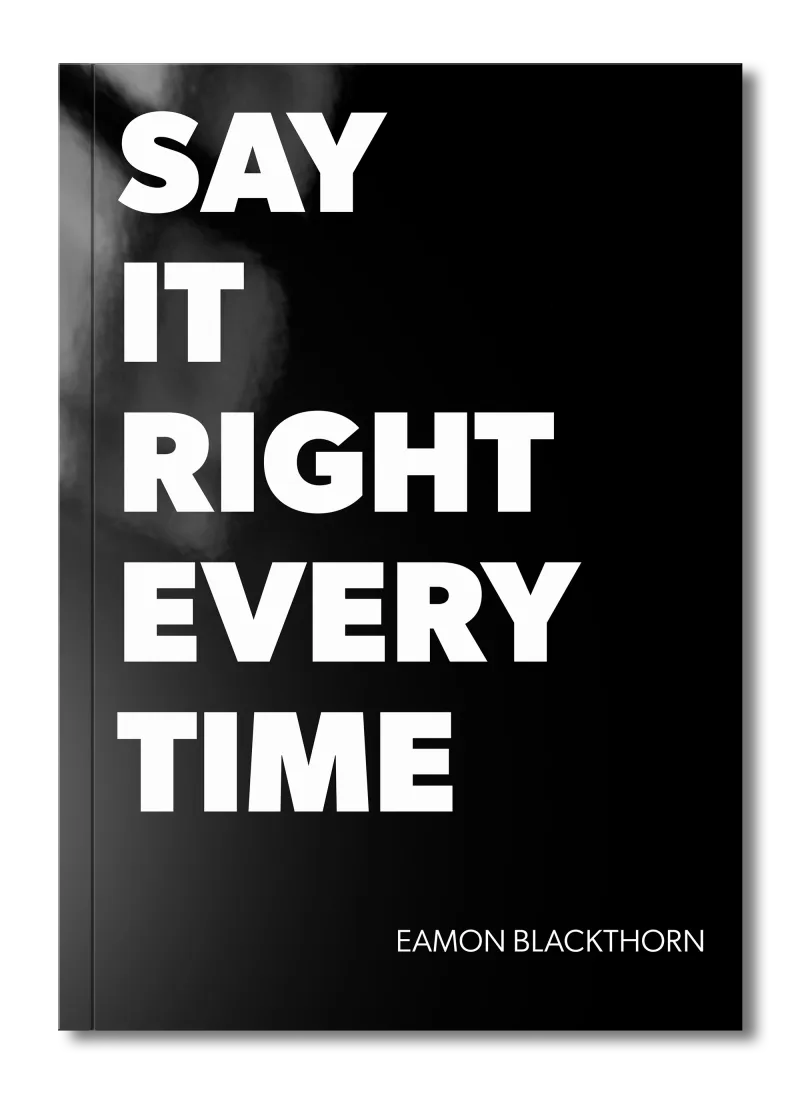
In Say It Right Every Time, I introduce the G.R.O.W. Method in Chapter 5 as a tool for receiving feedback and turning it into something useful. Most people treat feedback as an event to survive. This framework treats it as raw material to work with. When someone tells you that you have been dismissive, controlling, or consistently difficult, you have two choices: react, or respond with a plan. This article will give you the tools to do the second.
Why Toxic Trait Feedback Is So Hard to Use Without a Structure
Hearing that you have toxic traits hits differently than ordinary criticism. A comment about your presentation skills stings a little. Being told that your behaviour damages the people around you shakes something deeper. It triggers what I describe in Chapter 5 of Say It Right Every Time as the amygdala hijack: the moment your brain switches from thinking to defending. Your heart rate climbs. Your reasoning narrows. You reach for justifications, counterarguments, or silence.
Without a structure to hold onto, most people do one of three things. They apologise reflexively and change nothing. They argue the feedback away. Or they agree in the moment and forget it within a week. None of these responses address the actual behaviour. They just manage the discomfort of the conversation.
This is exactly where a framework earns its value. Structure does not make the conversation easier emotionally. It gives you a path to walk when your emotions want to pull you off course. The G.R.O.W. method is that path.
"The Conversation You're Avoiding Is the One You Need to Have."
"The Conversation You're Avoiding
Is the One You Need to Have."
Stop rehearsing conversations you'll never have. Say It Right Every Time gives you 115 word-for-word scripts and 16 proven frameworks to speak with confidence in every conversation that matters.
What the G.R.O.W. Method Is and Where It Comes From
The G.R.O.W. method, as I outline in Chapter 5 of Say It Right Every Time, is a four-part framework for receiving feedback and converting it into a personal development plan. The letters stand for Goal, Reality, Options, and Way Forward. The framework moves you from the raw moment of hearing difficult feedback to leaving the conversation with something concrete: a plan you can act on today.
It is important to understand what this framework is not. It is not a deflection tool. It is not a way to appear engaged while avoiding accountability. Used honestly, it requires you to sit with an uncomfortable reality and then do something specific about it. That takes courage. The structure just makes sure the courage goes somewhere productive.
How the G.R.O.W. Method Works Step by Step
Step 1: Goal
The first question to ask is: what does this feedback suggest my goal should be?
You are not setting a vague aspiration here. You are identifying a specific, concrete behavioural change that would address the toxic trait being named. If someone has told you that you undermine people in meetings, your goal is not "be nicer." It is something precise: stop interrupting colleagues mid-sentence, stop dismissing ideas before exploring them, stop using sarcasm as a substitute for honest disagreement.
Precision matters here because vague goals produce vague change. The feedback someone gave you almost always points to a specific behaviour, even if it was delivered broadly. Your job in this step is to name that behaviour clearly.
In use: Imagine your manager has just told you that your tendency to micro-manage is making your team anxious and eroding their confidence. Your goal is not "become a better manager." It is: "Give team members clear briefs and then trust them to execute without checking in more than once per day."
Step 2: Reality
This is the step most people rush past. It is also the most important one.
Reality asks you to look honestly at what your behaviour has actually looked like. Not your intention. Not your interpretation. The observable behaviour and its impact on the people around you. I have watched too many people skip straight to solutions because sitting with the reality of their own toxic patterns is genuinely painful. But if you skip this step, you build your plan on a distorted foundation.
Ask yourself: how often has this behaviour shown up? In what situations does it appear? Who has it affected, and how? What signals have you ignored or explained away?
In use: Using the same example: the reality might be that you have sent seven follow-up messages on a single task in one afternoon, pulled a report back from a team member to redo it yourself three times this month, and scheduled additional check-ins the day before every deadline because you do not trust the work will be done. That is the reality. Name it clearly, without minimising it.
If someone on your team was affected enough to raise this issue formally, you might also consider how to apologize in a way that actually restores the working relationship before moving forward.
Step 3: Options
Now you have a goal and an honest account of the current reality. The gap between them is where your options live.
This step asks: what could I do differently? You are generating a list, not committing to a single path yet. Think broadly. Could you ask for a mentor who manages without micro-managing? Could you establish a clear boundary for yourself around when you are and are not allowed to check in? Could you build a system that gives you the visibility you need without interfering with your team's autonomy? Could you work with a trusted colleague to flag the behaviour when it appears?
The goal is to produce at least three genuine options. One is not a choice. Two is an either/or. Three or more gives you the material to build a real plan.
In use: Your options might include: taking a course in delegation, agreeing with your team on a weekly status update that replaces ad hoc check-ins, asking your manager to hold you accountable to a new check-in standard, or identifying a specific trigger, like anxiety before deadlines, that drives the behaviour and addressing that directly.
Step 4: Way Forward
This is where the framework becomes a commitment. You choose from your options, combine them if useful, and state a specific plan with a timeline.
The Way Forward is not "I will try to do better." It is: "Starting Monday, I will send one project update request per week, scheduled every Friday morning. I will ask my colleague to flag it if I send anything outside that agreement. I will review this plan with my manager in four weeks."
Specificity is the difference between a plan and a wish. As I write in Say It Right Every Time, vague feedback is useless feedback, and the same is true of vague plans. Your Way Forward must be concrete enough that someone else could observe whether you are following it.
In use: "Based on this feedback, my goal for the next three months is to manage without micro-managing. The reality is that I have been checking in far too often and redoing work that was not wrong, just different from what I would have done. My options are to establish a weekly status structure, to ask a trusted peer to flag the behaviour, or to address the underlying anxiety through coaching. My plan is to implement the weekly status structure this week, to tell my team about it directly, and to schedule a follow-up conversation with my manager in 30 days to assess whether the behaviour has shifted."
That is the G.R.O.W. method applied in full. A reader can see exactly how this conversation played out in Say It Right Every Time, alongside scripts for receiving feedback in performance reviews and follow-up conversations that demonstrate growth.
When to Use the G.R.O.W. Method and When Not To
The G.R.O.W. method works best when you have already accepted that there is something worth examining in the feedback you received. It is a tool for processing and planning, not for deciding whether feedback is legitimate. If you are still in the stage of deciding whether the person who gave the feedback had any right to do so, you are not ready for this framework yet.
Use it when:
- You have heard the same criticism from more than one person and can no longer dismiss it as a single perspective.
- A performance review has named a specific behavioural pattern that is affecting your colleagues or your results.
- A relationship at work has deteriorated and you know your behaviour played a role.
- You want to show someone who gave you hard feedback that you took it seriously, not just in words but in action.
Do not use it when:
- You are still in the grip of a defensive reaction. Give yourself time to settle before you work through the steps. Applying a structure while your amygdala is running the show produces answers that protect your ego, not plans that change your behaviour.
- The feedback was vague and you have not yet had a chance to ask for specific examples. A plan built on unclear feedback will miss the target. Ask first: "Can you give me a specific example of when you saw that behaviour, and what you would have liked me to do differently?" Then use the framework once you have something concrete to work with.
For situations where a defensive reaction is the main obstacle, the C.O.R.E. Framework for staying calm when feedback triggers defensiveness is worth applying before you move into G.R.O.W.
Using G.R.O.W. When Multiple Toxic Traits Have Been Named
Sometimes the feedback is not about one behaviour. It is about a pattern: you are dismissive, you take credit, you shut down dissent, you are inconsistent in how you treat people. When multiple toxic traits have been named at once, the G.R.O.W. method still works. You just apply it one trait at a time.
Trying to build a single plan for everything at once leads to a plan that addresses nothing specifically. Choose the most damaging behaviour first, work through all four steps, and establish a Way Forward with a timeline. Then return to the next one. Progress on one front is more credible than vague commitments across five.
This approach also matters for the people who gave you the feedback. They need to see specific change in a specific area before they will believe the broader pattern can shift. If you are navigating a situation where team relationships have broken down due to these patterns, the D.E.A.L. Method for resolving conflicts that are fracturing team dynamics may help you manage the relationship repair alongside the personal work.
A Decision Guide for the Right Tool in the Right Moment
The G.R.O.W. method is one framework among several worth knowing when you are dealing with the aftermath of toxic behaviour being named. Here is a clear map of when each tool serves you best.
| Situation | Best Tool |
|---|---|
| You need to process feedback and build a personal plan | G.R.O.W. Method |
| You are feeling defensive and need to calm down first | C.O.R.E. Framework |
| You need to repair a relationship after the feedback | Apology framework |
| Your team's working relationship has broken down | B.R.I.D.G.E. or D.E.A.L. Method |
| You want to receive feedback without triggering conflict | G.R.O.W. in a performance conversation |
The G.R.O.W. method lives in the personal space. It is the tool you use when the work is on you. The relational tools, the ones that help you rebuild trust and repair connection, come after. Get your own house in order first, then go back into the relationship with something genuine to offer.
If feedback about your behaviour has come from a full team rather than one person, the G.R.O.W. Method applied to team feedback offers a version of this framework scaled to group dynamics rather than individual change.
For a broader look at using G.R.O.W. when feedback itself is the context, rather than a crisis, read how to receive feedback without getting defensive.
The Mistakes People Make When Using This Framework
Most of the time when this framework fails, it is not because the framework is wrong. It is because the person using it is being dishonest with themselves at a critical step.
The mistake: Treating the Goal step as a performance.
Why it happens: When the feedback came from a manager or during a formal review, the temptation is to state a goal that sounds good rather than one that addresses the actual behaviour.
What to do instead: Ask yourself whether the goal you are stating would actually change what people experience when they work with you. If the answer is no, keep digging.
The mistake: Minimising the Reality.
Why it happens: Honest self-assessment of toxic behaviour is painful. It is easier to acknowledge a mild version of what happened than the full truth.
What to do instead: Ask the person who gave you feedback to describe a specific incident in detail before you complete the Reality step. Their account will be more accurate than your memory.
The mistake: Listing Options you have no intention of pursuing.
Why it happens: The framework requires at least a few options, so people list them to complete the step, not because they have genuinely considered them.
What to do instead: For each option, ask: "Would I actually do this?" If the honest answer is no, remove it. Your Way Forward must come from real options, not decorative ones.
The mistake: Writing a Way Forward that has no accountability built in.
Why it happens: Accountability means someone can see whether you followed through, and that feels exposing.
What to do instead: Share your Way Forward with someone directly, whether your manager, a peer, or the person who gave you the feedback. Ask them to check in on your progress. Following up after feedback to show growth is not a sign of weakness. It is how trust gets rebuilt.
Building the Habit of Using G.R.O.W. Over Time
A framework used once is a useful experience. A framework used consistently becomes a real skill. Here is a realistic plan for making G.R.O.W. a natural part of how you handle feedback about your own behaviour.
In the first week after receiving hard feedback about a toxic trait, work through the four steps in writing. Writing matters here. It slows you down. It forces clarity. It creates a record you can return to. Keep it somewhere you will actually look at it.
In the first month, schedule one check-in with someone who observed the behaviour you are working to change. Not to report your progress but to ask honestly whether they have noticed a difference. Their perception is the only meaningful measure of whether your Way Forward is working.
Over the following months, bring G.R.O.W. into your regular feedback habits, not just the moments of crisis. If you are receiving feedback through a team-level breakdown and repair process, the same four steps apply to your individual piece of that work.
The more you use this structure, the less you will need to consciously think through each step. It becomes a reflex. Someone gives you hard feedback, and instead of flooding with defensiveness, you reach for Goal. That shift alone is worth every uncomfortable practice session.
What to Carry Away From This
Here is the truth of it. Being told you have toxic traits is not the end of anything. It is information. Painful, confronting, necessary information. Most people never hear it clearly because the people around them have learned to work around them instead of telling them the truth.
If someone had the courage to tell you directly, that is a gift. Treat it like one. Use the G.R.O.W. method not as a way to appear self-aware, but as a genuine tool for the hardest kind of work: changing behaviour that has become a habit.
The goal is not a perfect performance in your next one-on-one or a flawless run at your next review. The goal is that the people who work with you, six months from now, experience something different. That is what the G.R.O.W. method is designed to produce: real change, earned over time, one honest step at a time.
Frequently Asked Questions (FAQ)
What is the G.R.O.W. method?
The G.R.O.W. method is a four-step framework for turning feedback into a personal development plan. It stands for Goal, Reality, Options, and Way Forward. It gives you a structured way to respond to criticism about your behaviour without shutting down or getting defensive. Each step builds directly on the previous one.
How do you use the G.R.O.W. method after being told you have toxic traits?
Start by identifying the specific goal the feedback points toward, then honestly assess the current reality of your behaviour and its impact. Next, list your genuine options for change, and finally commit to a specific Way Forward with a timeline. This moves you from a defensive reaction to a concrete plan you can act on immediately.
What does G.R.O.W. stand for in the G.R.O.W. method?
G.R.O.W. stands for Goal, Reality, Options, and Way Forward. Each letter names one stage of the process. Together, they move you from receiving difficult feedback about toxic behaviour to having a concrete, personalised plan for changing the specific behaviour that caused the problem in the first place.
Can the G.R.O.W. method help with toxic behaviour at work?
Yes. The G.R.O.W. method is particularly useful in workplace settings where toxic behaviour has damaged relationships or trust. It gives you a professional, structured response to corrective feedback, and it shows colleagues and managers that you are serious about making change rather than simply defending yourself or offering empty promises.
What is the biggest mistake people make when using the G.R.O.W. method?
The most common mistake is rushing past the Reality step. People want to skip straight to solutions, but without an honest assessment of what your behaviour actually looked like and what impact it had, your options and plan will miss the real problem entirely. Sit with the Reality step longer than feels comfortable.
How is the G.R.O.W. method different from just saying sorry?
An apology addresses the past. The G.R.O.W. method addresses the future. It does not replace a sincere apology but it follows one with a structured plan for change. It shows the other person not just remorse but a clear, specific commitment to behaving differently going forward, which is what actually rebuilds trust over time.