
In Short
This article covers one master framework, the C.O.R.E. Framework, and three supporting tools that together give you a reliable system for managing conversations when toxic traits keep pulling them off course.
- The C.O.R.E. Framework: Clarity, Openness, Respect, Empathy
- The Empathy Bridge: lowering defenses before delivering your message
- The 3-Second Pause: interrupting the reactive cycle before it takes hold
Toxic traits conversations are exchanges in which one person's harmful behavioral patterns, including deflection, blame-shifting, contempt, or manipulation, repeatedly derail the discussion before any real issue can be addressed or resolved.
You walked in prepared. You knew what you wanted to say. You had even rehearsed it the night before. Then, within two minutes, the other person twisted the topic, made it about something you did six months ago, or shut down so completely that you found yourself either apologizing for things that were not your fault or saying things you immediately regretted. The conversation was over before it started. That is what toxic traits do. They do not just make conversations uncomfortable. They weaponize the conversation itself, turning it into a tool for avoiding accountability and destabilizing anyone who tries to hold a line.
Good intentions are not enough in those moments. Warmth is not enough. Preparation that is built only on what you plan to say is not enough. You need a system that holds when the pressure is on, because toxic traits conversations will put that pressure on you every single time.
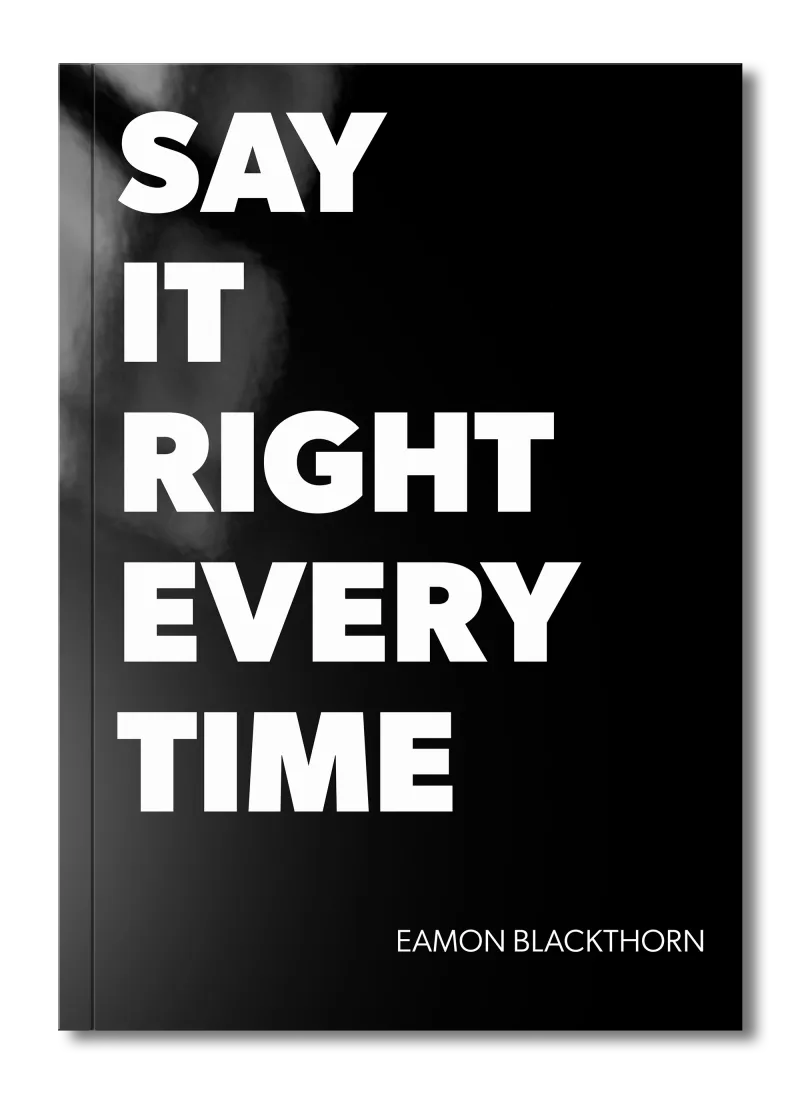
In Say It Right Every Time, I call this the C.O.R.E. Framework, a four-pillar master system built on Clarity, Openness, Respect, and Empathy. Chapter 2 lays it out in full. What follows is how to apply it, and three supporting tools drawn from the same chapter, specifically when you are dealing with someone whose toxic traits keep derailing the discussion.
Why Toxic Traits Demand More Than Good Instincts
Most of us believe that if we just stay calm and speak clearly, things will work out. I believed that for years. Then I sat across from someone who used every calm, clear statement I made as material to deflect from, dismiss, or distort. My instincts failed me. I went in with confidence and came out feeling like I had said nothing at all.
Here is what I have learned across six decades of difficult conversations: toxic traits specifically exploit the gap between good intentions and structured communication. Blame-shifting works because it pulls you into defending yourself, away from the original issue. Contemptuous dismissal works because it activates the part of your brain, what neuroscientists call the amygdala, that processes threat. Once that happens, rational thinking takes a back seat.
"Relying on instinct," I write in Chapter 2 of Say It Right Every Time, "is like trying to navigate a storm without a compass. You are tossed about by the winds of emotion, and you are likely to end up shipwrecked." A framework replaces unreliable instinct with a repeatable system. It does not guarantee the other person will cooperate. It guarantees that you will not lose the thread yourself.
If you are also dealing with the group dimension of this, the article on how to address passive-aggressive behavior that's silently eroding team synergy covers how these same toxic patterns operate across a wider team.
"The Conversation You're Avoiding Is the One You Need to Have."
"The Conversation You're Avoiding
Is the One You Need to Have."
Stop rehearsing conversations you'll never have. Say It Right Every Time gives you 115 word-for-word scripts and 16 proven frameworks to speak with confidence in every conversation that matters.
The C.O.R.E. Framework When Toxic Traits Are in the Room
The C.O.R.E. Framework is not a script you deliver once. It is a sequence of four pillars you move through, and return to if the conversation gets pulled sideways. Think of it as a compass bearing: when the toxic behavior pulls you off course, you find your bearing again and keep walking.
Framework 1: The C.O.R.E. Framework
What it is: A four-pillar master system for difficult conversations, covered in Chapter 2 of Say It Right Every Time. Clarity, Openness, Respect, and Empathy applied in sequence.
What it is designed for: Conversations where one person's toxic traits keep redirecting, escalating, or shutting down the exchange before any resolution can occur.
How it works:
Clarity. Before the conversation begins, you identify your core message in one sentence, your desired outcome in specific terms, and your reason for having this conversation at all. With toxic traits in play, clarity is your anchor. When someone deflects or twists the topic, you return to your core message: "I want to come back to what I was saying about [topic]." You do not chase every tangent they throw.
Openness. You enter the conversation willing to hear the other person's perspective, even if that perspective arrives wrapped in blame or hostility. This is not passivity. It is strategic. When you demonstrate genuine willingness to listen, you remove the other person's most common defense, the claim that you are not listening to them. It also slows the conversation down, which tends to reduce escalation.
Respect. This is not about being polite to someone who is treating you poorly. It is about staying focused on behavior and not on character. You do not say "You are always like this." You say "When this happens, the effect is..." Respectful directness keeps you on solid ground and prevents the conversation from becoming a character attack that the other person can easily deflect.
Empathy. You acknowledge what the other person is feeling or experiencing, not because their toxic behavior is acceptable, but because naming the emotion reduces its power. "I can see this feels frustrating" costs you nothing and frequently changes the entire temperature of the room.
When to use it: Any conversation where toxic traits, such as blame-shifting, contempt, persistent deflection, or emotional manipulation, have derailed previous attempts to address a real issue.
When not to use it: When you are already emotionally flooded yourself. When the other person is in a state of acute escalation. When the behavioral pattern is severe enough to require formal intervention rather than a one-on-one conversation.
Quick example: Your colleague dismisses your concern about their behavior by saying "You are too sensitive." Instead of defending your sensitivity, you return to Clarity: "My concern is about how this affects the team's output. The outcome I want is a clear agreement on how we handle this going forward." You apply Respect by not engaging the personal attack, and Empathy by adding: "I understand this is not easy to hear."
Eamon's note: The hardest part of C.O.R.E. is not learning the four pillars. It is trusting them when the other person is actively trying to knock you off them. That trust only comes with practice.
Three Supporting Tools That Make the C.O.R.E. Framework Work Under Pressure
The C.O.R.E. Framework is the structure. These three tools are what make it hold when someone's toxic traits are working hard against it.
Framework 2: The Clarity Checklist
What it is: A five-item pre-conversation preparation tool from Chapter 2 of Say It Right Every Time. It ensures your core message, desired outcome, supporting points, personal motivation, and listening readiness are all in place before you begin.
What it is designed for: Preventing toxic traits from succeeding at their primary function, which is to make you forget what you came to say.
How it works:
- Core message. Write it in one sentence. If you cannot, you are not ready.
- Desired outcome. State it specifically, realistically, and actionably. "I want things to improve" is not an outcome. "I want us to agree on a process for raising concerns" is.
- Supporting points. No more than three. These are specific behavioral examples, not character judgments.
- Personal motivation. Why does this matter to you? Knowing your own reason keeps you grounded when the other person tries to make the conversation about something else.
- Listening readiness. Ask yourself honestly: am I prepared to hear something I do not want to hear? If not, postpone until you are.
When to use it: Every time. Do not walk into a conversation with a person whose toxic traits you know about without completing this checklist.
When not to use it: There is no situation where this checklist is a bad idea. Some conversations will not allow preparation time, but even a two-minute version is better than walking in cold.
Quick example: Before meeting with a team member who routinely deflects responsibility onto others, you write down: Core message: your actions during last week's project created avoidable problems for the team. Desired outcome: a clear commitment to a specific behavior change. Three examples: each one a specific incident with a date and a consequence. That preparation becomes your anchor when the deflection starts.
Eamon's note: I have found that people who skip this step almost always regret it. Toxic traits conversations are not the place to improvise.
Framework 3: The Empathy Bridge
What it is: A technique for acknowledging the other person's feelings or situation before delivering a difficult message. It is designed to lower defenses and invite a degree of collaboration, even from someone whose toxic traits make them resistant to feedback.
What it is designed for: Breaking through the defensive wall that toxic behavior puts up the moment any difficult message arrives.
How it works:
- Observe the emotional state. Before you deliver your core message, notice what the other person appears to be feeling. Are they tense? Dismissive? Already defensive?
- Name it, briefly. "I can see this is a difficult topic." "I know this is not easy to hear." You do not need to elaborate. One sentence is enough.
- Transition to your message. "With that said, I need to be direct about what I observed." The Empathy Bridge is a bridge, not a destination. Cross it, then keep walking.
When to use it: When you can see that the other person's defenses are already raised before you have said anything substantive. Also useful when previous conversations on this topic ended in escalation.
When not to use it: When the other person's toxic trait is specifically to weaponize any expression of empathy against you, twisting it into an admission of guilt or a reason to dismiss your message. In those cases, skip the bridge and move directly to calm, factual Clarity.
Quick example: You say: "I know things have been difficult lately, and I imagine feedback is the last thing you want right now. I still need to talk with you about what happened on Thursday, because it affected the whole team." The second sentence lands differently than if you had opened with it cold.
Eamon's note: "Connect before you correct" is a phrase I have used for years. The Empathy Bridge is what that phrase looks like in practice.
For situations where this same dynamic is playing out in group settings, the article on scripts for addressing team members who are undermining group synergy gives you word-for-word language you can adapt.
Framework 4: The 3-Second Pause
What it is: A micro-intervention technique from Chapter 2 of Say It Right Every Time. When emotions spike in response to a toxic remark or manipulation tactic, you pause for three seconds before responding. Three seconds feels like nothing. In a charged conversation, it changes everything.
What it is designed for: Interrupting the amygdala hijack. When someone deploys a toxic trait, your nervous system reacts before your rational mind has a chance to assess the situation. The 3-Second Pause inserts a gap between the trigger and your response.
How it works:
- Feel the spike. You will know it: the tightening, the urge to fire back or shut down.
- Count three seconds internally. Breathe once. Do not fill the silence.
- Choose your response deliberately. Ask yourself: does my next sentence move toward my desired outcome, or does it hand the conversation back to the toxic pattern?
When to use it: Every time a toxic remark lands and you feel the urge to react immediately. This includes contemptuous comments, blame-shifting statements, and manipulation tactics designed to make you emotional.
When not to use it: When the conversation has already escalated beyond the point of productive exchange. In that case, use the postpone script: "I think we're both too emotional to have a productive conversation right now. Can we agree to talk about this tomorrow at 10am?"
Quick example: Your counterpart says: "This is exactly why nobody on the team respects your opinion." You feel the heat rise. You pause three seconds. Then: "My concern is about the project timeline, not about what others think of me. Can we get back to that?" You have not taken the bait. The conversation stays on your terms.
Eamon's note: Three seconds is longer than it feels. Let it be uncomfortable. The discomfort is you choosing a better response over an easy one.
If you want to build the confidence to hold that pause even when the stakes are very high, the S.T.R.O.N.G. Method covered in this article gives you a six-step pre-conversation ritual that builds exactly that kind of mental readiness.
Choosing the Right Tool for the Toxic Trait in Front of You
Not every toxic trait calls for the same response. Here is a quick mapping:
| Toxic Trait in Play | Primary Tool | Supporting Tool |
|---|---|---|
| Blame-shifting | Clarity Checklist | C.O.R.E. Clarity pillar |
| Contemptuous dismissal | 3-Second Pause | C.O.R.E. Respect pillar |
| Emotional escalation | 3-Second Pause | C.O.R.E. Empathy pillar |
| Deflection and topic-changing | C.O.R.E. Clarity pillar | Clarity Checklist |
| Defensive wall before you begin | Empathy Bridge | C.O.R.E. Openness pillar |
| Persistent manipulation | Clarity Checklist | C.O.R.E. Respect pillar |
The C.O.R.E. Framework is always your primary structure. The three tools serve specific moments within that structure. When you are not sure which tool to reach for, return to the simplest question: what is my desired outcome, and what is preventing me from moving toward it right now?
For team situations where multiple toxic dynamics are happening simultaneously, the D.E.A.L. Method for resolving conflicts that are fracturing team synergy offers a complementary structure that works well alongside C.O.R.E.
The Mistakes People Make When Toxic Traits Are Derailing the Room
I have made most of these myself. They are worth naming clearly.
The mistake: Chasing every deflection the other person throws.
Why it happens: Deflection triggers the urge to defend, and defending feels like staying on topic.
What to do instead: Return to your core message every time. "That is a separate topic. I want to come back to what I raised."
The mistake: Letting empathy become an apology for the other person's behavior.
Why it happens: When the other person escalates, softening the message feels like the safe choice.
What to do instead: Acknowledge their feeling without withdrawing your message. The Empathy Bridge crosses both ways.
The mistake: Treating the conversation as finished when the other person agrees verbally but has not committed to a specific action.
Why it happens: Verbal agreement feels like resolution, especially after a difficult exchange.
What to do instead: Close with specifics every time. "So we are agreed that by Friday you will..." Toxic traits often include a pattern of agreeing in the moment and changing nothing afterward.
The mistake: Skipping the Clarity Checklist because you feel like you know what you want to say.
Why it happens: Confidence in your own feelings is not the same as clarity in your message.
What to do instead: Write it down. Every time. Toxic traits conversations are exactly the ones where you need your core message on paper before you walk in.
If a conversation has already gone wrong and you need to recover the relationship, the R.E.C.O.V.E.R. Method gives you a structured path back.
Building Fluency With These Tools Over the Next Six Weeks
You do not become fluent in the C.O.R.E. Framework by reading about it. You become fluent by using it, imperfectly at first, then better. Here is a realistic plan.
Weeks one and two: Use the Clarity Checklist before every significant conversation, not just difficult ones. Build the habit of knowing your core message and desired outcome before you open your mouth.
Weeks three and four: Practice the 3-Second Pause in low-stakes situations. When a colleague says something that irritates you, pause before responding. Notice what you would have said versus what you chose to say.
Weeks five and six: Try the Empathy Bridge in one real conversation per week. Keep it brief. One sentence of acknowledgment, then your message. Notice how the other person's body language shifts.
The confidence-competence loop is real. Small wins with these tools build the confidence to use them in higher-stakes exchanges. As I describe in Chapter 3 of Say It Right Every Time, "Every time you say 'no' to something that is not right for you, you are saying 'yes' to something that is." The same principle applies here: every time you use the framework instead of defaulting to your worst instincts, you are practicing the version of yourself that can handle what is coming.
The C.O.R.E. Framework article on staying calm when feedback triggers a defensive reaction is worth reading alongside this one, as defensive reactions and toxic traits often appear together.
For situations where toxic traits have already damaged team trust, the articles on restoring team synergy after a breakdown extend the C.O.R.E. Framework into the group repair context.
What to Carry Away From This
Toxic traits are not going to stop arriving. They are going to keep showing up in colleagues, in managers, in clients, in people you care about. The question is not whether you will face them. The question is whether you will face them with a system or without one.
The C.O.R.E. Framework gives you that system. Clarity keeps you from losing the thread. Openness keeps you from becoming what you are trying to address. Respect keeps the conversation on behavior rather than character. Empathy keeps the other person's defenses low enough for something real to get through. These four pillars, supported by the Clarity Checklist, the Empathy Bridge, and the 3-Second Pause, are the tools I reach for when toxic traits conversations have the potential to go badly wrong.
Here is the truth of it: mastering toxic traits conversations is not about becoming harder. It is about becoming more deliberate. The framework is your structure. The practice is your strength. Give it six weeks of honest effort, and you will not recognize the difference in how you hold yourself when the pressure is on.
Frequently Asked Questions (FAQ)
What are toxic traits conversations and why are they so hard to manage?
Toxic traits conversations are exchanges where one person's harmful behavioral patterns, such as deflection, blame-shifting, or contempt, repeatedly pull the discussion off course. They are hard to manage because the toxic behavior triggers emotional reactions that make structured thinking almost impossible without a system to fall back on.
How does the C.O.R.E. Framework help when toxic traits derail a discussion?
The C.O.R.E. Framework gives you four sequential anchors: Clarity, Openness, Respect, and Empathy. When toxic traits cause the conversation to spiral, each pillar acts as a reset point. Instead of reacting instinctively, you return to the framework and regain control of both the direction and your own emotional state.
When should you not use the C.O.R.E. Framework with a toxic person?
Do not use it when you are already emotionally flooded, when the other person is in a state of acute escalation, or when the pattern of toxic behavior is so entrenched that no single conversation can shift it. In those cases, postpone the conversation and prepare separately before returning.
What is the Empathy Bridge and how does it work with toxic traits?
The Empathy Bridge is a technique from Chapter 2 of Say It Right Every Time. You acknowledge the other person's feelings or situation before delivering your message. With toxic traits, it lowers the other person's defenses just enough to create a window for the real conversation to begin.
How do I stop a toxic person from hijacking the conversation every time?
The 3-Second Pause is your most immediate tool. When a toxic remark lands and you feel the urge to react, wait three seconds before responding. This interrupts the amygdala hijack and gives you time to choose your next move deliberately, rather than handing the conversation back to the toxic pattern.
How long does it take to get fluent with the C.O.R.E. Framework in difficult conversations?
Most people begin to feel the difference after three to four deliberate practice sessions. Fluency, meaning the ability to apply it under real pressure without consciously thinking through each step, typically takes four to six weeks of consistent use across different situations and different people.