
In Short
This article covers one primary framework, the F.R.I.E.N.D. method, along with five supporting tools that help you confront toxic traits in a close friendship with clarity and care.
- The F.R.I.E.N.D. Method: six steps from framing to deciding on a path forward
- Supporting scripts for one-sided friendships, betrayal, and boundary setting
- A decision guide for choosing the right approach based on the situation
The F.R.I.E.N.D. method is a six-step framework for confronting toxic traits in a close friendship. It guides you through naming the specific issue, expressing your feelings honestly, and reaching a shared decision about what the friendship looks like going forward, without defaulting to silence or blowing the relationship apart.
You told yourself you would bring it up the next time it happened. Then the next time came, and you said nothing again. Maybe you softened it in your head: it was not that bad, you did not want to cause a scene, you valued the friendship too much to risk it. So the conversation stayed unspoken, and the resentment settled in like damp in a wall. I have watched this pattern destroy more friendships than outright betrayal ever did.
The problem is not that you lack courage. The problem is that you lack structure. When a close friend displays toxic traits, whether that is chronic one-sidedness, boundary violations, financial manipulation, or subtle patterns of betrayal, the emotional stakes are so high that good intentions collapse under the pressure. You need a reliable framework to reach for, one built specifically for the complexity of friendship.
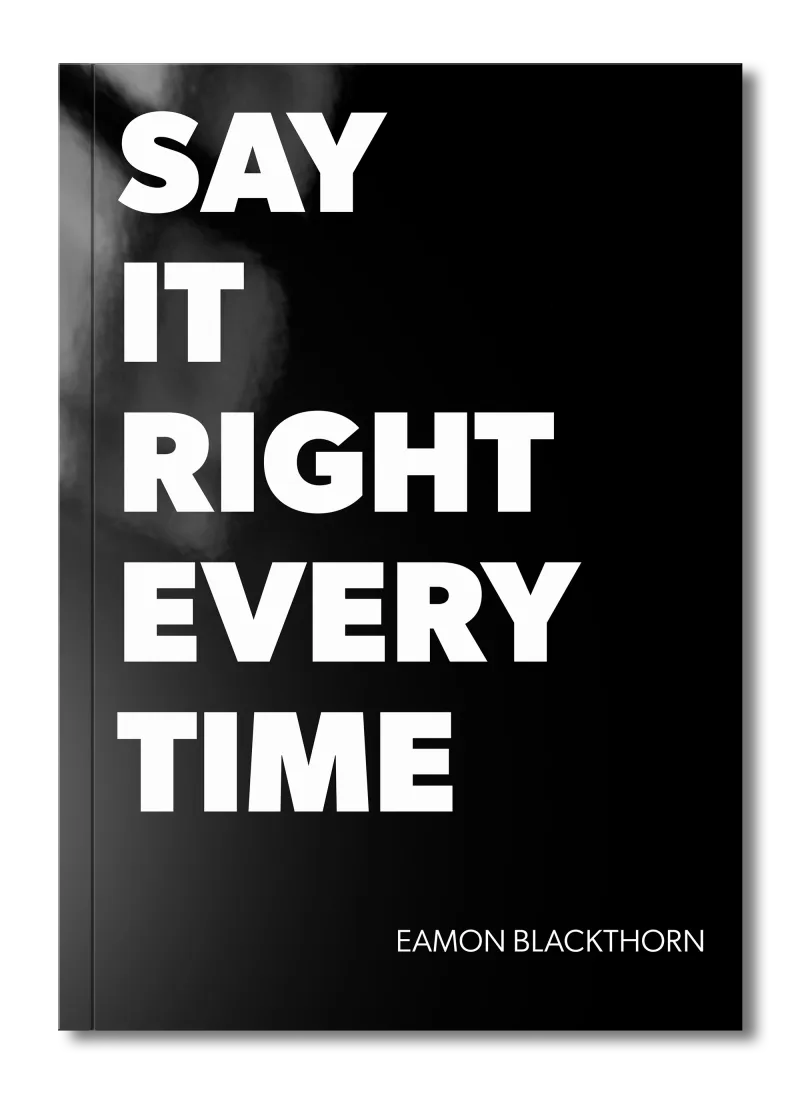
In Say It Right Every Time, I introduce the F.R.I.E.N.D. method: a six-step framework designed for exactly these moments. Chapter 10 of the book covers friendship and social conversations in full, including the cost of silence and the tools you need to have honest, careful conversations with the people who matter most. This article teaches the method completely, so you can apply it today.
Why Toxic Traits in Friendship Are Harder to Confront Than Anything at Work
Workplace conflicts have formal structures around them. You can escalate. You can involve a manager. There are policies and procedures to lean on. None of that exists in friendship. Friendship is voluntary. When you call out a colleague's toxic behavior, the professional relationship does not depend on them liking you afterward. When you call out a friend's toxic behavior, the entire relationship is on the line.
That voluntary nature changes everything. It raises the emotional temperature before you say a single word. It makes you second-guess whether you are being too sensitive. It makes the other person feel judged in the one space they expected unconditional acceptance. This is why most people choose silence, even when the toxic pattern is clear and harmful.
Here is the truth of it: silence is not neutrality. As I write in Say It Right Every Time (the full framework is covered here): "The conversations you avoid don't preserve the relationship. They erode it. Silence doesn't protect friendship. It slowly kills it." A framework does not eliminate the discomfort of confrontation. It gives you enough structure to move through the discomfort instead of retreating from it.
If you have ever struggled to raise something difficult with a team member, the principles behind how to start a difficult conversation that's blocking your team's synergy apply to friendship conversations too, though the stakes and tone are different.
"The Conversation You're Avoiding Is the One You Need to Have."
"The Conversation You're Avoiding
Is the One You Need to Have."
Stop rehearsing conversations you'll never have. Say It Right Every Time gives you 115 word-for-word scripts and 16 proven frameworks to speak with confidence in every conversation that matters.
The F.R.I.E.N.D. Method: How to Confront Toxic Traits Step by Step
This is the primary framework, drawn from Chapter 10 of Say It Right Every Time. It has six steps. Every step matters, and the order is deliberate. Do not skip ahead to the confrontation. The early steps are what make the confrontation land without detonating the friendship.
Step 1: Frame with Care
The opening of any difficult friendship conversation sets the entire trajectory. If you lead with accusation, the other person becomes defensive before you have said anything of substance. If you lead with vagueness, they never understand what you actually need from them.
Framing means establishing two things clearly before you describe the problem: that you value the friendship, and that this conversation is an act of respect, not an attack. This is not performance or softening. It is honest context that helps your friend receive what follows.
Script 98 (Standard) from Say It Right Every Time: "Hey, can we talk about something? I've been feeling [specific feeling] about [specific issue], and I don't want to let it build up. I care about our friendship, so I wanted to be honest with you about what's going on for me."
Notice the structure: a request to talk, a statement of feeling, a connection to the friendship, and honesty as the reason. That is a frame, not a preamble. The conversation has begun from a place of care rather than accusation.
When to use it: Every time you open a difficult friendship conversation about toxic behavior. When not to use it: Do not use elaborate framing in a crisis moment where you need to respond to something happening right now. Framing is for planned conversations, not immediate reactions.
Step 2: Respect the History
A long friendship carries weight. Before you focus on what is wrong, acknowledge what has been good. This is not about diminishing the problem. It is about reminding you both that this conversation is happening within a relationship that has real value.
This step also protects you from catastrophizing. When you are in the middle of confronting a toxic trait, it is easy to rewrite the entire friendship as toxic. That is rarely accurate. Respecting the history means holding both truths at once: the friendship has been meaningful, and something within it needs to change.
In practice: "We've been friends for twelve years, and that means a lot to me. That's exactly why I wanted to bring this up instead of letting it quietly damage things between us."
When to use it: When addressing long-standing or repeated toxic patterns in a friendship of genuine depth. When not to use it: Do not spend more than two or three sentences on history. If you overdo it, the other person starts to wonder when the real conversation will begin, and the frame feels manipulative.
Step 3: Identify the Specific Issue
This is where most people fail. They speak in generalities: "You always make everything about you" or "I feel like you don't respect me." These descriptions may be emotionally accurate, but they are not actionable. Your friend cannot change a pattern they cannot specifically identify.
Name the behavior. Give a concrete example. Be as specific as you would be if you were describing a scene in a film: what happened, when it happened, and what the observable impact was.
Script 101 (Standard) from Say It Right Every Time: "I feel like I'm always the one reaching out, and it's starting to hurt. I'm always [specific examples], and I rarely hear from you unless you need something."
That is specific. It gives your friend something real to respond to.
When to use it: Any time you are addressing a repeated toxic behavior pattern rather than a single incident. When not to use it: Avoid building a list of grievances. One specific issue, clearly stated, is more powerful than five examples delivered in quick succession. A list feels like a prosecution.
Specificity is just as important when giving constructive feedback without causing tension. The same principle of naming the behavior, not the character, applies in both directions.
Step 4: Express Feelings Honestly
After naming the specific behavior, say how it has affected you. Use I statements. This is not about softening the message; it is about accuracy. You know your experience better than you know their intentions. Speaking from your experience gives your friend less to argue with and more to understand.
Script 103 (Standard) from Say It Right Every Time: "When you [specific action], it really hurt me. I feel like you betrayed my trust. I need to know why you did that and whether our friendship can recover from this."
That script covers the most serious end of toxic behavior: betrayal. The same structure applies to less severe patterns. "When you cancel plans at the last minute repeatedly, I feel like my time doesn't matter to you" is specific, honest, and uses I statements throughout.
When to use it: Always, at this step. Expressing feelings is non-negotiable. Without it, the conversation becomes a complaint rather than a connection. When not to use it: Do not express feelings while simultaneously accusing. "I feel like you're a selfish person" is not an I statement; it is a judgment disguised as a feeling. Keep this step clean.
The S.B.I. method for giving feedback that actually changes behavior pairs well with this step. Situation, behavior, impact is exactly the structure this step asks you to follow.
Step 5: Navigate to Understanding
This is the step where the conversation becomes a genuine exchange rather than a one-way confrontation. You have framed with care, respected the history, named the specific issue, and expressed your feelings. Now you stop talking and you listen.
Navigating to understanding means asking a real question and genuinely receiving the answer. Your friend may have context you do not have. They may not have realized the pattern existed. They may offer a perspective that shifts yours. Or they may reveal, through their response, that they are not willing to engage at all. That information matters too.
In practice: "I've said what's been going on for me. I really want to understand your side of this. What's been happening from where you stand?"
When to use it: Every time. You cannot decide on a path forward, which is Step 6, until you understand where the other person actually is. When not to use it: Do not use this step as a technique to appear fair while already having decided the outcome. If you are not genuinely open to hearing something that might change your understanding, you are not ready for this conversation yet.
Step 6: Decide on a Path Forward
A difficult conversation that ends without a clear agreement produces nothing. You feel heard for approximately forty-eight hours, the relief fades, and the toxic pattern resumes. The final step of the F.R.I.E.N.D. method asks both of you to state explicitly what changes, and what happens if it does not.
This step requires courage. It means naming what you need going forward: "I need you to give me more notice when you cancel" or "I need you to pay back what you borrowed within the next month" or "I need to know that you won't share what I tell you in confidence." It also means agreeing on a consequence, not as a threat, but as a clear statement of what the friendship requires to survive.
Script 99 (Formal) from Say It Right Every Time: "I need to set a boundary with you. I care about our friendship, but I need to be clear about [specific boundary]. This isn't about you. It's about what I need to maintain my own well-being. I hope you can understand and respect this."
When to use it: At the close of every difficult friendship conversation. When not to use it: Do not rush this step while emotions are still running high. If you need to take a short break before landing here, take it.
As I write in Say It Right Every Time (Chapter 10 covers this in full): "A boundary that you don't enforce isn't a boundary. It's a suggestion."
Five Supporting Tools for Specific Toxic Patterns
The F.R.I.E.N.D. method is your primary framework. These five supporting tools handle the specific scenarios you will face within that structure.
Tool 1: The One-Sided Friendship Script Designed for the slow, grinding toxic pattern of a friend who only shows up when they need something. Use Script 101 as your spine: name the specific imbalance, give concrete examples, and ask directly whether the friendship can become more mutual. Do not accept vague reassurances. A path forward here requires a specific behavior change, not a general statement of good intention.
Tool 2: The Money Conversation Script Financial imbalance is one of the most avoided toxic patterns in friendship. Script 100 from Say It Right Every Time gives you the direct approach: "You borrowed [amount] from me [timeframe], and I haven't gotten it back yet. I don't want this to become awkward between us, but I do need you to pay me back. Can we work out a timeline?" That last question is what moves the conversation from confrontation to agreement.
Tool 3: The Betrayal Recovery Script When a friend has shared your confidence, lied to you, or acted in a way that fundamentally broke trust, the conversation requires both honesty and an explicit request for an account. Script 103 provides this. You are not just naming what happened; you are asking whether the friendship can recover. That question gives your friend the opportunity to take real accountability, and it gives you the information you need to decide.
Tool 4: The Boundary Enforcement Tool Setting a boundary is not the end of the work. Enforcing it is. Many people set a boundary well using Script 99 and then abandon it the moment their friend pushes back. When pushback comes, return to Step 1 of the F.R.I.E.N.D. method: frame with care, restate the boundary, and hold it. A boundary stated once and abandoned communicates that it was not real.
Tool 5: The Graceful Exit Script Some friendships, having absorbed every step of the F.R.I.E.N.D. method with no change, reach a natural end. Script 104 from Say It Right Every Time gives you a way to close a friendship with dignity rather than silence: "I've realized that our friendship isn't working for me anymore. This isn't about one specific thing. It's about the overall dynamic. I care about you, but I need to step back from this friendship. I wish you well." Ending with grace is harder than ghosting. It is also more honest.
For situations where toxic behavior is affecting a wider circle, the approach to addressing group social conflicts requires its own framing, particularly when friends share mutual connections who are watching how the confrontation unfolds.
Choosing the Right Approach: A Decision Guide for Toxic Friendship Patterns
Not every toxic trait calls for the same response. Use this guide to match the situation to the right tool.
| Situation | Primary Tool | Key Step to Emphasize |
|---|---|---|
| Repeated one-sided dynamic | Tool 1: One-Sided Script | Step 3: Identify the specific pattern |
| Money borrowed and not returned | Tool 2: Money Script | Step 6: Decide on a concrete timeline |
| Trust broken or confidence betrayed | Tool 3: Betrayal Script | Step 5: Navigate to understanding |
| Boundary crossed repeatedly | Tool 4: Boundary Enforcement | Step 6: Restate and hold |
| Pattern not changing despite conversations | Tool 5: Graceful Exit | Step 6: Decide on a path forward honestly |
| General toxic trait, first conversation | Full F.R.I.E.N.D. Method | All six steps in order |
The guide above is a starting point, not a rulebook. A betrayal may also involve a money element. A one-sided friendship may have a boundary component. Trust your own read on which toxic pattern is most central, and lead with the tool that addresses it most directly.
If the toxic behavior involves passive-aggressive patterns specifically, the principles behind addressing passive-aggressive behavior that's silently eroding relationships will give you additional tools for naming behavior that operates through denial and indirection.
The Mistakes People Make When Confronting Toxic Traits in Friendship
These are the most common failures I have observed across decades of watching people attempt these conversations.
The mistake: Waiting for a perfect moment before speaking.
Why it happens: The emotional stakes feel so high that any imperfect condition becomes a reason to delay.
What to do instead: Choose a reasonably private, calm moment and begin. There is no perfect moment. There is only now and later, and later costs more.
The mistake: Opening with "you always" or "you never."
Why it happens: You are speaking from accumulated frustration, not from a specific incident.
What to do instead: Return to Step 3. Name one specific, recent example. Build from the concrete, not the general.
The mistake: Accepting a vague response as a real agreement.
Why it happens: The relief of having said the thing makes you want to close the conversation quickly.
What to do instead: Stay in Step 6. Ask specifically: "So what are we agreeing to here?" A real path forward has named behaviors, not good intentions.
The mistake: Raising multiple toxic traits in one conversation.
Why it happens: You have been storing grievances, and once the door opens, they all come through at once.
What to do instead: Choose the one pattern that matters most right now. Address it fully. Return to other issues in a separate conversation once trust in the process is established.
Managers face a similar error when they pile feedback into a single session. The same discipline applies: giving feedback to someone without damaging the relationship requires focus, not a complete audit.
Building Real Fluency with the F.R.I.E.N.D. Method Over Time
Reading a framework and applying it under emotional pressure are two completely different things. Here is a direct plan for building genuine fluency over the next few months.
Weeks 1 and 2: Read each step of the F.R.I.E.N.D. method again and write one real example from your own friendship history where each step either worked or failed. You are not preparing a script yet. You are connecting the framework to your actual experience.
Weeks 3 and 4: Choose the lowest-stakes difficult conversation you have been avoiding with a friend. One that needs saying but is not a crisis. Apply the framework to it. Prepare your framing sentence, your specific behavior example, and your I statement before you begin.
Month 2: Review what happened. Which steps felt natural? Where did you drift? Which step did the conversation stall at? That stalling point is where you need to practice most. Use the relevant script from Say It Right Every Time as a model and rehearse it aloud before the next conversation.
Ongoing: Each time you use the method, notice which step required the most courage. As the method becomes more familiar, that step will move. In my experience, most people start by finding Step 3 hardest, and over time discover that Step 6 is the one that requires the most from them. Both are true. Both are learnable.
The most important piece of fluency-building is repetition in real conversations, not practice in your head. The framework only becomes a natural part of how you communicate when you have used it enough times to trust it under pressure.
The approach to using the D.E.A.L. method for resolving conflict offers a useful parallel structure for comparison, particularly if you are learning multiple frameworks simultaneously and want to understand where each one fits.
What to Carry Forward
Let me close with something I know for certain after six decades of getting this wrong, repairing it, and slowly getting it right.
Good friendships do not survive because the people in them are perfectly compatible. They survive because those people learned how to say hard things to each other and remain standing afterward. As I write in Say It Right Every Time (and teach in full here): "True friendships didn't survive because we avoided conflict. They survived because we learned how to navigate it."
The F.R.I.E.N.D. method will not make confronting toxic traits comfortable. Nothing does. What it gives you is a structure that holds when your emotions are running hot and your instinct is to say everything at once or nothing at all. Six steps. Each one specific. Each one connected to the next. That structure is what turns a conversation you have been dreading into an investment in a friendship worth keeping.
Use the F.R.I.E.N.D. method the next time a toxic trait in a close friendship needs naming. You will not do it perfectly the first time. That is not the point. The point is that you show up for the conversation, which is where every genuine friendship is either saved or slowly surrendered.
Frequently Asked Questions (FAQ)
What is the F.R.I.E.N.D. method?
The F.R.I.E.N.D. method is a six-step framework for confronting toxic traits in a close friendship. The steps are Frame with care, Respect the history, Identify the specific issue, Express feelings honestly, Navigate to understanding, and Decide on a path forward. It gives structure to conversations that most people avoid entirely.
How do you use the F.R.I.E.N.D. method with a toxic friend?
Start by choosing a private moment and framing the conversation with care. Name the specific toxic behavior you have observed, express how it has affected you using I statements, and then listen. The final step asks both of you to agree on what happens next, which is where real change becomes possible.
When should you confront toxic traits in a friendship?
Confront toxic traits before small patterns become friendship-ending problems. If a behavior is affecting your trust, your energy, or your willingness to spend time with that person, it is already worth addressing. Waiting rarely makes the conversation easier; it only gives resentment more time to build.
What toxic traits are hardest to confront in a close friendship?
The hardest toxic traits to confront are the slow, subtle ones: chronic one-sidedness, passive dismissal, small betrayals of trust, and financial imbalance. These do not arrive as one clear incident. They accumulate quietly, which means the person often does not realize the pattern exists until you name it directly.
Can the F.R.I.E.N.D. method save a friendship after a betrayal?
It can, but only if both people are willing to engage honestly with the Navigate and Decide steps. The method gives you a structure for naming the betrayal clearly and asking what recovery looks like. Whether the friendship survives depends on accountability and a genuine agreement about what changes going forward.
What if the F.R.I.E.N.D. method does not work?
If a friend refuses to engage with any of the six steps, dismisses the conversation, or repeats the toxic behavior after a clear agreement, the method has done its job: it has shown you where the friendship actually stands. At that point, you have the information you need to make a clear decision about the relationship.