
In Short
This article contains five scripts for closing a toxic traits conversation with a named agreement, covering situations from one-on-one direct confrontation to follow-up after a conversation that ended too soon.
- Script for securing a clear behavioral agreement at the close
- Script for handling defensiveness when naming toxic patterns
- Script for following up in writing after the conversation ends
A toxic traits conversation is a direct discussion about a specific, repeated pattern of harmful behavior. Closing one well means securing a named commitment to change, not just expressing relief that the difficult moment has passed.
You have just named the pattern. You said the thing that needed saying. The other person has heard it, or at least they have heard the words. And now you feel the pull: the conversation is winding down, the tension is dropping, and part of you wants to let the relief carry you both out of the room.
That is exactly where most toxic traits conversations fail.
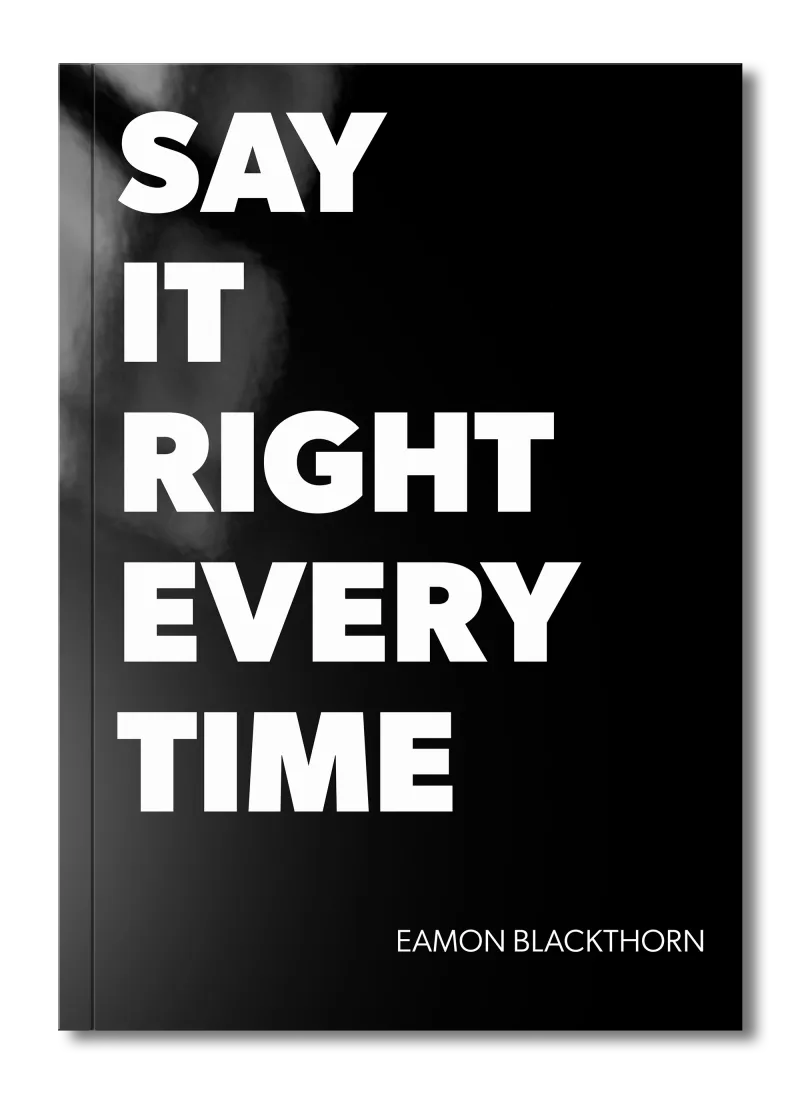
In Say It Right Every Time, I describe the close of a difficult conversation as the moment that decides whether the whole exchange was useful or wasted. The principle is simple: relief is not resolution. A conversation about toxic behavior only produces change when it ends with a named agreement, not a general sense that something was addressed.
Find the script that matches your situation. Read the context. Practice it out loud at least twice before using it. If you are still in the preparation stage, How to Start a Difficult Conversation That's Blocking Your Team's Synergy covers the opening.
How to Use These Scripts
Before you use any of these scripts, follow these steps.
- Find the situation that matches yours.
- Read the full script and the context note before speaking or writing.
- Adapt the words to your natural voice: keep the structure, change the tone.
- Practice out loud at least twice. Scripts read differently than they sound.
The most common mistake people make is reading word-for-word without adjusting for the relationship in front of them. A script delivered like a policy document lands cold, even when the words are right. The structure is what matters. The words are a starting point, not a performance. Keep the architecture of each script intact, and let your own voice carry the rest.
"The Conversation You're Avoiding Is the One You Need to Have."
"The Conversation You're Avoiding
Is the One You Need to Have."
Stop rehearsing conversations you'll never have. Say It Right Every Time gives you 115 word-for-word scripts and 16 proven frameworks to speak with confidence in every conversation that matters.
Script 1: Securing the Behavioral Agreement
Situation: Use this script at the close of a direct conversation about toxic behavior, when the other person has heard your concern but has not yet named a specific commitment. This is the script that turns a conversation from a venting session into an actionable agreement.
Why this works: Most toxic traits conversations end at the problem. The person who raised the issue feels they have done their part. What is missing is a named change, owned by the other person. This script keeps the conversation open just long enough to lock that in, using the same "Lock in the Commitment" step I outline in the D.E.A.L. Method in Chapter 9 of Say It Right Every Time.
Standard version:
"Before we close, I want to make sure we leave with something specific. We've talked about [name the behavior]. What I need going forward is [state the change clearly]. Can you tell me, in your own words, what you're committing to from here?"
Formal version:
"I want to take a moment before we conclude. We have discussed [name the behavior], and I have shared the impact it has had. To move forward constructively, I need a clear commitment from you regarding [state the required change]. I would ask you to confirm, specifically, what you are agreeing to do differently."
After you use it: A good response names a specific action or change with some ownership behind it. A difficult response is vague: "I'll try to do better." If you get vagueness, stay in the conversation one more turn. Ask: "Can you be more specific? What exactly will change?" Do not accept ambiguity as agreement.
Eamon's note: A verbal agreement is not enough on its own, but a conversation that ends without one is worth almost nothing at all.
Script 2: Naming the Pattern Without Attacking the Person
Situation: Use this before the close, when you need to summarize the toxic behavior clearly without triggering a full defensive shutdown. This is especially useful when the behavior has a pattern: repeated interrupting, undermining, blame-shifting, or exclusion.
Why this works: The S.B.I. Method, which I describe in Say It Right Every Time, anchors the conversation in situation, behavior, and impact rather than character. Toxic traits conversations collapse when they drift from "here is what you did" toward "here is what you are." This script keeps the focus sharp. If you want to understand how a neutral problem statement sets up this kind of conversation, How to Deliver a Neutral Problem Statement That Stops Team Conflict Before It Destroys Synergy covers that ground.
Standard version:
"I want to be clear about what I've observed, because I think it matters to name it directly. On [specific occasion], you [describe the behavior]. The impact on [the team / me / the situation] was [name the impact]. This isn't about who you are. It's about a pattern that needs to change."
Formal version:
"Before we discuss a path forward, I want to summarize what I have observed. On [specific occasion], the behavior I witnessed was [describe it clearly]. The consequence of that behavior was [state the impact specifically]. My intention in naming this is not to characterize you personally, but to be precise about what needs to change."
Casual version:
"Look, I want to be straight with you because I think you can handle it. What I've seen is [describe the behavior]. It's happened more than once, and it's caused [name the impact]. I'm not saying anything about who you are. I'm saying this specific thing needs to stop."
After you use it: Watch for acknowledgment, even partial acknowledgment. If the person deflects immediately ("That's not how it happened"), do not chase the deflection. Hold your ground calmly: "I hear you have a different view. What I need to focus on is the impact and what changes going forward."
Eamon's note: Naming the behavior without naming the person is the single most important skill in any toxic traits conversation, and almost nobody does it consistently.
Script 3: Handling Defensiveness at the Close
Situation: Use this when the other person becomes defensive or emotional as the conversation nears its end. This is particularly common when the toxic behavior has never been named before, or when the person has a pattern of denying impact.
Why this works: In Chapter 14 of Say It Right Every Time, I describe how manipulation and defensiveness both thrive in confusion and die in clarity. When someone gets defensive, the temptation is to soften the message. That is a mistake. Softening at this stage reads as uncertainty. What is needed is calm directness: acknowledge the emotion, hold the agreement.
Standard version:
"I can hear that this is hard to take in. That makes sense. And I need us to stay with the conversation just a moment longer, because I want to leave with something clear between us. The behavior we've discussed needs to change. Can we agree on what that looks like?"
Formal version:
"I recognize this conversation has been difficult, and I want to acknowledge that. I am not here to make this harder than it needs to be. However, I do need us to close with a specific agreement rather than a general one. The behavior we have discussed has had a real impact. What I need to know is: what specifically will change going forward?"
After you use it: If defensiveness escalates into anger, use the 3-Second Pause before responding. Do not match the energy in the room. If the conversation becomes unproductive, name it and set a specific time to return to it: "I think we need to step away and come back to this at [specific time]. But I want us both to understand that the conversation is not finished." For more on addressing persistent hostile patterns, see How to Address Passive-Aggressive Behavior That's Silently Eroding Team Synergy.
Eamon's note: Defensiveness is not a reason to stop. It is usually a sign you have finally reached the real issue.
Script 4: The Written Follow-Up After the Conversation
Situation: Use this within 24 hours of a verbal conversation about toxic behavior, especially when the behavior has a history of denial or minimization, or when the stakes are high enough to require a record.
Why this works: Chapter 14 of Say It Right Every Time is direct on this point: a written record before or after a difficult conversation creates an anchor to reality, especially when you are dealing with someone who rewrites history. This is not aggressive. It is precise. The written follow-up does not manufacture accountability; it simply confirms what was agreed. For a connected script on addressing behavior that undermines the team, Scripts for Addressing Team Members Who Are Undermining Group Synergy offers additional language.
Standard version:
"Hi [Name], I wanted to follow up on our conversation earlier. To make sure we're aligned, here's my understanding of what we agreed: [name the behavior discussed], [name the specific commitment made], and [name any follow-up step or timeline]. Let me know if I've captured that correctly, or if there's anything you want to add."
Formal version:
"Dear [Name], I am writing to confirm the key points from our conversation on [date]. We discussed [name the behavior] and its impact on [team / project / relationship]. You committed to [state the specific agreement clearly]. We also agreed to [follow-up step, if any] by [date]. Please let me know if this reflects your understanding accurately."
After you use it: A cooperative response confirms or lightly adjusts the summary. No response within 48 hours is itself a signal. Name it: "I sent a summary of our conversation two days ago and have not heard back. I'd like to confirm we're on the same page."
Eamon's note: The written follow-up is not a threat; it is a kindness, because it removes any later confusion about what was actually said.
Script 5: When the Conversation Ended Too Soon
Situation: Use this when a previous conversation about toxic behavior ended in relief rather than resolution: the tension dropped, someone softened the mood, and you left without a clear agreement. You need to reopen it cleanly.
Why this works: Avoidance is the worst response to conflict, and most of us know it. What is harder to recognize is the subtle avoidance that happens inside a conversation itself, when relief substitutes for resolution. The B.R.I.D.G.E. Method in Say It Right Every Time includes a step called "Gain Agreement" precisely because agreements do not generate themselves. Why Avoiding Difficult Conversations Is the Hidden Enemy of Team Synergy covers the cost of that avoidance in detail. For the full closing framework, How to Close a Difficult Team Conversation in a Way That Locks In Synergy Gains and How to Use the D.E.A.L. Method to Resolve Conflicts That Are Fracturing Team Synergy both go deeper on the mechanics.
Standard version:
"I've been thinking about our conversation, and I don't think we finished it. We talked about [name the behavior], and I felt the conversation wind down before we got to an agreement. I'd like to pick it back up. What I still need is [state the specific commitment]. Can we settle that now?"
Formal version:
"I wanted to revisit the conversation we had on [date]. I have been reflecting on it, and I believe we addressed the issue but did not arrive at a clear agreement on what changes going forward. I would like to take a few minutes to close that gap. Specifically, I need us to agree on [state the required change]. Are you available to do that now?"
Casual version:
"Hey, can we circle back on what we talked about the other day? I felt like we kind of left it hanging. I still need us to land on what's actually going to change with [name the behavior]. It won't take long."
After you use it: Watch for genuine engagement versus a second round of deflection. If the person engages, move directly to the agreement script (Script 1). If they deflect again, name the pattern itself: "I notice we keep getting to this point and not closing it. That is also something we need to address."
Eamon's note: The conversation you did not finish is still alive in the room, whether you returned to it or not.
Adapting These Scripts for Your Situation
Every script in this article is a starting point, not a final word. The structure is what you keep. The exact words are yours to shape.
Adjust for the relationship. A script used with a direct report carries different weight than the same words used with a peer. The formal versions in this article are built for hierarchical or high-stakes situations. The standard and casual versions are for peer relationships where directness is already a baseline.
Match the register to the history. If this is the first time you have raised the behavior, softer framing opens more doors. If this is the third conversation about the same toxic pattern, a firmer close is not only appropriate, it is necessary. The words should reflect where you actually are in the history of the issue.
Remove any phrase that does not sound like you. If a sentence sits uncomfortably in your mouth, cut it or rework it. Scripts that feel forced get delivered awkwardly. The reader on the other side will notice. Keep the intent of every line. Change the words until they feel true.
Name the specific behavior every time. Never let a script carry vague language into the conversation. Replace every bracket with a real, specific behavior before you open your mouth.
The goal is for these words to sound like a better, more prepared version of you, not like someone else.
Common Mistakes When Using These Scripts
The single biggest way these scripts fail is when the person using them accepts the first softening response and does not follow through to a named agreement.
Settling for "I'll try." Vague commitment is not commitment. If the response you receive is non-specific, stay in the conversation. Ask for the specific behavior that will change, and when.
Abandoning the script when defensiveness rises. Defensiveness is predictable in toxic traits conversations. If your script has a closing ask, deliver it even if the other person is uncomfortable. Discomfort is not a reason to stop.
Over-apologizing during the close. Phrases like "I'm sorry to bring this up again" or "I know this is hard to hear" repeated throughout the close undermine the agreement you are trying to reach. Say them once, briefly, then hold your position.
Ending with gratitude instead of clarity. "Thank you for hearing me out" is a fine note to add after you have secured the agreement. It is a poor substitute for the agreement itself.
Using the written follow-up as a threat. The written summary is a practical tool for clarity. Deliver it in a neutral, collegial tone. If it reads like a legal document, it will be received as an escalation, not a confirmation.
A script is a tool. Use it like one: with skill, not rigidity.
Frequently Asked Questions (FAQ)
What is a toxic traits conversation and how do you close one?
A toxic traits conversation is a direct discussion about a specific pattern of harmful behavior affecting others. Closing one well means securing a named agreement, not just expressing relief that the talk is over. A clear commitment is what separates a useful conversation from a wasted one.
How do you get a real agreement after confronting toxic behavior?
Name the specific behavior, state the required change, and ask for a direct response. Avoid vague language like "I hope things improve." A real agreement names what changes, by when, and what happens if the behavior continues. Write it down if the stakes are high.
What should you say at the end of a toxic traits conversation?
Summarize the pattern you discussed, state the agreement clearly, confirm the other person heard it, and name a follow-up point. Avoid ending with gratitude alone. The closing words must include a specific behavioral commitment, not just appreciation for having the talk.
How do you handle defensiveness when closing a toxic traits discussion?
Acknowledge the emotion without abandoning the agreement. Say something like: "I can hear this is difficult. That does not change what we need to agree on." Defensiveness is common when toxic traits are named directly. Hold the structure of the conversation even when the other person pushes back.
Should you follow up after a toxic traits conversation in writing?
Yes, in most cases. A written summary sent within 24 hours creates a clear record of what was agreed. This is especially important when the behavior has a history of denial or minimization. Chapter 11 of Say It Right Every Time covers the value of a written record before and after these conversations.
What makes a toxic traits conversation fail at the closing stage?
Most closings fail because the person who raised the issue accepts relief as a substitute for resolution. The other party says something softening, the tension drops, and both people leave without a named agreement. Relief is not resolution. Clarity at the close is what makes the toxic traits conversation count.