
In Short
After reading this, you will be able to craft and deliver a neutral problem statement that opens a difficult team conversation without triggering blame or defensiveness.
- Separate observable facts from personal accusations before you open your mouth
- Frame the problem around its impact on the team, not the behaviour of an individual
- Deliver the statement calmly and directly, then invite a response
A neutral problem statement is a clear, blame-free description of a situation that names what is happening without assigning fault. It gives a team a shared, objective starting point for resolving conflict without triggering defensiveness or shutting down dialogue.
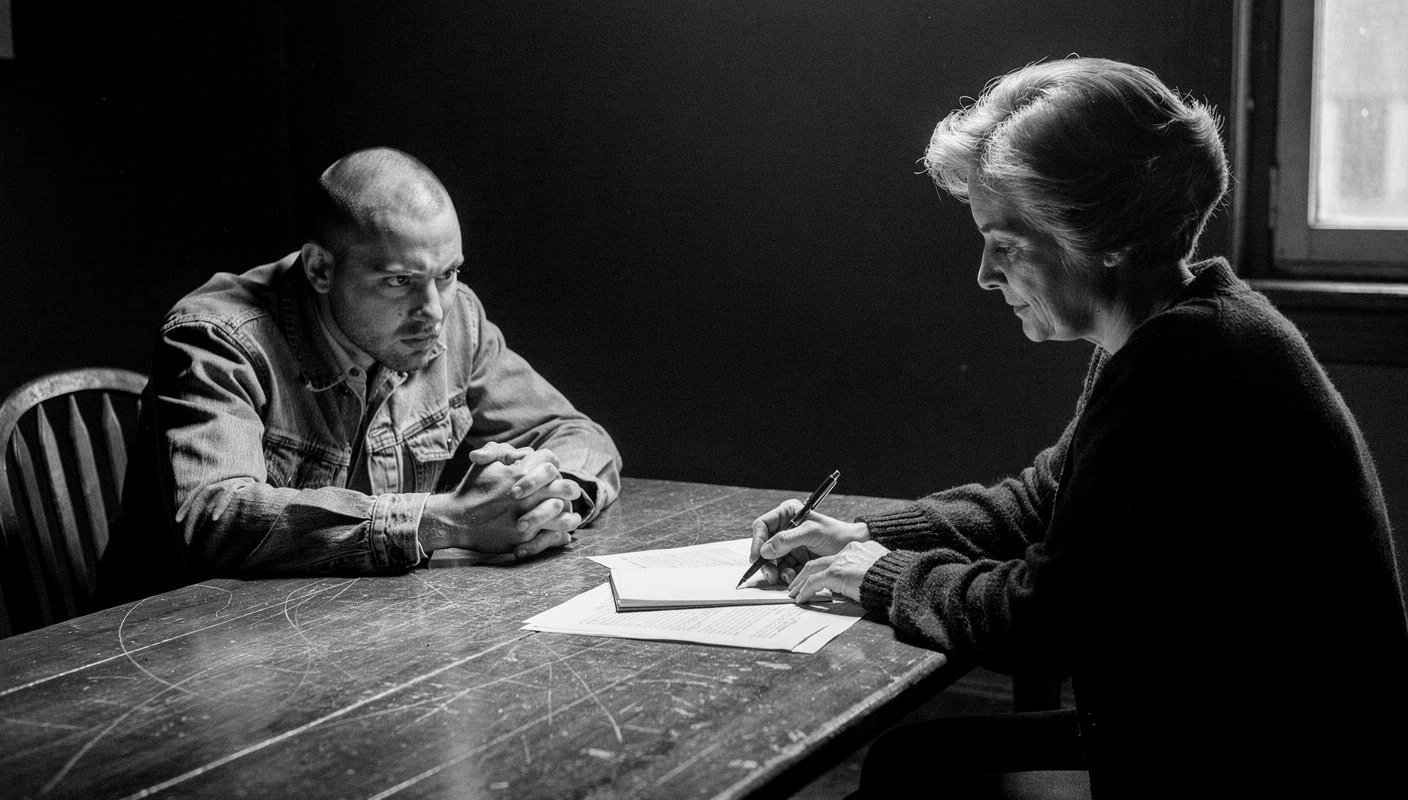
Two colleagues have been clashing for three weeks. The tension is obvious. Work is slowing down. You finally decide to address it, and the moment you open your mouth, one of them crosses their arms and says, "I knew this would get blamed on me." The conversation collapses before it starts. Not because you had bad intentions. Because the words you chose made someone feel accused, and once that happens, the focus shifts from the problem to self-defence.
This is the single most common failure point I have seen in decades of working with teams under pressure. People know conflict needs to be addressed. They struggle to find the words that address it without making things worse. Usually the problem is not courage or timing. It is structure. They do not have a clear method for framing the issue before the conversation begins, and so they improvise, and improvisation under emotional pressure almost always sounds like blame.
A neutral problem statement solves this. It is the tool that separates what is happening from who caused it, and it is the only reliable way to open a difficult conversation without destroying the team synergy you have worked to build. In this guide, you will get a clear, practical process for constructing and delivering one that you can use immediately.
If you are dealing with a situation that has already escalated beyond a first conversation, the guidance on how to de-escalate team conflict without destroying synergy will serve you well alongside this one.
Why Keeping a Problem Statement Neutral Is Harder Than It Looks
Knowing you should be neutral and actually being neutral when you are tired, frustrated, or watching a team you care about fall apart are two entirely different things. Most people understand the concept. Very few execute it cleanly in the moment.
Here is why this is genuinely difficult:
Emotion colours language before you realise it. You think you are describing a situation, but the words you choose, your tone, and where you put the emphasis all carry a verdict. "The report was late again" sounds neutral. "The report was late again" said with a certain weight is an indictment. The person on the receiving end hears the difference even when you do not.
Urgency creates shortcuts. When team friction is costing time and energy, there is a natural pressure to resolve it quickly. That pressure pushes you toward blunt, direct naming of who did what, because it feels faster. It rarely is. The resulting defensiveness adds days to the resolution, not hours.
Most of us have never been taught this skill explicitly. We learn communication through observation, and the models most of us grew up watching were people who either avoided conflict entirely or confronted it with accusation. Neither approach gives you a template for neutral, clear problem framing.
We confuse directness with blame. Good communicators are direct. But directness is about clarity of message, not clarity of fault. You can be completely direct about a problem without naming a person as its cause.
Unspoken expectations pile up. As I note in Say It Right Every Time, unspoken expectations are premeditated resentments. By the time the issue surfaces, there is often weeks of silent frustration behind it, and that history leaks into the words you choose.
The goal is not to eliminate these difficulties. It is to build a system that works in spite of them.
"The Conversation You're Avoiding Is the One You Need to Have."
"The Conversation You're Avoiding
Is the One You Need to Have."
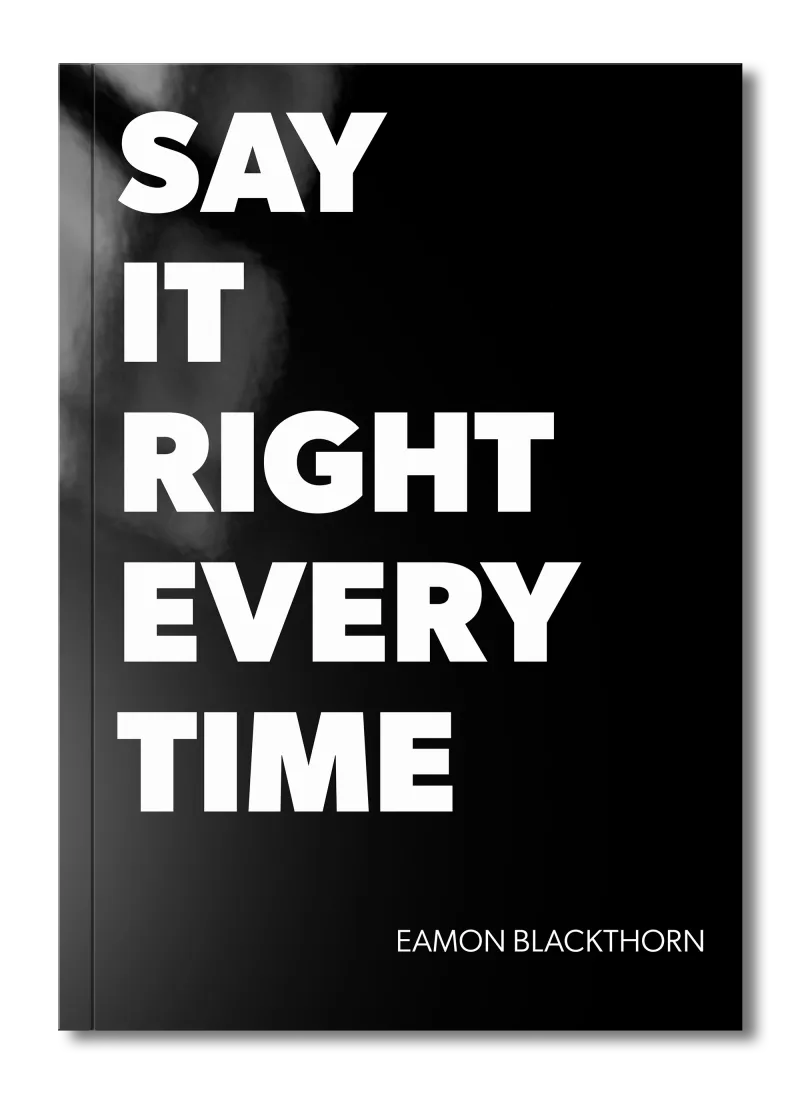
Stop rehearsing conversations you'll never have. Say It Right Every Time gives you 115 word-for-word scripts and 16 proven frameworks to speak with confidence in every conversation that matters.
The Foundation: What You Need Before You Deliver a Problem Statement
Before you begin, there are three things that need to be clear.
The observable facts, not your interpretation. Write down exactly what happened. Not what it means, not what it says about someone, just what occurred. "The project update was missing from Monday's report" is a fact. "Sarah doesn't take this seriously" is an interpretation. You need the fact. The interpretation has no place in a neutral statement.
The impact on the team, not the individual. A neutral problem statement works best when it connects the situation to its effect on the group's ability to function. This shifts the focus away from personal failing and toward shared cost. "When updates are missing, the team cannot plan accurately, and that slows everyone down" is something the whole team can engage with.
Your own emotional readiness. If you are angry, you will not deliver this neutrally no matter how good your words are. Take the time you need. I have delayed a conversation by one day because I knew I was not in the right place to hold it fairly. That delay cost nothing. Delivering the statement in anger would have cost far more.
Get these right first. The steps that follow will not work without them.
Step 1: Identify the Real Issue Beneath the Surface Argument
The presenting conflict is rarely the actual problem, and your neutral problem statement must address the real issue, not the symptom.
Two team members arguing about whose responsibility it was to chase the client are probably not actually arguing about responsibility. They are arguing about unclear role boundaries, unacknowledged workload, or a decision made weeks ago that was never properly resolved. If you frame your statement around the surface argument, you will resolve the wrong thing.
Here is how to find the real issue:
- Write down the visible conflict in one sentence.
- Ask yourself: "What would have prevented this from happening?" The answer points toward the root.
- Ask: "What does each person need that they are not currently getting?" That need is almost always the actual issue.
- Look for patterns. A single missed deadline is an event. Three missed deadlines over six weeks are a systemic problem.
- Separate what people did from what the situation required. Sometimes the problem is a process gap, not a performance gap.
Here is what this looks like in practice. Two team members are in open disagreement about who owns client communications. The surface argument is about one specific email that went unanswered. The real issue is that roles were never clearly defined when the account transferred. Your problem statement needs to address the role clarity gap, not the unanswered email. Once you see the real issue, your statement becomes far easier to frame without blame.
As I discuss in Chapter 6 of Say It Right Every Time, most conflicts are two people with unmet needs. When you can see past the surface argument to the underlying need, you can find language that the whole team can accept as fair.
Step 2: Strip Out All Accusatory Language
Once you know the real issue, you need to write a draft statement and then remove every word that assigns fault, implies character judgement, or uses language that puts someone on trial.
This is a craft skill. It takes practice. The good news is that you can prepare the statement before the conversation, which means you have time to review and revise.
Here is how to clean a statement:
- Underline any use of "you," "always," "never," or "should." These words almost always carry blame, even when you do not intend them to.
- Replace person-focused language with situation-focused language. "You missed the deadline" becomes "the deadline was not met."
- Remove any language that implies motive or character. "You clearly did not prioritise this" implies intent. "This did not receive the attention it needed" describes a state of affairs.
- Read the statement aloud and ask: "Could a fair observer find any accusation in this sentence?" If yes, revise again.
- Test the statement against this question: "Would both parties agree that this sentence describes the situation accurately?" If one person would object to the wording, it is not neutral yet.
This step is worth your full attention. A statement that passes this filter gives the conversation a genuinely fair starting point. One that does not will produce defensiveness within the first thirty seconds, and you will spend the rest of the conversation managing that rather than solving the problem.
Step 3: Build the Statement Using the S.B.I. Structure
The clearest and most reliable format for a neutral problem statement comes from the S.B.I. structure introduced in Say It Right Every Time: Situation, Behaviour, Impact. It gives you a framework that is specific enough to be actionable and neutral enough to stay blame-free.
Here is how to apply it:
- Situation: Name the context. "In last Monday's project planning meeting..." This grounds the statement in fact without implication.
- Behaviour: Describe what happened in observable terms. "...two of the deliverable owners did not have their status updates ready..." This is what anyone in the room could have observed.
- Impact: State the effect on the team. "...which meant we could not set accurate timelines for the week, and the client review had to be postponed." This connects the situation to shared cost.
Here is a complete example. You are opening a conversation about ongoing communication breakdowns between two sub-teams:
"In the last four sprint cycles, the design team and the development team have been working from different versions of the brief. As a result, we have had to redo work twice, and the launch date has moved back by two weeks. I want us to understand what is happening and agree on a way to prevent it going forward."
Notice what is absent: no names, no fault, no implication of carelessness. Notice what is present: a clear situation, a specific behaviour, a measurable impact. That is a neutral problem statement. It opens a door rather than closing one.
If you are preparing to start a difficult conversation that is blocking your team's synergy, this S.B.I. structure is the most reliable way to open it.
Step 4: Practise the Delivery Before the Conversation
A perfectly written statement can still land as an accusation if it is delivered with the wrong tone, the wrong pace, or the wrong body language. Preparation is not just about the words.
Your delivery needs to match the neutrality of your content. If your arms are crossed, your jaw is tight, and your voice is clipped, the other person will read those signals as hostility regardless of what you say. The statement and the delivery must be consistent.
Here is how to prepare:
- Read the statement aloud at least three times before the conversation. Notice where your voice rises or tightens. Those are the words that need a calmer delivery.
- Slow down the opening sentence deliberately. People tend to rush when nervous, and rushing makes a neutral statement sound aggressive.
- Sit in an open posture with both hands visible and resting naturally. This signals that you are not approaching the conversation as an adversary.
- Plan the pause after the statement. Deliver it, stop, and wait. Do not fill the silence. The other person needs a moment to process.
- Prepare a short bridging question to follow the statement, such as: "I wanted to start there. What is your perspective on the situation?" This signals that you are genuinely interested in their view, not delivering a verdict.
The preparation matters. A well-delivered statement builds the psychological safety that makes honest conversation possible. Without that safety, even the most carefully worded statement will be received with suspicion.
Step 5: Deliver the Statement and Open the Conversation
This is the moment all the preparation has been building toward. You sit down, you speak clearly, and you hold the space for an honest response.
In practice, this means delivering the statement once, without repeat or elaboration, and then genuinely listening. Resist the urge to defend, clarify, or soften what you have just said. The statement is complete. Now your job is to listen.
Here is how to execute the delivery:
- Open with a brief, direct explanation of why you called the conversation. "I wanted to talk about something that is affecting how we are working together as a team."
- Deliver the neutral problem statement exactly as you prepared it. Do not improvise at this stage.
- Stop. Do not add qualifiers or apologies. Let the statement stand on its own.
- Ask a genuinely open question. "I would like to understand your perspective on this. What are you seeing from where you sit?"
- Listen without interrupting. Your role in this moment is to understand, not to respond.
Here is a full script for this moment, drawn from the approach I outline in Chapter 6 of Say It Right Every Time:
"Thank you for making time for this. I wanted to raise something that I think is affecting the whole team's ability to move forward. Over the last three weeks, the handoff between planning and delivery has broken down at the same point each time, and we have lost momentum as a result. I am not here to assign blame. I want us to understand what is happening and find a way to fix it together. What is your experience of that handoff process right now?"
That statement opens a conversation. It does not start a prosecution. That distinction is everything when it comes to protecting team synergy.
For situations where the conversation still becomes heated, knowing how to de-escalate team conflict without destroying synergy will give you the tools to bring the temperature down without abandoning the process.
Step 6: Connect to the D.E.A.L. Method for What Comes Next
A neutral problem statement is not the end of the process. It is the beginning. Once you have opened the conversation cleanly, you need a structure to carry it forward, and that structure is the D.E.A.L. Method.
The D.E.A.L. Method, which I introduce in Say It Right Every Time, stands for Define the Issue, Explore Perspectives, Agree on a Solution, and Lock in the Commitment. Your neutral problem statement is the tool you use to execute the first step: Define the Issue. Get that step right, and the three that follow become far more manageable.
Here is how to move from the statement into the full process:
- After delivering the statement and hearing the initial response, confirm the shared definition. "So we both agree that the issue is X, and it is affecting the team in Y way. Is that a fair summary?"
- Move to perspective exploration. Ask each person to describe what they are experiencing without interruption. Apply what I call the journalist mindset: curiosity over judgement.
- Seek a solution that works for everyone involved. As I write in the book, a solution imposed on one person is not a solution; it is a temporary ceasefire.
- Lock in the commitment with specific accountability. Who will do what, by when, and how will you know it happened? A verbal agreement is not enough.
- Schedule a brief follow-up to confirm the commitment held. This signals that the resolution is real, not performative.
The D.E.A.L. Method gives structure to what could otherwise become an emotional minefield. For the full framework, you will find it in Say It Right Every Time. For the conflict resolution side of the method, the guidance on how to use the D.E.A.L. Method to resolve conflicts that are fracturing team synergy will take you through each step in detail.
Adapting This Process for High-Conflict Team Environments
In most teams, a well-prepared neutral problem statement will open a productive conversation. But in high-conflict environments, where trust has already eroded and previous attempts at resolution have failed, the process needs adjustment.
Prepare a written version of the statement. In high-conflict situations, people often mishear or misremember what was said at the start of a conversation, and that misremembering becomes the next argument. Writing the statement down and sharing it before or during the conversation removes that variable. It also demonstrates that you have thought carefully about the wording, which signals respect.
Consider bringing a neutral third party. When the parties involved have a history of conflict that predates the current issue, even a perfectly neutral statement can be received with suspicion. Having a third person present, whether a team lead, an HR partner, or a trusted colleague, helps hold the frame and ensures that both parties feel the process is fair. If this applies to your situation, the guidance on how to mediate between two team members to preserve group synergy will give you a clear process for doing that well.
Separate the conversations before bringing people together. In very high-conflict situations, speak to each person individually before a joint conversation. This gives each person the opportunity to hear the neutral problem statement privately, process their reaction, and arrive at the joint conversation with some of that initial heat already released.
Acknowledge the history without rehashing it. In a high-conflict environment, people often feel that their prior experiences are being ignored. A single sentence acknowledging the context, without relitigating it, can make the neutral statement land more fairly: "I know there have been difficulties here before, and I want to address what is happening now."
The core process remains the same. Only the execution changes.
Common Mistakes to Avoid
Let me tell you about the mistakes I see most often. I have made most of them myself.
The mistake: Framing the problem as a personality issue rather than a situational one.
Why it happens: When a person's behaviour is the visible cause, it is easy to conflate the behaviour with the person.
What to do instead: Describe the behaviour in observable terms and name the situational impact. Separate the person from the problem. Always.
The mistake: Delivering the statement and then immediately defending it.
Why it happens: Silence after a difficult statement feels uncomfortable, and we rush to fill it.
What to do instead: Prepare for the silence before the conversation. Remind yourself that your job after the statement is to listen, not to explain.
The mistake: Using softening language that accidentally minimises the issue.
Why it happens: We want to seem fair and non-threatening, so we hedge. "This is probably nothing, but..." or "I could be wrong, but..."
What to do instead: Deliver the statement directly and without apology. You can be calm without being vague. The team needs clarity, not cushioning.
The mistake: Waiting too long to raise the issue.
Why it happens: Conflict feels risky, and avoidance feels safer in the short term.
What to do instead: Raise the issue at the first sign of a pattern, not when it has become a crisis. As I have come to believe deeply after decades of working with teams: conflict is not the enemy. Silence is.
The mistake: Skipping preparation and improvising the statement in the moment.
Why it happens: The conflict comes to a head unexpectedly, and you feel pressure to address it immediately.
What to do instead: Buy yourself time with a brief acknowledgement: "I want to address this properly. Can we set a time to talk in the next twenty-four hours?" Then prepare.
These are not character flaws. They are gaps in the system. Fix the system.
Your Practical Checklist
Use this checklist before you begin and after each cycle.
- I have identified the real issue beneath the surface argument, not just the visible conflict.
- I have written down the observable facts without interpretation or judgement.
- I have connected the issue to its impact on the team, not just on an individual.
- I have removed all use of "you," "always," "never," and any language implying motive or character.
- I have structured the statement using Situation, Behaviour, and Impact.
- I have read the statement aloud and it contains no accusation that a fair observer would notice.
- I am in the right emotional state to deliver the statement without letting frustration colour my tone.
- I have practised the delivery and know where to slow down and pause.
- I have prepared a genuine open question to follow the statement.
- I have a plan for what comes next if the conversation becomes difficult.
- I have scheduled or planned a follow-up to confirm any commitment made during the conversation.
If you cannot check most of these, that is your starting point.
Summary and Next Steps
You now have a clear, tested process for framing a difficult team issue in language that opens a conversation rather than closing it. You can take something that was previously chaotic and emotionally loaded and give it a structure that protects both people and the team's ability to work together.
Here is what this process comes down to:
- Find the real issue beneath the visible conflict before you write a single word.
- Strip your statement of accusation, judgement, and implied motive.
- Use the S.B.I. structure: Situation, Behaviour, Impact.
- Prepare your delivery as carefully as you prepared your words.
- Deliver once, stop, and listen with genuine curiosity.
- Connect the statement to the D.E.A.L. Method to carry the conversation to a real resolution.
- Follow up to confirm that any commitment made is a commitment kept.
From here, the work continues. If the conversation reveals a deeper breakdown in trust, the B.R.I.D.G.E. Method for rebuilding synergy after a team breakdown gives you a six-step process for repairing the relationship properly. If the conversation requires a genuine apology from anyone involved, including yourself, how to apologize to a team member in a way that actually restores synergy will show you the difference between a real apology and a non-apology. And once the issue is resolved, closing a difficult team conversation in a way that locks in synergy gains ensures the resolution actually holds.
A neutral problem statement is not a magic phrase. It is a discipline, and like every discipline, it gets stronger with practice. Use it, refine it, and trust that team synergy is worth the care it takes to protect.
Frequently Asked Questions (FAQ)
What is a neutral problem statement?
A neutral problem statement is a clear, blame-free description of a situation that separates observable facts from personal accusations. It names what is happening without assigning fault, giving everyone on the team a shared, objective starting point for resolving the issue together.
How do you write a neutral problem statement for team conflict?
Focus on the observable situation rather than the people involved. Describe what is happening, when it happens, and what effect it is having on the team or work, without using the words you, always, or never. Then deliver it in a calm, direct tone before emotions escalate.
Why does a neutral problem statement protect team synergy?
Because blame shuts people down and accusation triggers defensiveness, both of which fracture the collaborative trust that team synergy depends on. A neutral statement keeps the issue in focus rather than the person, which makes it far easier for the group to work toward a shared solution.
When should you use a neutral problem statement in a team setting?
Use one as early as possible, the moment you notice a recurring friction point, a breakdown in communication, or a pattern that is slowing the team down. The longer you wait, the more entrenched positions become, and the harder it is to frame the problem without blame.
What is the difference between a neutral problem statement and an accusation?
An accusation assigns fault to a person: you missed the deadline. A neutral problem statement describes the situation: the last three deliverables have arrived late, which has pushed the client review back each time. One closes the conversation. The other opens it.
How does the D.E.A.L. Method connect to a neutral problem statement?
The D.E.A.L. Method, which stands for Define the Issue, Explore Perspectives, Agree on a Solution, and Lock in the Commitment, opens with defining the issue, and a neutral problem statement is the tool you use to do that. Get the first step right, and the remaining three become significantly easier.