
In Short
After reading this guide, you will know how to close a difficult team conversation in a way that converts honest dialogue into lasting team synergy gains.
- Summarise what was actually decided, not just what was discussed.
- Assign individual accountability before anyone leaves the room.
- Schedule a follow-up to protect the gains you just made.
Team synergy gains are the measurable improvements in trust, cooperation, and collective output that a team earns by working through difficulty well. Locking them in means converting the progress of a hard conversation into specific agreements and actions that hold.
The meeting ended. Everyone nodded. Someone said "sounds good" and people went back to their desks. Two weeks later, nothing had changed. The same tension was back, maybe slightly worse, and the effort of that difficult conversation had dissolved like morning frost.
I have watched this happen more times than I can count. The conversation itself went reasonably well. People were honest. Feelings were named. Ideas were exchanged. But nobody thought carefully about how to close it, and so the whole thing evaporated.
The real reason this happens is not that the conversation failed. It is that the closing was treated as a formality rather than a discipline. People mistake the emotional release of a hard talk for resolution. They are not the same thing. Without a structured close, there is no commitment, no accountability, and no protection for the progress just made.
In this guide, you will get a clear, practical process for closing difficult team conversations in a way that locks in genuine team synergy gains and makes them stick. If you want to understand why these conversations get avoided in the first place, Why Avoiding Difficult Conversations Is the Hidden Enemy of Team Synergy is worth reading first.
Why Closing Difficult Team Conversations Is Harder Than It Looks
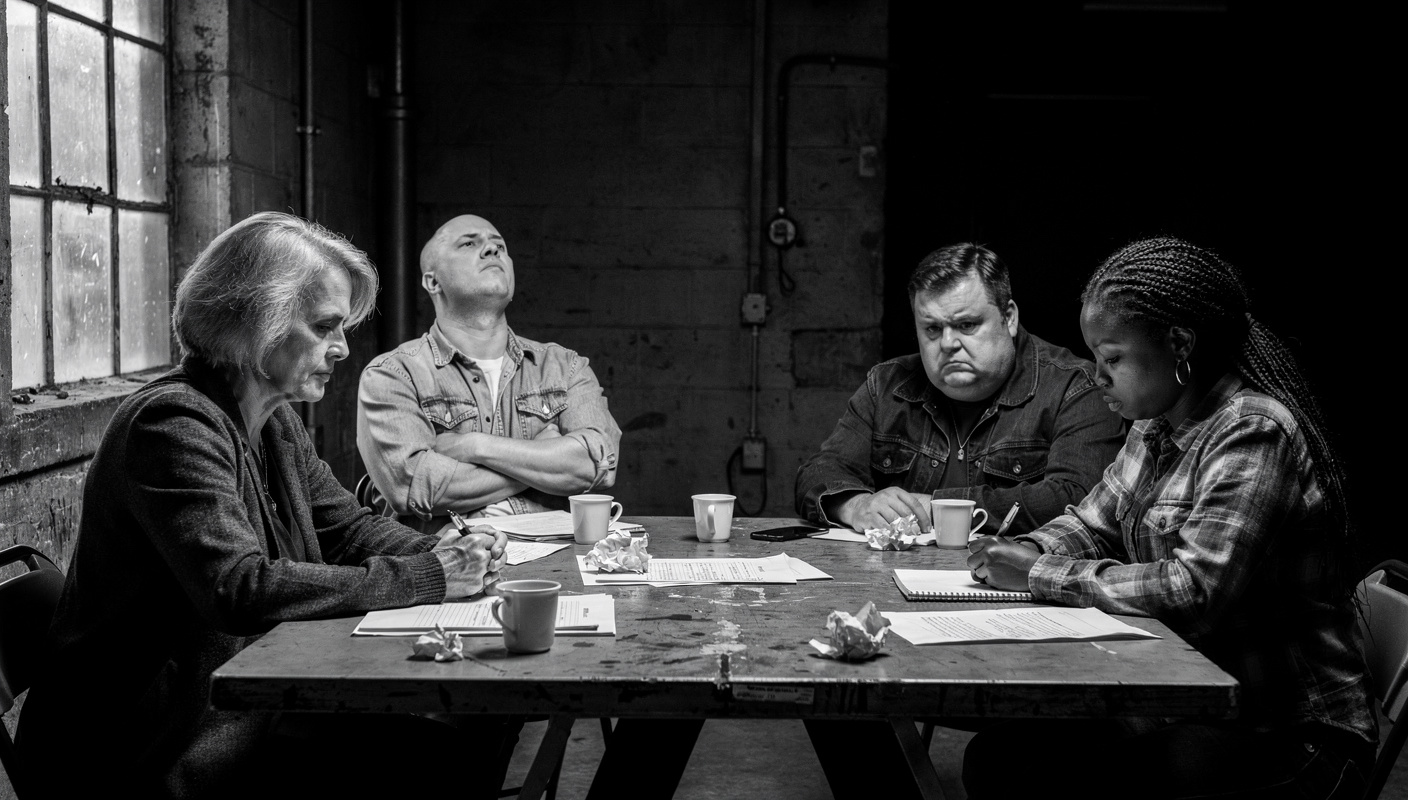
Knowing a conversation needs a strong close and actually delivering one are two different things. Most people reach the end of a hard discussion feeling spent. The last thing they want to do is stay present for another five careful minutes. That gap between knowing and doing is where most team synergy gains are lost.
Here is what makes the closing stage specifically difficult:
Emotional fatigue kicks in at exactly the wrong moment. A difficult conversation burns through concentration and emotional reserves. By the time you reach the close, everyone in the room is tired, and the temptation to wrap up quickly and escape is almost overwhelming.
People confuse venting with resolution. When the tension drops after honest words are exchanged, it feels like something has been settled. Often it has not. Feeling better is not the same as agreeing on what happens next.
Nobody wants to be the one who asks for specifics. Naming agreements, assigning tasks, and setting deadlines can feel like you are pushing your luck after a hard conversation. You got through it; why risk reigniting the fire?
Without a script, the close becomes vague. Most people have no prepared language for this moment. They reach the end and improvise, which usually produces something like "well, let's all try to do better," which means nothing concrete at all.
The team has different memories of what was agreed. Even in a good conversation, people hear selectively. What one person considers a firm decision, another treats as a suggestion. Without a spoken summary, these gaps widen fast.
The goal is not to eliminate these difficulties. It is to build a system that works in spite of them.
"The Conversation You're Avoiding Is the One You Need to Have."
"The Conversation You're Avoiding
Is the One You Need to Have."
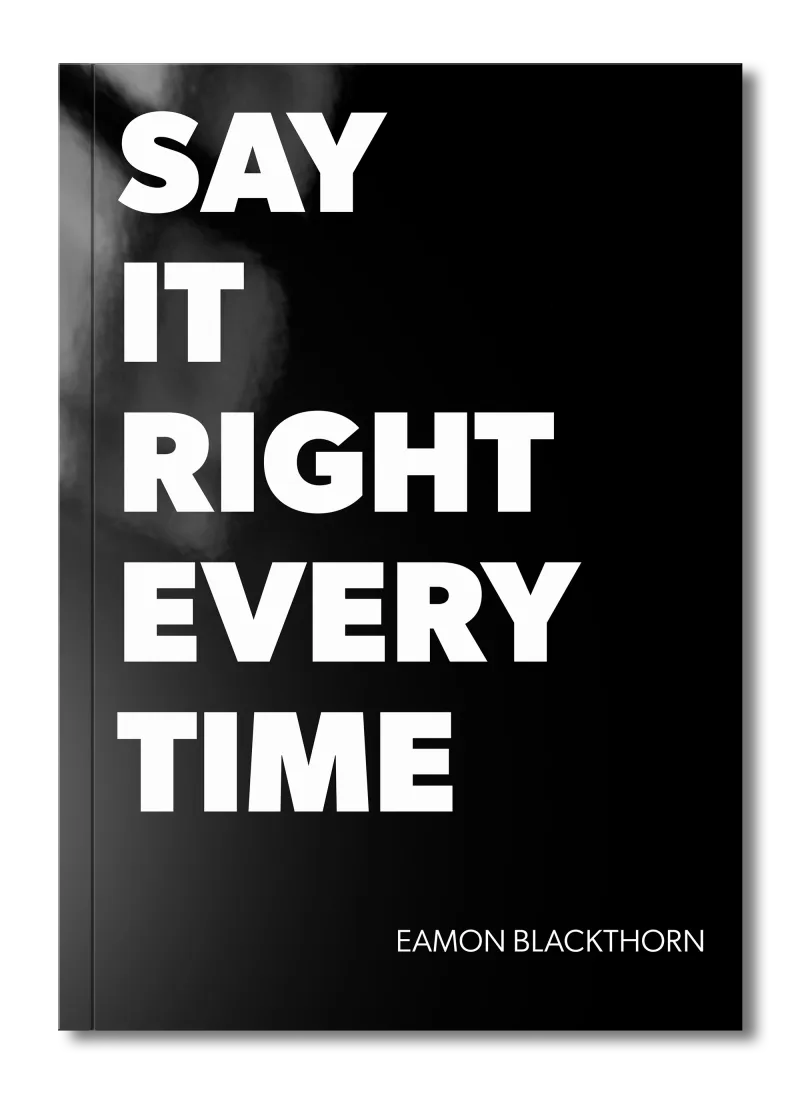
Stop rehearsing conversations you'll never have. Say It Right Every Time gives you 115 word-for-word scripts and 16 proven frameworks to speak with confidence in every conversation that matters.
What You Need Before You Begin the Closing Stage
Before you move into the close, there are three things that need to be clear.
The core issue was actually named. You cannot close around something that was never directly stated. Before you attempt to summarise agreements, check that the real issue was named during the conversation, not just circled. If you are still working from coded language and hints, the close will be built on sand.
The emotional temperature has dropped enough to think clearly. In Say It Right Every Time, I describe the concept of the amygdala hijack in Chapter 2 of the C.O.R.E. Framework: when emotions run high, the thinking brain steps back. Trying to close a conversation while someone is still flooded is asking for agreements they will resent later. Wait for genuine calm, not just silence.
Everyone who needs to commit is still in the room. A close that happens without a key team member present is not a real close. If someone had to leave early, pause the closing stage until you have everyone. A partial agreement is often worse than no agreement.
Get these right first. The steps that follow will not work without them.
Step 1: Name What Actually Happened
This step creates the foundation for every agreement that follows, and it must be done carefully.
Most people skip straight to "so what are we going to do?" That is a mistake. Before you move to action, someone needs to speak plainly about what the conversation covered and what genuinely shifted. This is not flattery. It is accuracy.
A clear spoken summary validates the effort of the conversation and gives the team a shared version of events to build on. In the C.O.R.E. Framework I outline in Say It Right Every Time, Clarity is the first pillar for good reason: without a clear shared understanding of where you are, everything that follows is guesswork.
Here is how to do it:
- State what issue the conversation addressed, in one plain sentence.
- Name two or three specific things that were acknowledged or shifted during the discussion.
- Note any points where genuine agreement emerged, even if partial.
- Check with the group: "Does that capture it, or have I missed something important?"
- Pause and let people correct the record before moving on.
Example script: "I want to make sure we are on the same page before we talk about next steps. We came in today because the handover process between the morning and afternoon teams has been breaking down. What I heard is that both sides feel the other is not communicating early enough, and that the shared log is not being used consistently. Is that a fair summary of where we got to?"
After this step, the team has a shared reference point. Now you can build something real on top of it.
Step 2: Separate What Was Decided from What Was Discussed
This is the step where vague conversations become real commitments, and it requires more precision than most people apply.
Not everything discussed in a difficult conversation becomes a decision. Some things are observations. Some are feelings. Some are possibilities raised and then set aside. If you treat all of it as a decision, you create false expectations and future resentment. If you treat none of it as a decision, nothing changes.
Your job in this step is to be a careful editor, not a cheerleader. Draw a clear line between what was agreed and what was simply talked about. This is the core discipline of the Lock in the Commitment step from the D.E.A.L. Method I cover in Chapter 6 of Say It Right Every Time: a verbal agreement is not enough until it is specific, named, and owned by someone.
Here is how to apply it:
- List each point raised in the conversation, briefly.
- For each point, ask: "Is this something we agreed to do, or something we acknowledged?"
- Mark the real decisions clearly and separately from the general discussion.
- If something important was raised but left unresolved, name it explicitly as "still open."
- Read the list back to the group before moving to accountability.
This step protects the team from a common failure: the follow-up meeting two weeks later where half the group says "I thought we agreed on that" and the other half says "no, we just talked about it."
Step 3: Assign Accountability with Specific Names and Dates
Collective responsibility is no responsibility at all. This step is where good intentions become real commitments.
Every action that emerged from the conversation must be owned by a specific person with a specific deadline. Not "the team will work on communication" but "Ciara will update the shared handover log by Thursday and share it with the group before the end of day Friday." That level of specificity is what separates a conversation that produces change from one that produces a warm feeling and nothing else.
The reason people resist this step is that it makes accountability visible. It is harder to drift if your name is attached to a date. That is precisely the point.
Here is how to do it:
- Take each real decision from Step 2 and ask: "Who specifically will own this?"
- Confirm that the person named is willing to take it on, not just assigned without consent.
- Set a specific date or timeframe for each action, not "soon" or "next week."
- Write it down in front of the group, or ask someone to do it.
- Read the full list of names, actions, and dates back before closing.
Example script: "So to make sure we are all clear: Marcus, you are going to revise the handover template and send a draft to the group by next Wednesday. Sinead, you are going to run a fifteen-minute team check-in every Monday morning starting this week. Does anyone need to adjust their commitment before we finish?"
After this step, the conversation has stopped being an event and started being a plan. That is the difference that matters for how you give feedback that strengthens team synergy in the weeks ahead.
Step 4: Acknowledge What Remains Unresolved
Not every difficult conversation produces full agreement. Pretending otherwise is one of the most corrosive things a team leader can do.
Here is the truth of it: forcing a false resolution is worse than leaving something honestly open. If you paper over a genuine disagreement with forced consensus, it resurfaces with extra force, usually at the worst possible moment. Naming what is still open is not failure. It is integrity.
In Chapter 5 of Say It Right Every Time, I describe the closing script for conversations that did not reach full agreement: "It's clear we're not going to solve this today. Can we agree to think about it and talk again on Friday?" That sentence does more for long-term team synergy than any forced handshake over a resolution nobody actually believes in.
Here is how to apply this step:
- Review your list from Step 2 and identify anything still genuinely unresolved.
- Name each open item plainly without blame: "We have not fully agreed on X yet."
- Confirm the group acknowledges the gap, rather than letting it be quietly ignored.
- Set a specific time to return to unresolved items: a date, a meeting, a follow-up.
- Confirm that the open items do not block the agreed actions from moving forward.
This step protects the team from the illusion of resolution, which is more dangerous than honest disagreement. When people know the open items are named and tracked, trust stays intact even when the answers are not yet clear.
Step 5: Close with a Spoken Acknowledgement
The final words of a difficult conversation carry more weight than people realise. They set the emotional tone for everything that follows.
A strong spoken close does three things: it thanks people for their courage in engaging honestly, it reaffirms the shared goal that brought the team to this table, and it signals that the conversation is complete rather than just abandoned. Without this, people walk away uncertain whether the whole thing was productive or just painful.
This is the moment the C.O.R.E. Framework's Empathy pillar earns its place. You are not just wrapping up logistics. You are restoring the human connection that a difficult conversation can temporarily strain.
Here is how to do it:
- Deliver a brief spoken summary of what the conversation achieved, in two or three sentences.
- Thank the group directly for staying present through a hard discussion.
- Restate the shared goal: the team outcome you are all working toward together.
- Signal that the conversation is complete with a clear, confident closing line.
- Leave space for anyone who needs one final word before the room clears.
Example script: "Thank you for this discussion. To summarise, we have agreed on a revised handover process, and both Marcus and Sinead have taken on specific actions with clear dates. I know this was not an easy conversation, and I respect everyone here for engaging honestly. We are all working toward the same thing: a team that functions without friction. I am confident we can get there. Is there anything anyone needs to say before we close?"
After this step, the conversation has an ending. That matters more than most people think. The research on how to start a difficult conversation often gets all the attention, but the close is where the work is actually protected.
Step 6: Document and Distribute Within 24 Hours
A conversation that produces no written record produces no lasting change. This step takes ten minutes and saves weeks of backsliding.
You do not need a formal report. A short email summarising the agreements, names, and dates is enough. What matters is that the record exists outside people's heads, where memory is selective and self-serving. Teams that document their difficult conversations are far more likely to honour the commitments made in them.
Here is how to do it:
- Write up the agreed actions, owners, and deadlines within 24 hours while the conversation is fresh.
- Keep the document short: three to five bullet points is plenty for most conversations.
- Send it to everyone who was in the room, and copy anyone who needs to be informed.
- Note any unresolved items and the date scheduled to return to them.
- Ask recipients to confirm they received it and flag anything that looks different from what they remember.
This step is also your early warning system. If someone comes back and says "that is not what I agreed to," you want to know that now, not in two weeks when they have already acted on their own interpretation.
Adapting This Process for Remote and Hybrid Teams
Remote and hybrid teams have an additional challenge: the natural end of an in-person conversation, where people linger and sense the emotional temperature, simply does not exist online. A video call ends and people are gone in seconds, with no chance for the informal moment that sometimes clarifies everything.
Slow the close down deliberately. On a video call, transitions happen faster than in a room. Build an explicit pause before you begin the closing stage. Tell the group: "Before we end, I want to spend a few minutes making sure we leave with the same understanding." This signals that the close is a distinct phase, not just the last two minutes before the calendar reminder pops up.
Use a shared document in real time. Screen-sharing a live notes document during the closing stage is one of the most effective tools available to remote teams. When people see their name and their commitment written on screen as you speak it, the reality of accountability lands immediately. It also prevents the "that is not what I agreed to" problem that comes with asynchronous follow-up.
Check in on emotional tone directly. In a physical room, you can sense when someone has gone quiet in a way that matters. On a screen, disengagement is invisible. Before closing a remote difficult conversation, go around the group and ask each person one word or one short sentence: "How are you leaving this conversation?" It takes three minutes and prevents a lot of damage. This technique connects directly to the B.R.I.D.G.E. Method for rebuilding synergy after a team breakdown.
Shorten the time to written follow-up. For remote teams, send the summary document the same day, not the next morning. The dispersal of a remote call is total: people go straight into other meetings, other contexts, other tasks. The sooner the record lands in their inbox, the better.
The core process holds across every format. Only the execution changes.
Common Mistakes to Avoid
Let me tell you about the mistakes I see most often. I have made most of them myself.
The mistake: Ending with "so, we all good?" and taking silence as agreement.
Why it happens: Relief that the hard part is over makes people rush to finish.
What to do instead: Ask a direct, specific question: "Does anyone see this differently from how I summarised it?" Silence to that question means something far more reliable.
The mistake: Assigning actions to "everyone" or "the team" without naming individuals.
Why it happens: It feels more collaborative and less confrontational to make it collective.
What to do instead: Name the person responsible for each action explicitly. Collective ownership means nobody owns it.
The mistake: Skipping the acknowledgement of what remains unresolved.
Why it happens: Admitting open issues feels like admitting the conversation failed.
What to do instead: Name the open items clearly and set a date to return to them. This builds more trust than a false resolution does.
The mistake: Sending the follow-up summary three or four days later.
Why it happens: The conversation is finished and it feels like the hard work is done.
What to do instead: Send it within 24 hours. If you find yourself doing otherwise, read how to recover team synergy when a conversation goes wrong to understand what delayed follow-up costs.
The mistake: Closing warmly but vaguely, without a specific summary.
Why it happens: The emotional tone is good, and people do not want to break the warmth with logistics.
What to do instead: The warmth and the specifics are not opposites. You can be direct and grateful in the same breath. Use the script in Step 5 as your model.
The mistake: Treating the close as the end of the process rather than the beginning of accountability.
Why it happens: People think the difficult work is the conversation itself, not the follow-through.
What to do instead: Use the R.E.C.O.V.E.R. Method if things drift after the close, and build the follow-up check-in into the original commitment.
These are not character flaws. They are gaps in the system. Fix the system.
Your Practical Checklist
Use this checklist before you begin the closing stage and after each conversation cycle.
- The real issue was named directly during the conversation, not just implied.
- The emotional temperature has dropped enough for clear thinking.
- Everyone who needs to commit is still in the room or on the call.
- I have summarised what was discussed and checked it with the group.
- I have separated what was decided from what was merely discussed.
- Every agreed action has a specific owner with a name attached.
- Every agreed action has a specific deadline, not just "soon."
- Open and unresolved items have been named honestly.
- A date has been set to return to unresolved items.
- I delivered a spoken close that acknowledged the group's effort.
- A written summary was sent to all participants within 24 hours.
- A follow-up check-in has been scheduled before the room cleared.
If you cannot check most of these, that is your starting point.
Summary and Next Steps
You now have a practical, step-by-step process for closing difficult team conversations in a way that converts honest dialogue into genuine, lasting progress. You also have the language to use at each stage, so you are not improvising at the moment when clarity matters most.
- A strong close begins before the final words: the emotional temperature must be settled and the right people must be present.
- Naming what actually happened in the conversation gives the whole team a shared version of events to build on.
- The line between what was decided and what was merely discussed must be drawn clearly and explicitly.
- Every action needs a specific owner, a specific task, and a specific deadline.
- Unresolved items must be named honestly and assigned a return date, not papered over.
- The spoken close should be warm, direct, and specific, not vague and optimistic.
- Documentation within 24 hours is not optional; it is the mechanism that makes the commitment real.
If you want to build the full arc of communication skill around difficult conversations, start with How to Have a Neutral Problem-Statement Conversation That Restores Team Synergy and then How to Start a Difficult Conversation That's Blocking Your Team's Synergy. The full D.E.A.L. and C.O.R.E. frameworks that underpin all of this are covered in depth in Say It Right Every Time, where I give you every script and tool you need for the full range of difficult conversations you will face.
Building team synergy gains is not a single conversation. It is a practice you return to, sharpen, and trust more with every cycle.
Frequently Asked Questions (FAQ)
What are team synergy gains in a difficult conversation?
Team synergy gains are the improvements in trust, clarity, and collective momentum that a team earns when they work through a difficult conversation well. They show up as better collaboration, clearer roles, and reduced friction in the weeks that follow a hard discussion.
How do you lock in team synergy gains after a hard team talk?
You lock in team synergy gains by closing with a specific, named agreement rather than a vague sense of resolution. That means summarising what was decided, assigning clear accountability, and scheduling a follow-up before anyone leaves the conversation.
Why do team synergy gains disappear after a difficult conversation?
Team synergy gains fade when conversations end without a named agreement or follow-up plan. People leave with different memories of what was decided, energy dissipates, and old patterns return within days. A structured close prevents this from happening.
What is the best way to close a difficult team conversation?
The best close combines a spoken summary, a mutual agreement on next steps, individual accountability for each action, and a scheduled check-in. This structure converts the emotional progress of the conversation into a concrete plan the whole team can act on.
How long should the closing stage of a difficult team conversation take?
The closing stage typically takes five to ten minutes, depending on the complexity of the issues discussed. Rushing it is a mistake. A well-structured close that takes ten minutes saves hours of backsliding, repeated conflict, and lost team synergy in the weeks ahead.
Can you close a difficult conversation if the team did not fully agree?
Yes. Not every difficult conversation ends in full agreement, and that is acceptable. A partial close names what was agreed, acknowledges what remains unresolved, and sets a specific time to continue. This preserves trust and keeps team synergy moving forward even without a complete resolution.