
In Short
After reading this, you will be able to use your physical presence deliberately to shape how any audience perceives and receives your message.
- Ground your body before you speak so tension does not speak for you.
- Use gesture and stillness with intention, not habit.
- Align your physical expression with your words to build trust.
Physical presence affects how an audience receives your message through the nonverbal signals your body sends: posture, gesture, movement, stillness, eye contact, and facial expression. Together, these signals shape credibility, warmth, and authority before a single word lands.
I have watched a confident person walk into a room, open their mouth, and lose the audience before the second sentence. The words were fine. The content was solid. But the shoulders were pulled up toward the ears, the eyes were scanning the floor, and the hands were gripping the edge of the podium as if it might run away. The room felt the tension, even if they could not name it.
The real reason people struggle with physical expression is not ignorance. Most people know, in the abstract, that body language matters. The difficulty runs deeper: under pressure, the body defaults to self-protection. Hunched shoulders, averted eyes, and nervous movement are not failures of knowledge. They are habits built from years of anxiety that nobody ever interrupted and replaced.
In this guide, you will get a clear, practical process for physical expression that you can use immediately. If you want to first understand how the broader landscape of emotional intelligence shapes your communication, The Role of Emotional Intelligence in Team Synergy is a strong place to begin.
Why Nonverbal Communication Is Harder Than It Looks
You know physical presence affects how people read you. Knowing that has not fixed the problem. There is a gap between understanding something intellectually and being able to change it in the moment, especially when nerves are running high.
Here is what I observe again and again, in people at every level:
Habits form under pressure and become invisible. You may have been pacing, gripping a pen, or breaking eye contact for twenty years without noticing. The body does what it has always done, and awareness alone rarely breaks that pattern.
Self-consciousness creates the very problem it is trying to solve. The moment you think too hard about your hands, your hands become a problem. Overthinking physical expression while speaking is like trying to walk while consciously moving each muscle. It seizes up.
There is no natural feedback loop. You cannot see yourself the way your audience sees you. Without external feedback, most people assume their body is communicating what they intend. It often is not.
Most people were never taught this systematically. Presentation training focuses on slides and structure. Nobody sat with you and said: here is what to do with your hands, here is how to use stillness, here is how to enter a room.
The stakes sharpen the problem. In low-stakes conversations, the body tends to relax. In high-stakes ones, every protective habit amplifies. The situations that most require strong physical expression are the ones where it most often falls apart.
The goal is not to eliminate these difficulties. It is to build a system that works in spite of them.
"The Conversation You're Avoiding Is the One You Need to Have."
"The Conversation You're Avoiding
Is the One You Need to Have."
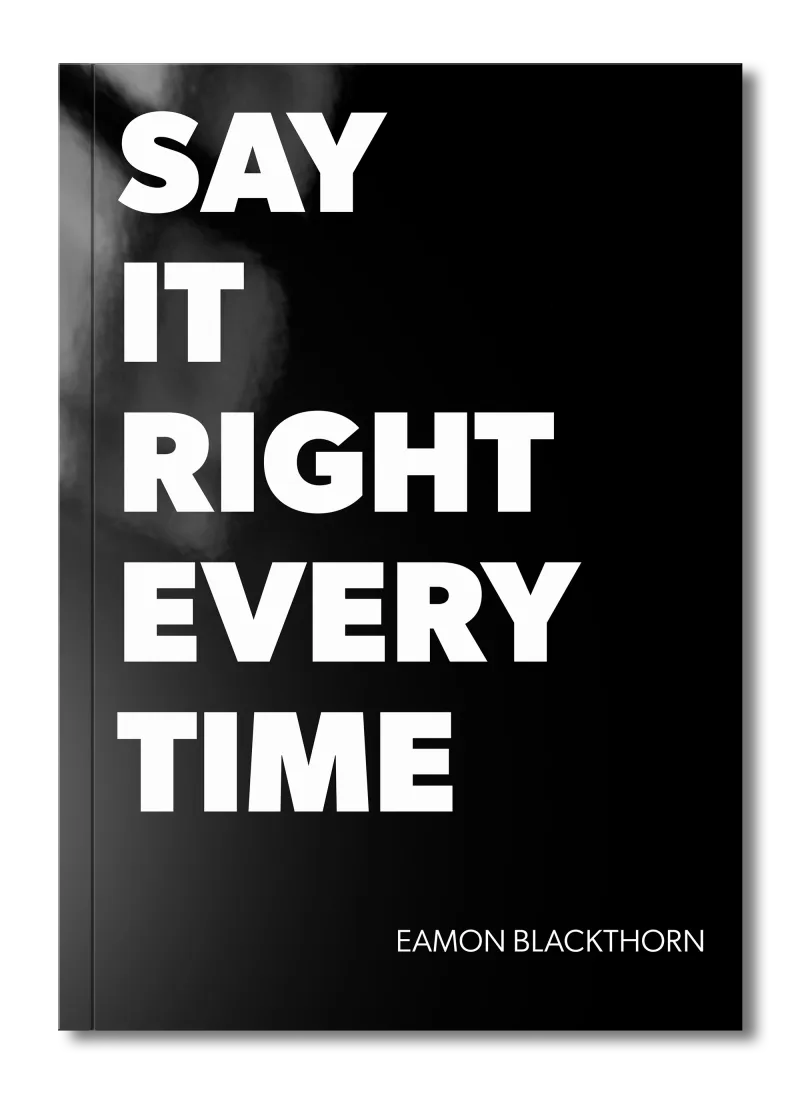
Stop rehearsing conversations you'll never have. Say It Right Every Time gives you 115 word-for-word scripts and 16 proven frameworks to speak with confidence in every conversation that matters.
What You Need Before You Can Work on Physical Expression
Before you begin, there are three things that need to be clear.
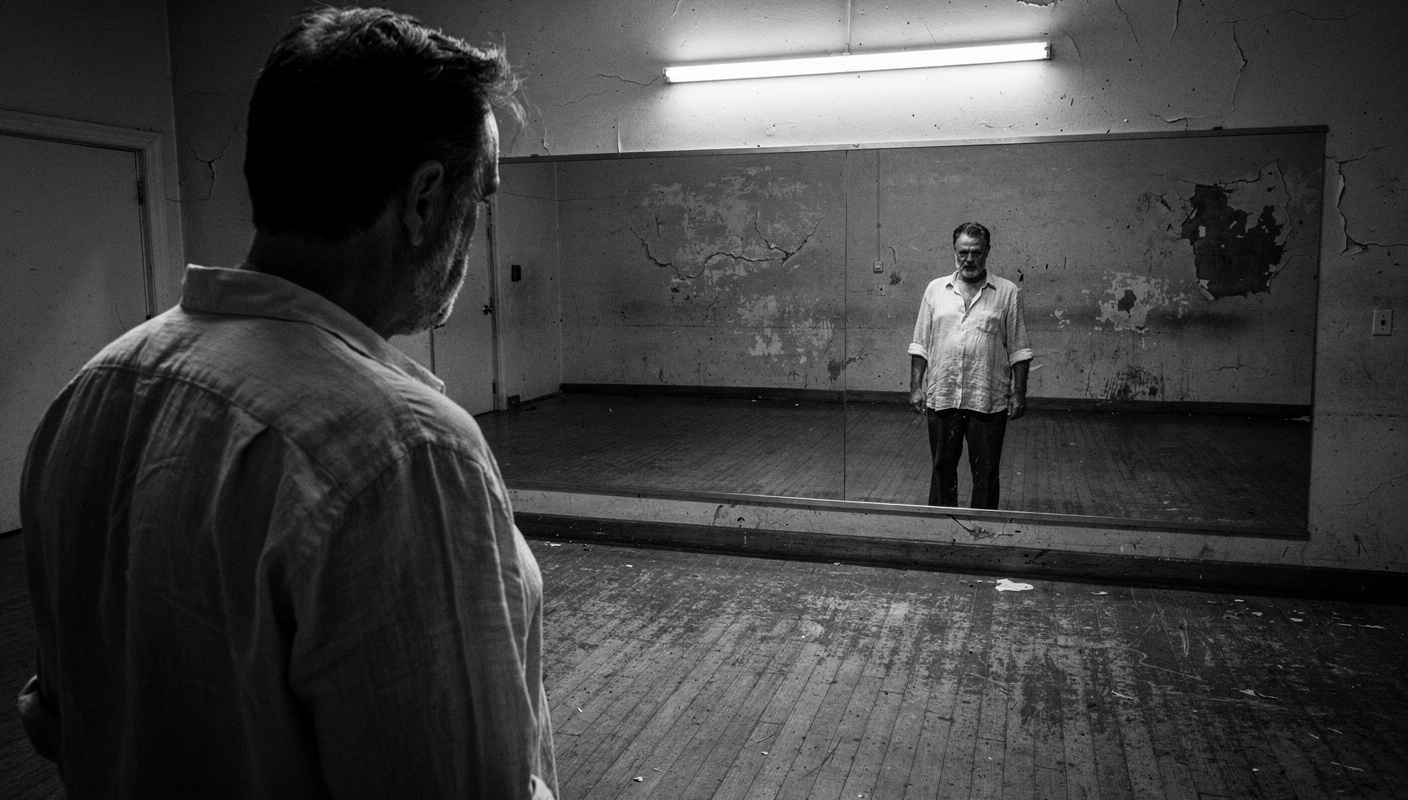
Know your baseline habits. You cannot change what you have not observed. Before working on any new physical technique, you need an honest picture of what your body currently does under pressure. This means recording yourself, asking a trusted colleague for specific feedback, or watching your own reflection during practice. Not a general impression. Specific observations: where do your hands go, what does your posture do, where does your eye contact break.
Accept that discomfort is not a signal to stop. When you first adopt a new physical habit, it will feel wrong. Stillness will feel rigid. A wider stance will feel performative. Open gestures will feel exaggerated. That feeling is normal and temporary. If you stop every time something feels unnatural, you will never build a new pattern. Discomfort is the sensation of change. Trust it.
Prepare the environment before the audience arrives. Physical confidence is partly spatial. Know the room before you stand in it. Walk the floor, find your mark, test the sightlines. Speakers who arrive late and set up in a rush carry that rushed energy into their physical expression. Give yourself the time to own the space before you share it.
Get these right first. The steps that follow will not work without them.
Step 1: Ground Your Stance Before You Speak
Your stance is the foundation everything else builds on, and most people get it wrong before they have said a single word.
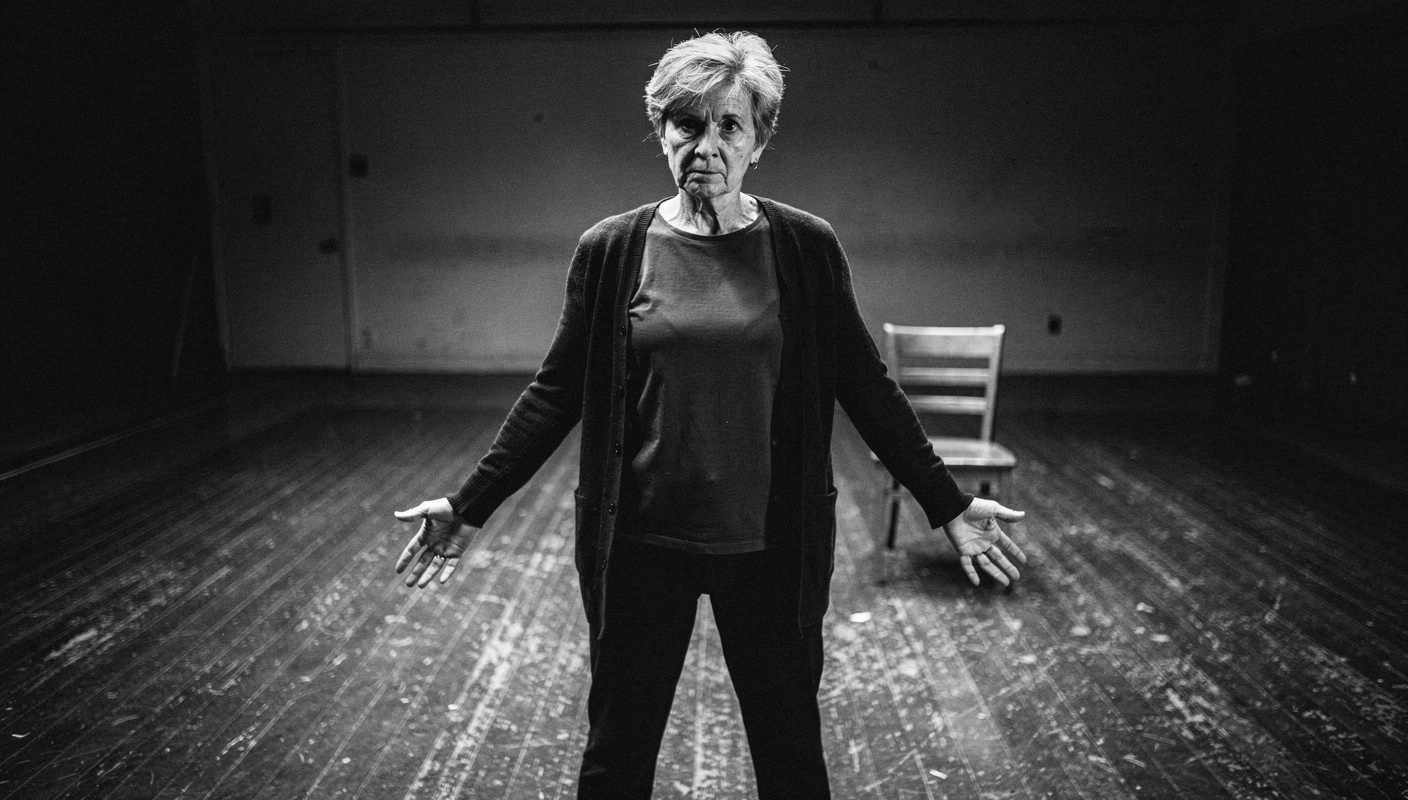
A grounded stance means feet roughly hip-width apart, weight distributed evenly, knees soft rather than locked. It sounds simple. Under pressure, people narrow their feet together, shift their weight onto one hip, or stand with locked knees. Each of these signals to the audience, at a physiological level, that the speaker is not fully settled. Physical presence affects trust from the moment you plant your feet.
To establish a grounded stance:
- Before you approach the front of the room, pause for three seconds in place and feel your feet connect with the floor.
- Set your feet deliberately: hip-width apart, toes pointing slightly outward.
- Roll your shoulders back once, then let them drop naturally. Do not hold them back. Drop them.
- Take one slow breath out before you begin, not a dramatic pause, just a quiet reset.
- Keep your weight centred. When you feel the urge to shift it, notice that urge and resist it for the first thirty seconds.
Here is what this looks like in practice. A regional manager I worked with was known for starting every presentation with her weight on her right hip, arms crossed, head slightly down while she found her notes. Three seconds into the room, her audience had already read her as uncertain and closed. We changed one thing first: she arrived, planted both feet, looked up, and said nothing for two seconds before starting. The room changed. The same words, the same content, but a different first impression because the body had changed.
A grounded stance does not guarantee the rest of your physical expression will be strong. But without it, nothing else you do will land with the same weight.
Step 2: Use Your Hands with Intention, Not Habit
Hands are the most visible and least trained part of physical expression, and they betray more anxiety than any other part of the body.
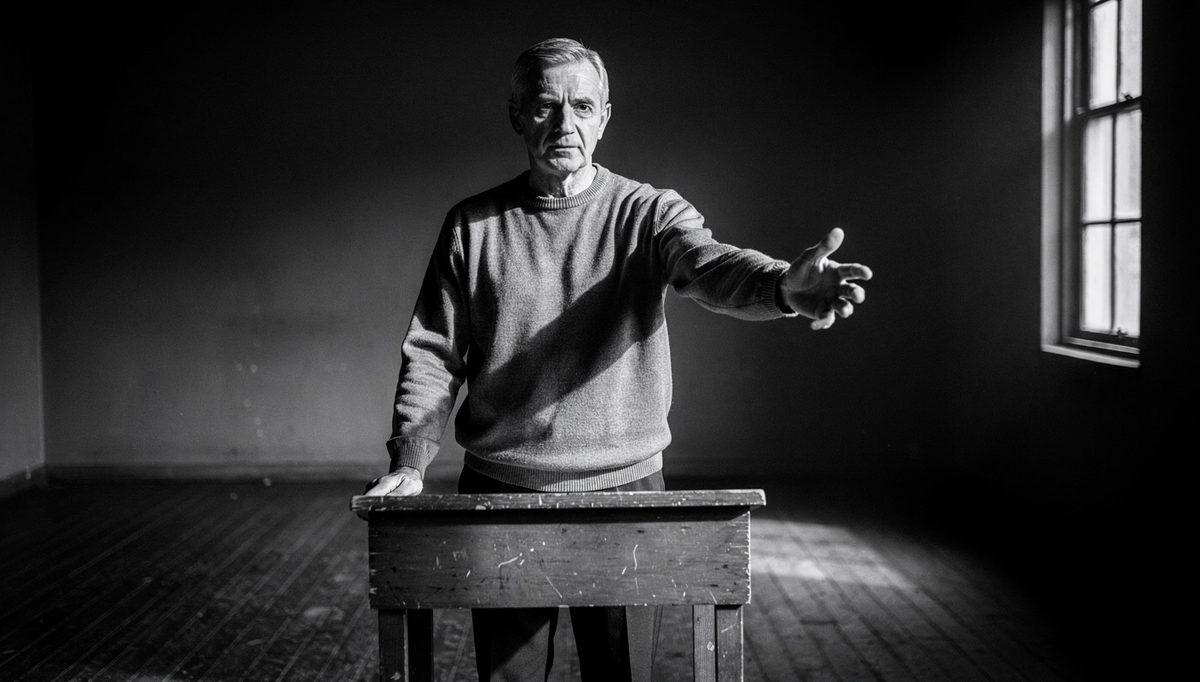
The common advice is to gesture naturally. That advice is useless for anyone whose natural gesture under pressure is to grip the lectern, fidget with a pen, or clap their palms together repeatedly. Natural does not mean effective. What you need is intentional: a small repertoire of deliberate gestures you can reach for rather than leaving your hands to their own devices.
To build intentional hand use:
- Identify your default nervous habit with your hands. Record yourself. Name it specifically: pen clicking, palm-rubbing, podium-gripping.
- Choose a neutral resting position for your hands when you are not gesturing: either loosely clasped in front at waist height, or relaxed at your sides. Practise holding that position for thirty seconds at a time.
- Learn three deliberate gestures: an open palm facing upward for offering an idea, a flat hand pressing down gently for emphasis, and a counting gesture for lists. Rehearse each one until it no longer feels forced.
- When you gesture, let the movement be complete. A half-raised arm that drifts back down without purpose looks uncertain. Commit to the gesture or do not make it.
- After a gesture, return your hands to the neutral resting position. Do not let them wander.
The hands that do the least unnecessary work communicate the most authority. Still, purposeful hands tell the audience that the person speaking is in control of themselves, and therefore worth listening to.
Step 3: Make Eye Contact That Connects Rather Than Scans
Poor eye contact is the fastest way to lose an audience's trust, and most people do not realise how often they are doing it.
Scanning is not connection. Moving your eyes quickly across a room, landing briefly on nobody, reads as evasion. The audience feels unseen, and an audience that feels unseen disconnects. Real eye contact means completing a thought while holding one person's gaze, then moving to another. It is not a technique. It is a conversation with many people, one at a time.
To build connecting eye contact:
- Divide the room mentally into three zones: left, centre, right. Make sure you complete at least one full thought while looking at each zone per minute of speaking.
- When you find a friendly, attentive face in the room, use it as an anchor during difficult transitions. That one point of connection steadies you.
- Resist the pull to look at your notes, slides, or the floor during pauses. A pause with held eye contact communicates confidence. The same pause with a dropped gaze communicates doubt.
- For smaller groups, hold eye contact with one person for a full sentence, then shift. For larger rooms, hold long enough that one section of the audience feels seen before you move on.
Here is what this sounds like in practice. A team leader preparing for a board presentation told me: "I always look at the slides when I am thinking. I feel like I am giving them a second." I asked what the board was doing while she looked away. "Looking at me, probably." Exactly. While she was seeking comfort in the slide, they were reading her face and finding uncertainty. We practised holding the gaze during the pause. The same pause, but eyes forward. She reported that the board leaned in noticeably more during her next presentation.
Eye contact is where physical presence affects connection most directly. It is also where most speakers surrender it most readily.
Step 4: Control Your Movement and Use Stillness Deliberately
Movement and stillness are both tools. Most people treat one as the default and the other as an accident.
Purposeless movement, pacing back and forth, swaying, shifting weight, creates a visual rhythm that competes with your words. The audience's attention tracks the movement, not the content. Stillness, on the other hand, creates focus. When a speaker stops moving and holds position, the room naturally sharpens its attention.
To develop deliberate movement:
- Mark two or three intentional positions in the room where you plan to stand during different parts of your talk. Move with purpose between them; do not drift.
- Before making a key point, come to a full stop. Let the stillness arrive before the words. This physical pause signals to the audience that something important is coming.
- Use a step forward to increase intimacy or urgency. Use a step back to create space for reflection or to signal a transition.
- Film yourself and watch the playback with the sound off. Whatever movement you see is what your audience is tracking. If it is distracting, eliminate it.
Understanding what makes people feel safe enough to receive a message fully is also shaped by the environment you create. The principles in What Is Psychological Safety and How It Drives Team Synergy are worth reading alongside this work, because physical expression contributes directly to whether people feel safe in your presence.
Stillness is not passive. It is one of the most active choices a speaker can make.
Step 5: Align Your Facial Expression with Your Message
Your face either confirms what your words are saying or contradicts it, and audiences always believe the face.
The most common misalignment I see is a flat or tense expression during content that is meant to be engaging, warm, or encouraging. The speaker believes they are communicating enthusiasm. But the jaw is tight, the brow is slightly furrowed, and the mouth is flat. The audience reads tension and distance, not engagement. When physical presence affects perception at its most subtle level, it happens here, on the face.
To align facial expression with your message:
- Before rehearsing content, spend two minutes deliberately activating your face: raise your eyebrows, smile broadly, then relax. This is not performing. It is releasing the tension that settles in during preparation.
- Identify the emotional tone of each section of your talk: is it serious, encouraging, challenging, curious? Match your facial expression to that tone consciously before you begin the section.
- If you are delivering difficult feedback or challenging content, soften your brow deliberately. A hard expression on hard content compounds resistance in the listener.
- Smile where a smile is genuine. Do not manufacture it. But do not suppress it either when the content calls for warmth.
Here is a concrete example. A senior engineer presented quarterly results to his team. The results were actually positive. But he presented them with the same flat, concentrated expression he used for technical problem-solving. His team left the room unsure whether things were good or bad. He had communicated the data. He had not communicated the feeling he intended to leave them with. One simple rehearsal where he identified the emotional arc of the presentation and practised matching his expression to it changed the room's response entirely.
Your face is not decoration. It is part of the message.
Adapting Physical Expression for Remote and Hybrid Settings
Remote communication has made physical expression both more limited and more concentrated, which means the stakes for getting it right are actually higher, not lower.
When you are on a video call, the audience sees you from the shoulders up, sometimes only from the chest up. Everything that happens in that frame is amplified. A slumped posture, averted eyes, or a tense jaw fills the screen in a way it never would in a live room.
Camera position and framing matter as much as posture. If the camera is below eye level, you appear to look down on your audience. If it is too far away, they lose the micro-expressions that build connection. Position the camera at eye level, close enough that your face and upper chest fill the frame comfortably.
Eye contact in remote settings means looking at the lens, not the screen. This is uncomfortable because it feels like you are not watching the other person. But from the audience's side, looking at the lens is the only thing that reads as direct eye contact. Practise it. It becomes natural quickly.
Gesture still matters, but scale it down. Large gestures move out of frame and become distracting. Keep gestures closer to the body and within the visible area of the frame. The same intentional principles apply: deliberate rather than habitual, complete rather than drifted.
Stillness is even more powerful on screen. On video, any unnecessary movement is amplified. A still, composed physical presence on a call communicates confidence and focus. Fidgeting is magnified by the frame.
The core process holds whether you are in a boardroom or on a video call. Only the execution changes.
The Mistakes I See Most Often in Physical Expression
Let me tell you about the mistakes I see most often. I have made most of them myself.
The mistake: Gripping a prop, pen, clicker, or lectern, to manage anxiety.
Why it happens: The hands want something to do, and an object feels like a solution.
What to do instead: Return to the neutral resting position you have practised. Holding an object only anchors the nervous energy in a visible place.
The mistake: Treating rehearsal as a content exercise only, without practising physical expression.
Why it happens: People focus on what they are going to say and assume the body will sort itself out.
What to do instead: Rehearse standing up, in the physical space if possible, with full attention on posture, gesture, and movement. A seated run-through does not prepare the body.
The mistake: Pacing continuously without purpose.
Why it happens: Movement releases nervous energy and feels like engagement.
What to do instead: Commit to stillness as your default. Move with intention between two or three planned positions. Let the movement serve the content, not the nerves.
The mistake: Breaking eye contact during the most important sentences.
Why it happens: Looking away feels like a thinking pause, a moment to gather the next thought.
What to do instead: Hold the gaze through the pause. That is exactly where the audience needs to see your eyes. Use the discomfort as a signal to hold longer, not shorter.
The mistake: Mirroring the audience's energy instead of setting it.
Why it happens: A flat or disengaged audience pulls the speaker down instinctively.
What to do instead: Your physical expression sets the temperature of the room. A grounded, open, energised physical presence lifts a flat audience. The room follows the speaker, not the other way around.
These are not character flaws. They are gaps in the system. Fix the system.
Your Practical Checklist for Physical Expression
Use this checklist before you begin and after each practice cycle.
- I have observed my own physical expression on video and can name my default nervous habits.
- I have identified a neutral resting position for my hands and can hold it for thirty seconds comfortably.
- I can plant a grounded stance, feet hip-width, weight even, shoulders dropped, and hold it for the first thirty seconds of speaking.
- I have practised three deliberate gestures and can execute each one completely without trailing off.
- I have divided my performance space into zones and planned intentional movement between at least two positions.
- I have rehearsed holding eye contact through pauses rather than breaking it to look at notes or slides.
- I have identified the emotional tone of each section and practised matching my facial expression to it.
- I have rehearsed standing up, not seated, with full attention on physical expression as well as content.
- For remote presentations, my camera is at eye level and I have practised looking at the lens during key points.
- I have asked a trusted person for specific, observable feedback on one physical habit I am working to change.
If you cannot check most of these, that is your starting point.
Summary and Next Steps
You now have a concrete process for developing physical expression that shapes how an audience perceives and receives your message, from the ground up.
- Ground your stance before you speak; everything else builds from that foundation.
- Train your hands to a neutral resting position and use three deliberate gestures instead of leaving them to habit.
- Make eye contact that completes a thought before moving; scanning is not connection.
- Use movement with purpose and stillness as a deliberate tool for emphasis.
- Align your facial expression to the emotional tone of your content; the face confirms or contradicts the words.
- Rehearse physical expression standing up, on video, and with specific feedback; you cannot fix what you cannot see.
- Physical presence affects perception at every level, in a room, on a screen, and in a one-to-one conversation.
For your next step, consider how your physical expression shows up specifically in feedback conversations, where body language either opens or closes the other person. Emotional Intelligence in Feedback Conversations and How to Give Feedback That Strengthens Team Synergy Instead of Breaking It both address the relational dimension of communication where your physical presence does as much work as your words. And if you want to understand how presence contributes to a team environment where people speak honestly, How Empathy Bridges in Team Communication Create the Conditions for Lasting Synergy is worth your time.
Your body has been speaking all your life. Now it is time to give it something worth saying.
Frequently Asked Questions (FAQ)
How does physical presence affect audience perception?
Physical presence affects audience perception through posture, gesture, stillness, and eye contact. These signals reach your audience before your words do. When your body communicates confidence and openness, people trust what you say more readily and engage with your message at a deeper level.
What is physical presence in communication?
Physical presence in communication is the deliberate use of your body, including posture, movement, gesture, and facial expression, to reinforce your spoken message. It is the nonverbal dimension of how you occupy a space and signal authority, warmth, and credibility to the people watching you.
Can you improve your physical presence as a speaker?
Yes, physical presence is a skill you can build through deliberate practice. Most people develop unhelpful physical habits under pressure without realising it. By identifying those habits, learning specific grounding techniques, and rehearsing with feedback, you can significantly change how an audience receives your message.
What body language communicates confidence to an audience?
Open posture, steady eye contact, controlled breathing, and purposeful movement all communicate confidence to an audience. Equally important is the absence of nervous habits: minimal fidgeting, no excessive pacing, and hands that rest still when not gesturing. Stillness, used well, signals authority more than constant movement does.
How does physical expression affect trust in communication?
When your physical expression aligns with your words, audiences read you as credible and trustworthy. Misalignment, such as saying you are confident while your shoulders are raised and your gaze drops, creates cognitive dissonance. People sense the disconnect, even when they cannot name it, and trust erodes quickly.
What is the difference between physical presence and body language?
Body language usually refers to unconscious signals: crossed arms, averted eyes, nervous tapping. Physical presence is the deliberate, trained use of your whole body to communicate. It includes body language but goes further, encompassing how you enter a room, how you use space, and how you manage stillness and movement with intention.