
In Short
Body language mistakes at work cost you credibility before you speak a single word.
- Crossed arms and averted eyes signal defensiveness, even when you mean none.
- Fidgeting and physical restlessness destroy the impression of confidence and calm.
- Mirroring the wrong signals can shut down a conversation without either party knowing why.
Body language mistakes are unintentional physical habits and postures that contradict your spoken message or undermine your professional presence. They include gestures, facial expressions, eye contact patterns, and body positioning that signal disengagement, anxiety, or defensiveness to the people you work with.
You walked out of that meeting certain you had handled yourself well. You spoke clearly, you made your point, and you kept your composure. But the offer on the table did not come your way. The promotion went to someone else. Your manager seemed distracted whenever you were in the room. Nobody told you anything was wrong with your body language mistakes. They rarely do.
Here is the truth of it: physical expression communicates before you open your mouth, and it keeps communicating after you stop. Most of us were never taught to watch ourselves from the outside. We focus on what we say and forget entirely that our posture, our gaze, and the tension in our hands are already telling a story.
The problem is that nonverbal signals feel invisible from the inside. You do not notice your own crossed arms. You do not feel yourself shrinking. But the people across the table notice every bit of it. In this article, you will learn to recognize six specific body language mistakes and what to do about each one.
If you want to understand how physical expression interacts with group dynamics, How to Ensure Every Participant Gets Heard is worth reading alongside this one.
Why Physical Expression Problems Are Easy to Miss
Most body language problems feel like nothing from the inside. You are not aware you are doing them, because they developed as protective habits, formed gradually under pressure, and they now feel completely normal to you.
These habits go undetected for several important reasons:
- Nobody tells you. Colleagues and managers rarely give direct feedback on physical signals. They simply form an impression and act on it, leaving you with no information and no chance to course-correct.
- The habits feel like composure. Folding your arms can feel like calm focus. Avoiding eye contact can feel like respectful restraint. The physical sensations of closed body language and composed body language are often identical from the inside.
- You are focused on your words. When you are nervous or concentrating, your entire attention goes to content. Your body reverts to its default, unmonitored state, and defaults are rarely deliberate.
- The feedback is delayed. The effect of a missed handshake or a tense posture does not show up in the meeting. It shows up three weeks later when someone makes a decision about you, and the connection is invisible.
- Everyone around you may have normalised it. If crossed arms and averted eyes are common in your team or organisation, no one flags it. The baseline is wrong, but it feels standard.
The first step is knowing what to look for. That is what this article gives you.
"The Conversation You're Avoiding Is the One You Need to Have."
"The Conversation You're Avoiding
Is the One You Need to Have."
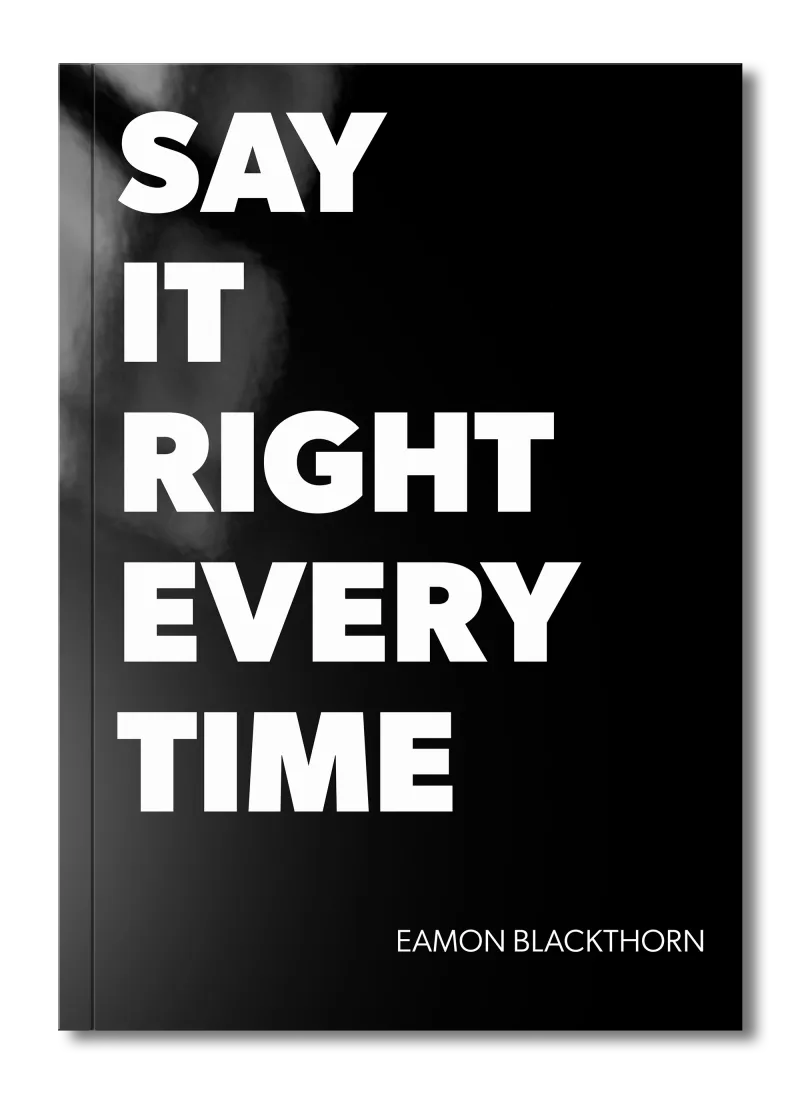
Stop rehearsing conversations you'll never have. Say It Right Every Time gives you 115 word-for-word scripts and 16 proven frameworks to speak with confidence in every conversation that matters.
Mistake 1: Arms Crossed Throughout the Conversation
What it looks like: You sit in a meeting or a one-on-one with your arms folded across your chest. It may feel comfortable and neutral. To the person across from you, it reads as a wall.
Why it happens: Crossing your arms is a self-soothing behaviour. When we feel challenged, uncertain, or defensive, the body instinctively protects the torso. You are not consciously broadcasting resistance. Your body is simply trying to feel safer.
Why it matters: Closed posture shuts down the other person's willingness to share openly. It signals that you have already decided, already closed, or simply do not care. In feedback conversations, this is especially costly. You can read more about how physical signals affect those moments in Emotional Intelligence in Feedback Conversations.
What to do about it: Before your next meeting, consciously place your hands on the table or in your lap. Do not cross them. When you feel the urge to fold your arms, take a slow breath instead. Practice this in low-stakes conversations first, then carry it into higher-pressure situations.
Eamon's note: I spent years thinking crossed arms made me look thoughtful. It made me look unapproachable, and it cost me more conversations than I can count.
Mistake 2: Eye Contact That Wanders Under Pressure
What it looks like: When the conversation gets difficult or someone challenges you, your gaze drifts to the table, the window, or anywhere but the other person's face. You glance back occasionally, but you never quite hold it.
Why it happens: Sustained eye contact during conflict or criticism activates the stress response. The instinct is to look away from a perceived threat. This is ancient wiring, not a character flaw, but in a modern workplace it reads as evasiveness or lack of confidence.
Why it matters: Wandering eye contact during a hard moment signals that you cannot hold your ground. It undermines every word you say, no matter how carefully chosen those words are.
What to do about it: Practice holding eye contact for five full seconds in ordinary conversations before attempting it under pressure. In a difficult exchange, aim to hold the other person's gaze for one complete sentence before allowing yourself to look away briefly. Return deliberately. Never let your eyes drop to the floor.
Eamon's note: The moment you look away is the moment the other person stops believing you.
Mistake 3: Fidgeting That Signals Internal Chaos
What it looks like: You tap your pen. You shift in your seat. You touch your face repeatedly or adjust your collar. None of it is dramatic, but it is constant, and the person watching you cannot ignore it.
Why it happens: Fidgeting is the body releasing nervous energy. The mind is under pressure and the body expresses it physically. Most people do not realise they are doing it until someone points it out or they watch themselves on video.
Why it matters: Physical restlessness tells the room you are not at ease. In a presentation or a negotiation, it directly undermines the impression of competence. People trust still people more than restless ones.
What to do about it: Before a high-stakes conversation, rest your hands flat on the table and feel the surface beneath them. This gives the nervous system a point of focus. During the conversation, return to that grounded position whenever you catch yourself fidgeting. One specific anchor point is far more effective than general willpower.
Eamon's note: A still body tells the room that your mind is in control, even when it is not.
Mistake 4: Turning Your Body Away from the Speaker
What it looks like: You are in a conversation, but your shoulders are angled away. Your feet point toward the door. Your torso is rotated just enough that you are not fully facing the person speaking. You may not even be aware you have done it.
Why it happens: We orient our bodies toward what we want. When a meeting is running long, when a conversation is uncomfortable, or when we are genuinely distracted, the body follows our desire to be elsewhere. It is honest, which is precisely the problem.
Why it matters: This is one of the most overlooked body language mistakes in professional settings, and it is devastating in team conversations. People feel dismissed without being able to name why. If you want your team's voices to land, you need your body fully committed to listening. How to Deal with Dominant Voices in a Discussion explores this dynamic in more depth.
What to do about it: In every conversation, consciously square your shoulders toward the other person. Plant both feet flat on the floor, pointed forward. This is not performance. It is physical respect, and people feel it immediately.
Eamon's note: Your feet tell the truth. Learn to manage them.
Mistake 5: A Flat, Unexpressive Face During Emotional Moments
What it looks like: Someone shares a concern, delivers difficult news, or describes something that clearly matters to them. Your face stays neutral. You are listening, but there is no visible acknowledgment. To them, your stillness looks like indifference.
Why it happens: Some people suppress facial expression as a form of professional control. They were taught that a composed face signals authority. Others simply have a naturally inexpressive resting face and have never had cause to notice it. Neither is a fault, but both carry a cost.
Why it matters: A flat face during an emotional conversation closes people down. It signals that their words are not landing. In feedback exchanges and conflict resolution, the absence of visible warmth can escalate tension that words alone cannot defuse. How to Handle Conflict During Meetings covers this directly.
What to do about it: You do not need to perform emotion. A small nod, a slight change in your brow, a brief softening around the eyes: these are enough. Practice in the mirror once, just to see what your neutral face actually looks like to others. The result is often a surprise.
Eamon's note: I once had a colleague tell me I looked bored in every meeting. I was not bored. I had simply never taught my face to show that I was not.
Mistake 6: Shrinking Your Physical Presence in High-Stakes Moments
What it looks like: Before a difficult conversation or a presentation, your shoulders round forward. You make yourself physically smaller, your head drops slightly, your voice comes from higher in your chest. You look and sound like someone bracing for impact.
Why it happens: This is the body's fear response. Under threat, we instinctively contract. It is protective biology, and it works directly against the impression of strength and readiness that high-stakes moments require.
Why it matters: Your physical presence sets the tone for the room before you speak. When you shrink, the room responds to your posture, not your preparation. Leaders who model strong physical presence consistently earn more trust and command more attention. How Leaders Can Model Effective Feedback Behavior is directly relevant here.
What to do about it: In the two minutes before any high-stakes conversation, stand tall with your shoulders back. Take three slow, deep breaths. Do this privately if you can. It is not a performance trick; it genuinely alters your physiological state and the physical signals you project when you walk in.
Eamon's note: The room reads your body before you say a word. Give it something worth reading.
The Pattern Behind These Body Language Mistakes
These mistakes rarely appear in isolation. When you see one, look for the others. They tend to travel in clusters.
The single most common root cause I have seen across six decades is this: people use physical expression to manage their own internal state rather than to communicate with the people in front of them. They cross their arms to feel safer. They look away to reduce pressure. They shrink to brace for impact. Every one of these moves is inward-facing. None of it is directed outward, toward connection.
A second pattern worth naming is the absence of physical rehearsal. Most professionals rehearse what they will say. Almost none rehearse how they will hold themselves. Words get practised; posture does not. The body then reverts to its unmonitored default at precisely the moment it matters most.
A third pattern is normalization within teams. When closed postures and averted eyes become the unspoken standard in a workplace, no one questions them. The culture models them, new people absorb them, and the whole system communicates less well than it could. This is why virtual settings carry their own distinct challenges: Best Practices for Virtual Meeting Communication addresses how physical expression translates, or fails to, on screen.
Fix the root and most of the symptoms resolve.
Your Diagnostic Checklist
Use this checklist to assess where you currently stand with your physical expression at work.
- I sometimes fold my arms during meetings without deciding to.
- My eye contact drifts when a conversation becomes challenging or uncomfortable.
- I tap, shift, or fidget visibly when I am under pressure or nervous.
- My body is sometimes angled away from the person I am speaking with.
- People have described me as hard to read or difficult to engage.
- My facial expression stays flat or neutral during emotional conversations.
- My shoulders round or drop forward before or during high-stakes moments.
- I rarely think about what my hands are doing during a presentation or meeting.
- I have not watched myself on video in a professional context in the past year.
- My physical presence feels different in one-on-one conversations versus group settings.
If you checked three or fewer items, your physical expression is largely sound. Focus on refining the specific habits you did flag. If you checked four to six, address the highest-impact items first: eye contact, posture, and arm position will give you the fastest return. If you checked seven or more, this needs your immediate and sustained attention. Start with one mistake and work it for two weeks before moving to the next.
How to Start Fixing Your Body Language at Work
Diagnosis without action is just worry. Here is where to begin.
Watch yourself once. Record a video of yourself in a practice conversation or presentation. Watch it with the sound off. You will see your physical signals with complete clarity. Most people find this uncomfortable and enormously useful.
Choose one signal to own. Do not attempt to change everything at once. Pick the single mistake from the list above that costs you the most. Work on it deliberately in low-pressure conversations for two full weeks before adding the next.
Build a physical anchor before hard conversations. Before any meeting that matters, take thirty seconds to stand tall, relax your shoulders, and set your hands at rest. This physical reset is your preparation. It works. The follow-through in writing matters too: Follow-Up Emails That Reinforce Accountability can help you extend the impact of well-managed conversations.
Ask one trusted colleague. Tell one person whose judgment you trust that you are working on your physical presence and ask them to give you honest, specific feedback after your next meeting together. Most people are relieved to be asked directly.
For everything that happens in group settings, How to Handle Conflict During Meetings gives you a practical framework for managing physical signals when tension is highest.
Summary
You now have a name for what was previously invisible: the specific body language mistakes that have been doing quiet damage to how others see you.
- Crossed arms close conversations before they begin.
- Wandering eye contact signals that you cannot hold your ground.
- Fidgeting broadcasts internal pressure that undermines your message.
- Turning away, even slightly, tells people their words do not land.
- A flat face during emotional moments reads as indifference, not composure.
- Shrinking before high-stakes moments sets the wrong tone for everything that follows.
If you want to strengthen how you show up in group settings, How to Ensure Every Participant Gets Heard is a natural next step. For leaders specifically, How Leaders Can Model Effective Feedback Behavior shows how physical presence sets the tone for an entire team.
Correcting your body language mistakes is not about performing confidence you do not feel. It is about removing the physical static that stops your real message from getting through.
Frequently Asked Questions (FAQ)
What are the most common body language mistakes at work?
The most common body language mistakes include crossed arms during conversations, avoiding eye contact, fidgeting under pressure, and turning your body away from the person speaking. Each one signals disengagement or defensiveness, even when that is not your intention. Small physical habits carry serious professional consequences.
How do body language mistakes affect your credibility at work?
Body language mistakes quietly undermine the trust people place in you. When your physical signals contradict your words, people believe your body, not your voice. Over time, inconsistent nonverbal cues make you seem uncertain, evasive, or disinterested, even if none of that is true.
Can body language mistakes be fixed with practice?
Yes. Most body language mistakes are habits formed under pressure, not permanent traits. With deliberate practice in low-stakes situations, you can retrain your default physical responses. Start by focusing on one signal at a time, such as eye contact or posture, before attempting to change everything at once.
Why do people make body language mistakes even when they know better?
Knowing the rules and applying them under stress are two different skills. When people feel nervous, judged, or defensive, the body defaults to protective postures. Awareness alone rarely overrides instinct. You need to rehearse open, composed physical expression until it becomes your natural response under pressure.
What does closed body language look like in a work setting?
Closed body language at work includes arms folded across the chest, shoulders turned away, minimal eye contact, and a body angled toward the exit. It signals that you are not fully present or not fully invested in the conversation, regardless of what your words are saying.
How can I improve my physical expression during difficult conversations?
Before a difficult conversation, take a slow breath and consciously relax your shoulders. Plant your feet flat on the floor and face the other person squarely. Keep your hands visible and still. These three physical adjustments alone create an immediate signal of openness and composure.