
In Short
Physical expression is the body's continuous, often unconscious communication through movement, posture, and gesture, which shapes how others receive and interpret everything you say.
- Micro-gestures happen faster than conscious thought and reveal genuine emotional states.
- In professional settings, these tiny signals directly affect trust, credibility, and connection.
- You can learn to read and manage micro-gestures with focused, consistent practice.
Micro-gestures professional communication refers to the brief, involuntary physical signals, such as a jaw tightening, a quick eyebrow shift, or fingers curling inward, that reveal your true emotional state during workplace interactions, often before you have spoken a single word.
You are presenting to a room you respect. The words are prepared. The argument is sound. But halfway through, you notice the senior manager across the table press her lips together and glance sideways for just a fraction of a second. Nobody else seems to react. But something shifts.
That flicker was a micro-gesture. And in that moment, it communicated more than ten minutes of your presentation.
Micro-gestures are the smallest unit of physical expression. They are brief, they are fast, and most of the time, neither the person making them nor the people receiving them is fully conscious they happened. Yet they shape the entire texture of professional interaction, feeding directly into how people judge your honesty, your confidence, and your credibility.
Understanding micro gestures professional contexts means learning to see what most people overlook. It means developing a skill that gives you a genuine edge in every meeting, negotiation, and feedback conversation you will ever have. If you want to understand how emotional intelligence shapes these same interactions, The Role of Emotional Intelligence in Team Synergy covers that ground well. Here, we focus entirely on the physical signals that pass between people in fractions of a second.
What Micro-Gestures Actually Mean as Physical Expression
Physical expression in communication means the full range of signals your body sends, from broad posture to the smallest flicker of muscle movement across your face. Micro-gestures sit at the most precise end of that range.
They are the involuntary movements your body makes when emotion runs faster than conscious thought. A slight jaw clench when you disagree. A brief nostril flare when something unsettles you. Fingers curling inward during a difficult question. These signals last less than a second, but they register in the people watching you.
Here is what that looks like in practice. A team leader is delivering news about a project delay. His words are calm and measured. But as he speaks, his right hand curls into a loose fist on the table, his chin dips slightly, and his eyes shift left for a fraction of a second before returning forward. Every one of those movements is a micro-gesture. Together, they tell the room something his words do not: he is not confident this delay is recoverable.
His colleagues may not name what they saw. But they feel the doubt. That feeling shapes every question they ask for the rest of the meeting. This is why physical expression, at the micro level, is not a soft skill. It is a direct force on how your professional communication lands.
"The Conversation You're Avoiding Is the One You Need to Have."
"The Conversation You're Avoiding
Is the One You Need to Have."
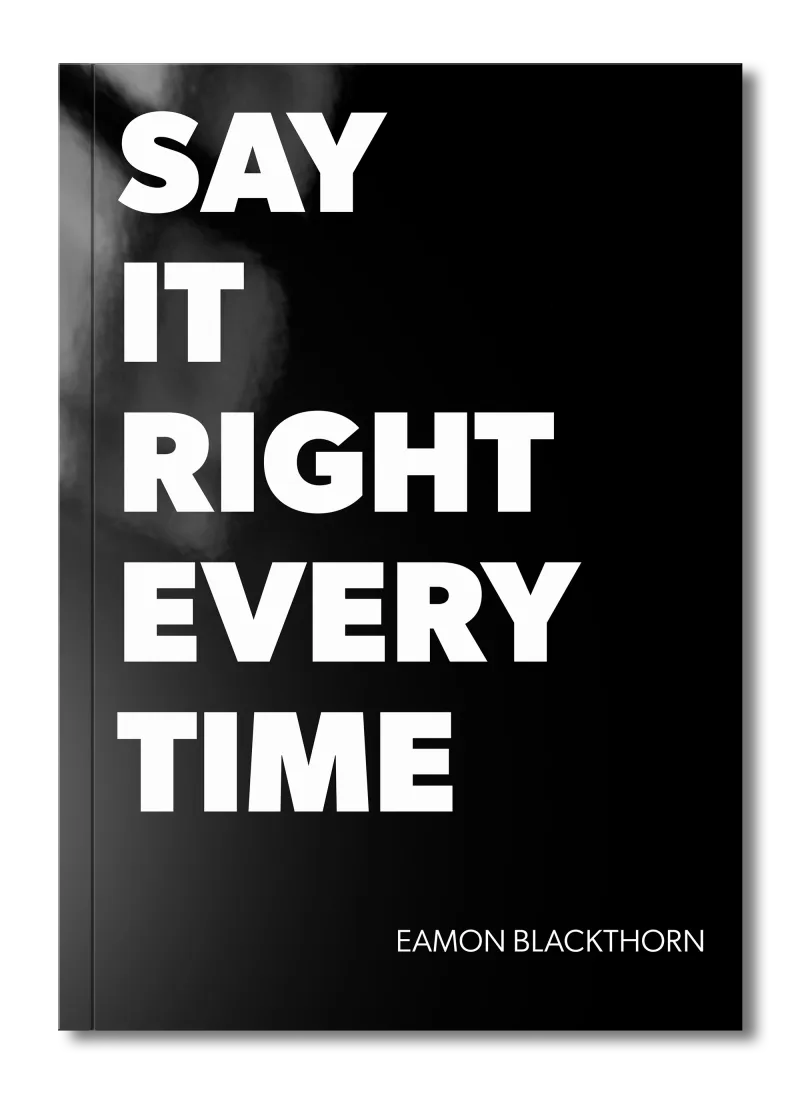
Stop rehearsing conversations you'll never have. Say It Right Every Time gives you 115 word-for-word scripts and 16 proven frameworks to speak with confidence in every conversation that matters.
Why Micro-Gestures Matter in Every Workplace Interaction
Here is the truth of it. Your words travel through people's conscious minds. Your micro-gestures travel through something older and faster. Before anyone decides whether to trust you, their nervous system has already been reading your body for several seconds.
When micro-gestures work against you, the consequences are real:
Trust breaks down without explanation. When your physical signals contradict your spoken message, people feel a mismatch they cannot always name. They describe you as "hard to read" or "a bit off." That vague sense of unease is enough to close doors before you know they were opening.
Your credibility suffers in high-stakes moments. Negotiations, performance conversations, and presentations are exactly the situations where stress sharpens people's instinctive reading of physical cues. The moments that matter most are the moments your body is hardest to manage.
You miss critical information from others. Reading micro-gestures is a two-way skill. When you develop awareness of your own physical expression, you naturally become more attuned to the signals other people send. That is an enormous advantage in any professional conversation. For a deeper look at how this connects to feedback conversations, Emotional Intelligence in Feedback Conversations is worth your time.
Connection becomes harder to build. People feel comfortable around those whose body and words tell the same story. When physical expression is controlled, coherent, and genuine, others relax. When it is fragmented or tense, they stay guarded.
These stakes play out in ordinary interactions every day, not just in boardrooms. You feel them in hallway conversations, in the brief exchange before a difficult meeting, in the pause before someone gives you feedback. Developing awareness of micro-gestures is not about performance. It is about becoming someone others can genuinely read and trust.
Key Characteristics of Micro-Gestures When Physical Expression Is Working
You know physical expression is working when you see these signs in yourself and others:
Alignment of signal and word. The movements a person makes are consistent with what they are saying. When someone says they are confident, their chin is level, their shoulders are settled, and their hands are still or moving with purpose. There is no contradiction between the verbal and the physical message.
Economy of movement. People who are genuinely present and grounded use fewer, cleaner movements. Excessive gesturing, foot tapping, or hair touching often signals internal noise rather than emphasis. Controlled physical expression says: I am here, I am clear, I am settled.
Spontaneous micro-responses. When someone listens well and engages genuinely, you will see brief, natural micro-gestures of response: a slight nod, a momentary lift in the eyebrows, a soft shift in posture. These are not performed. They happen because the person is actually paying attention, not managing an impression.
Recovery after disruption. Even skilled communicators experience moments of tension. What distinguishes them is how quickly their body returns to a neutral, open baseline. A brief jaw clench followed by a visible breath and a return to stillness is a sign of self-awareness and practiced physical regulation.
Congruence under pressure. In difficult conversations, the gap between what someone says and what their body does tends to widen. For people with strong physical expression skills, that gap stays narrow even when the stakes are high. This matters enormously in peer-to-peer feedback situations, where tension between colleagues makes physical incongruence particularly damaging.
Together, these characteristics describe a physical presence that people find clear, trustworthy, and easy to engage with. That quality is not accidental. It is built through practice.
Common Misconceptions About Micro-Gestures in Professional Settings
Let me clear up three things people consistently get wrong about physical expression at this level.
Misconception: Micro-gestures can be faked convincingly with enough practice.
The truth: You can learn to manage broad body language effectively, but micro-gestures occur too fast for deliberate performance to catch them reliably. The most effective approach is not to fake calm or confidence, but to genuinely prepare yourself before high-stakes interactions. When your internal state is grounded, your micro-gestures will reflect that without effort.
Misconception: Reading micro-gestures means you can know exactly what someone is thinking.
The truth: A single micro-gesture tells you almost nothing. A lip compression could mean disagreement, discomfort, or concentration. What matters is clusters of signals read in context. A lip press combined with a quick eye shift and a slight backward lean across several seconds of conversation is informative. One gesture in isolation is noise. Building this skill means learning to see patterns, not to decode individual signals like a code. Psychological safety in teams makes this kind of observational reading far easier, because people's signals are less distorted by fear.
Misconception: Micro-gesture awareness is only useful for senior leaders or negotiators.
The truth: Every professional conversation involves physical expression at this level. Whether you are giving feedback to a colleague, presenting to a client, or navigating a difficult exchange with a manager, these signals are already present. The only question is whether you are reading them or missing them. Ignoring them does not make them less influential.
The short of it is this: micro-gesture awareness is a practical skill available to anyone willing to observe carefully and practice with real intention.
Micro-Gestures in Real Professional Situations
Here is what physical expression looks like when it is, and is not, present.
In a performance review. A manager tells a team member their work has been strong this quarter. The words are positive. But as she speaks, she glances briefly at the door, her right hand taps once on the folder in front of her, and her smile fades slightly before she finishes the sentence. The employee does not consciously register each signal. But by the end of the meeting, he feels vaguely unsettled, as if something was left unsaid. The micro-gestures undermined the message. The role of communication in meeting success explores how these dynamics affect the whole room, not just the two people directly involved.
In a team disagreement. Two colleagues are working through a conflict in a group setting. One person argues their case with steady eye contact, open hands resting on the table, and a slight forward lean. The other listens with arms folded, chin pulled in, and a brief nostril flare at each key point. The group does not need words to tell them who is open to resolution and who is not. Physical expression is making the argument louder than either person's speech. How empathy bridges work in team communication can shift these dynamics when physical signals have already hardened positions.
In a leadership moment. A project leader is giving difficult feedback to her team after a failed delivery. Her posture is open, her hands are relaxed, and she maintains steady, direct eye contact while she speaks. When a team member pushes back with frustration, she takes a visible breath, her expression stays level, and she nods once before responding. Nothing in her body signals panic or retreat. The team reads that steadiness before they process her words. That is physical expression at its most powerful.
What these scenarios share is simple: the body always sends a message. Whether you intend it to or not.
Key Takeaways
Here is what matters most about micro-gestures in professional communication.
Physical expression happens whether you manage it or not. Your body is communicating in every professional interaction. Building awareness is not optional if you care about how others receive you.
Clusters matter more than single signals. One micro-gesture is almost meaningless. A pattern of signals across a conversation tells you something real. Train yourself to look for patterns, not individual moments.
Your internal state is your most powerful tool. The most reliable way to manage micro-gestures is to address the emotional state behind them. Prepare thoroughly, breathe deliberately, and approach high-stakes conversations from a grounded place.
Reading others' micro-gestures requires a baseline. Before you interpret someone's signals in a tense moment, you need to know what they look like in ordinary moments. Spend time observing people in low-stakes situations first.
Practice in real conversations, not just in theory. After any significant professional interaction, take five minutes to recall what you noticed physically, in yourself and in others. That kind of deliberate reflection builds skill faster than any technique alone.
Congruence earns trust over time. When your micro-gestures and your words consistently tell the same story, people develop a deep sense of reliability about you. That trust is built signal by signal, conversation by conversation. It is worth every bit of effort it takes to earn.
If you want to go further, understanding how micro gestures professional dynamics intersect with feedback conversations is a strong next step. How to Give Feedback That Strengthens Team Synergy gives you a direct framework for putting this awareness into practice.
Frequently Asked Questions (FAQ)
What are micro-gestures in professional communication?
Micro-gestures are small, often involuntary physical movements that occur during conversation, such as a brief eyebrow raise, a jaw tightening, or fingers curling inward. They reveal emotional states before conscious thought catches up. In professional contexts, these signals shape how others perceive your honesty, confidence, and intent.
How do micro gestures professional situations affect trust?
Micro-gestures either reinforce or contradict what you say aloud. When your words and your physical signals align, people feel they can trust you. When they conflict, people sense the mismatch and pull back, even if they cannot explain why. Trust erodes quickly once that gap appears.
Can you control your micro-gestures in the workplace?
You cannot fully suppress micro-gestures because they arise faster than conscious control. However, you can reduce the gap between what you feel and how you present yourself by practising physical self-awareness, slowing down your breathing, and preparing honestly before high-stakes conversations.
What is the difference between micro-gestures and general body language?
General body language refers to broad, intentional signals like posture and open arms. Micro-gestures are smaller and faster, often lasting less than a second. They are harder to fake and harder to suppress, which makes them a more reliable indicator of genuine emotional and physical expression.
How do you read micro gestures professional conversations accurately?
Look for clusters, not single signals. A lip press combined with a rapid eye shift and a slight shoulder pull means more than any one movement alone. Context matters too. Practice observing people in low-stakes moments first, so you build a reliable baseline before interpreting high-pressure interactions.
Why do micro-gestures matter more than words in some situations?
In high-stakes professional moments, such as negotiations, feedback conversations, or presentations, people instinctively read physical signals more than words. When stress rises, the body speaks first and loudest. Understanding this is central to physical expression as a communication skill.