

What Happened
Workplace conflict is universal. Every organization, regardless of size or industry, runs into friction between people. A recent piece aimed at professionals tackled the question of how to navigate these clashes without torching relationships or careers. The advice was well-intentioned. But well-intentioned advice and effective advice are two very different things, and this piece highlighted a gap that costs professionals dearly every single day.
The Communication Angle
Here is the core problem with how most people approach workplace conflict: they treat it as a relationship problem when it is actually a communication problem. Those are not the same thing. A relationship problem requires therapy. A communication problem requires a specific set of skills you can learn, practice, and deploy on purpose.
The standard advice tells you to "stay calm" and "listen actively." That is not advice. That is a greeting card. Staying calm is the outcome you want, not the method to get there. What actually works is naming the issue out loud before the conversation gets heated. Something direct and clean: "I want to talk about what happened in Tuesday's meeting, and I want us to walk out of this with a clear plan." That sentence does three things. It signals intent, it removes ambiguity, and it gives the other person a destination. Vague conversations produce vague results.
The second failure in most conflict advice is the obsession with tone at the expense of content. People spend enormous energy worrying about how they sound and almost no energy on what they are actually saying. Tone matters, yes. But a perfectly calm delivery of a muddled message still leaves everyone confused and resentful. You need both. Lead with clarity, then manage your tone. Not the other way around.
The third issue is the advice to "find common ground." In practice, this often means avoiding the actual disagreement entirely. Real resolution requires someone to say the uncomfortable thing plainly. Not aggressively, but plainly. "We have a conflict about who owns this decision, and right now neither of us is moving forward because of it." That sentence is more productive than an hour of cautious, circling conversation where everyone pretends the problem is smaller than it is.
The professionals who handle conflict well are not naturally calm or naturally diplomatic. They have simply learned to say the specific thing that needs to be said, at the specific moment it needs to be said, without dressing it up so much that it disappears.
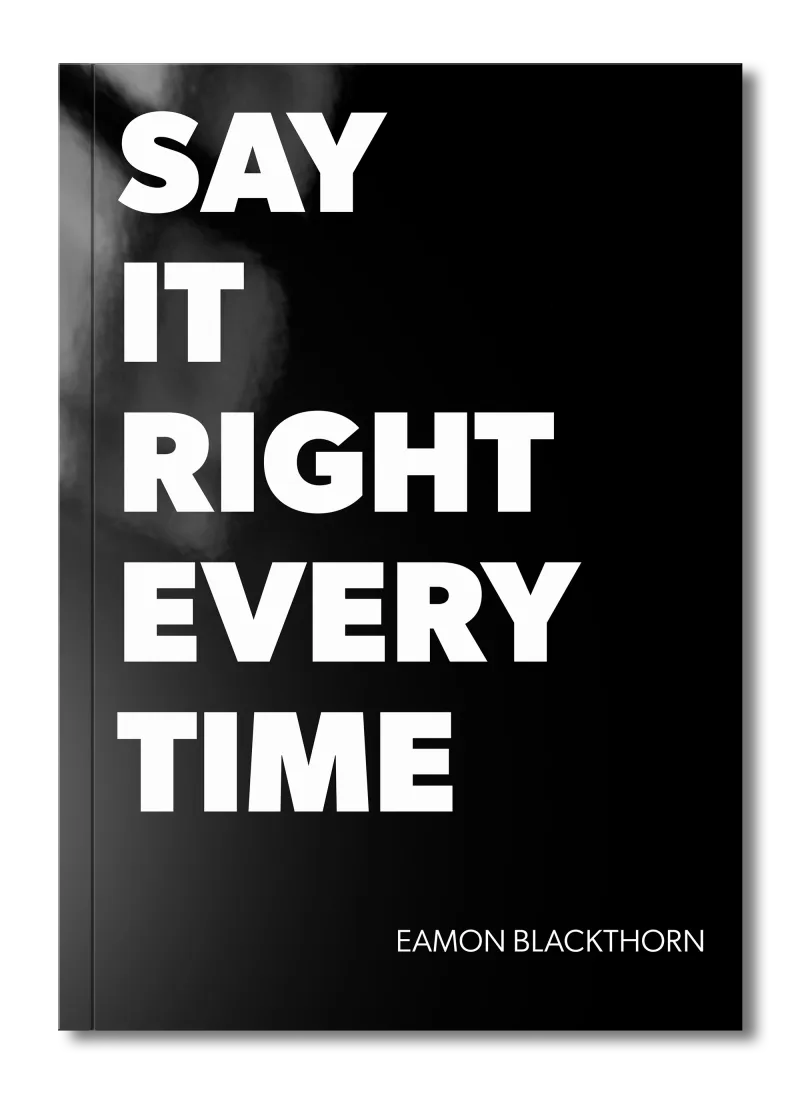
This is exactly the kind of scenario I break down in Say It Right Every Time. The chapter on conflict framing gives you a framework for opening a tense conversation in a way that positions you as the problem-solver in the room rather than another combatant. When you control the frame of a conversation, you largely control where it ends up.
Never Be Lost
for Words Again
Get word‑for‑word scripts for the conversations that shape your life, from job interviews and negotiations to difficult talks with family and partners, so you always know exactly what to say and how to say it.
Never Be Lost
for Words Again
Get word‑for‑word scripts for the conversations that shape your life, from job interviews and negotiations to difficult talks with family and partners, so you always know exactly what to say and how to say it.
Key Takeaway
Before your next difficult workplace conversation, write one sentence on paper: the single outcome you need from this conversation. Not a list. One sentence. Then write one sentence describing what you are willing to give up or concede to get it. Walk in with both sentences clear in your head. That preparation turns a reactive argument into a structured negotiation, and the other person will feel the difference immediately.