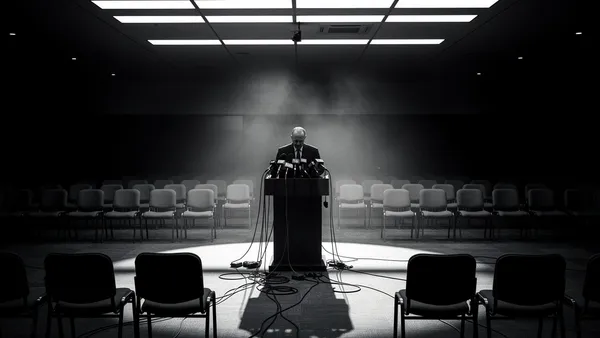

What Happened
Brands keep destroying their own reputations on social media, not because they post something wrong, but because they respond wrong. From tone-deaf apologies to defensive pile-ons, the pattern repeats itself across industries and company sizes. The common thread is not the original mistake. It is the communication failure that follows, turning a manageable problem into a lasting brand scar.
The Communication Angle
Here is the lesson: your first response in a crisis is not damage control. It is a declaration of your values. Every word you choose in that moment tells your audience who you actually are, not who your marketing team says you are.
Most brands fail at this for one specific reason. They write for the lawyers instead of the people. You can spot these responses instantly. They are full of passive voice ("mistakes were made"), vague accountability ("we take this very seriously"), and zero specifics. That language does not calm anyone down. It signals that someone is hiding. And audiences are not forgiving when they sense they are being managed rather than heard.
The brands that survive crises do three things differently. First, they lead with acknowledgment, not explanation. They say what happened before they say why. Second, they use plain, direct language. No corporate speak, no softening phrases. Third, they name a specific action they are taking. Not "we are reviewing our processes." Something real, something time-bound, something a person can picture. Those three moves together tell your audience: we see you, we are not hiding, and we are fixing it.
The worst social media fails share a second failure that almost never gets talked about: brands keep responding. They argue in comments. They reply to critics. They issue clarifications of clarifications. Every new post is another opportunity to make it worse. Silence, after one clean and honest statement, is often the most powerful communication move available. Knowing when to stop talking is a skill, and most brand teams do not practice it.
Brands that got it right treated the public statement as a one-way door. They said their piece, clearly and with ownership, and then they let their actions carry the story forward. That is not spin. That is discipline.
This is exactly the kind of scenario I break down in Say It Right Every Time. The chapter on crisis language gives you a framework for stripping a high-pressure response down to its essential structure: what you admit, what you commit to, and what you stop saying. Most people spend all their energy on the first two and never think about the third. That is where reputations go to die.
Never Be Lost
for Words Again
Get word‑for‑word scripts for the conversations that shape your life, from job interviews and negotiations to difficult talks with family and partners, so you always know exactly what to say and how to say it.
Never Be Lost
for Words Again
Get word‑for‑word scripts for the conversations that shape your life, from job interviews and negotiations to difficult talks with family and partners, so you always know exactly what to say and how to say it.
Key Takeaway
Before your brand (or you personally) posts any response to criticism or controversy, write one sentence that completes this: "The person reading this needs to walk away knowing that we ___." Fill in that blank before you write a single word of your actual response. If you cannot complete that sentence, you are not ready to respond yet. Every word you write after that should serve that one sentence. Cut anything that does not.