

What Happened
Customer experience leaders consistently struggle to gain traction in executive conversations. The core problem is translation: CX professionals speak in satisfaction scores and journey maps, while C-suite executives think in revenue, risk, and competitive position. Learning to bridge that gap is not a soft skill. It is a survival skill for anyone who wants a seat at the table where budgets get decided.
The Communication Angle
Here is the question worth asking: Why do smart, talented CX leaders walk into boardrooms and get ignored?
It is not because their ideas are bad. It is because they are answering questions nobody in that room is asking. A CFO does not wake up worried about your Net Promoter Score. She wakes up worried about customer acquisition costs, churn rates eating into revenue projections, and whether the company can defend its margin. When a CX leader opens with "our satisfaction scores dropped three points," the CFO has already mentally left the building.
The fix is not to dumb things down. The fix is to reframe everything you know through the lens of money and risk. Every CX metric you care about connects to a financial outcome. Your job, before you walk into any executive meeting, is to make that connection explicit and unavoidable. "Our satisfaction scores dropped three points" becomes "we are on track to lose approximately 8% of our renewal base this quarter, which puts $4.2 million in annual recurring revenue at risk." Same information. Completely different conversation.
The technique here is called anchoring to consequence. You lead not with the data but with what the data means to the person in front of you. This is not manipulation. This is respect. You are doing the translation work so they do not have to. Executives respond to leaders who make their jobs easier, not harder.
There is a second layer most CX professionals miss entirely: the ask. Too many CX leaders walk into C-suite meetings to inform rather than to decide. They present a problem, walk through slides, and then wait. That is a passive position and it signals that you are a reporter, not a leader. Every time you enter that room, you should be there to move something forward. Come with a clear recommendation. Come with a number attached to it. Come with the two objections they will raise and your responses already prepared. That preparation is what separates the people who get budget from the people who get nodded at and forgotten.
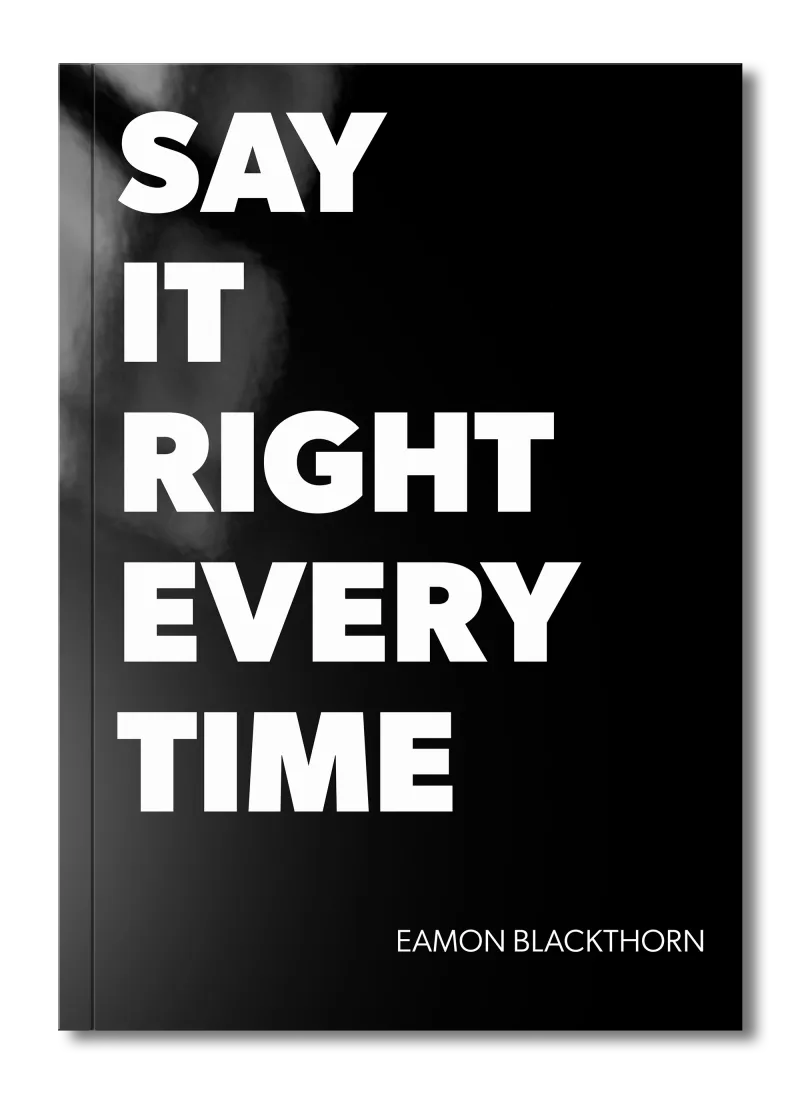
This is exactly the kind of scenario I break down in Say It Right Every Time. The chapter on audience-first framing gives you a framework for diagnosing what your listener actually cares about before you open your mouth, and then building your entire message backward from that point. CX leaders are not bad communicators. They are just trained to speak to the wrong audience. That chapter fixes it.
Never Be Lost
for Words Again
Get word‑for‑word scripts for the conversations that shape your life, from job interviews and negotiations to difficult talks with family and partners, so you always know exactly what to say and how to say it.
Never Be Lost
for Words Again
Get word‑for‑word scripts for the conversations that shape your life, from job interviews and negotiations to difficult talks with family and partners, so you always know exactly what to say and how to say it.
Key Takeaway
Before your next executive presentation, take every metric on your slides and write one sentence next to it that starts with "which means." Force yourself to complete that sentence in dollars, customer count, or competitive risk. If you cannot complete it, cut the metric. Walk in with only the numbers that have a "which means" answer ready to go.