
What Happened
Remote work is now a permanent fixture for millions of teams, and HR departments are scrambling to figure out what actually works in 2025. The old playbook of check-in emails and video calls has proven inadequate. Organizations that cracked the code on remote management share one thing in common: they rebuilt how they communicate, not just where they do it.
The Communication Angle
Here is the sharpest divide I see between managers who lose remote teams and managers who keep them engaged. The failing approach treats distance as a logistics problem. The successful approach treats it as a communication design problem. Those are completely different challenges, and confusing them is expensive.
The failing manager piles on more meetings to compensate for less visibility. Every question becomes a Zoom call. Every update becomes a 45-minute sync. The message this sends to employees is not "I care about staying connected." The message is "I do not trust you to work without supervision." Employees hear it. They always do. And the best ones leave.
The managers who get this right do the opposite. They default to written, asynchronous communication for everything that does not require a live decision. They are specific in every message. Not "can you update me on the project" but "by Thursday, I need the three blockers standing between us and launch, ranked by priority." That kind of precision respects the employee's time and eliminates the back-and-forth that kills productivity across time zones.
There is also a deeper issue that most HR guides ignore: the emotional register of remote communication. In an office, a quick hallway nod or a hand on the shoulder carries real weight. Remove those signals and your words carry all the freight. A flat, transactional message lands colder remotely than it ever would in person. Managers who understand this adjust their tone deliberately. They open with acknowledgment before they ask for anything. They close with context, not just commands. This is not softness. It is precision.
The contrast comes down to this: reactive managers add more communication volume when remote teams struggle. Strategic managers add more communication clarity. Volume creates noise. Clarity creates trust.
This is exactly the kind of scenario I break down in Say It Right Every Time. The chapter on written communication gives you a framework for stripping a message down to its load-bearing parts: the ask, the deadline, and the reason. Most people write three paragraphs when one sentence would do more work. Remote management does not fail because of distance. It fails because distance exposes every bad communication habit you already had.
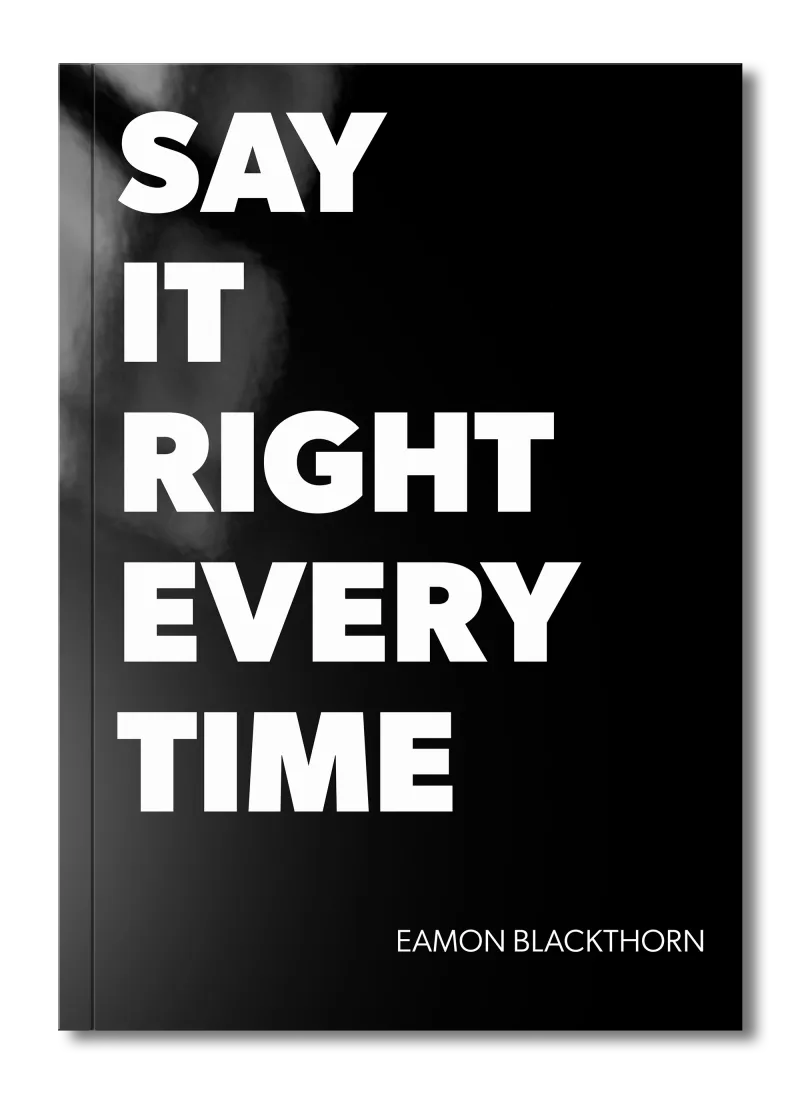
Never Be Lost
for Words Again
Get word‑for‑word scripts for the conversations that shape your life, from job interviews and negotiations to difficult talks with family and partners, so you always know exactly what to say and how to say it.
Never Be Lost
for Words Again
Get word‑for‑word scripts for the conversations that shape your life, from job interviews and negotiations to difficult talks with family and partners, so you always know exactly what to say and how to say it.
Key Takeaway
Before your next message to a remote employee, ask yourself one question: if this person reads this message without any context from our last conversation, will they know exactly what I need and when I need it? If the answer is no, rewrite it. One clear message saves four confused replies.