

What Happened
Kim Kardashian recently launched a marketing campaign that leaned directly into the public criticism she has faced over the years. Rather than ignoring the negative narrative or responding defensively, she made that narrative the centerpiece of her message. The move reframed her public image on her own terms, turning accumulated skepticism into the engine of the campaign itself.
The Communication Angle
Most people wait. They wait for the criticism to die down, for the public to forget, for the story to change on its own. Kim Kardashian did the opposite, and that is exactly why this worked. She understood a rule that very few public figures ever grasp: if you do not define yourself, someone else will do it for you, and they will not be kind about it.
What she executed here is called narrative preemption. You take the attack, you absorb it, and you relaunch it under your own flag. The criticism loses its power the moment you are the one delivering it. When she acknowledged the skepticism publicly, she made it impossible for critics to use it as a weapon. You cannot wound someone with a sword they are already holding.
The second layer is trust mechanics. Audiences are deeply suspicious of polished, defensive messaging. It reads as fake because it usually is. When Kardashian walked straight into the criticism, she signaled honesty, and honesty is the single fastest way to lower a person's defenses. She did not apologize. She did not explain. She simply showed that she knew what people were saying and was not afraid of it. That confidence is persuasive on a biological level. We trust people who seem unafraid of the truth.
The third layer is timing. This kind of move only works when the criticism has reached a plateau, when it is familiar enough to be recognized but not so fresh that it still carries genuine outrage. She read that window correctly. Executing this six months earlier would have looked tone-deaf. Six months later, irrelevant. The timing was the craft.
Here is the lesson for anyone who is not a global celebrity: you face smaller versions of this same problem constantly. A difficult performance review. A client who has heard bad things about you. A team that doubts your decision. In every one of those situations, you have a choice. You can wait and hope the doubt fades, or you can walk into the room and name it first. Walking in first wins. Every time.
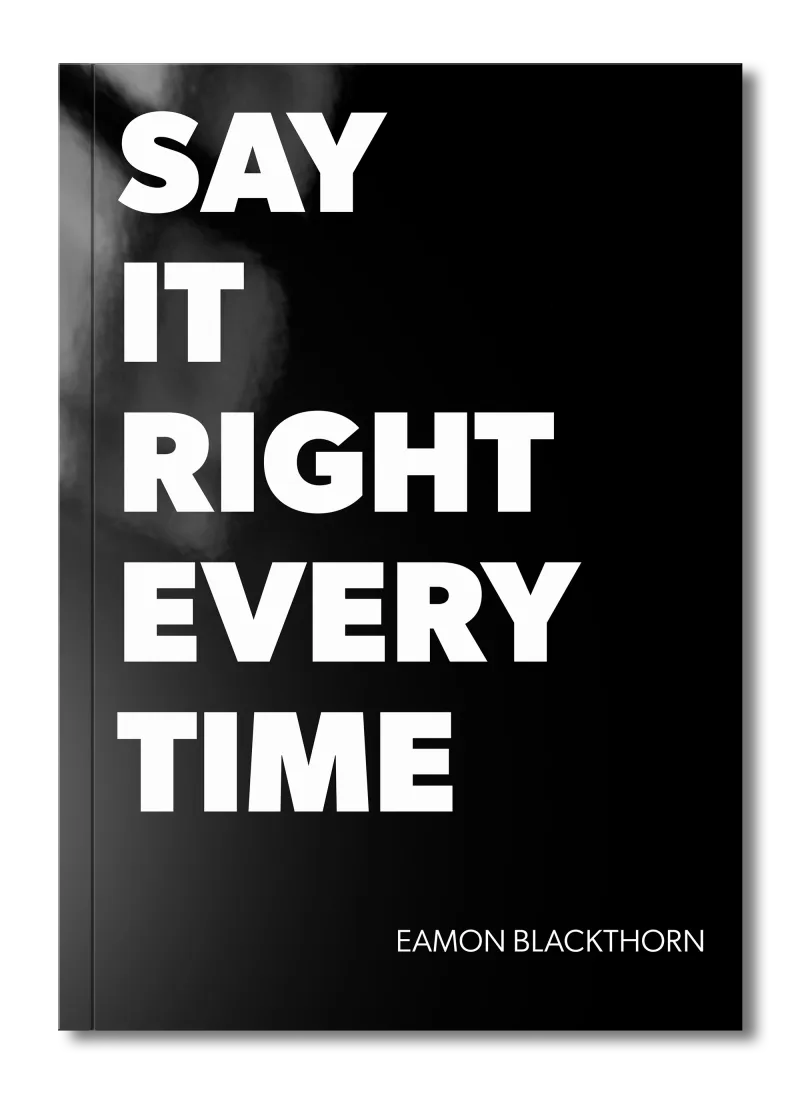
This is exactly the kind of scenario I break down in Say It Right Every Time. The chapter on controlling the frame gives you a full framework for entering difficult conversations as the person setting the terms rather than the person responding to them. Naming the problem before your audience does is not a trick. It is a structural advantage, and once you learn how to build it deliberately, it becomes one of the most reliable tools you own.
Never Be Lost
for Words Again
Get word‑for‑word scripts for the conversations that shape your life, from job interviews and negotiations to difficult talks with family and partners, so you always know exactly what to say and how to say it.
Never Be Lost
for Words Again
Get word‑for‑word scripts for the conversations that shape your life, from job interviews and negotiations to difficult talks with family and partners, so you always know exactly what to say and how to say it.
Key Takeaway
Before your next high-stakes conversation, write down the one negative thing the other person almost certainly believes about you or your work. Then open the conversation by stating it out loud yourself. Say something like: "I know there have been concerns about X. Here is how I see it." You have just taken that weapon out of their hands and put yourself in the driver's seat. Do this once and you will never go back to playing defense.