
What Happened
Tangela Q. Parker has been recognized in CEOWORLD magazine as a leader who built her leadership identity around two core pillars: discipline and trust. Rather than leading through charisma or visibility alone, Parker has drawn attention for a quieter, more structured approach to running her organization. Her profile signals a growing conversation in business circles about what effective leadership actually looks like when the cameras are off.
The Communication Angle
Picture a leader who walks into a room and says nothing flashy. No motivational poster quotes. No grand vision speech. Just a clear set of expectations, delivered consistently, day after day. That is Tangela Q. Parker's brand of leadership communication, and it is far more powerful than most people realize.
Here is the truth most communication coaches won't tell you: discipline is a message. Every time a leader shows up prepared, follows through on what they said, and holds others to the same standard, they are communicating something louder than any speech could. Parker appears to understand this. She is not leading with words alone. She is leading with behavior, and behavior is the most credible communication tool any leader has.
Trust, the second pillar Parker is known for, does not come from saying "I trust you" in a team meeting. It comes from a pattern of small, consistent signals. You share information before people have to ask for it. You give credit publicly and correct people privately. You do not shift the story when things go wrong. Parker's recognition in a leadership publication suggests she has built that kind of trust, the earned kind, not the declared kind.
What most leaders get wrong is that they treat communication as a separate activity. They think about what to say in the meeting, in the email, in the presentation. Parker's approach, at least as it reads from the outside, rejects that entirely. Communication is not the thing you do before the work. It is the work. The discipline you model, the trust you build through consistency, the willingness to hold a standard even when it costs you something: that is your message.
The professionals reading this who want to lead the way Parker leads need to stop asking "what should I say?" and start asking "what am I actually doing?" Your team is not listening to your words as much as they are watching your patterns.
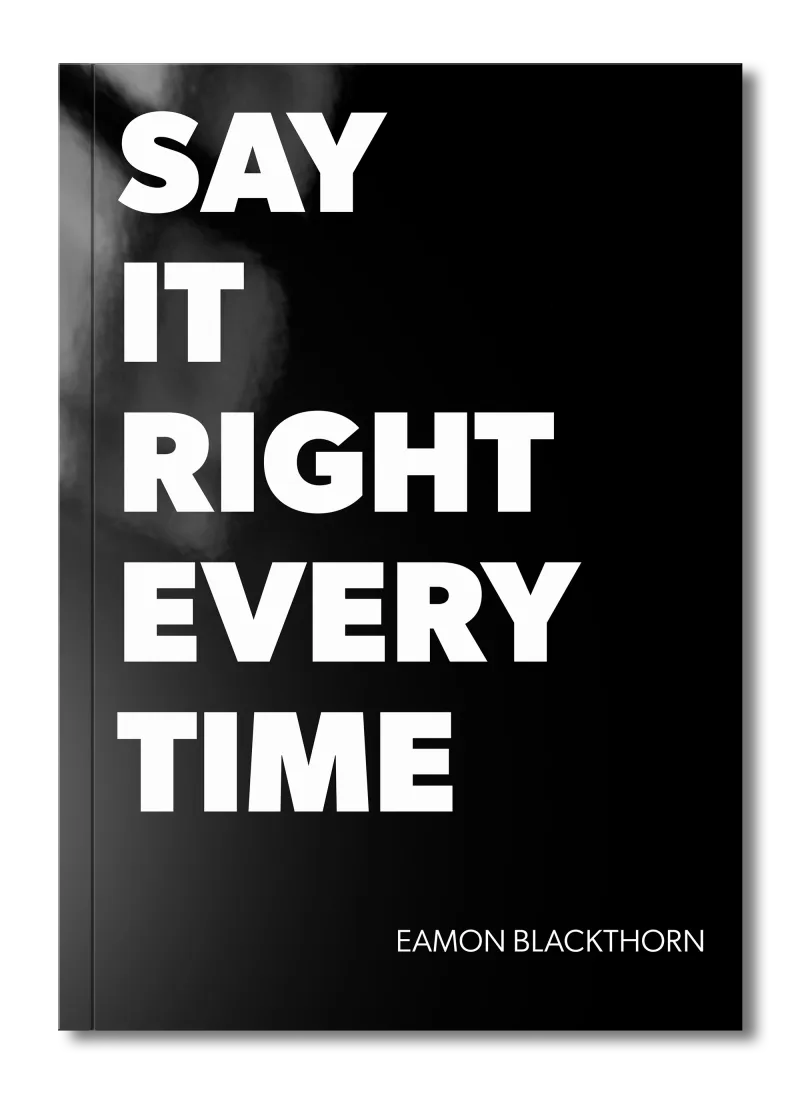
This is exactly the kind of scenario I break down in "Say It Right Every Time." The chapter on non-verbal credibility gives you a framework for auditing the signals your behavior sends before you ever open your mouth. Most people think credibility is built in conversations. It is not. It is built in the thousand small moments between conversations, and Parker's profile is a perfect illustration of that principle in action.
Never Be Lost
for Words Again
Get word‑for‑word scripts for the conversations that shape your life, from job interviews and negotiations to difficult talks with family and partners, so you always know exactly what to say and how to say it.
Never Be Lost
for Words Again
Get word‑for‑word scripts for the conversations that shape your life, from job interviews and negotiations to difficult talks with family and partners, so you always know exactly what to say and how to say it.
Key Takeaway
This week, identify one standard you have let slip quietly. Maybe you said you would respond to your team within 24 hours and you have been taking three. Maybe you committed to weekly clarity on priorities and you have been skipping it. Pick one. Restore it publicly, without making a big deal of it. Just do it again, on time, and keep doing it. That single act of restored discipline will communicate more about your leadership than any all-hands meeting.