

What Happened
Mahindra & Mahindra reported impressive first-quarter 2026 results, with growth metrics that most companies would celebrate. Yet investors responded by selling the stock. The numbers told one story. The market heard a different one entirely. That gap between performance and perception is not an accounting problem. It is a communication problem.
The Communication Angle
Why do strong results sometimes punish a company's stock price?
Because numbers never speak for themselves. Every earnings call is a narrative performance, and Mahindra's Q1 2026 outcome is a perfect case study in what happens when a company lets raw data carry the entire message. The data was good. The story, apparently, was not convincing enough.
Here is the core failure that happens in boardrooms and on earnings calls constantly: executives confuse reporting with communicating. Reporting is listing facts. Communicating is giving those facts meaning inside a framework the audience already cares about. Investors on an earnings call are not asking "what happened?" They are asking "what happens next, and should I trust you to get us there?" If your call does not answer that question directly and confidently, the market fills the silence with doubt.
The technical term for this is framing, but forget the label. The practical version is simple: before you read a single number, you tell the room what lens to use when they hear it. "This quarter proved our SUV strategy is working, and here is the one metric that shows it." That sentence does the job. It anchors everything that follows. Without it, investors are free to pick their own interpretation, and anxious money always picks the worst one.
There is also the issue of forward confidence. A stock drops after strong results almost always because management failed to project credible optimism about what comes next. Investors already know last quarter is over. They are pricing the future. If your communication about guidance is vague, cautious, or loaded with qualifiers, you are signaling uncertainty whether you intend to or not. Certainty is not arrogance. Certainty is leadership. You can acknowledge risks while still owning your direction. The executives who do this well say something like: "We see three headwinds. Here is exactly how we are moving through them." That is not spin. That is confidence with specificity, and it is what moves markets.
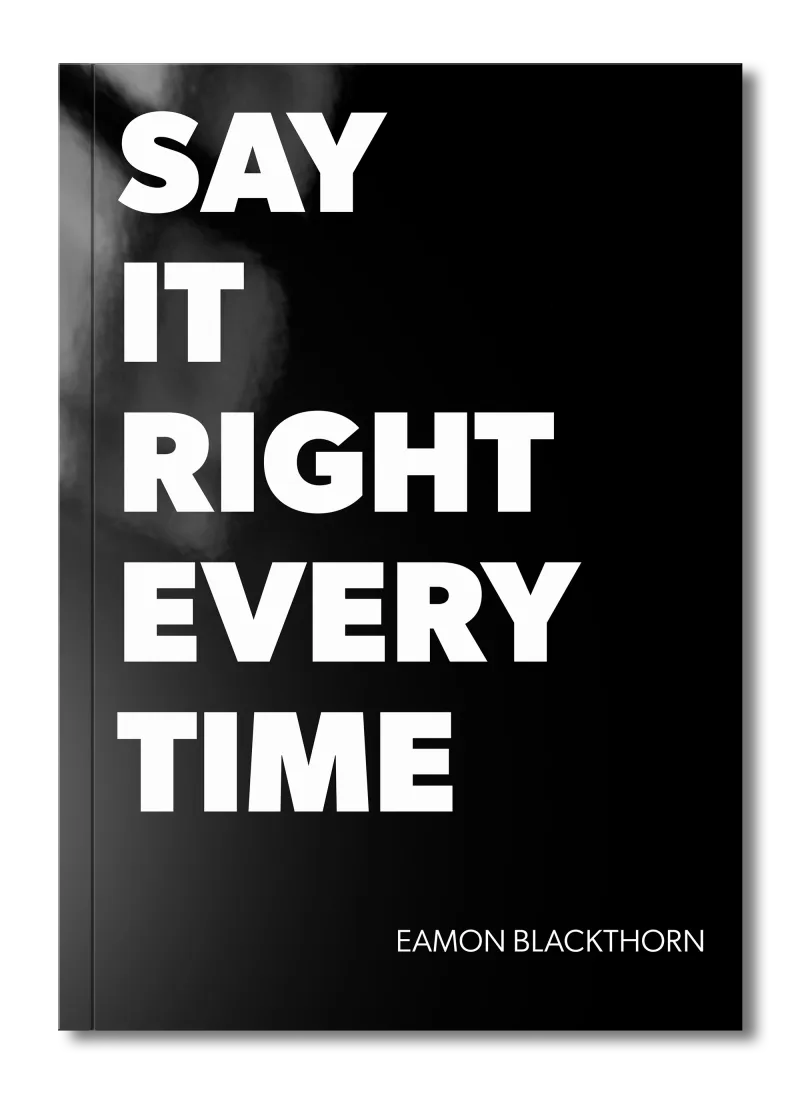
This is exactly the kind of scenario I break down in Say It Right Every Time. The chapter on framing high-stakes messages gives you a framework for leading with meaning instead of leading with data, so your audience arrives at your conclusion with you rather than despite you. The Mahindra situation is a textbook example of what that chapter is designed to prevent.
Never Be Lost
for Words Again
Get word‑for‑word scripts for the conversations that shape your life, from job interviews and negotiations to difficult talks with family and partners, so you always know exactly what to say and how to say it.
Never Be Lost
for Words Again
Get word‑for‑word scripts for the conversations that shape your life, from job interviews and negotiations to difficult talks with family and partners, so you always know exactly what to say and how to say it.
Key Takeaway
Before your next high-stakes presentation where you know the results are solid but the room might still push back, write one sentence that tells your audience what the numbers mean before you show them the numbers. Not a summary. A meaning statement. "This data proves X." Put it at the top. Say it out loud first. Everything after that sentence lands harder because the audience is no longer interpreting. They are confirming.