

What Happened
A senior leader at Lee Health, a Florida-based hospital system, published a personal reflection drawing on nearly 45 years at the organization. The piece centers on organizational culture and what it means in practice. Rather than citing metrics or strategy documents, the author anchors the entire argument in felt human experience, making the case that culture shows up in moments, not mission statements.
The Communication Angle
This piece works. And it works for one specific reason: the writer chose evidence over assertion.
Most leaders who write about culture fall into the same trap. They tell you culture is important. They use words like "values" and "commitment" and "excellence." Then they stop. The reader walks away with nothing to hold onto. That is not communication. That is noise dressed up in letterhead.
This author did something different. The credibility move here is not the title or the tenure. It is the framing. Forty-five years is not just a number dropped for authority. It is a contract with the reader. It says: I have seen this thing through enough cycles to know what is real. That kind of time-stamped personal authority is one of the most underused tools in leadership communication.
The second smart choice is structural. The writer opens with what culture is NOT, then builds toward what it IS. That contrast pattern is one of the oldest rhetorical moves in the book, and it is old because it works. When you tell someone what a thing is not before you tell them what it is, you clear the mental clutter. You remove the cheap substitutes before you introduce the real product. The reader's attention sharpens.
The third layer is the emotional grounding. Phrases anchored in "moments that matter most" do specific work. They pull the reader toward their own memory. They stop being passive audience and start being active participants in the argument. That is not an accident. That is a writer who understands that abstract ideas only stick when they are tied to something the reader has already felt.
The risk in this kind of personal, reflective writing is drift. You can get so absorbed in your own experience that you forget the reader. This piece skirts that edge. A sharper version would have named one specific moment, one actual scene, and let that image carry the argument. Principles without pictures fade. But the bones here are solid.
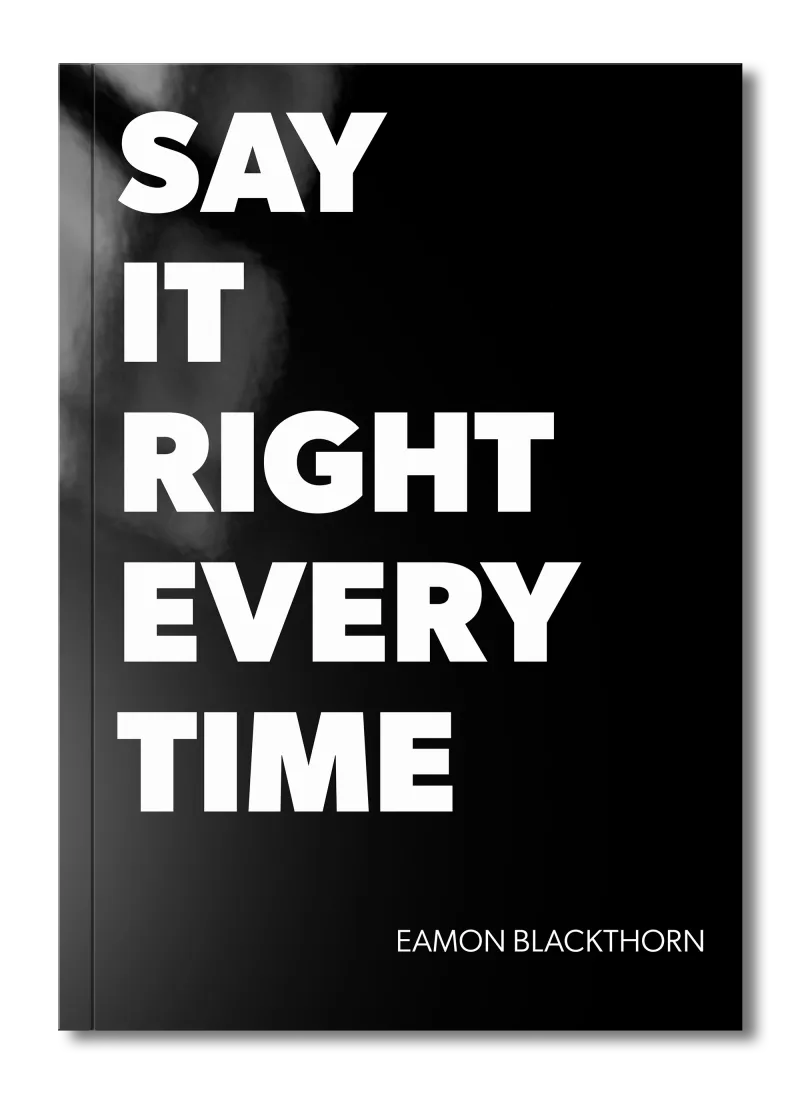
This is exactly the kind of scenario I break down in Say It Right Every Time. The chapter on earned authority gives you a framework for turning personal experience into persuasive credibility without sounding like you are just bragging about your resume. There is a real difference between invoking your history and using it. This Lee Health piece gets close to that line. The chapter shows you exactly how to step over it cleanly.
Never Be Lost
for Words Again
Get word‑for‑word scripts for the conversations that shape your life, from job interviews and negotiations to difficult talks with family and partners, so you always know exactly what to say and how to say it.
Never Be Lost
for Words Again
Get word‑for‑word scripts for the conversations that shape your life, from job interviews and negotiations to difficult talks with family and partners, so you always know exactly what to say and how to say it.
Key Takeaway
Before you write or say anything about your organization's culture, your team's values, or your leadership philosophy, stop and ask yourself: what is the one scene I have personally witnessed that proves this is real? Write that scene down first. Two or three sentences, concrete and specific. Then build your argument around it. If you cannot find the scene, you do not yet have a point worth making.