

What Happened
Gap's CEO recently made a deliberate move to tie the brand's cultural identity back to specific business recovery targets. Rather than leaning on feel-good brand language alone, the executive publicly linked Gap's creative relevance to measurable turnaround benchmarks. This is a notable strategic communication choice for a legacy retailer that has spent years fighting to stay meaningful to younger consumers.
The Communication Angle
Here is the question worth asking: Can a leader speak the language of culture and the language of numbers in the same breath without losing the audience?
Most executives pick one. They either go full visionary (inspiring but vague) or full analyst (credible but cold). The Gap CEO did something harder and smarter. The move connects emotional resonance to concrete accountability. That combination is rare, and it works for a specific reason: it eliminates the escape hatch.
When leaders talk only about vision, audiences nod and move on. Nothing is at stake. But when you attach a cultural promise to a measurable goal, you have just made yourself accountable in two directions at once. You cannot claim cultural success while the numbers are bleeding, and you cannot hide behind the numbers if the brand feels dead. That is pressure, and it is exactly the right kind of pressure for a turnaround story.
The technique at work here is what I call "anchored aspiration." You state where you want to go in vivid, human terms, then you bolt a specific number or deadline to it so the aspiration has weight. Gap's CEO essentially said: we are not just going to feel relevant again, we are going to prove it in a way you can measure. That is a fundamentally different speech act than "we are committed to our heritage and our future."
The risk, of course, is execution. This communication strategy only pays off if the results follow. But as a strategic choice in a moment of turnaround pressure, it is the right call. It signals confidence, not wishful thinking. Leaders in recovery mode who speak only in soft cultural terms signal fear. Leaders who speak in both registers signal control.
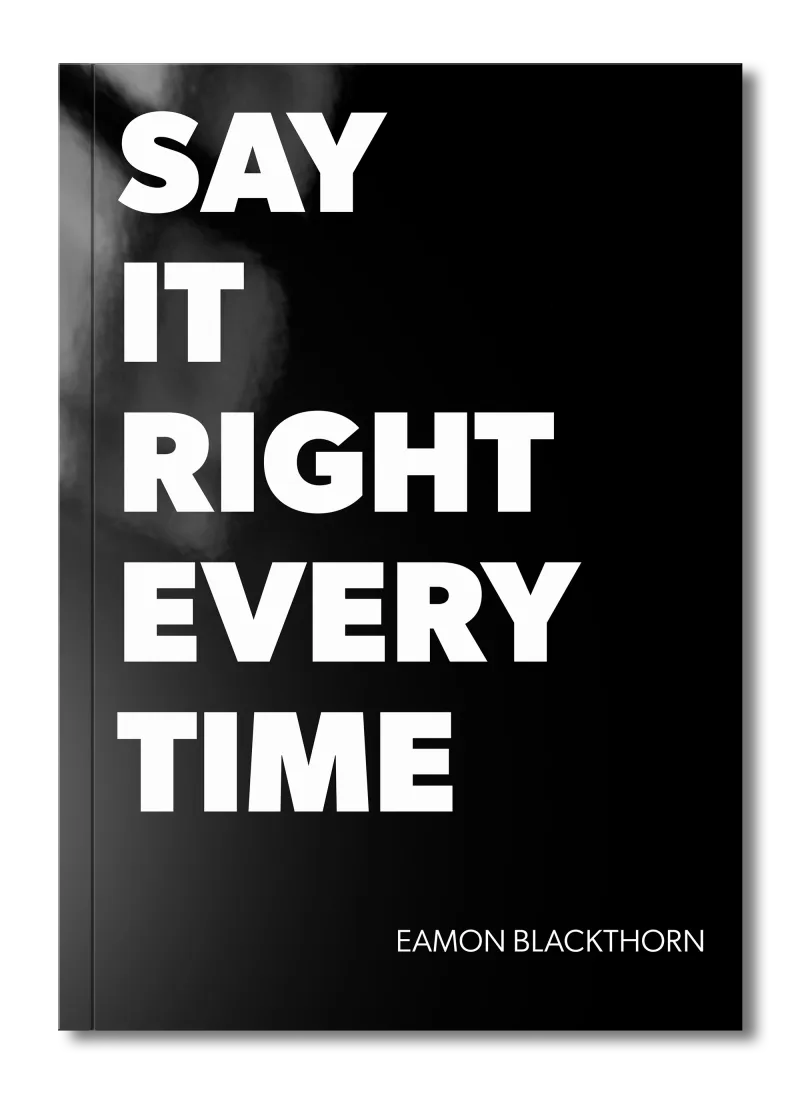
This is exactly the kind of scenario I break down in Say It Right Every Time. The chapter on high-stakes messaging gives you a framework for layering credibility and inspiration without letting either one cancel the other out. Most people treat facts and feeling as opposites. They are not. They are partners, and knowing how to pair them is one of the most powerful things a leader can learn to do.
Never Be Lost
for Words Again
Get word‑for‑word scripts for the conversations that shape your life, from job interviews and negotiations to difficult talks with family and partners, so you always know exactly what to say and how to say it.
Never Be Lost
for Words Again
Get word‑for‑word scripts for the conversations that shape your life, from job interviews and negotiations to difficult talks with family and partners, so you always know exactly what to say and how to say it.
Key Takeaway
Before your next leadership update, write down the one emotional promise you are making (how you want people to feel about the direction) and the one specific number that will prove you delivered on it. Put both in the same sentence. If you cannot connect them, your message is either too vague or too cold. Fix that before you open your mouth.