

What Happened
Leadership communication is undergoing a visible shift. The polished, distant, corporate-speak style that defined executive presence for decades is losing ground. Leaders who speak plainly, respond directly, and show genuine conviction are pulling ahead in trust and influence. The old playbook of carefully managed messaging and committee-approved statements is being replaced by something harder to fake: clarity with a human voice behind it.
The Communication Angle
Picture a boardroom in 2009. A CEO steps to the podium after a rough quarter and delivers a flawless, rehearsed non-answer. Twelve minutes of words, zero information. The audience nods. Nobody actually hears a thing. That was the standard. That was "professional." And for a long time, nobody questioned it because everyone was doing it.
That era is ending. Not because leaders suddenly became braver, but because audiences became sharper. Employees, investors, customers, all of them have been drowning in noise long enough to recognize signal the moment they hear it. And when a leader speaks in plain, direct language about something real, it lands differently now. It cuts through. The contrast alone makes it powerful.
The core communication shift here is the move from position-protection language to conviction language. Position-protection is what most executives default to: careful phrasing, passive constructions, nothing that can be quoted against you later. It sounds safe. It is actually catastrophic for trust because people can feel the absence of commitment behind every sentence. Conviction language does the opposite. It makes a clear claim. It stakes something. It says: this is what I believe and here is why. You can disagree with it. You cannot ignore it.
Here is where most leaders get this wrong. They confuse conviction language with aggression or arrogance. They think taking a clear position means being combative. It does not. Conviction is about specificity and ownership. It is "we made the wrong call on the launch timing and here is what we are doing about it" instead of "there were challenges that impacted our go-to-market results." One of those sentences was spoken by a person. The other was written by a committee of ghosts.
The leaders who are winning this communication evolution are not the most charismatic people in the room. They are the most specific. They name the problem. They own the decision. They tell you exactly what comes next. That specificity is the new executive presence.
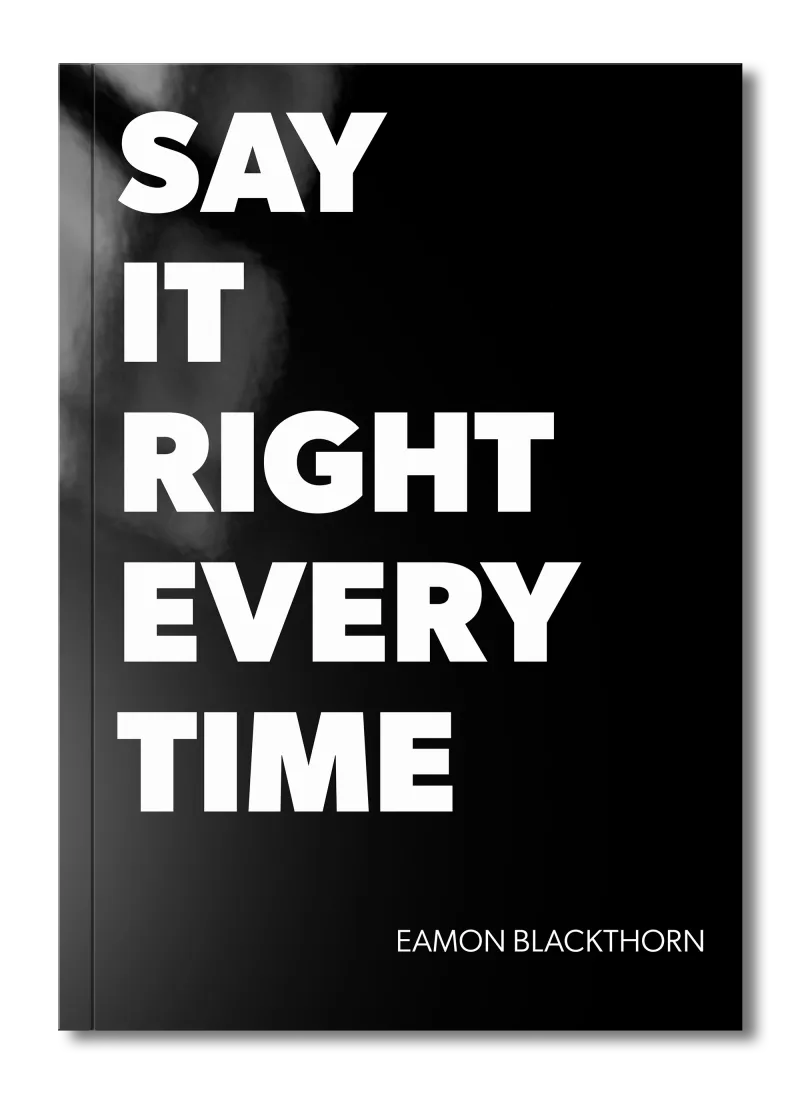
This is exactly the kind of scenario I break down in Say It Right Every Time. The chapter on conviction-based messaging gives you a framework for stripping position-protection language out of your communication before it costs you the room's trust. Most people do not realize how much of what they say is defensive until they see it mapped out side by side with what they meant to say. The gap is almost always larger than expected.
Never Be Lost
for Words Again
Get word‑for‑word scripts for the conversations that shape your life, from job interviews and negotiations to difficult talks with family and partners, so you always know exactly what to say and how to say it.
Never Be Lost
for Words Again
Get word‑for‑word scripts for the conversations that shape your life, from job interviews and negotiations to difficult talks with family and partners, so you always know exactly what to say and how to say it.
Key Takeaway
Before your next team meeting or public statement, write down one sentence that completes this prompt: "What I actually believe about this situation is..." Do not soften it, do not hedge it. Read it back. If it sounds like something a real person would say to a trusted colleague, you are on the right track. If it sounds like a press release, rewrite it until it does not. That sentence becomes the spine of everything you communicate.