

What Happened
The way leaders communicate is shifting fast, and the old playbook is getting retired. Executives who once relied on formal memos, polished press releases, and scripted town halls are finding those tools increasingly useless. A growing body of observation from business media suggests that the leaders gaining ground today are doing something different: they are speaking like humans, not institutions.
The Communication Angle
Here is the question worth asking: If communication is evolving, why are most leaders still communicating like it is 1995?
The answer is fear. Specifically, the fear of being wrong in public. Leaders are trained to protect the organization first and connect with people second. So they speak in layers of careful language, qualified statements, and corporate cushioning. The result is a message that reaches nobody. You cannot move people with language designed to offend nobody.
The leaders who are winning right now share one visible trait: they say something specific. Not vague commitments to "excellence" or "stakeholder value." They name the problem. They name their decision. They name what it costs. This is not vulnerability for its own sake. It is precision. Precision builds trust faster than any amount of warm, blurry rhetoric ever will.
Think about how this plays out in real situations. A CEO faces a rough quarter. The old approach is to bury the bad news inside forward-looking projections and optimistic language about "navigating challenges." The new approach is to open with the hard number, explain the decision that led there, and then describe exactly what changes next. Same facts. Radically different impact. One sounds like a cover-up. The other sounds like a leader.
The evolution happening here is not about tone or technology or which platform you use. It is about whether leaders are willing to make a clear claim and stand behind it. That is the real shift. Audiences, whether employees, investors, or customers, have become very good at detecting the difference between a leader who believes what they are saying and one who is reading something cleared by legal. The leaders who close that gap are the ones who will have rooms that actually listen to them.
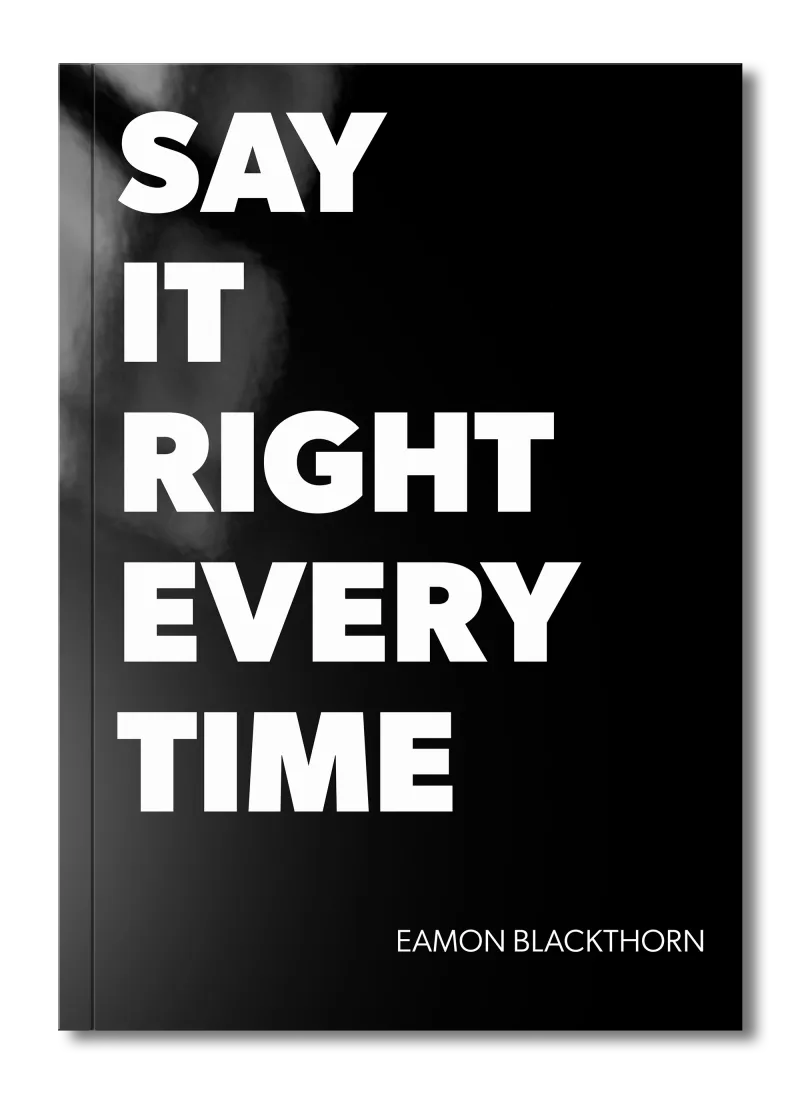
This is exactly the kind of scenario I break down in Say It Right Every Time. The chapter on clarity under pressure gives you a framework for stripping a message to its load-bearing structure, the part that actually carries meaning, so that when stakes are high and audiences are skeptical, you are not scrambling for words. You already know what you came to say.
Never Be Lost
for Words Again
Get word‑for‑word scripts for the conversations that shape your life, from job interviews and negotiations to difficult talks with family and partners, so you always know exactly what to say and how to say it.
Never Be Lost
for Words Again
Get word‑for‑word scripts for the conversations that shape your life, from job interviews and negotiations to difficult talks with family and partners, so you always know exactly what to say and how to say it.
Key Takeaway
Before your next all-hands meeting, board update, or team briefing, strip your talking points down to this: one problem you are naming out loud, one decision you made about it, and one specific thing your audience can expect to see change. Write those three things on a single index card. If you cannot fill that card cleanly, you are not ready to speak. When you can fill it, you do not need the rest of your notes.