

What Happened
Gap's CEO recently made a deliberate move to tie the brand's cultural cachet directly to hard business targets. Instead of speaking in vague terms about "brand relevance" and "consumer connection," the CEO linked those softer ideas to specific turnaround metrics. It was a public communication choice, and it was the right one.
The Communication Angle
Can you lead a turnaround without giving people something concrete to believe in?
No. You cannot. And that is exactly what most struggling brand leaders get wrong. They pick one lane: either they go emotional ("we're iconic, we matter, people love us") or they go cold ("margins up, costs down, stores closed"). Gap's CEO refused to choose, and that refusal is the whole lesson.
Here is what the CEO did correctly. Connecting cultural relevance to financial goals is not just messaging strategy. It is proof of understanding. When a leader says "our brand means something AND here is how that translates to revenue," they are doing two things at once. They are speaking to the skeptics who only trust numbers, and they are speaking to the believers who care about identity. One speech. Two audiences. Both convinced.
Most executives present these as separate conversations. The investor call gets the numbers. The brand conference gets the mission talk. That split is a mistake. It signals that the leader sees the business as two separate things rather than one connected story. Audiences pick up on that fracture immediately, even if they cannot name it. They walk away feeling unconvinced without knowing why.
The technique at work here is what I call "anchor and extend." You start with something your audience already accepts as true (Gap is a cultural touchstone, it has history, people recognize it) and then you extend that accepted truth toward the conclusion you need them to reach (therefore, the brand has real recovery potential, and here are the numbers to prove it). You are not asking people to take a leap. You are walking them across a bridge they helped build.
The practical application is straightforward. Before any major communication moment, whether a board presentation, a team meeting, or a press interview, ask yourself two questions. What does my audience already believe that I can build on? And what specific, measurable destination am I leading them toward? If you cannot answer both questions in one sentence each, you are not ready to speak yet.
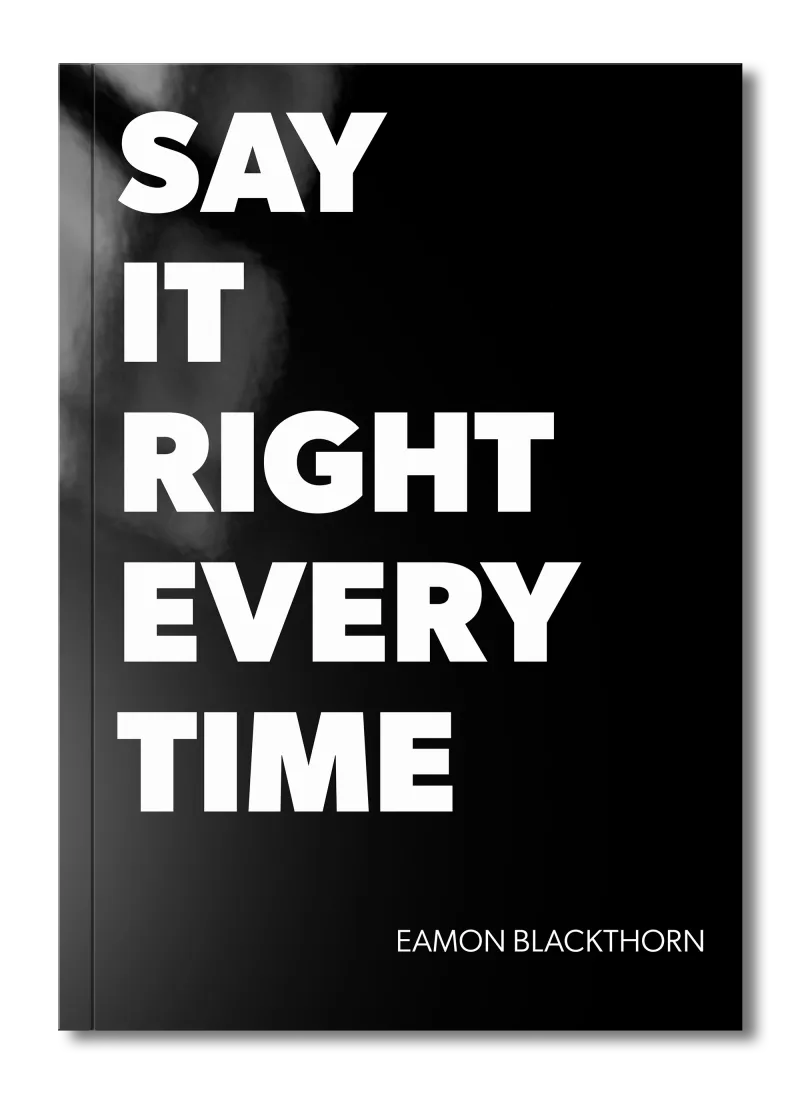
This is exactly the kind of scenario I break down in Say It Right Every Time. The chapter on bridging belief to action gives you a framework for moving an audience from emotional buy-in to concrete commitment, without losing either group in the process. The Gap CEO's instinct was sound. The chapter shows you how to make that instinct a repeatable skill, not a lucky guess.
Never Be Lost
for Words Again
Get word‑for‑word scripts for the conversations that shape your life, from job interviews and negotiations to difficult talks with family and partners, so you always know exactly what to say and how to say it.
Never Be Lost
for Words Again
Get word‑for‑word scripts for the conversations that shape your life, from job interviews and negotiations to difficult talks with family and partners, so you always know exactly what to say and how to say it.
Key Takeaway
Before your next leadership presentation, write this sentence at the top of your notes: "Because [something my audience already believes], we will achieve [one specific measurable goal] by [a real date]." If you cannot complete that sentence cleanly, rewrite your opening. Do not step in front of the room until you can say it out loud without stumbling.