

What Happened
Forbes recently highlighted three unconventional skills that contribute to executive presence, moving beyond the usual advice about posture and eye contact. The piece challenges the standard playbook and points toward less obvious behaviors that signal leadership authority. It suggests that what makes someone look and sound like an executive is often found in unexpected places, not in the obvious performance of confidence.
The Communication Angle
Here is the lesson, stated plainly: Executive presence is not a costume you put on. It is a set of communication habits you either have or you do not. And most professionals are working on the wrong habits entirely.
The Forbes piece is right to push past the tired advice. Telling someone to "stand tall and make eye contact" is like telling a struggling musician to "just play better notes." It ignores the actual mechanics. The three skills that genuinely move the needle are ones that require real discipline, and the first is this: knowing when to stop talking. Leaders who command a room say less than everyone expects. They finish a thought and then go quiet. That silence is not awkward. It is authority. Most people fill silence because it makes them uncomfortable. Executives let it work for them.
The second skill is precision in word choice. Not fancy words. Precise ones. There is a massive difference between a manager who says "I feel like we might want to consider possibly looking into this" and one who says "We are doing this. Here is the timeline." The first person sounds like they are asking for permission. The second one sounds like they are already in charge. Every word that softens your statement costs you credibility. Cut those words out entirely.
The third skill is the hardest one to build: genuine listening that shows on your face. Not nodding while you wait for your turn to speak. Actually processing what someone says before you respond. When you do this, two things happen. The other person feels genuinely heard, which builds trust fast. And your response is sharper because you actually heard the full argument. Executives who listen visibly and respond specifically (not generally) become the people everyone wants in the room.
These three skills share one thing in common. They all require you to slow down. Executive presence is not about doing more. It is about doing less, but doing it with complete intention.
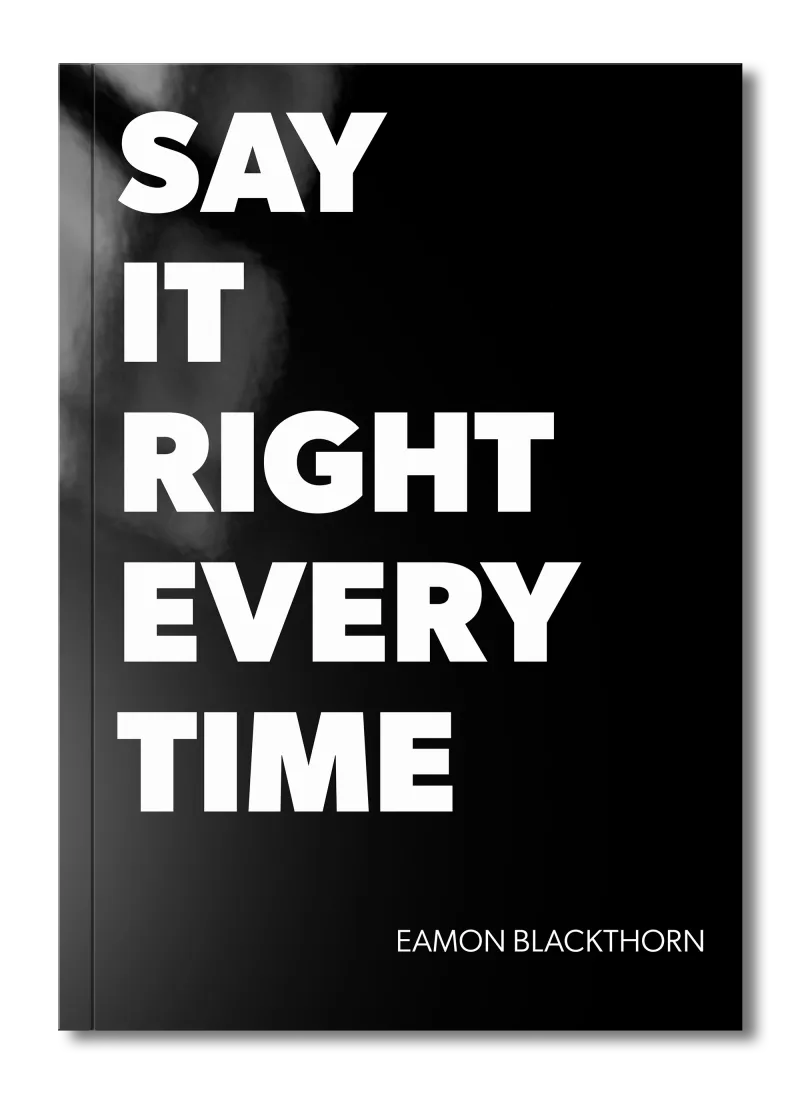
This is exactly the kind of scenario I break down in Say It Right Every Time. The chapter on verbal precision gives you a framework for auditing your own speech patterns, specifically how to identify the filler phrases that are quietly undermining your authority every time you open your mouth. Once you see them, you cannot unsee them.
Never Be Lost
for Words Again
Get word‑for‑word scripts for the conversations that shape your life, from job interviews and negotiations to difficult talks with family and partners, so you always know exactly what to say and how to say it.
Never Be Lost
for Words Again
Get word‑for‑word scripts for the conversations that shape your life, from job interviews and negotiations to difficult talks with family and partners, so you always know exactly what to say and how to say it.
Key Takeaway
In your next meeting, pick one moment where you would normally add a qualifying word or phrase ("I think," "maybe," "sort of") and cut it completely. Say the sentence without it. Notice how the room responds differently. Do this once, deliberately, in every meeting for the next two weeks. You will feel the shift before you can even explain it.