

What Happened
Research into CEO communication patterns reveals a direct link between how executives speak publicly and how investors respond with their money. The tone, word choice, and confidence level a CEO projects during earnings calls, press events, and media appearances measurably moves stock prices. In short, what leaders say and how they say it has become a market variable as real as revenue figures.
The Communication Angle
Let's start with the event itself: an earnings call. A CEO walks up to the microphone and says something like, "We're cautiously optimistic about the headwinds we're navigating." The stock dips. That's not a coincidence. That sentence is a masterclass in what not to do. "Cautiously optimistic" signals fear. "Headwinds we're navigating" signals chaos dressed up in corporate clothing. Investors don't hear careful nuance. They hear a captain who isn't sure the ship will make it.
The communication failure here is specific. Vague, hedging language triggers what I call the credibility gap. When you soften every claim, listeners stop trusting the ones that matter. Investors are pattern matchers. They've heard a thousand CEOs talk around bad news. The moment you sound like all of them, you've lost the room before the Q&A even starts.
Compare that to a CEO who opens with: "We had a tough quarter. Here's exactly why, and here's what we changed." That's three things working at once. First, it's direct, which signals confidence. Second, it owns the problem, which signals integrity. Third, it pivots to action, which signals control. None of that is spin. It's architecture. The message is built in a specific sequence to move the listener from concern to confidence.
The deeper issue is that most executives treat investor communication like a legal document. They want to say as little as possible while technically saying something. That instinct destroys trust faster than bad earnings do. Markets forgive bad quarters. They don't forgive evasion. When a CEO sounds like they're reading from a script designed to avoid accountability, sophisticated investors don't think "careful." They think "hiding something."
The fix is not to be cheerful or over-promise. The fix is to be precise and sequential. State the reality. Assign the cause. Name the response. Project the outcome. Four beats. Every time. That structure tells the listener: this person understands what happened and has a plan. That's the voice markets reward.
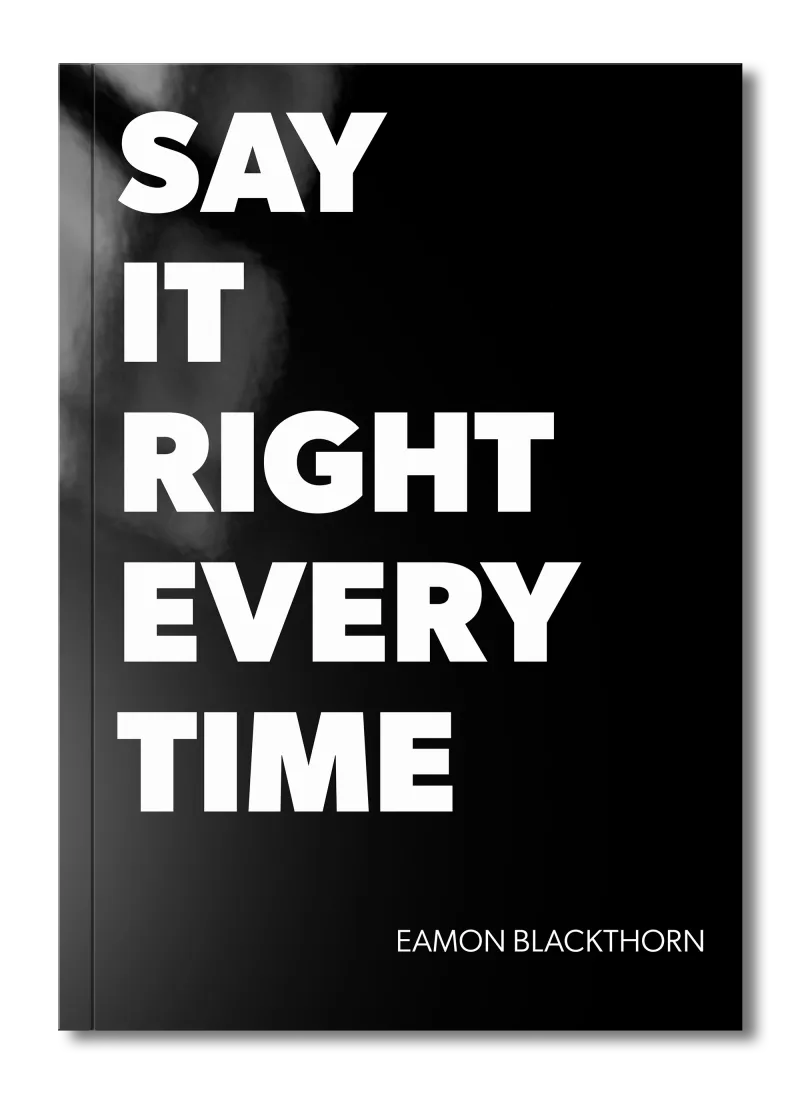
This is exactly the kind of scenario I break down in Say It Right Every Time. The chapter on high-stakes messaging gives you a framework for structuring difficult announcements so your audience lands on confidence instead of concern. The principle is simple: people don't respond to what you mean, they respond to what they hear. Getting those two things aligned is the whole game.
Never Be Lost
for Words Again
Get word‑for‑word scripts for the conversations that shape your life, from job interviews and negotiations to difficult talks with family and partners, so you always know exactly what to say and how to say it.
Never Be Lost
for Words Again
Get word‑for‑word scripts for the conversations that shape your life, from job interviews and negotiations to difficult talks with family and partners, so you always know exactly what to say and how to say it.
Key Takeaway
Before your next investor update, earnings call, or high-stakes presentation, write down the four beats in order: what the reality is, why it happened, what you are doing about it, and what the expected result is. Read it out loud. If any of those beats are missing or buried in qualifications, cut the qualifications and restore the beat. Clarity is not a risk. Vagueness is.