
In Short
This article contains five scripts for advocating for your team's synergy needs, covering situations from naming a collaboration breakdown to escalating an unresolved issue with senior leadership.
- Raising a synergy concern with your manager
- Naming a collaboration breakdown with a peer
- Escalating an unresolved synergy issue to senior leadership
Team synergy scripts are word-for-word phrases prepared in advance to help you speak clearly and confidently about your team's collaboration needs. They give you precise language for high-stakes situations where hesitation, anxiety, or low confidence can cause you to go silent when your team needs you to speak.
I remember sitting outside a director's office with a genuine problem on my hands. My team's collaboration had fractured quietly over several months, and I knew it. What I did not have were the words to explain it without sounding like I was raising a complaint. I had the situation clearly in my head. I had nothing prepared on my tongue. I went in, fumbled through it, and walked out having said about a third of what needed saying. The team synergy scripts I am giving you today are what I wish I had carried into that room.
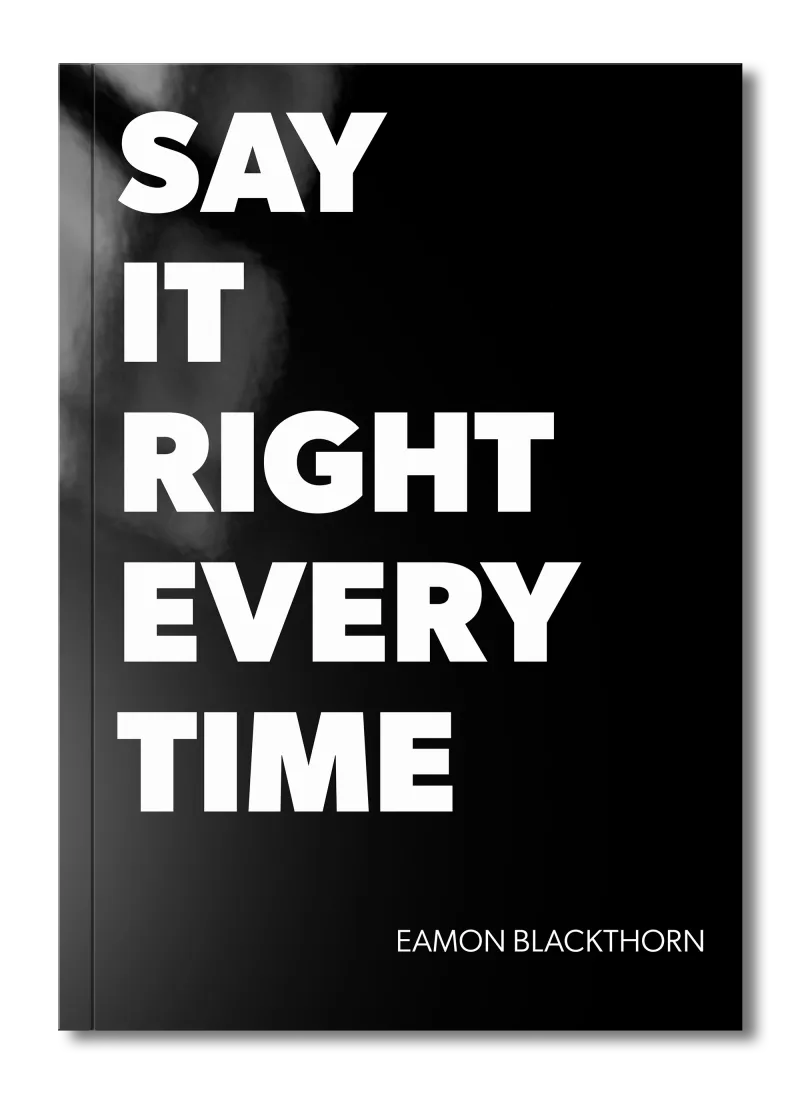
These scripts work because preparation is where confidence lives. In Say It Right Every Time, I describe this as the confidence-competence loop: you practice the words, the practice builds competence, and that competence produces the confidence to deliver them when it matters. The words come first. The courage follows. You can explore how the confidence-competence loop explains why some teams build synergy faster than others to understand the full cycle.
Find the script that matches your situation. Read the context note before you say a word. Practice it out loud at least twice before you use it. If you want the full framework behind these conversations, I cover it in detail in Chapter 6 of Say It Right Every Time.
How to Use These Scripts
Before you use any of these scripts, follow these steps.
- Find the situation that matches yours.
- Read the full script and the context note before speaking or writing.
- Adapt the words to your natural voice: keep the structure, change the tone.
- Practice out loud at least twice. Scripts read differently than they sound.
The most common mistake people make with word-for-word scripts is reading them verbatim without adjusting for the relationship or the room. A script prepared for a formal leadership conversation will land badly with a peer you have known for three years. Read the script, absorb the structure, then deliver it in the register that fits your relationship. The goal is a better, more prepared version of you, not a performance of someone else.
"The Conversation You're Avoiding Is the One You Need to Have."
"The Conversation You're Avoiding
Is the One You Need to Have."
Stop rehearsing conversations you'll never have. Say It Right Every Time gives you 115 word-for-word scripts and 16 proven frameworks to speak with confidence in every conversation that matters.
Script 1: Raising a Team Synergy Concern With Your Manager
Situation: Use this script when you have noticed a pattern that is weakening your team's collaboration and you need your manager to understand what is happening. This works best in a one-to-one setting, before the problem has become a crisis.
Why this works: You are naming an observable pattern rather than expressing frustration. Managers respond to specifics. When you lead with impact and name a concrete example, you give them something to act on rather than defend against. This approach draws directly on the principle I outline in Chapter 6 of Say It Right Every Time: specific behavioural examples carry more weight than vague complaints, every time.
Standard version: "I wanted to raise something I've been watching for a few weeks. There's a pattern affecting how well our team is working together, and I think it needs some attention. Specifically, [describe the observable issue, e.g., 'decisions are being made in small groups and the rest of the team is finding out afterwards']. The impact is that [name the effect on collaboration or output]. I'm not raising this to point fingers. I want us to work well together, and I think we need a plan for it. Can we talk through what that might look like?"
Formal version: "Thank you for making time for this. I would like to bring something to your attention that I believe is affecting our team's collective performance. Over the past [timeframe], I have observed [specific behaviour or pattern]. The effect on our ability to collaborate effectively has been [specific impact]. I want to be transparent that this is important to me, and I would appreciate your support in addressing it. I have some initial thoughts on how we might approach it, and I am open to your perspective."
After you use it: A good response will involve your manager asking for more detail or acknowledging the pattern. If they become defensive, hold your ground calmly: restate the impact, not the complaint. One sentence is enough: "I just want to make sure we address this before it affects our results more seriously."
Eamon's note: The courage to name a problem early is what separates good teams from great ones.
Script 2: Naming a Collaboration Breakdown With a Peer
Situation: Use this when a specific working relationship within the team has broken down and it is affecting how the team functions as a whole. This is a peer-to-peer conversation, ideally private, before the friction becomes visible to the wider team or leadership.
Why this works: Collaboration breakdowns between peers rarely get named directly. Most people either endure them silently or escalate them upward too soon. This script gives you a middle path: a direct, respectful conversation that addresses the gap without assigning blame. You can read more about how to start a difficult conversation that's blocking your team's synergy for deeper guidance on the opening moments of these exchanges.
Standard version: "Can I talk to you about something? I've noticed some friction between us lately, and I think it's starting to affect how we're working together on [project or area]. I don't want to let it sit. I'm not looking to assign blame. I just want to understand if there's something I've done that's contributed to it, and to figure out how we get back to working well together. What's your read on it?"
Formal version: "I would like to speak with you privately about something I have been observing. I have noticed some tension in our working relationship over the past [timeframe], and I am concerned it is beginning to affect the team's ability to collaborate effectively. I want to address this directly rather than let it develop further. I am open to hearing your perspective and I am prepared to take responsibility for any part I may have played. My intention is to find a way forward that works for both of us."
Casual version: "Hey, I wanted to grab five minutes with you. I feel like things have been a bit off between us recently, and I don't want to just leave it. Is there something I've done that I should know about? I'd rather just clear the air."
After you use it: A good response will involve your peer engaging with the question honestly, even if it takes a moment. If they deflect or minimise the issue, do not push immediately. Name what you saw: "I may be misreading it, but I wanted to check because our working relationship matters to me."
Eamon's note: Naming friction early, while it is still small, takes more courage than waiting, but it costs you far less.
Script 3: Advocating for Your Team's Synergy Needs With Senior Leadership
Situation: Use this when a systemic issue is limiting your team's ability to collaborate effectively and you need senior leadership to take action. This is a planned conversation, not a reactive one. Bring it to a scheduled meeting, not a corridor moment.
Why this works: Senior leaders need to see the organisational cost before they will act. This script uses the V.A.L.U.E. Method from Chapter 7 of Say It Right Every Time: you clarify your team's value, prove with accomplishments what good collaboration has produced, listen for their constraints, understand their perspective before presenting yours, and engage toward a shared solution. You can study the full approach in how to use the V.A.L.U.E. Method to advocate for your team's synergy needs with senior leadership.
Standard version: "I wanted to raise something about how our team is set up to collaborate right now. When we're working well together, we've delivered [specific result or outcome]. Lately, there are some structural things getting in the way of that. Specifically, [name the barrier: e.g., 'we're split across two reporting lines and there's no shared space for coordination']. I think this is costing us [name the organisational impact]. I'd like to propose [one clear, practical change]. I'm not asking for much. I just want to make sure we're not leaving performance on the table unnecessarily."
Formal version: "Thank you for your time. I would like to discuss something that I believe is limiting our team's collective performance. When conditions have supported close collaboration, we have achieved [specific outcome]. Currently, [describe the structural or systemic barrier]. The impact on our ability to deliver is [specific, measurable effect]. I would like to propose [one specific, actionable change] as a starting point. I have prepared a brief summary of the situation and my recommendation. I am open to your perspective on the best path forward."
After you use it: Senior leaders often respond by asking for more data or deferring the decision. Be ready with one concrete next step: "I can put a one-page summary together by Thursday if that helps." If they push back on the problem itself, do not argue. Acknowledge their view and return to the impact: "I understand that. From where I sit, the effect on the team has been significant enough that I felt it needed to be raised."
Eamon's note: Here is the truth of it: leadership cannot fix what it does not know is broken. Your job is to name it clearly enough that they can act.
Script 4: Requesting Conditions That Support Team Synergy
Situation: Use this when your team lacks something specific, such as regular shared time, a clearer process, or reduced competing priorities, that is preventing genuine collaboration from taking root. This is a proactive request, not a reactive complaint.
Why this works: Most managers want their teams to collaborate well. What they often lack is a clear, specific request they can action. This script gives you a way to name what your team needs without framing it as a grievance. What psychological safety means and how it drives team synergy is worth reading alongside this script if the underlying issue involves trust or fear of speaking up.
Standard version: "I want to talk about something I think would make a real difference to how our team works together. Right now, we don't have [name the missing condition: e.g., 'a regular time to align as a group before major decisions are made']. The result is that we're often working in parallel rather than together. I think if we had [name the specific thing you are requesting], it would noticeably improve our output and our working relationships. I've thought about how it could work practically. Can I walk you through it?"
Formal version: "I would like to raise a proposal regarding the conditions our team needs to perform at its best. At present, [describe the specific gap]. The effect on our collaboration and collective output has been [describe impact]. I would like to propose [specific, actionable request]. This is not a significant resource ask. I believe it would produce measurable improvement in how we work together and what we deliver. I have thought through the practical steps and am prepared to lead the implementation."
After you use it: A good response will involve your manager asking how it would work in practice. Come prepared with one concrete first step. If they say the timing is not right, ask: "What would need to be in place for this to be possible? I'd rather know what we're working toward."
Eamon's note: Teams do not just need good people. They need conditions that allow good people to work well together. Asking for those conditions is not weakness. It is clear thinking.
Script 5: Recovering After a Synergy Conversation That Did Not Go Well
Situation: Use this when a previous attempt to raise your team's synergy needs was fumbled, shut down, or handled badly, and you need to re-open the conversation without carrying the weight of that first attempt. The three-step recovery process from Chapter 6 of Say It Right Every Time, Acknowledge, Correct, Move On, applies directly here.
Why this works: A conversation that goes poorly does not have to stay closed. What matters is how you return to it. This script gives you a clear re-entry point that names what happened without dwelling on it. How to use the confidence-competence loop to make your team synergy conversations less terrifying is directly relevant here if your hesitation to try again is rooted in the fear of repeating the first attempt.
Standard version: "I wanted to come back to the conversation we had about [the issue]. I don't think I explained it well the last time, and I want to try again. What I was really trying to say was [restate your core point clearly and simply]. I think this matters enough to the team that I didn't want to leave it where it was. Can I have another few minutes with you on it?"
Formal version: "I appreciate your patience in revisiting this. When we last spoke about [the issue], I do not believe I communicated my concern as clearly as I should have. I would like to try again. The core of what I was raising is this: [restate your central point in one or two sentences]. I believe it is significant enough to warrant a proper conversation, and I am prepared to discuss it in whatever level of detail would be most useful to you."
Casual version: "Hey, can I try that conversation again? I think I came at it the wrong way last time. I just want to make sure I've actually said what I meant to say."
After you use it: Most people respond well to someone returning to a conversation with more clarity and less defensiveness. If your manager or peer is still reluctant to engage, name it directly: "I get the sense this is still a difficult topic. I'm not dropping it, but I'm also not trying to pressure you. I just need us to find a way through it."
Eamon's note: Your ability to recover and return to a hard conversation is, in my experience, more impressive than getting it right the first time.
Adapting These Scripts for Your Situation
Every script in this article is a starting point, not a final word. The structure carries the logic. Your voice carries the relationship.
Adjust for relationship length. A script written for a formal exchange with senior leadership will feel cold and distant with a colleague you have worked alongside for five years. Keep the core message, soften the register. The substance does not change. The tone must.
Match the stakes to the register. Low-stakes conversations between trusted peers do not need formal language. High-stakes conversations with leadership do not need to be casual. Read the room before you choose which version to use. Getting the register wrong can undermine an otherwise strong message.
Remove any phrase that does not sound like you. If a line makes you wince when you say it aloud, replace it. Scripts fail when people deliver them at arm's length because the words feel borrowed. The test is simple: if you would not say it in another conversation, do not say it in this one.
Build in your specific details. The brackets in these scripts mark the places where your real situation goes. A script without your specifics is a sketch. Fill it in before you use it, or it will sound rehearsed rather than prepared.
The goal is for these words to sound like a better, more prepared version of you, not like someone else.
Common Mistakes When Using Scripts for Team Synergy Conversations
The biggest way scripts fail is when people deliver the words without owning them. You can hear the difference. So can the person on the other side of the table.
Reading verbatim without adapting. A script is not a court statement. It is a framework. If you are reading it line by line without looking up, you have lost the room before you have said anything meaningful.
Using a formal script with someone who knows you well. Formal register with a trusted colleague creates distance and can feel like a warning shot. Match the tone to the relationship, not just the situation.
Skipping the preparation step. A script you have only read, never spoken, will feel unfamiliar the moment the pressure is on. Practice out loud. The words need to live in your mouth, not just on a page. How psychological safety enables honest communication and sustains team synergy is worth reading before any conversation where trust is fragile.
Abandoning the script when you get a difficult response. This is the most common failure point. Someone pushes back and the whole prepared structure collapses. Know in advance what you will do if the first response is resistant. Return to your core point simply and calmly.
Treating the script as a destination rather than a starting point. These words open conversations. They do not close them. After you deliver the opening, listen. The conversation that follows is where the real work happens. How to give feedback that strengthens team synergy instead of breaking it will help you navigate what comes next.
A script is a tool. Use it like one: with skill, not rigidity.
Frequently Asked Questions (FAQ)
What are team synergy scripts and when should you use them?
Team synergy scripts are word-for-word phrases prepared in advance to help you speak clearly about your team's collaboration needs. Use them when confidence is low, stakes are high, or when you know what you need to say but keep losing the words under pressure. Preparation is where confidence begins.
How do you advocate for team synergy needs without sounding like you are complaining?
Frame your concern around collective performance and shared outcomes, not personal frustration. Scripts that open with observable impact rather than blame keep the conversation constructive. The goal is to name what the team needs to function well, not to assign fault to any individual.
Can team synergy scripts work in high-stakes conversations with senior leadership?
Yes, and they work best there. Senior leaders respond to clarity, evidence, and solutions. A well-prepared script helps you present synergy concerns as organisational issues worth solving, not personal grievances. The formal versions in this article are specifically designed for leadership conversations.
What do you do when someone responds badly to a team synergy script?
Pause, stay calm, and do not abandon the structure. A difficult response often means the issue is real and has been avoided. Acknowledge what they said, restate your core point simply, and invite them to respond. Preparation means you can hold your ground without becoming defensive.
How do you adapt a team synergy script to your own voice?
Keep the structure of the script and change the tone to match how you naturally speak. Replace phrases that feel formal or stiff with your own words. The script is a skeleton, not a costume. What matters is that the core message stays intact while the delivery sounds like you.
Why is preparation so important for team synergy conversations?
Preparation is where confidence comes from. As I explain in Say It Right Every Time, confidence is not a prerequisite for action, it is the result of it. When you have prepared your words, you walk in knowing what you need to say, and that knowledge steadies you under pressure during the most important team synergy conversations you will face.