
In Short
Women's eye contact is measured by a different standard than men's. A steady, direct gaze signals authority when a man delivers it and aggression when a woman does. Understanding why that filter exists is the first step toward navigating it with intention, not frustration.
- The same gaze lands differently depending on who holds it, because social expectation shapes interpretation before content does.
- Strategic Positioning, framing your intention before your core message, gives your eye contact a context that anchors it to competence rather than challenge.
- The goal is not to soften your gaze. It is to build the frame around it so the room reads it correctly.
Women's eye contact refers to the way sustained or direct gaze is perceived, interpreted, and judged differently for women than for men in professional and social settings, due to gendered social expectations that filter the same nonverbal behaviour through separate standards of acceptability and authority.
Introduction
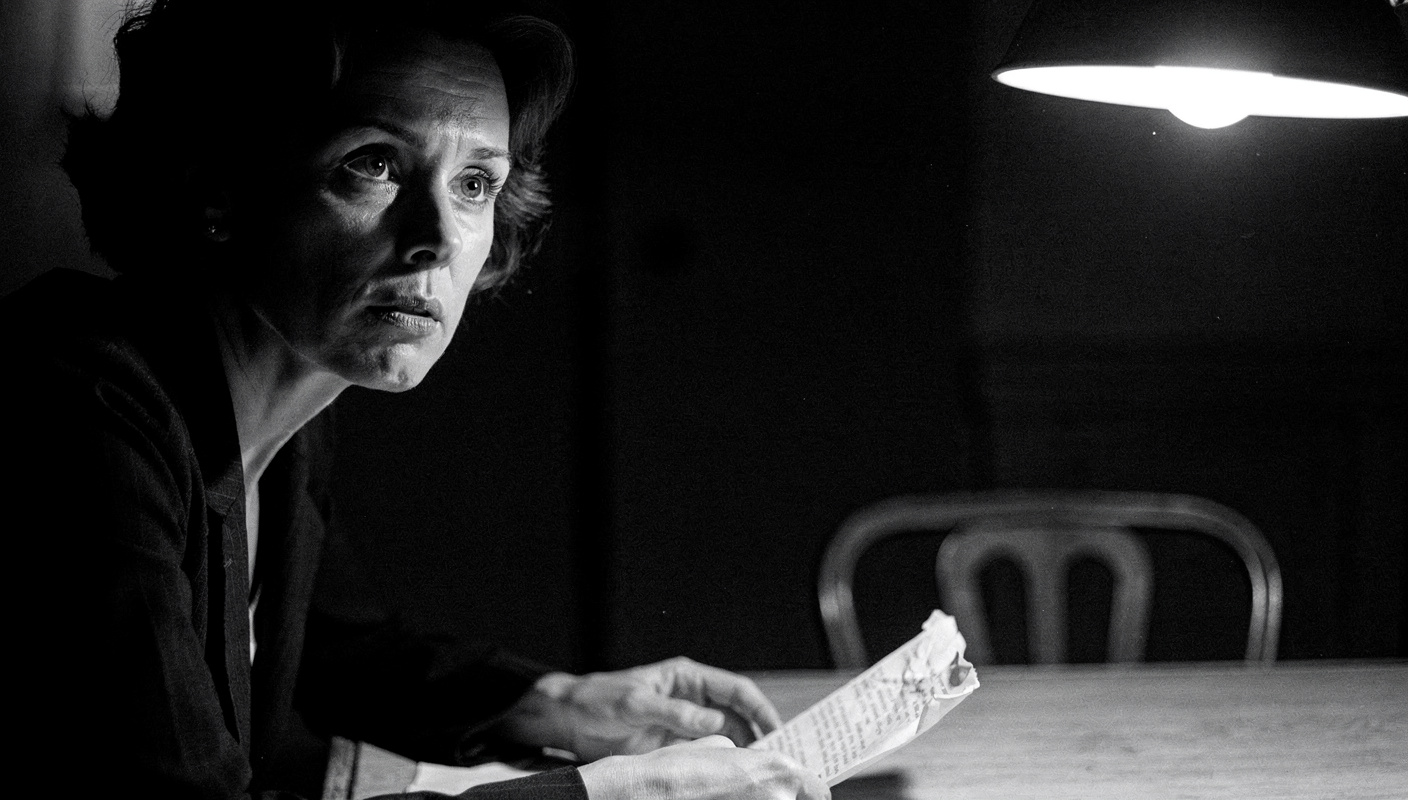
Watch what happens the next time a woman holds steady, direct eye contact in a tense meeting. Watch how quickly the word "intense" surfaces. Watch how a man doing the identical thing gets described as "focused" or "commanding." The behaviour is the same. The evaluation is not. This is the double bind at the centre of women's eye contact in professional life, and it has nothing to do with the gaze itself.
I have spent six decades watching people communicate across tables, across arguments, across silences. The patterns that repeat most reliably are not about words. They are about what the room decides a behaviour means before a single word is spoken. Eye contact is one of the most powerful nonverbal signals a person can send. It communicates presence, confidence, and engagement. But the interpretation of that signal does not arrive clean. It passes through a filter built from social expectation, and that filter is not the same for everyone.
By the end of this article, you will understand why the filter exists, how it operates in real situations, and what you can do to work within it without surrendering your authority.
"The Conversation You're Avoiding Is the One You Need to Have."
"The Conversation You're Avoiding
Is the One You Need to Have."
Stop rehearsing conversations you'll never have. Say It Right Every Time gives you 115 word-for-word scripts and 16 proven frameworks to speak with confidence in every conversation that matters.
Why the Same Gaze Produces Different Results
There is a concept I call the Perception Gap in Say It Right Every Time For Women, and it sits at the root of this problem. The Perception Gap is the distance between the message you send and the interpretation your audience receives after filtering it through their own social expectations and biases. Eye contact demonstrates this gap more visibly than almost any other nonverbal signal.
Direct, sustained gaze has been coded for generations as a dominance signal. It is the behaviour of someone who expects to be listened to, who holds authority, who does not look away first. For decades, that behaviour was almost exclusively associated with men in leadership. So the social brain learned to read a sustained gaze as: this person is in charge, and this is normal. When a woman delivers the same gaze, the brain registers the same behaviour, but it conflicts with a different set of learned expectations. The result is not a clean reading of confidence. It is dissonance. And dissonance, in the absence of other information, gets resolved as threat.
This is not a conscious process in the people reading you. That is what makes it so difficult to address directly. The bias operates at the level of the system, not the individual. As I write in Say It Right Every Time For Women: "The communication is not the problem. The system of perception it passes through is."
The Double Bind That Eye Contact Creates for Women
The Double Bind is, as I describe in Chapter 1 of Say It Right Every Time For Women, the impossible choice between being perceived as too soft or too strong. Nowhere does this bind tighten more visibly than in eye contact.
Hold your gaze steadily: you risk being read as aggressive, cold, or confrontational. Drop your gaze, look away, defer visually: you risk being read as unconfident, uncertain, or easy to dismiss. There is no neutral position. Every choice you make with your eyes is being interpreted through a filter you did not build and cannot simply dismantle by willing it away.
What makes the Double Bind particularly difficult with eye contact is that the signal is delivered in real time, in milliseconds, often without conscious control. You cannot draft and redraft a gaze the way you can a sentence. This is why awareness alone does not solve the problem. You need a method.
Understanding this bind connects directly to how you approach nonverbal communication in tense situations, where your gaze is being read most intensely and where the cost of misreading is highest.
How the Biased Filter Actually Works in a Room
Let me walk you through what this looks like in practice, because the mechanism becomes clearest when you can see it in motion.
A woman presents a proposal in a meeting. She speaks with conviction, makes direct eye contact with the senior person in the room, and holds that gaze as she makes her core argument. She does not look away when she finishes. She waits. In a man, that sequence reads as authority: he believes in his position and he is holding space for the response. In a woman, that exact sequence often triggers what I call Emotional Labeling, the reflex by which a valid, grounded expression gets misclassified as emotional or aggressive because of how it conflicts with expectation.
The senior person does not think: "She is intimidating me." They think: "Something feels off here." That vague discomfort gets attached to her, not to the bias producing it. She walks away having delivered a strong presentation, and the feedback is that she seemed "a bit intense" or "came across as defensive" when she was neither. This is the Perception Gap in direct operation. Her eye contact was an asset. The filter turned it into a liability.
This same dynamic plays out in how you handle conflict during meetings, where the gaze you hold during a disagreement gets read through the lens of who is expected to yield.
Why This Goes Unrecognised for So Long
Here is the truth of it: most people, including many women experiencing this, attribute the misreading to something they did wrong rather than to a filter they had no part in creating. The feedback rarely names the bias. It names the woman.
She is told she came across as aggressive. She is told she needs to smile more, soften her approach, be more collaborative. She adjusts. She softens. And then she faces the other horn of the bind: she is not taken seriously enough. Now she is not direct enough. Now she lacks executive presence.
The Rehearsal Trap, which I outline in Chapter 3 of Say It Right Every Time For Women, is what happens when women spend enormous energy rehearsing scripts and adjusting behaviour in response to feedback that is itself produced by bias. You can rehearse forever without progress if you are rehearsing to satisfy a moving and contradictory standard. The standard is not consistent. The filter shifts. What it is actually responding to is not your eye contact in isolation. It is your eye contact inside a frame the room has already built for you.
That is the insight that changes everything. You cannot fix eye contact alone. You have to address the frame it sits inside. And that is a much more actionable problem.
Strategic Positioning: Building the Frame Before Your Gaze Lands
The method I call Strategic Positioning, introduced in Chapter 3 of Say It Right Every Time For Women, is the discipline of framing a conversation and your role in it before you deliver your core message. When applied to eye contact, it means giving your gaze a context before you deliver it, so the room interprets it inside a frame you chose rather than the frame their bias chose for you.
Think of it this way. Strategic Positioning is like telling the audience what genre of film they are about to watch before the opening scene. If you have established that this is a collaborative discussion about solving a shared problem, your direct gaze reads as engaged partnership. If you walk in cold and hold that same gaze without context, the room fills in the blank with whatever their default filter produces.
In practice, this looks like this:
Before a high-stakes moment: Instead of locking eyes and delivering your argument, open with: "My goal here is to make sure we get the right outcome for everyone. Let me give you my read on the data." Then hold your gaze. The frame is already set. Your eye contact now reinforces credibility rather than triggering dissonance.
When a direct gaze is being read as aggression: Pair it with a nod before you speak. A single, measured nod signals that you are listening and engaging, not challenging. The gaze itself stays strong. The nod gives it a social context that reduces the threat signal.
When your eye contact is being interrupted or dismissed: Do not look away first. Hold the gaze steady, and reframe out loud. "I want to finish this point. I will come back to you in a moment." This is also a technique for reclaiming the floor when you are interrupted, a situation where your gaze is often the first thing challenged.
The Execution Adjustment here is not "use less eye contact." It is "build the context that allows your eye contact to land as intended." The gaze itself is an asset. What changes is the architecture around it.
The S.T.R.O.N.G. Framework and the Gaze Within It
In Chapter 5 of Say It Right Every Time For Women, I introduce the S.T.R.O.N.G. Framework: a six-step process for projecting grounded authority in high-stakes conversations. The steps are: State Your Intention Clearly, Take a Breath and Pause, Respect All Perspectives, Offer Specific Examples, Navigate to Solutions, Gain Commitment to Action.
The pause in step two is the moment where eye contact does its most significant work. After you state your intention, you take a breath and pause. That silence, held with a steady, open gaze directed at your audience, is what I call claiming the silence. It is a non-verbal declaration that you are comfortable taking up space. In a room that expects women to fill silence with more words, often softer words, holding a gaze through a deliberate pause is a quiet act of authority.
The gaze during the pause does not need to be a stare. It is relaxed and direct. It says: I am not uncertain. I am choosing to give you a moment to receive what I just said. This is the difference between eye contact that reads as confrontational and eye contact that reads as grounded. The distinction is internal composure, and composure is a discipline, not a feeling.
Silence is authority. A pause is a non-verbal declaration that you are comfortable taking up space and that your message is worth waiting for. When you pair that pause with a steady, calm gaze, you are communicating something far more powerful than any word you could insert instead.
This principle connects directly to the role of communication in meeting success, where the nonverbal signals you send during pauses and transitions shape how your entire contribution is weighted.
What the Perception Cost Actually Looks Like Over Time
Every conversation you do not have because the Perception Gap makes it too expensive is a cost you pay quietly. I want to name what that cost looks like in terms of eye contact specifically, because it is more significant than most people realise.
When a woman learns, through repeated feedback, that her direct gaze costs her something, she begins to manage it. She softens it. She looks away sooner. She drops her gaze during arguments, during challenges, during the moments when a steady look would signal exactly the confidence and competence she actually has. She has not become less competent. She has become less visible.
This is the invisible tax I describe throughout Say It Right Every Time For Women. It is the quiet, compounding cost of adjusting to a biased filter instead of learning to work within it strategically. The difference matters. Adjusting means giving ground. Working strategically means keeping your ground while changing the frame around it.
Competence without communication is invisible. And a gaze that has been trained down by bias is, in its own way, a form of communication silenced. The goal is not to stare people down. It is to deliver your eye contact with the same deliberate confidence you bring to your words, and to build the frame that ensures it lands as such.
This matters profoundly when you consider how to ensure every participant gets heard, because often the participants most likely to be visually dismissed are those whose gaze has already been trained into retreat.
Before a Hard Conversation: The Frame You Set With Your Eyes
One area where this plays out with particular force is before a difficult conversation even begins. The first five seconds of eye contact in a charged exchange set the frame for everything that follows. How you enter that space visually, before either person speaks, shapes what the other person expects to receive.
I have watched this happen hundreds of times. Two people sit down for a hard conversation. One holds the other's gaze from the start, calm and open. The other looks briefly at the table. In those five seconds, without a word spoken, a hierarchy has been implied. The person who looked away first has communicated something they did not intend.
The Empathy Bridge Technique addresses how to defuse tension before a difficult conversation starts. Eye contact is part of that initial signal. If your gaze is already uncertain when you sit down, no script will fully recover what those first seconds gave away. Prepare not just your words but your posture and your eyes before you walk through the door.
A brief, grounding moment before you enter: breathe, settle, decide what your gaze will communicate. Not aggressive. Not deferential. Present. That is the intention your eyes carry in before your voice does.
What You Can Do Differently Starting Now
Let me be clear about what this analysis points to. It is not a call to be more aggressive with your gaze. It is not a call to be softer. It is a call to be more deliberate, and to understand that deliberateness in communication is itself a form of authority.
These three adjustments follow directly from the analysis:
Frame before you fix your gaze. Before you make a significant point, state your intention in one sentence. "I want to make sure this lands clearly" or "My goal here is to give you the full picture." Then hold your gaze. The frame now carries your eye contact rather than leaving it exposed to the filter.
Claim the pause. After your key point, pause. Do not fill the silence with softening words. Hold the gaze for one steady moment. That pause communicates more confidence than anything you could add to the sentence.
Distribute in groups, lock in on individuals. In a group setting, distribute your eye contact across the room when delivering general context. When you want to signal authority or close an argument, bring your gaze to the senior person in the room and hold it briefly. This is the pattern that reads as executive presence, and it works because it combines inclusion with confidence rather than defaulting to either alone.
These principles become most important in the moments described in how to de-escalate arguments during meetings, where eye contact is the fastest thing in the room and the first thing misread.
What the Gaze Is Really Communicating
This much I know for certain: the women I have watched navigate this best are not the ones who figured out the perfect gaze. They are the ones who stopped trying to solve eye contact in isolation and started building the frame around it.
Women's eye contact is not the problem. The filter through which it passes is. You cannot remove that filter by staring it down. But you can, with practice and method, build a context strong enough that the filter loses its grip on your meaning. That is what Strategic Positioning does for your gaze. That is what the S.T.R.O.N.G. Framework does in the pauses between your words. That is what deliberate, calm, open eye contact delivers when it lands inside a frame you chose.
Your gaze is an asset. Treat it like one. Prepare it the way you prepare your arguments, deliver it with the same clarity you bring to your best sentences, and build the frame that ensures the room receives what you actually sent. The full method for doing this across every high-stakes situation is laid out in Say It Right Every Time For Women, but you can start applying women's eye contact strategies today, in the next conversation that matters to you.
Frequently Asked Questions (FAQ)
What is the double bind of women's eye contact?
The double bind of women's eye contact is the impossible position where holding a gaze is read as aggressive or intimidating, but avoiding it reads as weak or untrustworthy. The same behaviour that signals confidence in a man signals a social violation in a woman, leaving no neutral option between the two judgements.
Why is women's eye contact judged differently than men's?
Women's eye contact passes through a social filter shaped by decades of expectation. Direct, sustained gaze has long been coded as a dominance signal. When a woman delivers it, the behaviour conflicts with social expectations of deference, so the same gaze gets misread as hostility or discomfort rather than confidence and authority.
How can women use eye contact strategically in meetings?
Pair a direct gaze with a brief nod or a measured pause before speaking. This signals deliberate engagement rather than challenge. Distributing eye contact evenly across a group, rather than locking onto one person, also reduces the likelihood of it being read as confrontational and strengthens the impression of inclusive leadership.
Does making eye contact help women appear more confident?
Yes, but only when it is delivered within a clear frame. Eye contact alone is interpreted through whatever lens the room already holds. Strategic Positioning, naming your intention before your core message, gives your gaze a context that anchors it to authority rather than aggression and allows your confidence to register as intended.
What does emotional labeling have to do with eye contact?
When a woman holds a direct gaze during a charged conversation, the room sometimes reads her composure as anger rather than confidence. That misreading is emotional labeling at work. The same expression that reads as calm professionalism in a man gets coded as hostility in a woman simply because the perception filter is calibrated differently for each.
How do you reclaim authority after breaking eye contact?
Return your gaze deliberately and pair it with a grounding statement: "Let me finish this point" or "I want to be direct about this." The return of a steady gaze, paired with a clear intention, resets the frame without requiring you to explain or justify the break. The deliberateness of the return is itself the authority signal.
Can eye contact training help women overcome the perception gap?
Practice helps, but training eye contact alone is not enough. The Perception Gap means even a well-delivered gaze gets filtered through bias. Combining practiced eye contact with Strategic Positioning, framing your role and intention before speaking, closes far more of the gap than gaze training alone and produces more durable results across different room dynamics.