
In Short
Toxic traits do not fade with time, they deepen with silence.
- Repeated apologies without behavioral change are a sign of entrenchment, not progress.
- Others reshaping their behavior to accommodate one person is a warning signal most teams miss.
- Toxic traits disappear only when someone names the pattern directly and holds a clear boundary.
Toxic traits disappear rarely without deliberate intervention because the behaviors that define them are typically self-reinforcing. A toxic trait is a persistent, harmful behavioral pattern that damages relationships, erodes trust, and resists change without direct, sustained confrontation from others.
You gave someone honest feedback six months ago. They apologized. You thought it was resolved. Then, slowly, the same behavior returned, sharper this time, more confident, as though it had learned to hide better. That is the pattern with toxic traits. They do not simply dissolve when named once. Most people dealing with a difficult colleague or team member assume that time and goodwill will soften the edges. They rarely do.
The reason toxic traits are so easy to miss is that they rarely announce themselves. They shift shape. What looks like improvement is often just temporary suppression. The damage accumulates quietly, and by the time people recognize the full picture, the pattern has had months or years to root itself in place. Understanding why toxic traits disappear so infrequently, and what signs confirm they are deepening, not easing, is the first genuinely useful step.
In this article, you will learn to recognize six specific signs that toxic traits are entrenching, and what to do about each one. If you are dealing with destructive behavior in your team or want to understand the forces that keep harmful patterns in place, avoiding difficult conversations only makes this worse, so we start by naming what is actually happening.
Why Toxic Behavioral Patterns Are So Difficult to Detect
Toxic traits rarely look dangerous at first glance. They arrive dressed as confidence, directness, high standards, or strong opinions. By the time the damage becomes visible, the behavior is already embedded in the team's daily life.
There are several reasons the warning signs go unnoticed:
- The behavior is intermittent. Toxic traits often surface only under pressure, which makes people question whether the pattern is real or just a bad day. This inconsistency protects the behavior from scrutiny.
- The person is otherwise capable. When someone is skilled at their work, their damaging interpersonal conduct gets excused, minimized, or quietly absorbed by everyone around them.
- Others adapt invisibly. Team members stop raising certain topics, reroute conversations, or simply avoid the person. The adaptation is so gradual that no one registers it as a red flag.
- Apologies reset the clock. A sincere-sounding apology gives observers hope that the issue has resolved. It rarely has. The apology becomes part of the cycle, not the end of it.
- The costs are diffuse. No single incident feels catastrophic enough to act on. The harm is spread across dozens of small moments, none of which individually justifies a confrontation.
The first step is knowing what to look for. That is what this article gives you.
"The Conversation You're Avoiding Is the One You Need to Have."
"The Conversation You're Avoiding
Is the One You Need to Have."
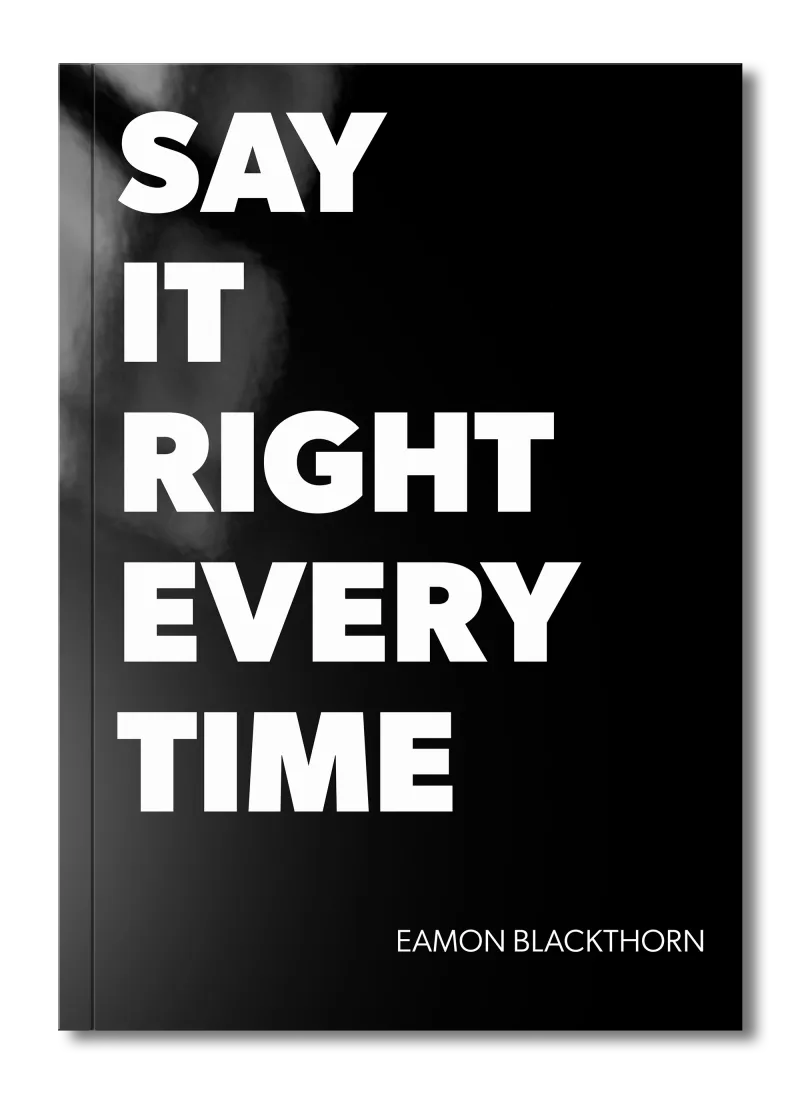
Stop rehearsing conversations you'll never have. Say It Right Every Time gives you 115 word-for-word scripts and 16 proven frameworks to speak with confidence in every conversation that matters.
Sign 1: Apologies That Arrive Without Behavioral Change
What it looks like: The person says the right things after an incident. They express remorse, acknowledge impact, and commit to doing better. Then, within weeks, the same behavior surfaces again in a slightly different form.
Why it happens: Apologies reduce social pressure. They are effective tools for resetting the room without requiring the harder work of actual change. Over time, the apology becomes a practiced response, a way of managing consequences rather than confronting the behavior itself.
Why it matters: When apologies function as reset buttons, they make toxic traits more durable, not less. The person learns that remorse is sufficient currency for continued conduct.
What to do about it: Stop evaluating intent and start tracking behavior over time. Keep a simple written record of incidents and the responses that followed. After a second or third repetition, name the pattern directly: "I've heard you say this won't happen again. It has happened three times. I need to talk about what changes, not what you intend." Focus on the pattern, not the most recent incident.
Eamon's note: I have watched this one outlast good managers who mistook eloquent apologies for genuine accountability.
Sign 2: Other People Quietly Reshaping Their Behavior
What it looks like: Your strongest team members stop raising certain ideas in meetings. Colleagues take longer routes through the building to avoid one person. Conversations go quiet when a specific individual enters the room. Nobody has announced a problem, but everyone has made the same silent calculation.
Why it happens: People adapt to protect themselves. When a toxic trait creates unpredictability, discomfort, or consequences for honesty, the rational response is to reduce exposure. This adaptation is often so gradual that it feels normal by the time anyone notices. Understanding how passive-aggressive behavior silently erodes team cohesion helps clarify just how contagious this kind of adaptation becomes.
Why it matters: When talented people are self-censoring to manage one person's behavior, you are not losing one difficult individual. You are losing the contribution of everyone around them.
What to do about it: Ask your team direct questions in a safe setting. "Is there anything you've been holding back?" and "Are there topics you feel uncomfortable raising?" These questions surface the adaptation without requiring anyone to name the person directly. What you hear will tell you everything.
Eamon's note: This is the sign most leaders see last, because it looks like a quiet team rather than a damaged one.
Sign 3: The Trait Gets Reframed as a Strength
What it looks like: The person begins describing their harmful behavior in positive terms. Aggression becomes "directness." Dismissiveness becomes "high standards." Refusing to accept feedback becomes "knowing their own mind." They are not hiding the behavior. They are rebranding it.
Why it happens: This is what happens when a toxic trait goes unchallenged long enough. Without honest external feedback, the person's own interpretation fills the gap. They construct a narrative where the behavior is not a problem but an asset. This reframing is often unconscious, which makes it harder to address.
Why it matters: Once a person has built their identity around a toxic trait, behavioral change feels like an attack on who they are. This is when resistance becomes serious and intervention requires more courage.
What to do about it: Separate the behavior from the person's identity. Do not attack the reframe directly. Instead, describe the specific impact: "When you interrupt someone mid-sentence in a client meeting, the client disengages. That is the outcome I need us to address." Stay concrete. Stay specific. The moment you attack the label, the conversation becomes a debate about character rather than a conversation about conduct. If you need precise language for these situations, scripts for addressing team members who are undermining group cohesion will give you the words.
Eamon's note: This one surprised me every time, until I understood that unchallenged behavior eventually becomes personality.
Sign 4: Consequences Are Consistently Avoided
What it looks like: Despite repeated incidents, nothing tangible changes for the person displaying the toxic trait. No formal conversation is recorded. No expectations are reset in writing. No meaningful consequence follows the behavior. Everyone is aware the situation is difficult, but the machinery of accountability has not engaged.
Why it happens: Confronting harmful behavior is uncomfortable and carries risk. Leaders fear overreacting, misreading the situation, or triggering conflict. They wait for the behavior to resolve itself, not understanding that the absence of consequences is itself a signal, one that tells the person their conduct is acceptable.
Why it matters: Every day that passes without consequence is a day the behavior becomes more entrenched. Common communication mistakes that quietly destroy team cohesion include exactly this: the hope that silence and patience will do the work that direct conversation must do.
What to do about it: Set a clear, specific expectation in a documented conversation. "This behavior needs to stop. Here is what I need to see instead. Here is what happens if it continues." Write it down. Follow through. This is not cruelty. This is the minimum condition for change.
Eamon's note: I spent years believing that giving someone time was giving them respect. It was not. It was giving the behavior time to set solid.
Sign 5: The Person Consistently Centralizes Conflict Around Themselves
What it looks like: Somehow, every team disagreement, every difficult moment, every tense meeting eventually becomes about this one person's feelings, grievances, or needs. Other people's concerns get redirected. The conversation shifts. Team members learn not to raise issues because they know who will dominate the response.
Why it happens: Some toxic traits are fundamentally about control of emotional space. The person may not be conscious of it, but they have learned, over years, that making themselves the center of any conflict is effective. It exhausts others, prevents resolution, and protects their own position.
Why it matters: This pattern makes genuine team problem-solving impossible. Issues cannot be resolved when one person's reaction consistently hijacks the process. Understanding what the amygdala hijack is and how it blocks team performance under pressure helps explain why these moments escalate so predictably.
What to do about it: Establish a ground rule for team conversations: each person's impact is addressed directly and in proportion to the issue. When a person attempts to redirect a conversation to their own grievance, name it plainly: "We will come to that. Right now, I need us to stay with this specific question." Structure protects the room.
Eamon's note: I have watched this one destroy teams that had every other thing right.
Sign 6: High-Pressure Moments Trigger Regression, Not Growth
What it looks like: Under normal conditions, the person seems to have moderated their behavior. Then a deadline tightens, a conflict surfaces, or stakes increase. Immediately, the old pattern returns at full intensity, sometimes worse than before. Every gain made during calm periods evaporates when pressure arrives.
Why it happens: Toxic traits are not usually the result of deliberate choice. They are ingrained stress responses. Under pressure, people default to their deepest habits. If those habits have never been genuinely challenged and replaced, they surface whenever the load increases. You can read more about this under stress in signs your team's amygdala hijack problem is destroying cohesion in real time.
Why it matters: A behavior that only appears under pressure is still a toxic trait. The pressure is not the cause. It is the condition that reveals what was always there.
What to do about it: Address the pattern specifically in its high-pressure context. Do not let the return to calm erase the conversation. "I want to talk about what happened during the deadline crunch last week. That is the moment we need to work on." Separate the acknowledgment of stress from the acceptance of harmful conduct. Stress explains behavior. It does not excuse it.
Eamon's note: Here is the truth of it: growth that cannot hold under pressure is not growth. It is performance.
The Pattern Behind Persistent Toxic Traits
These signs rarely appear in isolation. When you see two or three of them, the others are usually present as well, operating just below the surface.
The single most common root cause is the absence of honest, consistent feedback delivered early enough to matter. Toxic traits take hold and spread in environments where the discomfort of addressing harmful behavior outweighs the perceived cost of tolerating it. The behavior is not the disease. The silence around it is.
Two secondary patterns are worth naming. The first is enabling through accommodation. When a team unconsciously restructures itself to work around one person's conduct, it removes the friction that would otherwise prompt change. The accommodation feels like peace. It is, in fact, a support system for the toxic trait. This connects directly to the common mistakes that destroy workplace cohesion that leaders normalize without realizing it.
The second pattern is the absence of structural accountability. When no clear behavioral expectations exist, when no written records are kept, and when consequences are inconsistent or absent, harmful conduct is effectively permitted. Individual willingness to address the problem matters, but it is the structure that sustains change.
Fix the root and most of the symptoms resolve.
Your Diagnostic Checklist
Use this checklist to assess where you or your team currently stand.
- The same person has repeated a harmful behavior after apologizing for it at least twice.
- Team members avoid topics, routes, or conversations to prevent triggering a specific individual.
- The person describes their harmful behavior using positive terms such as "high standards" or "being direct."
- No formal, documented conversation has been held about this person's behavioral pattern.
- Team discussions consistently shift to focus on this person's feelings or grievances.
- The harmful behavior intensifies under deadline or conflict pressure.
- Others have stopped raising concerns because they predict the response will not be productive.
- The person has faced no clear, stated consequence for repeated conduct.
- You or other leaders have waited longer than a month hoping the issue would resolve without action.
- The person's work performance is used internally to excuse their interpersonal conduct.
Scoring: If you checked 3 or fewer, the situation is manageable with prompt, direct conversation. If you checked 4 to 6, the pattern is already entrenching and needs structured intervention now. If you checked 7 or more, this requires immediate attention; the cost of delay is already compounding.
How to Start Fixing This
Diagnosis without action is just worry. You now know what you are looking at. Here is where to begin.
Name the pattern, not the incident. Choose the most recent example of the behavior and prepare a specific description of it. Do not address the person's character. Address what you observed, what impact it had, and what you need to see instead. Prepare this in writing before the conversation.
Set a written expectation. After the conversation, summarize the agreed expectation in an email or shared document. "Following our discussion on [date], we agreed that [specific behavior] will not continue. [Specific alternative conduct] is the expectation going forward." This removes ambiguity and creates a record.
Hold the boundary the first time it is tested. The pattern will return. When it does, address it immediately, calmly, and directly. This is the moment that determines whether the intervention holds. Delay or softening after the boundary is set communicates that the boundary was not real.
Stop accommodating the pattern structurally. Identify one way the team has reshaped itself around this person's conduct. Reverse that accommodation deliberately and name why you are doing it. This restores the friction that accountability requires.
For the full approach to addressing team members whose behavior is damaging group performance, scripts for addressing team members who are undermining group cohesion will give you the specific language you need.
Summary
You can now see the difference between a toxic trait that is softening and one that is simply resting. That distinction is the most important thing this article offers.
- Apologies without behavioral change are a sign of entrenchment, not resolution.
- When others adapt their behavior to accommodate one person, the trait is already embedded in the team's structure.
- Reframing harmful behavior as a strength signals the trait has become identity. That is harder to address, but not impossible.
- Consequences must be real, stated, and followed through. Without them, tolerance becomes permission.
- High-pressure moments reveal the true state of any behavioral pattern. Do not let calm periods erase the evidence.
- Toxic traits disappear only when named directly, challenged consistently, and met with genuine accountability.
If you are working through related patterns in your team, you will find these articles directly useful: Why Avoiding Difficult Conversations Is the Hidden Enemy of Team Synergy, Common Mistakes That Destroy Workplace Synergy, and How to Address Passive-Aggressive Behavior That's Silently Eroding Team Synergy.
Toxic traits disappear when someone decides the cost of silence is higher than the discomfort of honesty. That someone can be you, starting today.
Frequently Asked Questions (FAQ)
Do toxic traits disappear on their own over time?
Toxic traits rarely disappear without deliberate intervention. Without direct feedback, clear consequences, or personal accountability, destructive behavioral patterns tend to entrench further. The person displaying them often adapts their behavior just enough to reduce pressure, while the core trait remains fully intact.
Why do toxic traits rarely disappear without deliberate intervention?
Toxic traits persist because they are typically self-reinforcing. They give the person displaying them a short-term advantage, such as control, attention, or escape from accountability. Without someone naming the pattern clearly and holding a boundary, the behavior continues unchallenged and gradually becomes more deeply embedded.
How do you recognize when toxic traits are getting worse, not better?
Signs that toxic traits are deepening include repeated apologies with no behavior change, others adjusting their conduct to avoid triggering the person, and the person reframing their harmful behavior as a strength. These patterns signal entrenchment, not improvement.
What stops toxic traits from disappearing in a workplace setting?
In workplaces, toxic traits persist when managers avoid direct confrontation, when poor behavior is quietly tolerated to preserve harmony, and when no clear expectations or consequences are in place. The absence of deliberate intervention creates an environment where destructive patterns are effectively rewarded.
Can a person with toxic traits change without outside intervention?
Genuine change without outside intervention is rare. Most people displaying toxic traits lack accurate self-awareness about the impact of their behavior. They need consistent, honest feedback from someone they respect, paired with real consequences for continued conduct, before lasting behavioral change becomes possible.
How long does it take for toxic traits to become entrenched?
Toxic traits can become entrenched surprisingly quickly, often within months of going unchallenged. Once others adapt their behavior around the person, the pattern is reinforced structurally. Early, direct intervention is far more effective than attempting to address deeply embedded behavior after years of tolerance.