
In Short
Toxic traits rarely look dangerous at first, they look like quirks, stress, or bad timing, and by the time the pattern is undeniable, real harm has already been done.
- You constantly feel worse about yourself after time with this person.
- They shift blame so smoothly that you end up apologising for their behaviour.
- Your boundaries are treated as suggestions, not as limits to respect.
Identifying toxic traits means recognising recurring patterns of harmful behaviour in another person before those patterns cause lasting psychological damage. These traits go beyond ordinary flaws: they consistently erode your confidence, distort your reality, and resist correction over time.
You thought it was just stress. You told yourself they were having a hard time, that it would pass, that you were being too sensitive. Then six months later, you realised you had stopped trusting your own judgement and could not quite remember when that started.
That is how toxic traits work. They do not arrive with a warning label. They arrive gradually, dressed as personality quirks or understandable moods, and by the time the pattern becomes undeniable, the damage to your mental and emotional health is already well underway. Identifying toxic traits early is the difference between a difficult conversation and a long, slow recovery.
In this article, you will learn to recognise six specific warning signs and what to do about each one. If you are navigating these dynamics within a team setting, Scripts for Addressing Team Members Who Are Undermining Group Synergy offers language for the harder conversations.
Why Toxic Traits Problems Are Easy to Miss
The reason most people do not spot toxic traits early is not a lack of intelligence. It is because these traits are designed, consciously or not, to be invisible until they are entrenched.
They often look like something else entirely. Controlling behaviour looks like care. Chronic criticism looks like high standards. Blame shifting looks like a person who is simply under pressure. By the time the pattern is clear, you have spent months explaining it away.
Here is why they go undetected so consistently:
- They develop slowly, so there is no single obvious moment. A toxic trait rarely arrives fully formed on day one. It builds over weeks and months, each instance just slightly worse than the last, so the change never feels dramatic enough to name.
- People around you may have normalised the behaviour. When everyone in a team or family has adapted to someone's toxic patterns, their behaviour becomes the invisible wallpaper. You start to wonder if you are the problem for noticing.
- Your own self-doubt becomes part of the trap. Toxic traits, particularly dismissiveness and gaslighting, directly target your confidence in your own perception. You question yourself before you question them.
- Charm and good moments create confusion. Most people with toxic traits are not unpleasant all the time. The good moments make the harmful ones feel like exceptions rather than a pattern.
- You care about the person, so you extend more grace than the situation deserves. Compassion is a strength. But in the presence of toxic traits, it can keep you standing in a place that is costing you too much.
The first step is knowing what to look for. That is what this article gives you.
"The Conversation You're Avoiding Is the One You Need to Have."
"The Conversation You're Avoiding
Is the One You Need to Have."
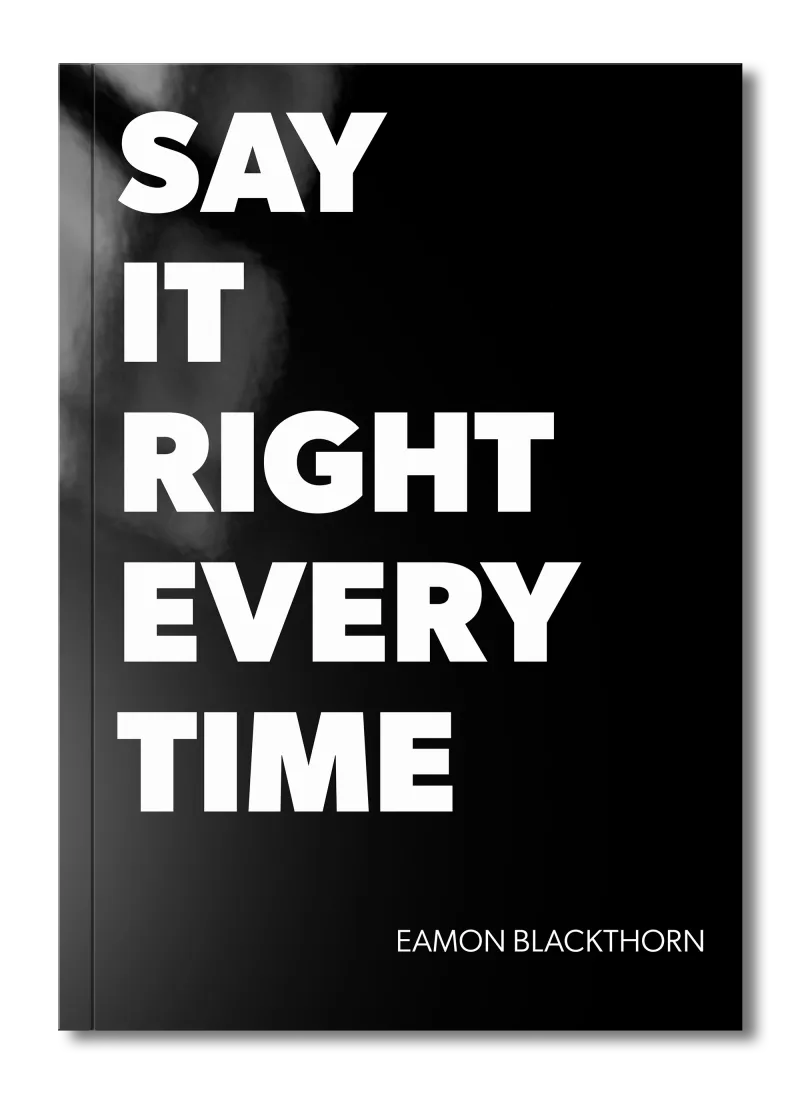
Stop rehearsing conversations you'll never have. Say It Right Every Time gives you 115 word-for-word scripts and 16 proven frameworks to speak with confidence in every conversation that matters.
Sign 1: You Feel Worse About Yourself After Every Interaction
What it looks like: You leave conversations with this person feeling smaller, more uncertain, or vaguely ashamed, even when nothing overtly unkind was said. Over time, you notice you have stopped sharing ideas, stopped taking risks, and started deferring to them as a matter of course.
Why it happens: Dismissiveness and subtle contempt do not always arrive as direct insults. They arrive as a raised eyebrow, a sigh, a slight pause before agreeing with you. The cumulative effect is corrosive. Your nervous system registers the threat even when your conscious mind is still giving them the benefit of the doubt.
Why it matters: Chronic exposure to this kind of interaction erodes your confidence at the root. Left unaddressed, it rewires how you see yourself and what you believe you are capable of.
What to do about it: Start keeping a brief, honest record after interactions with this person. Write one sentence: how did you feel before and how do you feel now? Three weeks of that log will show you a pattern that no amount of rationalising can explain away. Then act on what the evidence shows you.
Eamon's note: I have watched this one quietly hollow out people who had every confidence in the world before they met the wrong person.
Sign 2: Blame Always Lands on Someone Else
What it looks like: When something goes wrong, this person never carries any part of the responsibility. Somehow, the story always ends with your misunderstanding, someone else's failure, or bad luck. They have a remarkable talent for being the victim of every situation they actually caused.
Why it happens: Blame shifting is a defence mechanism that protects someone from facing their own accountability. For people with this trait, responsibility feels existentially threatening, so they redirect it with speed and skill before they even consciously decide to.
Why it matters: If you spend enough time around someone who shifts blame, you will start to absorb it. You will begin apologising for things that are not your fault, and over time, you will genuinely believe you are the source of the problems they created.
What to do about it: When blame lands on you, pause before accepting it. Ask yourself a clear question: what specific action of mine caused this outcome? If you cannot answer that with specifics, the blame does not belong to you. Practice saying, calmly and without accusation, "I do not think I own that one."
Eamon's note: Blame shifting is one of the most disorienting toxic traits there is, because it turns your own fair-mindedness against you.
Sign 3: Your Boundaries Are Treated as Negotiating Positions
What it looks like: You set a clear limit, and they push back, explain why it is unreasonable, go around it, or simply ignore it and act as if you never said anything. You find yourself restating the same boundary repeatedly, each time with less conviction, because defending it costs so much energy.
Why it happens: People who consistently violate boundaries often view them as expressions of temporary preference rather than as genuine limits. This may come from their own upbringing, or from a deeper belief that their needs matter more than yours. The pushing is rarely accidental.
Why it matters: A boundary that cannot be maintained is no boundary at all. When your limits are treated as suggestions, you lose your sense of agency, and that loss accumulates into something much harder to recover from than a single disagreement.
What to do about it: State your boundary once, clearly and without over-explaining. Then hold the consequence if it is crossed. The mistake most people make is restating the boundary instead of enforcing it. You do not need their agreement to keep a limit. You need your own follow-through. For team settings where boundary violations are disrupting collaboration, How to Address Passive-Aggressive Behavior That's Silently Eroding Team Synergy offers a practical frame.
Eamon's note: I spent years re-explaining boundaries to people who had never misunderstood them in the first place.
Sign 4: You Walk on Eggshells Around Their Moods
What it looks like: You have become an expert at reading their emotional weather before you say or do anything. You time your requests, soften your phrasing, or go silent entirely depending on how they seem to be feeling. You work hard to manage their reactions, and you have accepted this as normal.
Why it happens: When someone's moods are unpredictable and their reactions disproportionate, the people around them adapt to survive. This is a sensible short-term response. Over time, it becomes an invisible prison where your behaviour is entirely shaped by someone else's emotional state. Understanding how unregulated emotional states escalate tension is explored in What Is the Amygdala Hijack and How It Silently Blocks Team Synergy in High-Pressure Moments.
Why it matters: Living in a state of constant low-level vigilance is exhausting. It consumes attention, creativity, and emotional strength that you need for your own life.
What to do about it: Name what is happening privately before you try to change anything. Write down three specific recent examples of adjusting your behaviour to manage this person's mood. Seeing it written in plain terms is often the moment people finally trust what they have been feeling for months.
Eamon's note: The moment you start planning what you will say based on someone else's mood before they have even spoken, you have lost the ground beneath you.
Sign 5: They Use Your Vulnerabilities Against You
What it looks like: Something you shared in confidence, a fear, an insecurity, a past failure, surfaces later as a jab, a comparison, or a knowing look during an argument. It is rarely stated outright. It is subtle enough that when you call it out, they can dismiss you as being oversensitive.
Why it happens: This is one of the most deliberately harmful toxic traits on this list. It requires the person to remember what hurt you and choose to use it. It does not happen by accident. It is a method of control: keeping you uncertain enough about yourself that you do not challenge them.
Why it matters: When you can no longer share your real self with someone for fear it will be weaponised, the relationship becomes a performance. The isolation that follows is a form of harm in itself.
What to do about it: Stop sharing vulnerabilities with this person. Not as punishment, but as a practical protection. Trust, once used against you this way, is not easily rebuilt without genuine accountability from them. You are allowed to decide who has access to your inner life. This dynamic frequently shows up in team environments as well; Signs Your Team's Amygdala Hijack Problem Is Destroying Synergy in Real Time shows how unresolved fear and reactivity erode safety across a group.
Eamon's note: Here is the truth of it: a person who uses your trust against you is telling you exactly who they are.
Sign 6: You Feel Responsible for Their Emotional State
What it looks like: You feel guilty when they are unhappy, even when their unhappiness has nothing to do with you. You work to fix their mood, soften their frustration, and absorb their distress as though it were your obligation. And somehow, it never quite works, so you try harder.
Why it happens: Some people with toxic traits are skilled, again consciously or not, at externalising their emotional regulation. They make the people around them responsible for how they feel. This can develop from deep unmet needs, a concept explored in How Unmet Needs Drive Team Conflict and What to Say to Restore Synergy. It is not your fault that you responded with care. But you need to see what that care is costing you.
Why it matters: Taking on another person's emotional state as your responsibility is not compassion. It is a trap that depletes your own reserves until you have nothing left.
What to do about it: Practise a simple internal distinction: their feeling, not my problem to fix. You can acknowledge someone's distress with warmth without taking ownership of it. "I can hear you're frustrated" is not the same as "I am responsible for making this better." Learn the difference, and practise it every day.
Eamon's note: I spent the better part of a decade confusing emotional responsibility with emotional kindness. They are not the same thing at all.
The Pattern Behind These Warning Signs
These signs rarely appear in isolation. They cluster. Where you find one, you usually find two or three more operating beneath the surface.
The single most common root beneath all of them is an imbalance of power dressed as a relationship. The person with toxic traits, knowingly or not, has organised the dynamic so that your needs, perceptions, and limits consistently come second. Every sign in this article is a symptom of that imbalance.
Two secondary patterns are worth naming. The first is escalation over time. Toxic traits do not stabilise. If they are not addressed, they worsen. The boundary pushing becomes more brazen. The blame shifting becomes more comprehensive. The dismissiveness becomes contempt. Early identification matters precisely because early-stage patterns are far easier to respond to than late-stage ones.
The second pattern is the erosion of your own judgment. The longer you are exposed to toxic traits, the more you begin to adopt their frame of reality. You start to see yourself as they see you: as the source of the problems, as too sensitive, as lucky to be tolerated. Rebuilding that clarity of self-perception takes real time and real work. If you have found yourself caught in this cycle within a team, Scripts for Telling a Team Member Their Behavior Is Isolating Them From the Group offers a way to name these dynamics clearly.
Fix the root and most of the symptoms resolve.
Your Diagnostic Checklist
Use this checklist to assess where you or your relationships currently stand.
- I feel worse about myself after most interactions with this person.
- I find myself apologising for things I am not actually responsible for.
- I have restated the same boundary more than twice without it being respected.
- I monitor this person's mood before deciding what to say or do.
- Something I shared in confidence has been used against me in an argument.
- I feel responsible for managing their emotional state.
- I second-guess my memory of events after conversations with them.
- I have stopped sharing certain thoughts or feelings to avoid their reaction.
- Other people have commented that this relationship seems to drain me.
- I feel a sense of relief when I know I will not have to see or speak to them.
- I regularly feel confused about whether my perceptions are accurate.
- I have changed parts of my behaviour significantly to accommodate their moods.
If you checked 3 or fewer, the dynamic may be workable with direct, honest conversation. If you checked 4 to 7, take the patterns seriously and act on the highest-impact items first. If you checked 8 or more, this relationship is causing real harm and needs immediate attention, whether that means a clear boundary, a direct confrontation, or a considered exit.
How to Start Fixing This
Diagnosis without action is just worry. The following steps will not solve everything, but they will give you solid ground to stand on.
Name the specific pattern in writing. Do not rely on your feelings alone. Write down three specific incidents, with dates and details, that illustrate the toxic trait you have identified. Specificity cuts through rationalisation and gives you something real to work with.
Stop explaining your boundaries and start enforcing them. The next time a limit is crossed, do not restate it. Apply the consequence you said you would apply. Consistency is the only thing that communicates you are serious. You will know this is working when you stop dreading having to say it again.
Rebuild your own perception of reality. Talk to someone you trust outside the relationship: a friend, a colleague, a professional. Describe the specific behaviours you have observed and let them respond honestly. People with toxic traits rely on your isolation and self-doubt. Connection with others is the most direct repair for both. If you are managing this within a team context, How to Handle Conflict During Meetings provides practical tools for the moments when these dynamics surface in group settings.
Decide what the relationship is worth to you. Not every relationship can or should survive the identification of toxic traits. Some can be adjusted with honesty and courage. Others need to be restructured or exited. Make this decision deliberately, with the evidence in front of you, not in the middle of an emotionally activated moment.
Summary
You can now see what most people cannot see until it is too late: the early, specific signs of toxic traits and the pattern of power imbalance that runs beneath all of them.
- Feeling consistently worse about yourself after interactions is not just moodiness. It is data.
- Blame that always lands on you, despite your best efforts, is a pattern, not a coincidence.
- Boundaries that are repeatedly crossed are not misunderstandings. They are choices.
- Walking on eggshells is not a personality quirk in the relationship. It is a warning signal.
- Being responsible for someone else's emotional state is not love. It is a trap.
- The earlier you name these traits, the more options you have.
For team environments where toxic traits are disrupting group dynamics, start with How Unmet Needs Drive Team Conflict and What to Say to Restore Synergy and How to Handle Conflict During Meetings. Both offer the language and structure to address these dynamics directly.
Identifying toxic traits early is not about judging people harshly. It is about trusting what you see, protecting what matters, and refusing to wait until the damage is done before you act.
Frequently Asked Questions (FAQ)
What does identifying toxic traits early actually mean?
Identifying toxic traits early means recognising patterns of harmful behaviour before they cause lasting psychological damage. It involves watching for specific signs, like chronic dismissiveness, blame shifting, or boundary violations, while they are still subtle enough to address or escape from safely.
How do toxic traits differ from ordinary personality flaws?
Ordinary flaws are unintentional and the person showing them is usually open to feedback. Toxic traits are patterns of behaviour that consistently harm others, resist correction, and tend to escalate over time. The key difference is impact: toxic traits leave you feeling worse about yourself repeatedly.
Why is identifying toxic traits in others so difficult?
Toxic traits are difficult to identify because they develop gradually, are often masked by charm or plausible excuses, and the people around you may have normalised them. Your own self-doubt becomes part of the trap, you question your perception before you question their behaviour.
Can someone with toxic traits change?
Change is possible, but it requires the person to genuinely recognise the harm they cause and commit to sustained effort. In practice, most people with deeply embedded toxic traits do not change without professional help and a strong internal motivation. Waiting for change without evidence of it is not a sound strategy.
What is the first step after identifying toxic traits in someone close to you?
The first step is naming what you are seeing clearly and without excusing it. Write it down. Describe specific behaviours, not vague feelings. That clarity gives you the ground to decide what you need, whether that is a direct conversation, a firm boundary, or a managed exit from the relationship.
Are toxic traits always deliberate?
Not always. Some people with toxic traits are genuinely unaware of the harm they cause. But intent does not reduce impact. Whether deliberate or not, repeated toxic behaviour erodes your confidence, your trust, and your wellbeing. Awareness of their intent may inform how you respond, but it does not excuse what they do.