
In Short
Toxic traits in parents feel normal to the children who grow up with them, which is exactly what makes them so hard to identify and so easy to repeat.
- Children raised with emotional manipulation often spend adulthood managing other people's feelings at the cost of their own.
- Conditional love teaches children that they must earn connection, a belief that follows them into every relationship they build.
- The behaviours you accepted in childhood become the template for what you accept from everyone else.
Toxic traits in parents are persistent behavioural patterns that damage a child's emotional development and self-worth. They include manipulation, conditional love, gaslighting, and boundary violations. Unlike ordinary parenting mistakes, these patterns are repeated and shape the child's understanding of what love and relationships are supposed to feel like.
You thought that was just how families worked. That was just how love felt. That was just what home was like. I have sat across from people in their forties and fifties who spent decades wondering why they kept ending up in the same painful relationships, with the same hollow feeling, and never once connected it back to what they absorbed as children.
The problem with toxic traits in parents is that they do not come with a warning label. They come wrapped in the ordinary texture of daily life: dinner tables, school runs, bedtime routines. By the time a child is old enough to question what happened, they have already built their entire sense of what is normal around it.
Most people do not miss the signs because they are not paying attention. They miss them because the signs look like love. In this article, you will learn to recognise six specific signs of toxic parental traits, understand why they are so easy to miss, and know what to do about each one.
If you have ever wondered why you struggle with emotional intelligence in close relationships, the answer often starts here.
Why Toxic Parental Behaviour Is So Hard to See
The difficulty is not ignorance. It is proximity. When you grow up inside something, you cannot see its shape from the outside. The toxic becomes the familiar, and the familiar becomes the standard.
Here is why these patterns go undetected for so long:
- It was all you knew. If your parent manipulated you through guilt from the time you were five years old, that did not feel like manipulation. It felt like how things worked. You had no other reference point.
- Other people confirmed it. Relatives, family friends, and neighbours often reinforce the family narrative. When everyone around you agrees that a parent is "just passionate" or "only wants the best," it is very difficult to trust your own instincts.
- Love was genuinely present. This is the hardest one. Toxic parents are not always cold or cruel. Many are warm, funny, and loving some of the time. That inconsistency is part of what makes it so confusing and so hard to name clearly.
- Naming it feels like betrayal. There is a powerful cultural message that says honouring your parents means never criticising them. Many people silence their own recognition of harm because they do not want to be the person who called their parent toxic.
- The damage looks like personality. Anxiety, people-pleasing, difficulty with boundaries: these are often read as character traits rather than learned responses to an unsafe environment.
The first step is knowing what to look for. That is what this article gives you.
"The Conversation You're Avoiding Is the One You Need to Have."
"The Conversation You're Avoiding
Is the One You Need to Have."
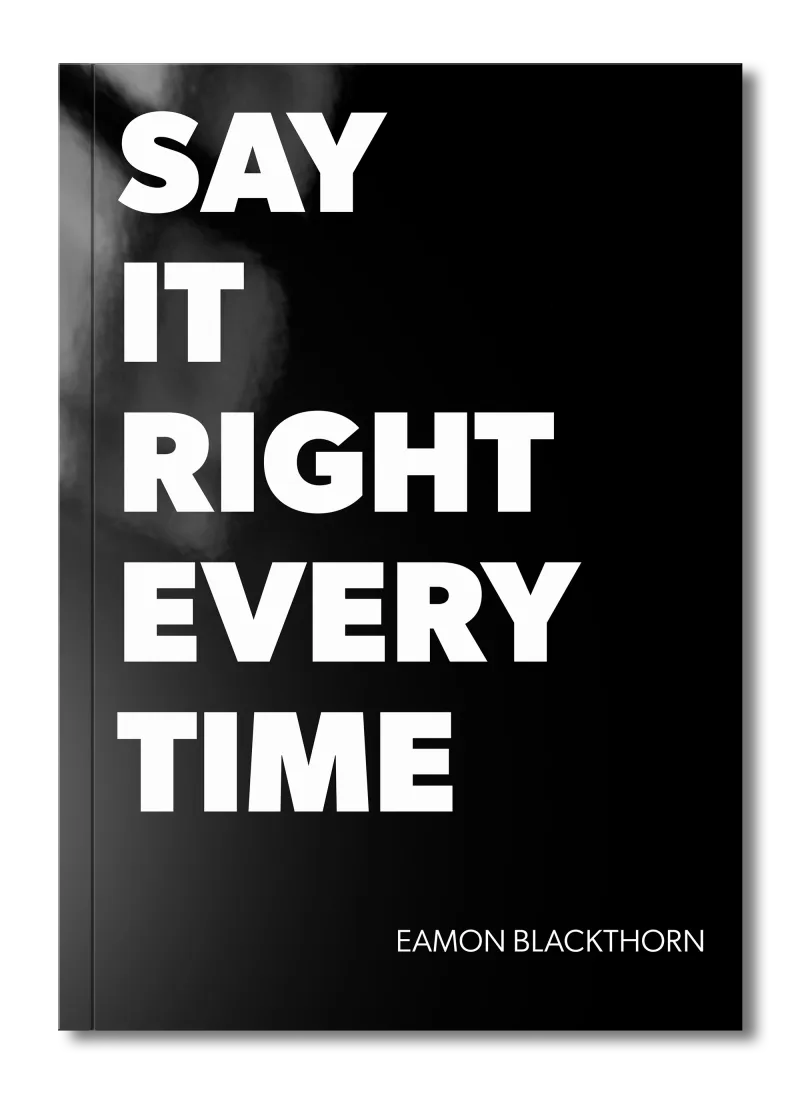
Stop rehearsing conversations you'll never have. Say It Right Every Time gives you 115 word-for-word scripts and 16 proven frameworks to speak with confidence in every conversation that matters.
Sign 1: You Were Responsible for Your Parent's Emotional State
What it looks like: You learned early to scan a parent's mood the moment you walked into a room. You adjusted your behaviour, your tone, your very presence, to manage how they felt. You became a small emotional caretaker long before you were capable of caring for yourself.
Why it happens: Some parents were never taught to regulate their own emotions. They unconsciously offloaded that work onto their children, the most available and most loyal people in their lives. This is sometimes called parentification, and it is a genuine theft of childhood.
Why it matters: Adults who grew up this way often spend their lives managing everyone else's emotions at the expense of their own. They find it nearly impossible to identify what they themselves feel, let alone ask for what they need.
What to do about it: Start noticing, this week, how often you check other people's emotional temperature before speaking. When you catch yourself doing it, pause and ask: what do I actually want to say here? Practice saying that, even quietly, even just to yourself first.
Eamon's note: I have watched this one cost people their entire sense of self, spent a lifetime being everyone's emotional anchor while slowly drowning.
Sign 2: Love Always Came With Conditions
What it looks like: Affection, praise, and warmth were available, but only when you performed well, agreed, obeyed, or reflected well on the parent. When you failed, disappointed, or dissented, the warmth withdrew. You learned that love was something you earned, not something you simply had.
Why it happens: Parents who dispense conditional love usually received the same themselves. They may genuinely believe that withdrawing affection is a reasonable motivational tool. What they do not see is the message their child receives: you are only loveable when you are useful.
Why it matters: This pattern becomes the lens through which every relationship is filtered. If you believe at your core that love must be earned, you will work yourself to exhaustion trying to earn it from people who should simply give it freely.
What to do about it: Notice where you are currently performing for approval. It might be at work, in friendships, or in a relationship. Ask yourself honestly: would these people still value me if I stopped performing? If you cannot answer that with confidence, that is important information.
Eamon's note: Conditional love is the quietest cruelty because it comes dressed as high standards.
Sign 3: Your Feelings Were Regularly Dismissed or Denied
What it looks like: When you expressed fear, sadness, or anger as a child, you were told you were overreacting, being too sensitive, or making things up. Over time, you stopped expressing those feelings, and eventually, stopped trusting them. You learned that your inner experience was not reliable.
Why it happens: Some parents dismiss feelings because they cannot tolerate their own. Others believe they are toughening their children up. The result is the same: a child who learns that their emotional reality is not valid.
Why it matters: Emotional neglect of this kind creates adults who apologise for having feelings, who minimise their own suffering, and who are easily gaslit by anyone willing to tell them they are overreacting. This connects directly to difficulties building psychological safety in any relationship.
What to do about it: The next time you feel something strongly and your instinct is to dismiss it, write it down instead. Just one sentence: what you felt, when, and what triggered it. Do that for two weeks. You will begin to see your emotional life is far more coherent and accurate than you were taught to believe.
Eamon's note: When someone has spent years being told their feelings are wrong, learning to trust them again is some of the bravest work a person can do.
Sign 4: Disagreement Was Treated as Disloyalty
What it looks like: In your childhood home, having a different opinion from a parent was not just a disagreement. It was a threat. It was met with anger, withdrawal, punishment, or lengthy explanations of why you were wrong. You learned that peace required agreement, and you became very good at agreeing.
Why it happens: Parents who cannot tolerate dissent are usually deeply insecure. They have conflated their identity with their authority, and any challenge feels like an attack on who they are. The child pays the price for that fragility.
Why it matters: Adults raised this way often find difficult conversations almost impossible. They avoid conflict at enormous personal cost, agreeing to things they resent, staying silent when they should speak, and building slow-burning resentment in every close relationship.
What to do about it: Start with low-stakes disagreements. Express a small, genuine preference this week, something you might normally let slide. Notice what happens in your body when you do it. Notice that the relationship usually survives. That evidence, repeated often enough, begins to rewire the old fear.
Eamon's note: The inability to disagree does not make you peaceful; it makes you invisible.
Sign 5: Shame Was a Primary Parenting Tool
What it looks like: Mistakes were not just corrected; they were used as evidence of your character. You were not someone who did a bad thing. You were lazy, selfish, stupid, or ungrateful. The criticism went past the behaviour and landed on who you were as a person.
Why it happens: Shame-based parenting is often generational. A parent who was shamed as a child has a well-worn groove for it. They reach for it instinctively, genuinely believing it motivates change. What it actually does is erode the child's sense that they are fundamentally acceptable as a human being.
Why it matters: This is the non-obvious one. Many people carry a background hum of self-loathing that they cannot explain and attribute to some personal failing. That hum was installed, not innate. It drives perfectionism, self-sabotage, and a persistent sense of unworthiness that bleeds into every relationship. Understanding passive-aggressive behaviour in others is far easier once you understand how shame shapes communication.
What to do about it: Begin separating behaviour from identity in your own self-talk. When you make a mistake, practice saying: "I did something unhelpful" rather than "I am a failure." It feels awkward at first. Do it anyway. The language you use about yourself is the first thing you can change.
Eamon's note: Shame does not motivate; it paralyses, and the proof is in the decades people spend trying to outrun it.
Sign 6: Your Boundaries Were Treated as Obstacles
What it looks like: Privacy was not respected. Doors were opened without knocking. Diaries were read. Friendships were interrogated. Emotions were shared back to you at inconvenient moments. You had no reliable sense of where you ended and your parent began, because the boundaries between you were never honoured.
Why it happens: Some parents genuinely do not know where they end and their children begin, a pattern called enmeshment. Others believe that parental authority overrides a child's right to any private inner life. Either way, the child learns that having boundaries is selfish, dramatic, or impossible.
Why it matters: Adults without healthy boundary templates struggle to set them with anyone. They either have no limits at all or swing to rigid walls that keep everyone out. Neither creates the connection they are looking for, which affects teamwork, friendship, and intimacy alike. Learning to address behaviour that undermines group trust starts with knowing what your own limits actually are.
What to do about it: Identify one boundary you wish you had in a current relationship. Write it down in plain language: what you are willing to accept, and what you are not. You do not have to communicate it this week. Just name it for yourself. That act of naming is often the first real boundary a person has ever set.
Eamon's note: You cannot build real connection without knowing where you stand; enmeshment is not closeness, it is a loss of self.
The Pattern Behind These Signs
These signs rarely appear in isolation. In most families where toxic traits took root, several of them were present simultaneously, reinforcing each other in ways that made the environment feel total and inescapable.
The single most common root cause underneath all of these patterns is a parent who was never taught to see their child as a separate person with legitimate needs of their own. Every sign in this article traces back to that failure: the emotional caretaking, the conditional love, the shame, the dismissed feelings, all of it flows from a parent who needed the child to be an extension of themselves rather than a distinct human being.
Two secondary patterns are worth naming. The first is the generational transmission of pain. Most parents with toxic traits are not malicious. They are wounded people repeating what was done to them, having never had the opportunity or support to examine it. That context matters for your understanding, though it does not change what you experienced.
The second is that avoiding difficult conversations inside these families becomes the survival strategy that every member adopts. Silence becomes safety. And what is never spoken cannot be healed.
Fix the root and most of the symptoms resolve.
Your Diagnostic Checklist
Use this checklist to assess where you currently stand in relation to these patterns.
- You regularly scan other people's moods before deciding how to act or speak.
- You find it difficult to identify what you actually feel in emotionally charged situations.
- You work hard to earn approval in relationships that should simply accept you.
- You apologise frequently, often for things that are not your fault.
- You avoid expressing disagreement because you expect a negative or disproportionate reaction.
- You minimise your own suffering with phrases like "it wasn't that bad" or "others had it worse."
- You feel a persistent low-level guilt that you struggle to trace to a specific cause.
- You have difficulty saying no without extensive explanation or anxiety.
- You feel responsible when people around you are upset, even when you did nothing wrong.
- You struggle to trust your own memory or emotional responses when challenged by others.
If you checked three or fewer, the patterns are limited and you likely have strong foundational self-awareness. If you checked four to six, these patterns are present and worth addressing deliberately. If you checked seven or more, this is significantly shaping your daily life and relationships, and it deserves real, focused attention.
How to Start Fixing This
Diagnosis without action is just worry. Here is where to begin.
Name it without minimising it. Write down, in plain language, which of the signs in this article applied to your childhood. Do not soften it with "but they meant well" or "it wasn't always like that." State what happened clearly. Clarity is not cruelty; it is the beginning of honesty.
Separate the past from the present. When you notice a reaction in your current life that feels disproportionate, ask: is this about what is happening now, or is this a rehearsed response from childhood? That question alone can interrupt patterns that have been running on autopilot for decades.
Practise one boundary this week. Choose one relationship where you want to hold a limit you have never held before. Start small. The goal is not confrontation; it is experience. You need evidence that having a boundary does not destroy the relationship before you can fully believe it. Building empathy in communication with others starts with having enough self-respect to hold your own ground first.
Find a witness. This work is very difficult to do alone. A therapist, a trusted friend who can hold your story without judgment, or a structured support group can give you the external perspective that was missing in childhood. You deserve someone who can reflect your experience back accurately.
Summary
You can now see what you could not see before: that the behaviours you accepted as normal were not inevitable. They were learned. And what is learned can be examined, named, and changed.
- Toxic traits in parents feel normal because they are the water you grew up swimming in.
- Emotional caretaking, conditional love, shame, and boundary violations leave specific and identifiable marks on adult behaviour.
- The damage rarely looks like damage; it looks like personality, anxiety, or personal failing.
- Naming these patterns honestly is not disloyalty; it is the first act of genuine self-respect.
- You did not choose what you absorbed, but you can choose what you carry forward.
For related reading on how these patterns show up in group settings, see The Role of Emotional Intelligence in Team Synergy and What Is Psychological Safety and How It Drives Team Synergy.
Recognising toxic traits in parents is not the end of the story. It is the moment the real story begins.
Frequently Asked Questions (FAQ)
What are toxic traits in parents?
Toxic traits in parents are persistent behavioural patterns that harm a child's emotional development and self-worth. They include emotional manipulation, conditional love, gaslighting, and boundary violations. Unlike occasional bad parenting, these traits are repeated, often unconscious, and shape how the child learns to relate to others throughout their life.
How do toxic traits in parents affect children long term?
Children exposed to toxic traits in parents often grow up normalising damaging behaviour. They may tolerate poor treatment in friendships, romantic relationships, or at work because it matches what they learned to expect. The effects include people-pleasing, difficulty with boundaries, low self-worth, and chronic hypervigilance in relationships.
How do you recognise toxic traits in your own parents?
Recognising toxic traits in parents requires honesty about what felt normal in your childhood home. Signs include feeling responsible for your parent's emotions, being shamed for having needs, and never feeling safe to disagree. If love always came with conditions attached, that is a significant indicator worth examining carefully.
Can toxic traits in parents be unintentional?
Yes. Many parents with toxic traits are repeating patterns they absorbed from their own upbringing. Their behaviour is real and damaging regardless of intent. Understanding that it was likely unintentional can help with your processing, but it does not erase the impact or remove your need to address what you experienced.
What is the first step to healing from a toxic parent?
The first step is naming the pattern clearly and without minimising it. Many people spend years defending or excusing a parent's behaviour before they can see it plainly. Once you can name what happened, you can begin separating what was done to you from what you now choose to accept in your life.
How do toxic parental traits affect your adult relationships?
Toxic parental traits create a baseline for what relationships feel like. If chaos, criticism, or emotional withdrawal were normal in childhood, you may unconsciously seek or tolerate the same in adult relationships. Recognising this pattern is the foundation of changing who you allow close to you and what you accept from them.