
In Short
Toxic traits in online relationships follow the same destructive patterns as in-person ones, but digital communication removes the physical and emotional cues that normally expose them early.
- Body language, tone, and real-time reactions are absent online, making manipulation easier to sustain.
- Online interactions can be curated, delayed, and edited in ways that face-to-face contact cannot.
- The warning signs are the same; the visibility is not.
Toxic traits online describes harmful behavioural patterns, including manipulation, control, gaslighting, and boundary violations, that occur specifically within digital relationships. These patterns mirror in-person toxic behaviour but are significantly harder to detect because digital communication strips away the non-verbal information that normally exposes them.
Why Toxic Traits Look Different Through a Screen
I want to tell you about a woman I knew. Intelligent, perceptive, the kind of person who would have spotted a controlling partner from across a room inside thirty seconds. She spent two years in an online relationship that left her questioning her own memory, her own judgment, and her own worth. She did not miss the warning signs because she was naive. She missed them because the screen removed everything she normally used to read people.
Toxic traits in online relationships are not a new category of harm. They are the same patterns of manipulation, control, and emotional damage that have always existed. What changes is the environment. Digital communication is a stripped-down medium. It removes tone, removes body language, removes the micro-expressions and physical hesitations that, in person, would have your instincts firing before your conscious mind catches up.
This article is about that gap. It is about understanding why toxic behaviour is easier to sustain online, what the warning signs look like in each setting, and how to build the clarity you need to protect yourself in both. By the time you finish reading, you will know what to look for and why you were not wrong to miss it.
"The Conversation You're Avoiding Is the One You Need to Have."
"The Conversation You're Avoiding
Is the One You Need to Have."
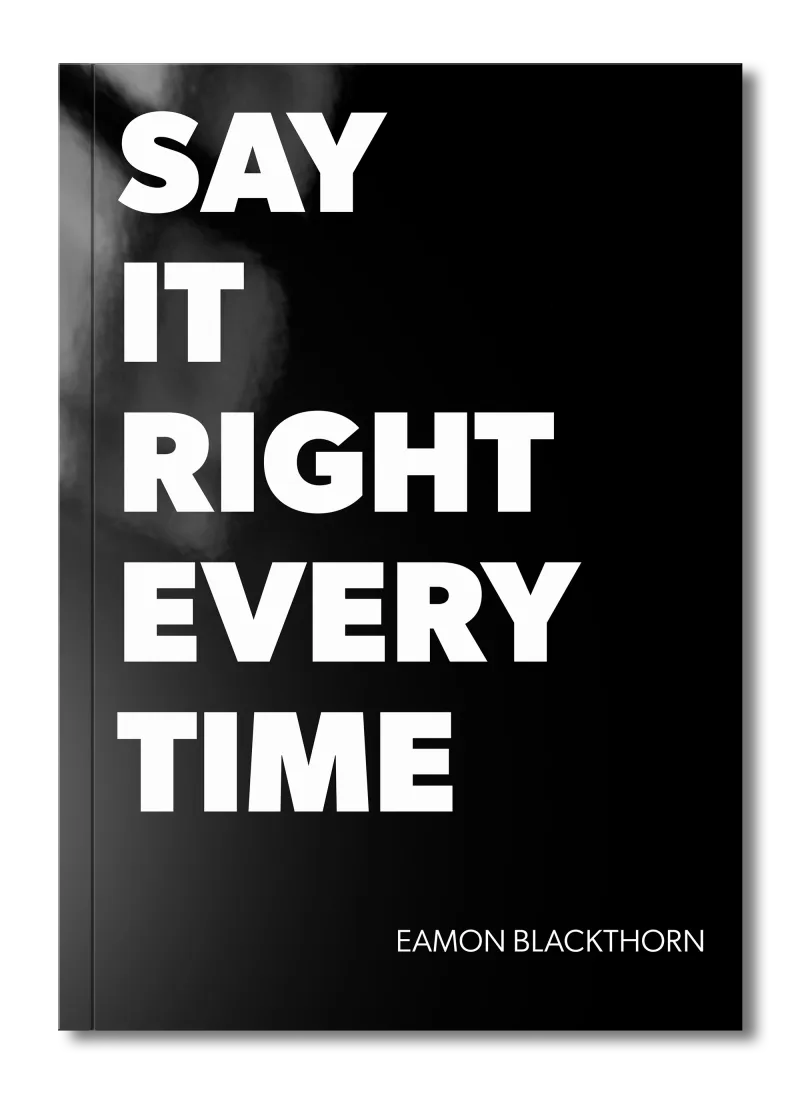
Stop rehearsing conversations you'll never have. Say It Right Every Time gives you 115 word-for-word scripts and 16 proven frameworks to speak with confidence in every conversation that matters.
What Toxic Traits Actually Look Like in Person
In face-to-face relationships, toxic behaviour leaves physical evidence. It is there in the way someone steps too close when they are making a point. It is in the silence that falls after you say something they do not like, the smile that does not reach the eyes, the hand that grips your arm just a fraction too hard.
These physical cues are not subtle to your nervous system. Your body registers threat before your mind has named it. You feel uneasy in someone's presence without being able to explain why. That unease is information, and it is delivered in real time, with no delay and no editing.
Toxic traits in person include the same core behaviours you will find online: manipulation, gaslighting, punishment through withdrawal, intermittent reinforcement, boundary violations. But in person, they are harder to sustain over time without being seen. Genuine reactions are difficult to fake consistently. When someone loses their temper in front of you, you cannot unsend it. When they diminish you in a group setting, others witness it. The physical world creates accountability, even imperfect accountability, that the digital world does not.
This is not to say in-person toxic behaviour is obvious or easy to leave. It is not. But the information density of face-to-face interaction, the sheer volume of cues your senses are processing, gives you more to work with.
How Digital Communication Changes the Game for Toxic Behaviour
Toxic traits online operate in a leaner environment. Every interaction is mediated by a device. Every message can be drafted, revised, and timed for maximum impact before it reaches you. Every silence can be calculated. And none of it comes with the physical data that would trip your instincts.
Here is the truth of it: a person who is charming and attentive in text does not need to maintain that performance with their face, their voice, or their body. They can take ten minutes to compose a response that appears spontaneous. They can withdraw without explanation and call it being busy. They can reframe what they said in a previous message with enough confidence that you start doubting your own reading of it.
Gaslighting, which is one of the most damaging toxic traits in any relationship, becomes significantly easier to execute online. Written records should make accountability easier, but a skilled manipulator learns to exploit the ambiguity of text. Tone is absent. Context is absent. They tell you that you misread the message, that you are too sensitive, that you are creating problems where there are none. And because you cannot point to a facial expression or a tone of voice, the doubt takes root faster.
If you recognise patterns like this in your own experience, the piece on how unmet needs drive team conflict and what to say to restore synergy speaks to the same psychological mechanics at work in any relationship under pressure.
Side-by-Side: How the Same Toxic Traits Behave in Each Setting
| Dimension | In-Person Toxic Traits | Toxic Traits Online |
|---|---|---|
| Visibility of warning signs | High: tone, body language, and physical behaviour expose patterns early | Low: curated messaging removes non-verbal cues entirely |
| Manipulation tactics | Intimidation, physical proximity, real-time emotional pressure | Intermittent reinforcement, timed withdrawal, gaslighting through text |
| Accountability | Social witnesses and real-time reactions create partial accountability | Near-total absence of external accountability; no witnesses |
| Pattern recognition | Physical repetition makes patterns harder to deny over time | Text-based patterns are easier to minimise, explain away, or reframe |
| Escape difficulty | Physical presence can create safety concerns and practical barriers | Distance creates an illusion of easier exit; emotional damage remains severe |
| Evidence | Felt experience, observed behaviour, witness testimony | Written records exist but are easily reframed or dismissed |
| Pace of escalation | Real-time escalation is visible and often shocking | Gradual escalation through text feels slower, less dramatic, and harder to name |
The table gives you the shape of the difference. What it cannot fully capture is the emotional disorientation that comes specifically from online toxic behaviour.
In person, your body is a partner in your awareness. Online, you are working only with words on a screen, and words can be made to say almost anything. The slow, gradual escalation of toxic traits online is particularly dangerous because each individual incident seems small. A delayed response here. A slightly cold message there. A comment that could mean two things. Individually, none of it looks like a pattern. Together, it is one. This is why recognising how passive-aggressive behaviour silently erodes relationships is such important preparation for the digital environment specifically.
The Grey Area: Where Online and In-Person Toxic Traits Overlap
The honest answer is that the harm is the same. Whether someone controls you through physical presence or through the deliberate withdrawal of digital contact, the psychological damage lands in the same place. Anxiety, self-doubt, hypervigilance, the constant recalibration of yourself to manage another person's mood: these are the marks of toxic behaviour regardless of the medium.
Both settings involve real people making real choices to harm. Neither is a lesser form of damage because one happens through a screen. People who minimise online toxic behaviour by saying "it is just the internet" are making the same mistake as people who once said "it is just words." Words cause real harm. Digital behaviour causes real harm.
The overlap also matters because most relationships now exist in both spaces. A colleague you see in person also communicates with you in email and messaging apps. A partner who is physically present also texts you throughout the day. Toxic traits rarely stay contained to one channel. If you see the behaviour in person, you will often find it amplified in their digital communication, and vice versa.
When the Online Setting Specifically Enables Toxic Behaviour
Some toxic behaviours are especially well-suited to digital communication, not because they are different in nature, but because the online environment removes friction that would otherwise limit them.
Intermittent reinforcement thrives online. This is the pattern of alternating warmth and withdrawal that creates anxious attachment. In person, you can read the shift in someone's mood. Online, you experience it as a notification that does not come, a message left on read, a sudden return to warmth after days of silence. The unpredictability is easier to maintain and harder for you to track.
Monitoring and surveillance is another. A controlling person in a physical relationship has limits on how much they can track your movements. Online, the tools for monitoring are built into the platforms themselves. Read receipts, location sharing, social media activity, response times: all of it becomes material for a toxic person to use.
Ghosting as punishment is a digital-era tactic that maps directly onto older toxic patterns of emotional withdrawal and silent treatment. In person, total withdrawal requires physical absence. Online, it takes one decision not to respond. Understanding why avoiding difficult conversations is the hidden enemy of healthy relationships helps explain why this tactic is so destabilising.
When In-Person Interaction Exposes What Digital Interaction Hides
Here is the other side of it. Many people who have experienced toxic traits online describe the moment they met the person face to face as a shift. Something they could not name in text became immediately visible in person. The charm that read as warmth online felt practised in the room. The confidence that seemed attractive in messages felt like control in person.
This is your nervous system doing its job with better data. Face-to-face interaction remains the highest-bandwidth communication channel we have. When you move an online relationship into physical space, you are testing it against your full perceptual system, not just your reading of words.
This matters practically. If someone consistently avoids moving a relationship into real-time communication, whether that is a video call, a phone conversation, or a meeting in person, treat that resistance as information. The avoidance of real-time interaction is itself a warning sign. It is the preservation of control through curated communication. Common communication mistakes that quietly destroy trust often begin with exactly this pattern: the systematic avoidance of channels where performance is harder to sustain.
Three Confusions That Keep People Stuck
Mistaking Digital Fluency for Good Character
The mistake: Someone who communicates beautifully in text, who always says the right thing, who is responsive and articulate, is assumed to be trustworthy.
Why it happens: We associate the quality of communication with the quality of the person. Articulate people do tend to understand others. But a manipulative person invests specifically in their communication, because it is their primary tool.
What to do instead: Evaluate behaviour over time and across situations, not the quality of individual messages. Anyone can write a good message. Consistency of behaviour across weeks and months is what matters.
Assuming Written Evidence Provides Clarity
The mistake: People believe that having the messages saved means they can prove what happened, that the record will settle the question of whether the behaviour was toxic.
Why it happens: Written records feel like objective evidence. But text without tone, context, and non-verbal cues is genuinely ambiguous, and a skilled gaslighter knows how to exploit that ambiguity.
What to do instead: Trust the cumulative effect on you. If a pattern of communication leaves you consistently anxious, confused, or diminished, that pattern is your evidence. You do not need to prove it to anyone else first.
Treating Online Harm as Less Serious
The mistake: Minimising toxic traits in online relationships because there is no physical component, no raised voice, no physical intimidation.
Why it happens: Older frameworks for recognising harm relied heavily on physical indicators. Digital harm is newer and less discussed in everyday language.
What to do instead: Measure harm by its effect. Anxiety, loss of confidence, hypervigilance, and self-doubt are real injuries regardless of the channel. Scripts for addressing behaviour that undermines your wellbeing are as necessary in digital contexts as they are face to face.
Practical Steps for Each Setting
If the Toxic Traits Are Primarily Online
Move key conversations to real-time formats wherever possible. A phone call or video conversation removes the ability to craft and time messages. Notice how the dynamic changes when the person cannot edit their reaction. Name the patterns you observe in plain language, without accusation: "I notice that when I raise this topic, the conversation goes quiet for days." This is not a confrontation. It is clarity.
Pay attention to how you feel after interactions, not only during them. Toxic traits online often produce a delayed emotional response, confusion that arrives an hour after the conversation rather than in the middle of it. That delayed disorientation is a signal worth taking seriously. The tools developed in understanding what the amygdala hijack does to your judgment under pressure apply directly here: when confusion and anxiety are your dominant response to someone's communication, your system is telling you something accurate.
If the Toxic Traits Show Up In Person
You have more data available to you, and you should use it. Your body's response to someone's physical presence is information. Unease, tension, the instinct to make yourself smaller: these are not overreactions. Trust them enough to look at what is generating them.
Document what happens in real interactions as soon as possible afterward, because toxic people are skilled at reframing events over time. Your immediate, specific memory of what was said and done is more reliable than what you will remember in a month, after it has been reinterpreted. Recognising the signs of a team amygdala hijack in real time offers a useful lens for understanding why your rational recall of toxic interactions is often compromised immediately after they happen.
Frequently Asked Questions (FAQ)
What are toxic traits online in relationships?
Toxic traits online are harmful behavioural patterns that show up in digital interactions, including manipulation, intermittent reinforcement, control, and boundary violations. They are harder to spot than in-person toxic behaviour because digital communication removes the physical and emotional cues that normally expose them.
Why are toxic traits harder to spot in online relationships?
Online relationships strip away body language, tone of voice, and real-time emotional responses. A person can craft every message carefully, delay reactions, and disappear without explanation. These gaps in information allow toxic patterns to hide behind curated text long before you sense something is wrong.
What are the warning signs of toxic traits online?
Key warning signs include excessive monitoring of your activity, love-bombing followed by sudden withdrawal, refusal to communicate in real time, gaslighting through rewritten message threads, and punishment through silence. These patterns often feel confusing online because they lack the physical reinforcement you would notice face to face.
How do toxic traits show up differently in person versus online?
In person, toxic traits reveal themselves through tone, body language, physical proximity, and real-time reactions. Online, the same traits hide behind delayed responses, carefully worded messages, and the absence of non-verbal cues. In-person interactions are harder to fake consistently; online ones are far easier to curate and conceal.
Can someone be toxic online but not in person?
Yes. Some people behave more destructively in digital spaces because the distance lowers their inhibition and removes immediate social consequences. Others use online communication specifically as a tool for control, able to craft messages, monitor responses, and withdraw access in ways that are harder to execute face to face.
How do you protect yourself from toxic traits online?
Trust the pattern, not the message. If someone's digital behaviour creates consistent confusion, anxiety, or self-doubt, treat that as a warning sign regardless of how reasonable their words appear. Move important conversations to real-time formats. Name what you observe. And know that clarity is your strongest protection.
What This Comes Down to
The medium changes the visibility of the warning signs. It does not change the nature of the harm or the pattern behind it. Toxic traits online follow the same logic as toxic traits in person: the erosion of your confidence, the distortion of your perception, the steady narrowing of your sense of what you are allowed to feel or say. What changes is the camouflage. Digital communication is extraordinarily good at concealing the shape of that pattern until it has already cost you something. The strongest thing you can do is learn to trust the cumulative effect of interactions rather than the quality of any single message. Your nervous system is not confused. It is receiving incomplete data. Give it more channels to work with, move conversations into real time, name what you observe, and hold on to what you know. Recognising toxic traits online is a skill, and like every skill worth having, it gets clearer with practice.