
In Short
You can explain someone's toxic traits to a third party clearly and credibly by leading with specific behaviour, not character labels.
- Prepare concrete examples before the conversation, not during it.
- Describe what happened and the impact it caused, not what kind of person they are.
- Stay calm and specific; the pattern will make your case better than your emotion ever will.
Toxic traits explained refers to the practice of identifying and communicating specific, harmful behaviour patterns in another person to someone who needs to understand them. It focuses on observable actions and their impact, not personality judgements, so the listener can assess the situation accurately.
A colleague of mine spent three months trying to tell her manager about a team member who was systematically undermining her. Every time she raised it, the manager nodded politely and changed the subject. She was not lying. She was not exaggerating. But she was leading with the word "toxic," followed by a torrent of emotion and a string of incidents that ran together without dates, details, or clear impact. She sounded like someone venting, not someone reporting a problem. The behaviour continued for another four months because the right person never truly understood what was happening.
Getting toxic traits explained clearly to a third party is one of the most genuinely difficult communication tasks you will ever face. The behaviour is real, the harm is real, but the moment you open your mouth, you are fighting against every force that makes you sound unreliable: accumulated frustration, the need to be believed, and the sheer complexity of patterns that unfold slowly over time. This article gives you a process that works. Use it.
Why Describing Harmful Behaviour Patterns Is So Difficult to Do Credibly
The first thing to understand is that toxic behaviour is designed, consciously or not, to be deniable. The person doing it rarely leaves clean evidence. What they leave is a pattern: a habit of dismissing you in meetings, a tendency to take credit quietly, a way of shifting blame that nobody notices until it has happened six times. Patterns are hard to describe without sounding like you are building a case against someone you dislike.
There is also the emotional problem. By the time most people decide to speak to a third party, they are exhausted. They have absorbed the behaviour for weeks or months. When they finally sit down to explain it, the feeling comes out first, and the listener hears the feeling rather than the facts. The result is that the person doing real harm walks away looking fine, and the person raising the concern walks away looking fragile.
This is not a failure of character. It is a failure of preparation and method. Both are fixable.
"The Conversation You're Avoiding Is the One You Need to Have."
"The Conversation You're Avoiding
Is the One You Need to Have."
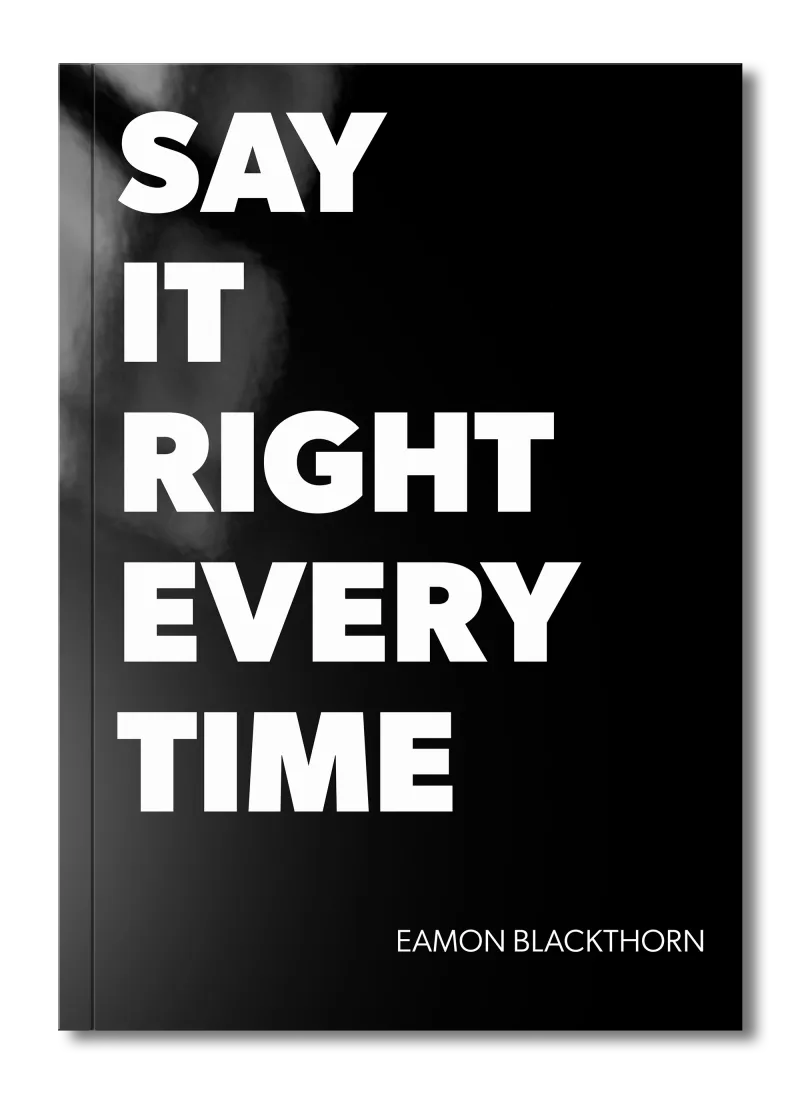
Stop rehearsing conversations you'll never have. Say It Right Every Time gives you 115 word-for-word scripts and 16 proven frameworks to speak with confidence in every conversation that matters.
What Must Be in Place Before You Speak to Anyone
Before you sit down with a manager, HR representative, or trusted colleague, three things must be true.
First, you need specific incidents, not impressions. "She makes me feel undermined" is an impression. "In the team meeting on Tuesday, she interrupted my presentation three times and attributed two of my findings to her own earlier work, in front of the whole group" is an incident. You need at least three to five of these, ideally more. Patterns require evidence of repetition.
Second, you need to be able to name the impact. Not how the behaviour made you feel emotionally, but what it cost: a missed deadline, a confused client, a team member who stopped contributing, a decision that was made on bad information. Impact that is concrete and professional lands harder than impact that is personal.
Third, you need to have your own emotions under control before you walk in. This does not mean suppressing what you feel. It means processing it beforehand so it does not run the conversation. If you cry or raise your voice, the listener's focus will shift from the problem to your reaction. That is not fair, but it is true. Prepare for this conversation the way you would prepare for a presentation that matters.
How to Explain Toxic Traits to a Third Party: A Step-by-Step Process
Step 1: Open With Your Purpose, Not Your Frustration
The first thirty seconds matter more than anything else you say. Start by naming why you are there and what you are asking for. This tells the listener how to receive what follows.
Try something like this: "I want to talk to you about a pattern of behaviour I have been observing with a colleague. I am not looking to get anyone in trouble. I want you to have a clear picture of what is happening so we can figure out the right response."
That framing does three things. It signals that you are calm and purposeful. It removes the impression that this is a personal grudge. And it puts the listener into problem-solving mode rather than referee mode.
Step 2: Name the Behaviour, Not the Person's Character
This is the most important discipline in the entire process. The moment you say "she is manipulative" or "he is toxic," you have handed the listener a label they cannot verify. Labels trigger defensiveness and doubt. Behaviour is observable and specific.
Instead of "he gaslights me," say: "When I raise a concern, he responds by telling me I misunderstood what happened, even when other people in the room witnessed the same thing. It has happened consistently enough that I have started doubting my own memory of events."
That second version describes the same reality without the loaded word. It gives the listener something they can investigate and corroborate, rather than a character judgement they have to accept or reject on faith.
Step 3: Present Your Evidence in Order
Walk through your specific incidents in sequence. Give each one a time, a place, and a concrete description of what happened. Do not rush through them, and do not pile them all together. Let each one land before you move to the next.
Here is a useful structure for each incident: what the situation was, what the person did, and what resulted from it. "In the project review on the 14th, she told the client that the delay was due to errors in my analysis. My analysis was correct. The delay was caused by a supplier issue that she had been informed about two weeks earlier. The client now has a distorted view of the quality of my work."
That is three sentences. It is specific, it is sequenced, and it contains no character attack. Repeat this structure for each incident you have documented. If you need help thinking through how to structure confrontational conversations, the framework I describe in Scripts for Addressing Team Members Who Are Undermining Group Synergy gives you a reliable starting point.
Step 4: Connect the Incidents Into a Pattern
Once you have laid out your specific examples, help the listener see the line that runs through them. Do not tell them what to conclude. Show them the shape of the behaviour and let them draw their own conclusions. This is far more powerful than arguing your interpretation.
You might say: "What I want you to notice is that this is not one bad day or one misunderstanding. Across these incidents, the same thing happens: when something goes wrong, accountability lands on someone else. Usually me. I do not think this is accidental at this point, but I am not asking you to share that conclusion. I am asking you to notice the pattern."
Inviting the listener to form their own view makes them a participant rather than an audience. Their conclusion will carry more weight to them than yours ever could.
Step 5: Name the Impact on the Team or the Work
Move the conversation from the interpersonal to the professional. This is where many people stop short, and it is a costly mistake. A third party, especially a manager, needs to understand why this matters beyond your personal experience of it.
Be specific about professional consequences. Has a project suffered? Has team communication broken down? Have good people gone quiet or disengaged? The research on how unmet needs drive team conflict makes clear that sustained harmful behaviour does not stay contained to one relationship; it affects the whole group over time. Name that effect with specific examples.
Step 6: Make a Clear, Specific Ask
Do not leave the conversation without naming what you need from the third party. A vague hope that they will "do something" is not an ask. It puts the responsibility for problem-solving entirely on them, and often leads to inaction.
Your ask should be proportionate and realistic. "I would like this to be observed directly over the next few weeks before any action is taken" is reasonable. "I would like a mediated conversation where we can address this directly" is reasonable. "I need confirmation that this will be taken seriously and followed up with me" is reasonable. Whatever you ask for, name it plainly so the listener knows exactly what a good outcome looks like from your side.
Step 7: Close With Your Willingness to Be Part of the Solution
End by signalling that you are not here to burn anyone down. You are here because the situation needs to change, and you are prepared to be part of making that happen. This final note matters enormously. It confirms to the listener that what they just heard came from someone trying to solve a problem, not someone looking for a fight.
"I know this is a difficult situation, and I am not expecting an easy fix. I wanted you to have the full picture. I am happy to support whatever process makes sense from here."
Adapting the Process for High-Conflict Settings
In a high-conflict workplace, where the toxic behaviour is already well-known but somehow tolerated, the step sequence above stays the same but the emphasis shifts. You will be dealing with a listener who may already have some awareness of the problem and some investment in not acting on it.
In these settings, your documentation matters more than your delivery. Come with written records, emails, or a short written summary of incidents you can leave with the third party. Do not rely on the conversation alone. People in high-conflict environments are often managing pressure from multiple directions, and a written summary gives them something to work with when you are not in the room.
Also, be explicit about what you have already tried. If you have already addressed the behaviour directly with the person, say so clearly. Describe what you said, how they responded, and why direct conversation has not resolved it. This positions your third-party conversation as a reasonable next step, not a first resort. You can find tools for those earlier direct conversations in resources on addressing passive-aggressive behaviour that is silently eroding team dynamics and on why avoiding difficult conversations is the hidden enemy of a functioning team.
Where People Go Wrong When Explaining Toxic Behaviour
The mistake: Opening with a label like "she is toxic" or "he is a narcissist."
Why it happens: After months of absorbing the behaviour, the label feels like the most accurate summary available.
What to do instead: Save your interpretation for the end, if you share it at all. Lead with specific behaviour and let the listener form their own view.
The mistake: Telling every incident rather than the most important ones.
Why it happens: It all feels relevant because it all hurt.
What to do instead: Select your three to five strongest, most clearly documented incidents. More is not more persuasive; it is more exhausting.
The mistake: Losing composure mid-conversation.
Why it happens: Talking about the behaviour brings it back, and the emotion rises with it.
What to do instead: Practise the conversation beforehand, ideally out loud with someone you trust. Knowing your material reduces the chance that emotion overtakes it. The approach in how to use I statements to prevent blame cycles in team conversations can help you frame your personal experience without sounding accusatory.
The mistake: Not naming what you need at the end.
Why it happens: People feel that making an explicit ask sounds demanding.
What to do instead: A clear ask is a courtesy to the listener. It tells them how to help you. Without it, good intentions lead to no action.
The mistake: Comparing the person to other team members.
Why it happens: Contrast feels like context.
What to do instead: Keep the conversation focused on one person's behaviour and its impact. Comparisons distract and create new conflict. If team dynamics are broader, that is a separate conversation. The article on common communication mistakes that quietly destroy team functioning covers this territory in more depth.
Your Pre-Conversation Checklist
Use this before you speak to any third party about someone's harmful behaviour patterns. It takes ten minutes and will save you significantly more than that.
- Write down every specific incident you plan to reference. For each one, note the date, the setting, exactly what was said or done, and who else was present.
- For each incident, write one sentence describing the professional impact: what it cost, who was affected, what changed as a result.
- Write your opening sentence. Practise it aloud until it feels calm and natural.
- Decide which three to five incidents are your strongest. Leave the rest out of this conversation.
- Write down your specific ask. What do you want the third party to do, investigate, or commit to?
- Read through your notes as if you are the listener hearing this for the first time. Does it sound credible and specific, or does it sound like a grievance? Revise anything that sounds like the latter.
- Consider whether the behaviour you are describing is also affecting others on the team. If so, are there colleagues who might independently corroborate what you have observed? Read about how behaviour can isolate team members from the group for more on this dynamic.
Frequently Asked Questions (FAQ)
What does toxic traits explained mean in a workplace context?
Toxic traits explained in a workplace context means identifying and communicating specific, harmful behaviour patterns that damage relationships, erode trust, or undermine team performance. It involves describing what someone does, not who they are, so that others can understand the impact without dismissing the concern as personal bias.
How do you explain toxic traits to someone without sounding dramatic?
You explain toxic traits by leading with concrete, observable behaviour rather than emotional labels. Describe specific incidents, name the impact on people or work, and avoid generalising. When you stay calm and factual, the pattern speaks for itself and you preserve your credibility with the person you are speaking to.
What are the most common toxic traits to explain to a third party?
The most common toxic traits people need to explain include persistent blame shifting, subtle manipulation, public undermining, consistent dishonesty, and boundary violations that accumulate over time. Each of these requires specific examples and clear impact statements rather than general character judgements if you want to be taken seriously.
Why do people sound dramatic when describing toxic behaviour?
People sound dramatic because they reach for emotional language when they are frustrated, use labels like toxic or narcissistic without supporting evidence, or describe a pattern without grounding it in specific incidents. The listener hears feeling rather than fact, and dismisses the concern as personal grievance rather than a genuine problem.
Should you document toxic traits before talking to a third party?
Yes. Before speaking to a third party, you need a clear record of specific incidents: what happened, when it happened, who was present, and what the impact was. Documentation is not about building a legal case; it gives you the factual foundation to speak calmly and specifically rather than relying on memory under pressure.
How do you explain toxic traits in a remote or hybrid team setting?
In remote settings, toxic traits often leave a clearer paper trail through messages, emails, and meeting recordings. Reference these directly when speaking to a third party. Describe the pattern you have observed across multiple interactions, name the communication channels involved, and focus on impact to the team rather than intent.
What should you never say when explaining someone's toxic behaviour to a manager?
Never open with a character label like toxic, manipulative, or narcissistic. Never use phrases like always or never without supporting examples. Avoid comparing the person to others on the team. These approaches put the listener on the defensive on the other person's behalf and shift attention away from the behaviour itself.
What You Can Do Differently Starting Today
Here is the truth of it: being dismissed when you tell the truth is one of the most demoralising experiences in any workplace. It makes you question your own perception and it leaves the harmful behaviour intact. But most dismissals happen not because the listener does not care, but because the communication failed to give them something they could act on.
You now have a process that changes that. The next time you need to get toxic traits explained clearly to someone who can help, come prepared with specific incidents, concrete impact, and a calm delivery. The pattern will do the work. Your job is simply to present it in a form the listener can trust. Do that, and you give yourself the best possible chance of being heard, believed, and supported.