
In Short
Physical expression in communication means the way your body moves, holds itself, and signals intention, and whether those signals match the words coming out of your mouth.
- When your physical cues and spoken message align, people trust you instinctively.
- When they conflict, people will always believe your body over your words.
- Nonverbal consistency is a skill you can practice, not a trait you are born with.
Nonverbal consistency aligning refers to the practice of ensuring your physical expressions, including posture, gesture, facial cues, and eye contact, match the spoken message you intend to deliver, so that your body and words reinforce rather than contradict each other.
You have watched it happen. A manager stands at the front of the room and says, "I am fully committed to this team." His arms are crossed, his eyes keep dropping to his phone, and his voice carries all the warmth of a train announcement. Nobody believes him. Not one person in that room. And he has no idea why his people do not trust him.
That is the problem with nonverbal consistency aligning. When your physical expression and your spoken words pull in opposite directions, the words lose every time. People do not think their way to distrust. They feel it, immediately, in their bodies, before their minds have formed a single argument.
This article will show you what physical expression actually means in the real world, what goes wrong when it breaks down, and what you can do to close the gap between what you mean and what your body is broadcasting.
If you want to understand how emotional safety shapes the way people communicate in groups, The Role of Emotional Intelligence in Team Synergy covers that territory well. Here, we focus entirely on the physical dimension: how your body speaks, whether you intend it to or not.
What Nonverbal Consistency Actually Means in Practice
Physical expression is the full set of signals your body sends during any interaction. It includes posture, gesture, facial expression, eye contact, proximity, and the way you hold still as much as the way you move.
Nonverbal consistency aligning means those signals are not working against your words. It does not mean performing confidence or manufacturing warmth. It means your inner state and your outer presentation are moving in the same direction, so the person in front of you receives one clear signal, not two competing ones.
Here is what that looks like in a real moment. A team leader sits down with a direct report to give difficult feedback. She leans forward slightly, hands resting open on the table, eyes steady and focused on the person across from her. Her tone is measured, not harsh. She holds the person's gaze through the hard sentence. Everything her body does confirms what her words are saying: this conversation matters, I respect you, and I am not going anywhere until we work through it. The other person may not enjoy the feedback, but they do not feel attacked. They feel met.
That is physical expression working well. When it breaks down, the message fractures, and trust fractures with it.
"The Conversation You're Avoiding Is the One You Need to Have."
"The Conversation You're Avoiding
Is the One You Need to Have."
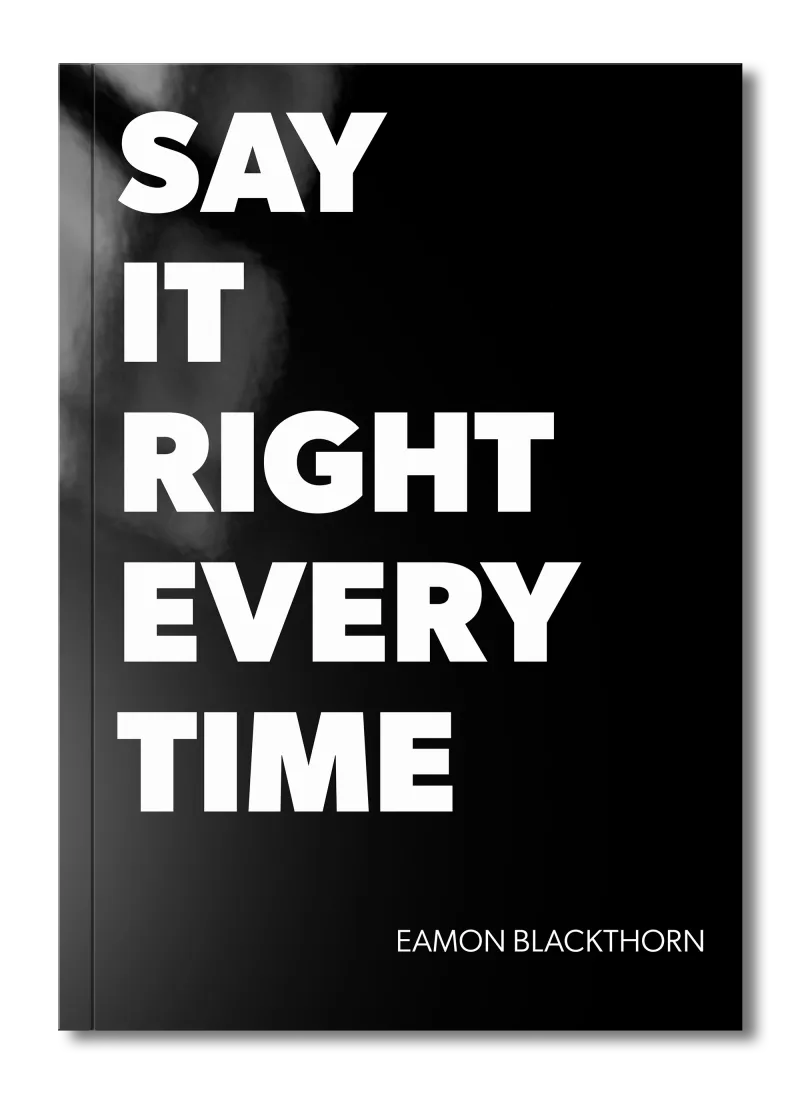
Stop rehearsing conversations you'll never have. Say It Right Every Time gives you 115 word-for-word scripts and 16 proven frameworks to speak with confidence in every conversation that matters.
Why Physical Expression Matters for Real Connection
Here is the truth of it: words are the smallest part of communication. They carry meaning, yes. But they travel on a current of physical signals that people read constantly, often without knowing they are reading anything at all.
When your body and your words align, several things become possible that are otherwise out of reach:
You earn credibility without demanding it. People grant trust to those whose physical presence matches their spoken commitment. A handshake held too briefly, a gaze that shifts at the wrong moment, a posture that says "I would rather be elsewhere", these details cost you credibility that words cannot buy back. You have to earn trust through consistent physical signals, not through insisting you are trustworthy.
Your message lands as intended. When your physical expression reinforces your words, there is no gap for the other person to fill with their own interpretation. Misalignment creates that gap, and people fill it with their worst assumption.
Difficult conversations become possible. What Is Psychological Safety and How It Drives Team Synergy explains how safety shapes what people are willing to say. That safety begins in the physical cues you send before you open your mouth. An open posture, steady eye contact, and a calm expression tell the other person: it is safe to be honest here.
You build connection across difference. Physical expression is a language that crosses cultural and professional backgrounds. It is the most human signal you have, and it is available in every conversation.
Most professionals spend years sharpening their arguments and none at all studying how their body delivers those arguments. That is a costly gap.
The Key Characteristics of Nonverbal Consistency When It Works
You know physical expression is working when you see these signs in yourself and in the interactions you are part of.
Posture that signals presence. Your body faces the person you are speaking to, squared and still without being rigid. You are not turned away, not angled toward the door, not slumped in a way that reads as disengaged. Presence is the first physical signal you send, and it communicates respect before a word is spoken.
Eye contact that holds without forcing. You maintain eye contact through the important moments, not a stare, not a performance, but a steady gaze that tells the other person you are genuinely with them. For example, when someone shares something difficult, you hold your gaze rather than glancing away, because your eyes confirm that you are listening, not just waiting.
Gestures that match the message. When you describe something open and collaborative, your hands are open. When you express certainty, your gestures are deliberate and contained. Gestures that contradict the message, pointing fingers during "I am not blaming anyone," or expansive waving arms during "let us keep this simple", create friction that your audience will feel even if they cannot name it.
Facial expressions that arrive on time. Congruent physical expression means your face responds when the content calls for it, not a second late. A delayed smile or a frown that appears after the emotional moment has passed signals that you are performing a reaction rather than having one.
Stillness used with intention. Constant movement, fidgeting, and shifting weight signal anxiety or disengagement. The ability to hold still during a critical moment tells the other person you are grounded and that you are treating the moment with the weight it deserves.
Together, these characteristics add up to one thing: the physical signal that you mean what you say. When they are all present, people do not need to analyse your words. They simply believe you.
Common Misconceptions About Physical Expression
Let me clear up three things people consistently get wrong about physical expression.
Misconception: Good physical expression means controlling every gesture and projecting confidence at all times. The truth: Performed confidence is one of the easiest things for people to detect, and one of the most damaging when they do. Nonverbal consistency is not about controlling your body into a dominant posture. It is about reducing the gap between what you genuinely feel and how your body represents that. A nervous person who acknowledges their nerves and holds steady is far more credible than a nervous person who overperforms calm.
Misconception: Physical expression is mostly about the big gestures, the handshake, the stance, the power pose. The truth: It is the small details that determine credibility. The speed at which your eyes move, the fraction of a second your smile holds before fading, the subtle shift in your weight when a topic makes you uncomfortable. These microexpressions and minor postural changes carry more information than any deliberate gesture you make. Signs Your Team's Amygdala Hijack Problem Is Destroying Synergy in Real Time shows how these small physical signals escalate under pressure in group settings.
Misconception: Some people are simply naturally expressive, and the rest cannot learn it. The truth: Physical expression is a skill, not a fixed trait. I spent years unaware of what my body was doing during hard conversations. I learned, slowly and with genuine effort, to bring my physical signals into alignment with my intentions. It takes practice and honest feedback, but it is absolutely learnable. Anyone who tells you it is not has simply not tried with enough courage.
The short version: alignment matters more than performance, small details matter more than grand gestures, and this can be learned.
Nonverbal Consistency in Real Situations
Here is what physical expression looks like when it is, and is not, present.
Workplace: The feedback session that went wrong. A senior manager called a team member in to discuss a missed deadline. He said all the right things: "I want to understand what happened," and "This is a conversation, not a judgment." But he kept his arms crossed throughout, his chair pushed back from the desk, and his eyes moved to his screen twice while the other person was speaking. The team member left feeling scolded, not heard. Nothing the manager said was wrong. Everything his body said was.
Team setting: The meeting that built trust. A project lead opened a difficult planning session by acknowledging the pressure the team was under. She did not just say the words. She leaned forward, made eye contact with each person as she spoke, and kept her hands open on the table. When a junior team member raised a concern, she turned her whole body toward him, not just her head. The room felt different after that. How Empathy Bridges in Team Communication Create the Conditions for Lasting Synergy explores how this kind of physical attentiveness lays the ground for real team cohesion.
Personal leadership: The apology that landed. A team leader needed to apologise for a decision that had cost her team a significant opportunity. She stood still, spoke without defensive gestures, and did not break eye contact when the hard part came. The stillness said: I am not running from this. The apology was believed. Not because of the words, but because her body confirmed them.
What these three scenarios share is simple: the body is always speaking. The only question is whether it is telling the same story as the words.
Key Takeaways
Here is what matters most about physical expression and nonverbal consistency.
Alignment is the goal, not performance. Your body and your words need to carry the same message. When they do, people trust you. When they do not, no amount of carefully chosen words will fix the damage.
Start by watching yourself. Record a conversation, or ask someone you trust to observe you in a meeting. Notice what your body does when the topic gets difficult. That is your baseline, and knowing it is where real improvement begins.
Stillness is a skill. The ability to hold your ground physically during a tense moment communicates strength and respect. Practice it deliberately in low-stakes conversations first.
The small signals carry the most weight. Eye contact held for one second too short, a smile that fades before the other person has finished speaking, these micro-signals tell the truth even when your words are careful and considered.
Practice in real conditions. You cannot master this in isolation. You learn physical expression by being in conversations, paying attention, and adjusting. How to Give Feedback That Strengthens Team Synergy Instead of Breaking It is a good next step if feedback conversations are where your nonverbal consistency aligning breaks down most often.
If you want to go further, look also at How Psychological Safety Enables Honest Communication and Sustains Team Synergy and What Is the Amygdala Hijack and How It Silently Blocks Team Synergy in High-Pressure Moments, both explain what happens to physical expression when pressure rises and your nervous system takes over.
Frequently Asked Questions (FAQ)
What is nonverbal consistency in communication?
Nonverbal consistency means your physical expressions, including posture, gesture, eye contact, and facial cues, match the words you speak. When your body and words send the same signal, people trust you. When they conflict, people believe the body, almost every time.
Why does nonverbal consistency aligning matter in the workplace?
Because trust is built or broken in the physical details. A manager who says she values her team while checking her phone sends a clear message. Aligning your physical expression with your words is how you earn the respect and credibility that no job title can give you.
How do you improve nonverbal consistency in communication?
Start by recording yourself in a low-stakes conversation. Watch without sound first and notice your posture, gestures, and facial expressions. Then watch with sound. The gaps between what you see and what you hear are where your nonverbal consistency aligning needs the most deliberate work.
What are the most common signs of poor physical expression alignment?
Watch for crossed arms during open conversations, eye contact that drifts during critical moments, and smiles that do not reach the eyes. These gaps between message and movement tell the other person something is off, even when they cannot name exactly what they noticed.
Can you train physical expression in communication?
You can, and it requires deliberate practice rather than performance. The goal is not to control every gesture but to reduce the gap between what you feel and how you move. Over time, that alignment becomes natural rather than calculated, and that is when people begin to genuinely trust you.
How does nonverbal consistency relate to emotional intelligence?
Emotional intelligence gives you the self-awareness to notice when your inner state is leaking into your physical expression in ways that contradict your words. When you can read that gap in yourself, you can close it. That is why strong physical expression and emotional awareness develop together.