
What Happened
A Gambian commentator raised a pointed public question about where political competition crosses into something more dangerous. The piece asked citizens to examine whether the language and tactics of political rivals were actually undermining the democratic systems those rivals claim to protect. The argument was not aimed at one party. It was aimed at everyone holding a microphone in a political arena.
The Communication Angle
Here is the real question politicians and their advisors almost never ask: what is the cumulative effect of my language on the institution I am operating inside?
Individual speeches feel harmless. A sharp attack here, an inflammatory accusation there. But political speech is not a series of isolated events. It is a long conversation with the public about what is normal, what is acceptable, and who counts as a legitimate participant in democracy. When political figures consistently use language that frames opponents as enemies of the people rather than holders of different positions, they are not just scoring points. They are editing the public's mental dictionary.
This is where most political communicators fail completely. They optimize for the short game. They ask: "Will this line fire up my base tonight?" They never ask: "What does this line teach my audience about how democracy works?" Those are two entirely different performance metrics, and confusing them is how you win elections while slowly burning down the house.
The fix is not vague civility. I have no patience for calls to "be nicer." Nice is not the goal. Precision is. When you have a sharp disagreement with a political opponent, you can be brutal about their argument without being destructive about their right to exist in the conversation. "My opponent's plan will cost jobs" is a hard hit. "My opponent is a traitor to this country" is a structural attack on the democratic framework itself. One challenges a position. The other challenges legitimacy. Politicians, speechwriters, and campaign managers need to know the difference and hold that line with discipline.
There is also a responsibility on the audience side. Citizens who cheer for delegitimizing language are not passive spectators. They are co-authors of the political speech environment. Demand better framing from the people you support. That is not weakness. That is literacy.
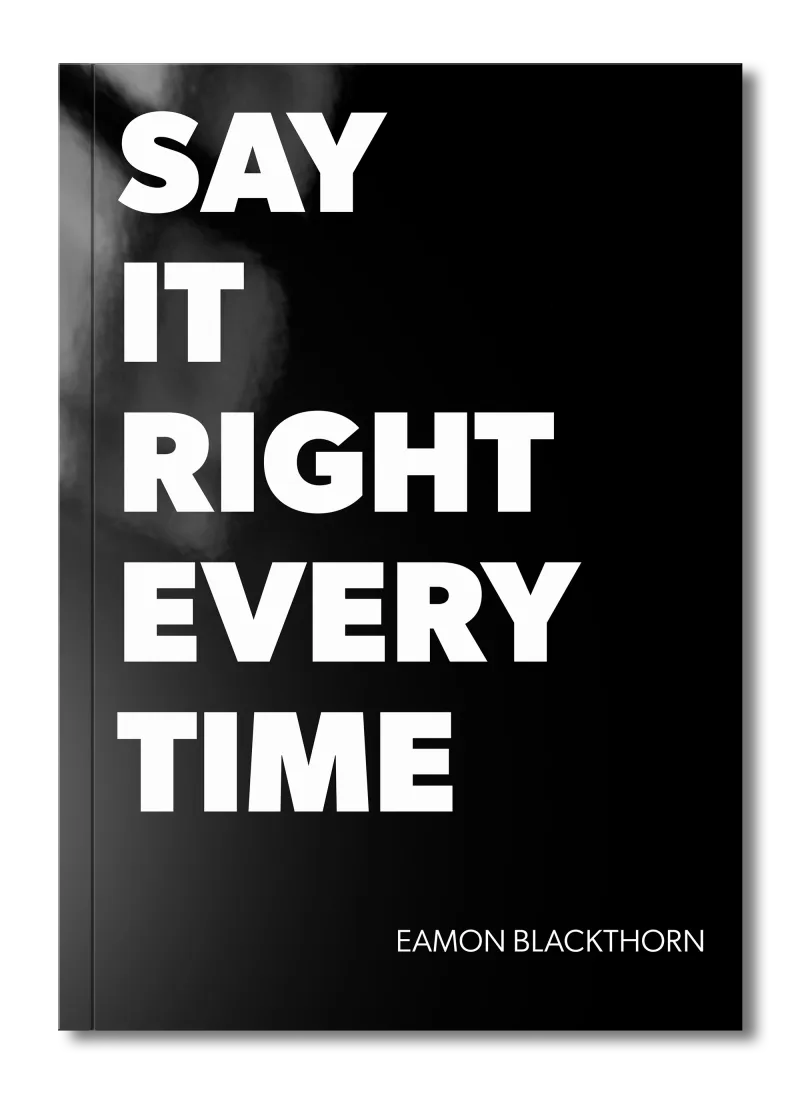
This is exactly the kind of scenario I break down in Say It Right Every Time. The chapter on high-stakes framing gives you a framework for landing a strong, unambiguous point without collapsing the trust structure your audience needs to keep believing you. Because the moment your words make people feel like outsiders in their own civic life, you have not just lost the argument. You have lost the room permanently.
Never Be Lost
for Words Again
Get word‑for‑word scripts for the conversations that shape your life, from job interviews and negotiations to difficult talks with family and partners, so you always know exactly what to say and how to say it.
Never Be Lost
for Words Again
Get word‑for‑word scripts for the conversations that shape your life, from job interviews and negotiations to difficult talks with family and partners, so you always know exactly what to say and how to say it.
Key Takeaway
Before your next public statement on a contested topic, run it through this single filter: does this attack the argument, or the right to argue? If it attacks the right to argue, rewrite it. Every time. No exceptions. You can still be fierce. You just have to aim at the position, not the person's place in the room.