
What Happened
Brands across industries have repeatedly torched their reputations on social media through avoidable communication blunders. From tone-deaf responses to public outrage, to corporate accounts trying too hard to be funny at the worst possible moments, these failures share a common thread. The companies that crash hardest are not the ones with the worst products. They are the ones with the worst instincts when the pressure is on.
The Communication Angle
Every major social media fail follows the same anatomy. The brand either says the wrong thing, says the right thing in the wrong way, or says nothing when silence is the last option they should choose. The medium is not the problem. The thinking behind the message is the problem.
Start with the most common failure: the defensive response. A customer calls a brand out publicly. The brand fires back with corporate language that protects legal liability but destroys human trust. What they are actually communicating is "we care about ourselves more than you." The audience reads that instantly. Lawyers write for courtrooms. Social media demands that you write for people.
The second killer is false urgency without substance. A brand gets caught in a scandal and rushes out a statement within hours. The statement is full of words like "values" and "commitment" and "review" but says nothing concrete. This move feels proactive but lands as cowardly. Speed without clarity is just noise. The audience does not want a fast response. They want a true one. Take four hours and say something real instead of taking forty minutes to say nothing.
The third failure is the attempted pivot to humor. Some brands, watching a crisis unfold, try to lighten the mood with a joke or a meme. This almost never works. Humor requires shared goodwill between the speaker and the audience. In a crisis, that goodwill is exactly what you have spent. Attempting to joke your way out signals that you do not understand why people are upset. It reads as dismissal. Your audience will not forgive you for making them feel dismissed.
The brands that actually survive social media crises do one thing differently: they make the other person the subject of the sentence. Not "we are sorry if anyone was offended" but "you deserved better and we failed you." That shift from "I" and "we" to "you" is not a writing trick. It is a philosophy. It tells the audience where your attention actually lives.
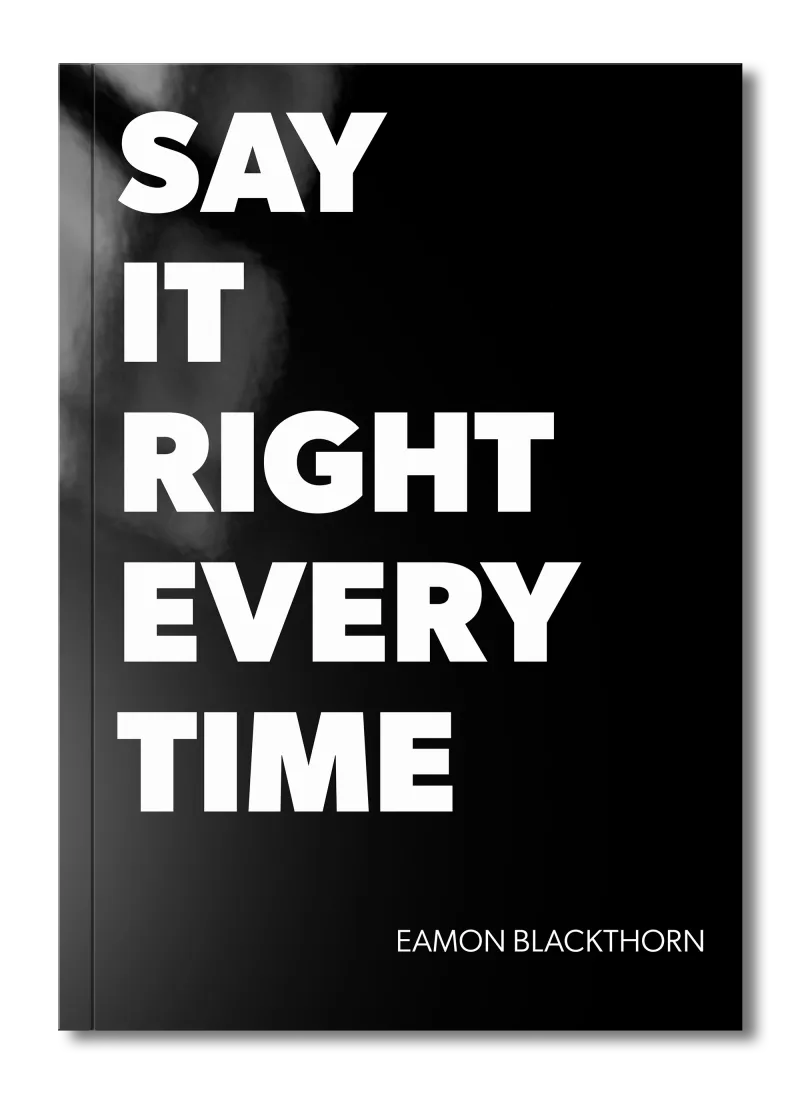
This is exactly the kind of scenario I break down in Say It Right Every Time. The chapter on audience-first language gives you a framework for auditing your own messages before they go public, so you can catch the self-protective instinct before it costs you the room. The principle is simple: whoever you are talking to should feel like the most important person in every sentence you write. In a crisis, that is not a nicety. It is your only real option.
Never Be Lost
for Words Again
Get word‑for‑word scripts for the conversations that shape your life, from job interviews and negotiations to difficult talks with family and partners, so you always know exactly what to say and how to say it.
Never Be Lost
for Words Again
Get word‑for‑word scripts for the conversations that shape your life, from job interviews and negotiations to difficult talks with family and partners, so you always know exactly what to say and how to say it.
Key Takeaway
Before your team posts any public response to criticism, read your draft out loud and count how many times the sentence subject is your brand versus your audience. If your brand appears more than twice in a five-sentence statement, rewrite it until the customer is the center of every single sentence. This one habit will separate your crisis response from every hollow corporate apology your audience has ever scrolled past.