What Happened
Each year, a gathering at Martha's Vineyard pulls together senior leaders to wrestle with the forces reshaping business. This year, artificial intelligence dominated the agenda. The core tension was not about tools or software. It was about something older and harder: how leaders talk to their people when the ground is shifting, and how trust either holds an organization together or quietly bleeds out.
The Communication Angle
Here is the lesson, stated plainly: You cannot automate your way through a trust crisis. AI can accelerate work, cut costs, and surface insights. It cannot reassure a nervous team at 9 a.m. on a Tuesday. Only you can do that, and most leaders are doing it badly.
The mistake leaders make right now is staying vague on purpose. They think ambiguity protects them. It does not. When you say "we're exploring AI's potential for our workflows," your team hears one thing: "some of you will be gone soon." Silence and corporate filler language do not buy you time. They burn trust, fast.
The leaders worth watching are the ones who do the opposite. They name the threat directly, then name their commitment directly. Not a memo. Not a town hall with a slide deck and a Q&A that ends after two questions. A real conversation, with real answers. These leaders say: "Here is what we know. Here is what we do not know yet. Here is what I will protect." Three sentences. Enormous difference.
This is where most leadership communication falls apart at the structural level. Leaders treat trust like a feeling that either exists or it does not. It is not a feeling. It is a track record built sentence by sentence. Every time you dodge a hard question, you make a withdrawal. Every time you answer one honestly, even if the answer is uncomfortable, you make a deposit. The math is simple and unforgiving.
The Martha's Vineyard conversation matters because it brings this problem into the open among the people who have the power to fix it. The leaders in that room are not lacking information about AI. They are lacking the communication discipline to translate what they know into words their people can trust and act on.
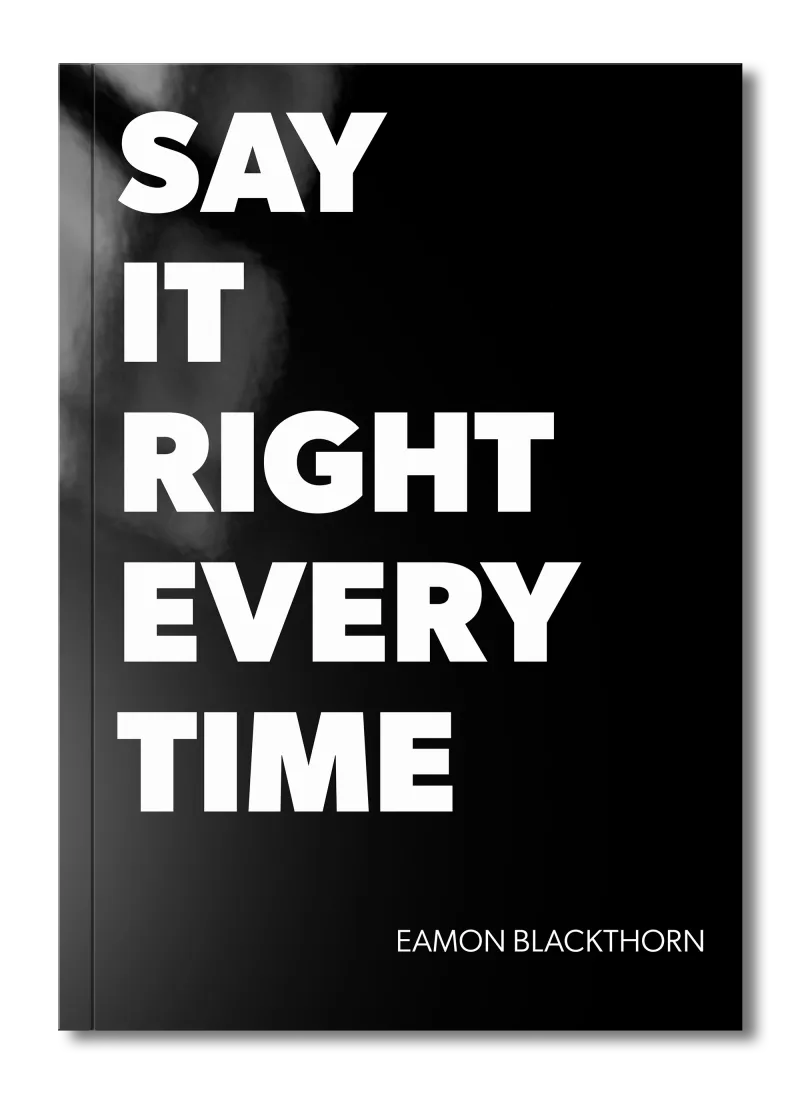
This is exactly the kind of scenario I break down in Say It Right Every Time. The chapter on high-stakes transparency gives you a framework for delivering hard truths without losing your authority or your team's confidence. The goal is not to make people feel good. The goal is to make people feel certain that you are telling them the truth. Those are very different targets, and hitting the right one changes everything.
Never Be Lost
for Words Again
Get word‑for‑word scripts for the conversations that shape your life, from job interviews and negotiations to difficult talks with family and partners, so you always know exactly what to say and how to say it.
Never Be Lost
for Words Again
Get word‑for‑word scripts for the conversations that shape your life, from job interviews and negotiations to difficult talks with family and partners, so you always know exactly what to say and how to say it.
Key Takeaway
Before your next all-hands or team meeting about AI, automation, or any kind of organizational change: write down the one fear your team is almost certainly carrying but not saying out loud. Then address it first, before any agenda item, before any good news, before any slides. Name the fear yourself. "I know some of you are wondering if this means your role is at risk." Then answer it honestly. That single move will do more for your credibility than any polished presentation.