
What Happened
Trinidad and Tobago MP Camille Robinson-Regis publicly apologized to UDeCOTT Chairman Shankar Bidaisee after statements she made at a press conference connected him to two HDC insurance brokerage contracts. The apology came through a written release, just days after her original remarks. The speed of the reversal and the formal channel she chose tell us everything about the pressure she was under.
The Communication Angle
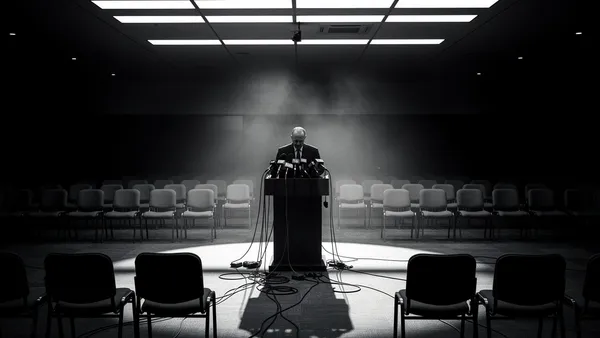
Picture this: a politician walks into a press conference loaded with ammunition, fires at a public official, and then 48 hours later walks it all back through a press release. That is not communication strategy. That is a controlled retreat, and everyone watching knows it.
The first problem is what I call premature fire. Robinson-Regis went public with claims before she had locked down her facts. This is the most common and most damaging mistake in high-stakes communication. The moment you attach someone's name to a scandal in front of cameras, you own that claim. If you cannot defend it, you will pay for it. The apology does not erase the accusation. It amplifies it. Because now the story is not about the contracts. The story is about her credibility.
The second problem is the delivery mechanism. A written release is the coward's tool when the original offense was done face to face with journalists. She stood at a microphone and made her statements publicly. The apology deserved the same stage. A press release reads like legal housekeeping. It signals that the apology was crafted by a team trying to limit exposure, not by a person genuinely owning a mistake. Bidaisee and the public both deserve better than that, and they can tell the difference.
Here is what she should have done instead. Before that Thursday press conference, someone on her team should have asked one question out loud: "If we are wrong about this, what happens?" That single question forces you to pressure-test your claims before the cameras roll. If the answer is "we lose credibility and hand our opponents a weapon," you slow down. You verify. You speak only to what you can prove.
When an apology becomes unavoidable, own the platform. Go back to the same room, the same microphones, and say the words yourself. A spoken apology is human. A written one is a legal instrument. Audiences respond to vulnerability, not paperwork.
This is exactly the kind of scenario I break down in Say It Right Every Time. The chapter on high-stakes delivery gives you a framework for sequencing what you say and when you say it, because timing and evidence are inseparable. Saying the right thing at the wrong moment, or without the right proof behind it, is just a slower way to say the wrong thing entirely.
Never Be Lost
for Words Again
Get word‑for‑word scripts for the conversations that shape your life, from job interviews and negotiations to difficult talks with family and partners, so you always know exactly what to say and how to say it.
Never Be Lost
for Words Again
Get word‑for‑word scripts for the conversations that shape your life, from job interviews and negotiations to difficult talks with family and partners, so you always know exactly what to say and how to say it.
Key Takeaway
Before your next public statement involving another person's reputation, write down exactly one thing: the specific evidence you have in your hand right now that supports the claim. Not what you believe. Not what a source told you. What you can prove today. If you cannot write it down in two sentences, you are not ready to say it out loud.