
What Happened
When a brand spokesperson, influencer, or hired talent goes sideways, the company behind them faces a communication problem that can spiral fast. Ad Age recently examined how brands should approach the full arc of a talent crisis: from screening talent before signing to rebuilding trust after the damage is done. The piece reveals that most brands are still reactive, not prepared, and that gap is where reputations get destroyed.
The Communication Angle
Here is the core failure I see repeatedly: brands treat talent vetting as a legal and PR task, not a communication task. They run background checks. They scan social media. Then something blows up anyway, and they have no idea what to say because they never built a communication framework around the relationship in the first place. The contract exists. The messaging strategy does not.
The moment a crisis hits, most brand teams default to silence or vague corporate-speak. "We are aware of the situation and take these matters seriously." That sentence communicates exactly one thing: nobody in that room had the courage to say something real. Audiences read that non-statement perfectly. It does not protect the brand. It confirms the brand is more interested in liability than accountability.
What actually works is a tiered response model. First, acknowledge the specific problem. Not "recent events" but the actual situation, named plainly. Second, state your position clearly. Do you stand by the talent, or are you cutting ties? Pick one. Brands that try to straddle that line look weak to everyone on both sides. Third, explain the action you are taking and the timeline. People can accept hard news. They cannot accept ambiguity that drags on for days while reporters fill the silence for you.
The vetting phase matters more than brands want to admit. Before signing talent, you need a direct conversation, not just a questionnaire, about values alignment. Ask the person directly: "Is there anything in your public or private history that could contradict what our brand stands for?" That conversation is uncomfortable. It is also the only way to surface problems before they become your problems. Most brands skip this because it feels awkward. That awkwardness is exactly the signal you should lean into.
Recovery communication is where I see the most wasted opportunity. A brand that handles a talent crisis with speed, specificity, and genuine accountability almost always comes out stronger than one that had no crisis at all. The reason is simple: people do not expect perfection. They expect honesty. A well-handled crisis is proof that the brand has real values, not just a real marketing budget.
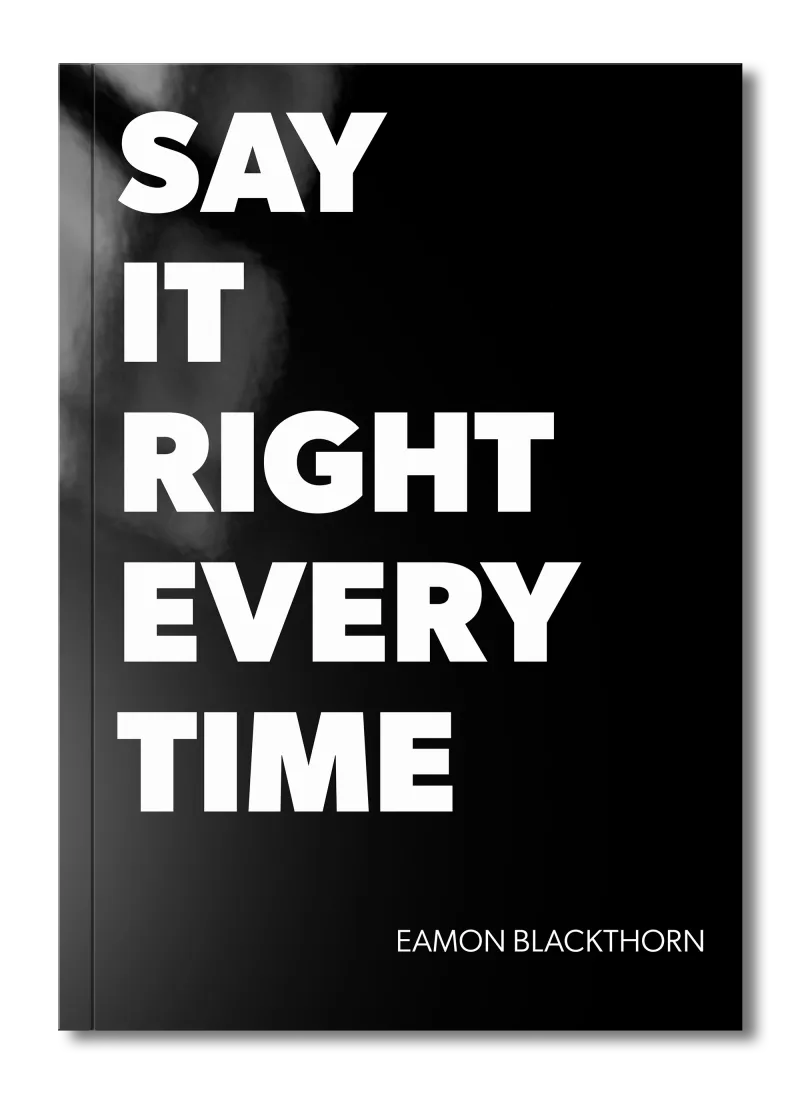
This is exactly the kind of scenario I break down in Say It Right Every Time. The chapter on high-stakes conversations gives you a framework for asking the questions that feel too blunt to ask, so you get real answers before they become public problems. The talent vetting conversation I described above follows that framework precisely: state your purpose plainly, ask the uncomfortable thing directly, and then stop talking long enough to actually hear the response.
Never Be Lost
for Words Again
Get word‑for‑word scripts for the conversations that shape your life, from job interviews and negotiations to difficult talks with family and partners, so you always know exactly what to say and how to say it.
Never Be Lost
for Words Again
Get word‑for‑word scripts for the conversations that shape your life, from job interviews and negotiations to difficult talks with family and partners, so you always know exactly what to say and how to say it.
Key Takeaway
Before you sign any talent deal, schedule one unscripted conversation with that person. No PR handlers, no prepared questions. Just a direct exchange about their personal brand and yours. Listen for hesitation. Listen for what they avoid saying. That conversation will tell you more than any social media audit, and it will also make your crisis response faster and cleaner if something goes wrong later.